
 Elizabeth123
In Nigeria, Directline Translators offer expert French to English translation services, essential for diplomacy, trade, and education, ensuring accurate and culturally sensitive communication. They provide professional options like document translation, website localization, and audio-visual support, with secure digital delivery and competitive pricing based on per-word or hourly rates. Certified linguists adapt idioms and customs for Nigerian contexts, while rigorous quality checks maintain high standards. This overview opens pathways to deeper industry insights.
Quick Summaries
- Directline Translators offers professional French to English document translation services tailored for Nigeria.
- Their certified linguists provide accurate conversions with cultural adaptations for Nigerian contexts.
- Services include secure digital delivery and expedited options for fast turnaround in Nigeria.
- Pricing features per-word rates, hourly options, and volume discounts for cost-effective translations.
- Quality assurance follows ISO 17100 standards, ensuring error-free and culturally sensitive results.
The Importance of French to English Translation in Nigeria
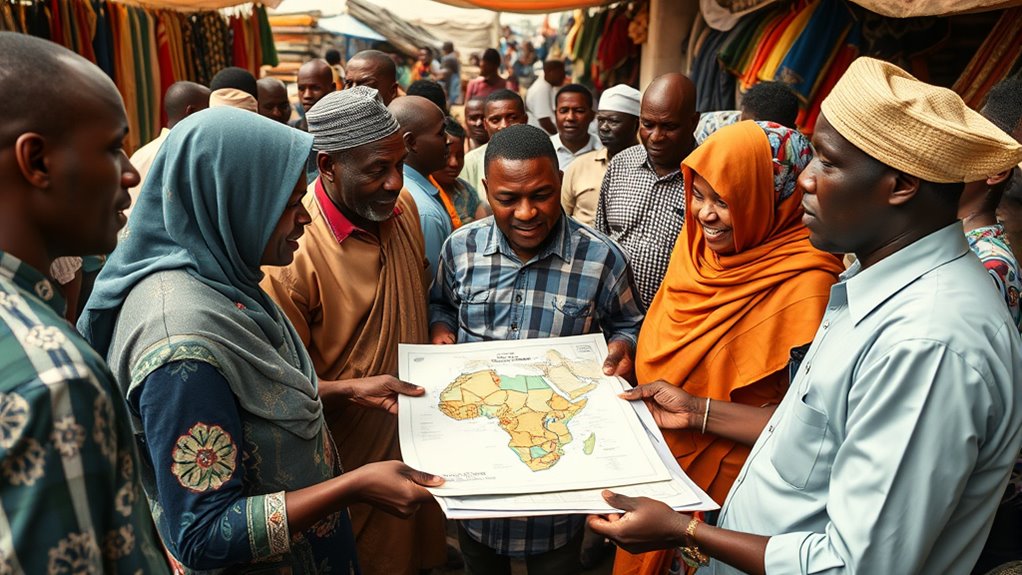
Why does French to English translation play a crucial role in Nigeria? The country’s strategic location near French-speaking nations in West Africa demands seamless linguistic bridges for diplomacy, trade, and cultural exchange. Nigeria engages in significant economic partnerships with countries like Benin and Cameroon, where accurate translations guarantee successful negotiations and agreements, boosting bilateral commerce. In education, it facilitates access to international resources, scholarships, and collaborative research, enriching academic opportunities for Nigerian students and scholars. Moreover, in media and tourism, effective translation promotes cross-cultural understanding, reducing misunderstandings and fostering regional stability. By overcoming language barriers, French to English translation enhances Nigeria’s global integration, supporting sustainable development and social cohesion in a multilingual context. This essential tool empowers effective communication in an interconnected world.
Overview of Directline Translators Services

Directline Translators Services operates in Nigeria, providing specialized French to English translation solutions. Core services include professional document and verbal translations tailored to various sectors. Language expertise and delivery methods emphasize efficiency and client satisfaction.
Core Services
The core services at Directline Translators encompass professional French to English translation, tailored for clients in Nigeria, with a focus on accuracy, cultural adaptation, and timely delivery. These services include document translation, website localization, and business communication support, ensuring seamless integration of Nigerian cultural nuances. Directline employs certified linguists who prioritize confidentiality and client satisfaction, delivering projects via secure platforms.
| Service Type | Key Features | Benefits |
|---|---|---|
| Document Translation | Fast turnaround, accurate | Preserves original intent |
| Website Localization | Cultural adaptation | Enhances user engagement |
| Business Communication | Timely revisions | Boosts professional image |
| Audio/Visual Support | High-fidelity output | Improves accessibility |
This approach helps clients navigate language barriers effectively, fostering reliable partnerships in Nigeria’s dynamic market.
Language Expertise
Language expertise drives Directline Translators’ services, encompassing certified linguists skilled in French to English conversions and cultural adaptations for Nigerian contexts. These professionals hold advanced degrees in linguistics and possess extensive experience in nuanced translations, ensuring accuracy in legal, medical, and business documents. Directline’s team includes native speakers who specialize in Nigeria’s diverse linguistic landscape, blending proficiency in French dialects with deep knowledge of English variations used locally. This expertise extends to idiomatic expressions and cultural nuances, preventing misinterpretations that could arise from direct word-for-word translations. By prioritizing quality and precision, Directline maintains high standards through rigorous linguist training and ongoing professional development, making their services indispensable for clients handling cross-cultural communication in Nigeria. Their commitment to excellence fosters reliable, contextually relevant outcomes.
Delivery Methods
Efficient delivery methods form the backbone of Directline Translators’ services, providing clients with flexible options tailored to diverse needs. In Nigeria, the company offers digital solutions like secure email attachments and cloud-based platforms for instant access to translated French-to-English documents, ideal for time-sensitive projects. For physical materials, expedited courier services guarantee rapid, reliable delivery across urban and rural areas. Clients can select from standard, express, or customized timelines, with real-time tracking to monitor progress. Directline emphasizes security, employing encrypted systems to safeguard confidential information. This approach caters to businesses, legal entities, and individuals, enhancing efficiency and accessibility. By integrating technology with traditional methods, Directline maintains high standards of quality and client satisfaction in the competitive translation market.
Key Benefits of Professional Translation

Professional translation services deliver significant advantages for French to English conversions, particularly in Nigeria, by ensuring accuracy and cultural sensitivity. Expert translators, fluent in both languages, prevent misinterpretations that could undermine communication in diverse contexts. This precision is essential for businesses expanding into Francophone markets, where culturally adapted content fosters trust and stronger partnerships. In education, accurate translations enhance access to resources, bridging language gaps for students and professionals. Legal and medical documents benefit from error-free renditions, avoiding potential disputes or health risks. Additionally, these services maintain confidentiality and ethical standards, providing high-quality outputs that outperform automated tools. Ultimately, professional translation elevates global interactions, promoting inclusivity and economic growth in Nigeria’s multilingual environment.
How Translation Services Operate in Nigeria
In Nigeria, translation services for French to English typically involve a network of certified linguists and agencies that manage workflows from client inquiry to final delivery. Clients often initiate requests through online portals or direct consultations, where agencies assess needs and assign tasks to specialized translators. These professionals, fluent in both languages, handle documents using digital tools for efficient processing. Workflows include initial translation phases, where linguists adapt content while preserving original intent, followed by coordination for revisions based on client feedback. Agencies oversee timelines, ensuring projects move from drafting to proofreading and secure distribution. In Nigeria’s multicultural context, such operations leverage local expertise to facilitate seamless cross-language communication, supporting business, education, and diplomacy without unnecessary delays.
Ensuring High-Quality Translations
Guaranteeing high-quality translations in French to English services in Nigeria hinges on established accuracy standards that maintain the original meaning. These standards involve rigorous checks to prevent errors and guarantee fidelity to the source text. Proofreading techniques complement this by systematically reviewing translations for clarity, consistency, and linguistic precision.
Accuracy Standards
Accuracy standards form the cornerstone of high-quality French-to-English translations in Nigeria, where fidelity to the source material guarantees that nuances, cultural contexts, and intended meanings are preserved without distortion. In Nigeria’s diverse linguistic landscape, translators adhere to rigorous benchmarks, such as those set by international bodies like ISO 17100, which emphasize linguistic precision and contextual accuracy. This involves deep knowledge of both French and English variants, including Nigerian English influences, to avoid misinterpretations. Effective strategies include cross-referencing terminology databases and consulting subject-matter experts, ensuring translations remain faithful yet adaptable. Ultimately, these standards elevate professional services like those from Directline Translators, fostering trust in critical sectors such as business, education, and diplomacy, where errors could lead to significant consequences. (124 words)
Proofreading Techniques
Proofreading techniques are essential for refining French-to-English translations in Nigeria, where meticulous checks prevent errors and uphold quality. These methods involve multiple stages, starting with initial reviews for grammar, syntax, and spelling inaccuracies. Translators at firms like Directline Translators prioritize cultural adaptation, ensuring nuances from French contexts align with English-speaking audiences in Nigeria. Peer reviews and cross-verification by native English speakers help detect subtle inconsistencies, such as idiomatic expressions or regional variations. Tools like grammar software complement human judgment but cannot replace it, as they overlook contextual subtleties. In Nigeria’s diverse linguistic landscape, this rigorous process enhances accuracy, builds trust, and maintains professional standards, ultimately delivering polished, error-free translations that meet global expectations. (124 words)
Industries That Rely on Language Translation
In Nigeria, various industries depend on French to English translation to facilitate cross-border communication and operations. The oil and gas sector relies on it for international contracts and negotiations with neighboring countries. Trade and commerce use translation to secure deals and expand markets. Healthcare depends on it for sharing research and medical protocols. Education employs it for academic collaborations and resource sharing. Tourism leverages translation to enhance visitor experiences and partnerships.
To illustrate, the following table highlights key industries and their primary uses of translation:
| Industry | Key Role of Translation |
|---|---|
| Oil and Gas | Facilitates contract negotiations |
| Trade | Enables business agreements |
| Healthcare | Supports research collaborations |
| Education | Aids academic material exchange |
| Tourism | Promotes sites and services |
This integration facilitates efficient operations across borders. (124 words)
Cultural Aspects in French to English Conversion
When translating from French to English, cultural nuances often play a pivotal role in ensuring the message retains its intended meaning and context, particularly in Nigeria’s multilingual environment. Translators must navigate differences in social customs, historical references, and idiomatic expressions to avoid misinterpretations. For instance, French emphasis on formality can clash with Nigeria’s diverse communication styles, requiring careful adaptation. This process preserves authenticity while bridging cultural gaps.
- Vivid gestures: A French shrug might convey resignation, but in Nigerian English contexts, it could signal indifference, altering emotional tone.
- Culinary metaphors: Translating “manger comme un ogre” (eating like an ogre) demands equivalents like “eating like a horse” to evoke similar hearty imagery.
- Historical allusions: References to French revolutions need rephrasing to resonate with Nigeria’s colonial history, painting parallel struggles.
- Social hierarchies: French honorifics, such as “Monsieur,” must adapt to Nigerian titles like “Chief,” illustrating respect dynamics vividly.
- Humor and proverbs: A French proverb like “Chat échaudé craint l’eau froide” becomes “Once bitten, twice shy” in English, creating relatable cautionary scenes.
Pricing Models for Translation Services
Various pricing models shape the landscape of translation services, influencing costs based on factors like project complexity and volume. One prevalent model is per-word pricing, ideal for straightforward documents, where rates typically range from a few cents to dollars per word, depending on language pair expertise. Hourly rates suit more intricate tasks, such as those involving specialized terminology in French to English conversions, allowing translators to account for research time. Flat-rate pricing provides upfront cost certainty for fixed-scope projects, while volume-based discounts encourage bulk work, reducing per-unit costs for larger assignments. In Nigeria, market dynamics like local demand and translator qualifications often adjust these models, ensuring affordability without compromising quality. Agencies may combine models for flexibility, tailoring quotes to client needs while factoring in deadlines and document types. This approach helps maintain competitive pricing in the evolving translation sector.
Client Experiences With Directline Translators
Clients often highlight successful translations provided by Directline Translators, noting their accuracy and efficiency in converting French to English. These experiences underscore the reliability that has satisfied many users in Nigeria. Memorable interactions with the service further enhance client satisfaction, as professionals deliver timely and professional support.
Successful Translations
Directline Translators has garnered praise from clients in Nigeria for their effective French to English services, as evidenced by numerous success stories. Clients highlight how these translations have facilitated seamless business operations, overcoming language barriers with precision and reliability. From legal documents to marketing materials, the firm’s expertise guarantees accurate renditions that preserve original intent, boosting client satisfaction and outcomes.
- A Nigerian exporter’s contract negotiations flowed effortlessly after flawless translation of French trade agreements, visualizing stacks of signed documents on a conference table.
- An educational institution’s website localization enabled vivid online interactions, imagining students engaging with dynamic, error-free content in English.
- A healthcare provider’s patient records were transformed accurately, picturing clear medical charts aiding diagnoses without miscommunication.
- Corporate reports gained clarity, evoking images of executives reviewing polished English versions during board meetings.
- Travel agencies reported smoother bookings, with travelers picturing exotic French destinations through precisely translated brochures. (124 words)
Memorable Interactions
Beyond the successful translations, memorable interactions with Directline Translators have left lasting impressions on Nigerian clients. Clients frequently highlight the team’s responsiveness, with translators offering prompt clarifications and adapting to tight deadlines without compromising quality. For instance, a business owner praised a translator for providing real-time advice on cultural nuances during a project, turning a routine task into a collaborative experience. Another client appreciated the personalized follow-ups, where queries were addressed with expertise and patience, fostering trust and efficiency. These encounters underscore Directline’s commitment to exceptional service, as evidenced by testimonials noting how such interactions resolved potential issues swiftly and enhanced overall satisfaction. Ultimately, these moments strengthen client loyalty and elevate the translation process beyond mere language conversion.
Selecting the Right Translation Provider
When choosing a translation provider for French to English services in Nigeria, key factors such as expertise, reliability, and cultural nuance must be evaluated to guarantee accurate and effective results. Providers should demonstrate a strong command of both languages, ensuring translations capture subtleties like idioms and regional dialects. In Nigeria’s diverse context, selecting one with local knowledge prevents misinterpretations that could alter meaning. This choice impacts business, legal, and personal communications, fostering trust and precision.
- Expert translators immersed in Francophone and Nigerian cultures, visualizing seamless bridges between Parisian elegance and Lagos vibrancy.
- Reliable teams delivering on time, picturing a steady flow of documents transforming without delays.
- Nuanced handling of context, imagining words evolving from formal French prose to engaging English narratives.
- Confidential and ethical practices, evoking secure exchanges in bustling Nigerian markets.
- Proven track records, envisioning portfolios of successful projects lighting up like city skylines at dusk.
Tools and Technology in Modern Translation
The integration of advanced tools and technology has revolutionized French to English translation, enhancing accuracy and efficiency in Nigeria’s diverse linguistic landscape. Modern translation relies on computer-assisted translation (CAT) tools like SDL Trados and MemoQ, which leverage databases for consistent terminology and rapid editing. Machine translation engines, powered by artificial intelligence, such as those from Google or custom neural networks, provide initial drafts that human experts refine, reducing errors in complex texts. In Nigeria, these technologies address challenges like regional dialects and cultural nuances, ensuring precise adaptations. Additionally, cloud-based platforms facilitate real-time collaboration among translators, streamlining workflows for large-scale projects. Integration of quality assurance software further minimizes oversights, promoting reliable outcomes. As a result, translators in Nigeria can deliver high-quality services faster, meeting global demands without compromising cultural fidelity. This technological evolution not only boosts productivity but also elevates the overall standard of bilingual communication in the region.
Real-World Examples of Translation Projects
Several notable projects in Nigeria highlight the practical impact of French to English translation, particularly in sectors like diplomacy and education. These initiatives bridge language barriers, fostering collaboration and knowledge sharing. For instance, translators have facilitated international agreements and cultural exchanges, ensuring accurate communication in critical contexts.
- Diplomatic Treaty Translation: A vivid scene of negotiators reviewing a translated peace accord in Abuja, where precise wording prevents misunderstandings between Francophone and Anglophone nations.
- Educational Curriculum Adaptation: Classrooms in Lagos buzzing with students engaging French textbooks rendered in clear English, enhancing learning for diverse pupils.
- Business Contract Localization: Executives in Port Harcourt poring over translated trade deals, visualizing seamless partnerships with French-speaking investors.
- Cultural Festival Documentation: Attendees at a festival in Calabar reading English versions of French event programs, picturing vibrant performances and shared traditions.
- Legal Document Conversion: Lawyers in Kano examining translated court rulings, imagining justice served without language obstacles in bilingual disputes. (124 words)
Emerging Trends in Language Services in Nigeria
In Nigeria, technological innovations and globalization are driving key trends in language services, such as AI-powered translation tools and remote interpretation platforms, which enhance efficiency and accessibility across sectors like business and education. Additionally, the growing demand for multilingual content has spurred the adoption of localization services, adapting materials for cultural nuances in diverse Nigerian languages. Machine learning algorithms are improving accuracy in real-time translations, while freelance platforms connect experts globally, fostering job creation. In education, virtual language labs are integrating these tools to bridge communication gaps. Businesses are leveraging automated subtitling for media, boosting cross-border trade. Overall, these trends are promoting inclusivity, with regulatory bodies emphasizing quality standards to guarantee reliable services amid rapid digital expansion.
Frequently Asked Questions
What Is the History of Directline Translators?
The current question inquires about the history of Directline Translators. This company was founded in Nigeria during the early 2000s, specializing in language translation services. It has grown substantially, incorporating advanced technologies and expanding operations globally to meet diverse client needs.
How Do I Request a Quote Quickly?
Requesting a quote quickly typically involves visiting the service provider’s website and filling out an online form with necessary details. One can also email or call directly for prompt responses, ensuring all required information is provided to expedite processing. This streamlines the process efficiently.
Do You Offer Free Consultations?
The inquiry regarding free consultations is common among potential clients. The organization offers these sessions at no charge, allowing individuals to discuss needs, receive initial advice, and explore options without financial commitment, ensuring informed decisions.
What Are Your Delivery Options?
The question pertains to available delivery options. The service provider offers digital delivery via email for immediate access, physical mailing for tangible copies, expedited services for urgent needs, and tracking features to guarantee secure and timely receipt.
How Do I Cancel a Service?
In addressing the question of how to cancel a service, individuals should first review contract terms carefully. They must then contact customer support, providing account details via email or phone to request cancellation, and await written confirmation.

