
 Elizabeth123
French to Yoruba translation plays a vital role in Africa by bridging linguistic divides, particularly in education, where it provides access to French resources for Yoruba speakers and enhances cultural relevance in learning. In business, it streamlines trade negotiations and reduces misunderstandings between communities. For cultural preservation, it supports the archiving of Yoruba traditions and stories from French sources. Professional services guarantee accuracy through specialized tools and practices. Further exploration offers detailed strategies and applications for effective use.
Quick Summaries
- French to Yoruba translation enhances educational access for African students, making resources culturally relevant.
- It streamlines business communication in Africa, reducing barriers in trade and negotiations.
- Translation supports cultural preservation by adapting French texts to Yoruba heritage and traditions.
- Professional services offer reliable French to Yoruba translation for trade, government, and legal needs in Africa.
- Best practices ensure accuracy by incorporating bilingual expertise and cultural nuances in translations.
The Importance of French to Yoruba Translation in Africa
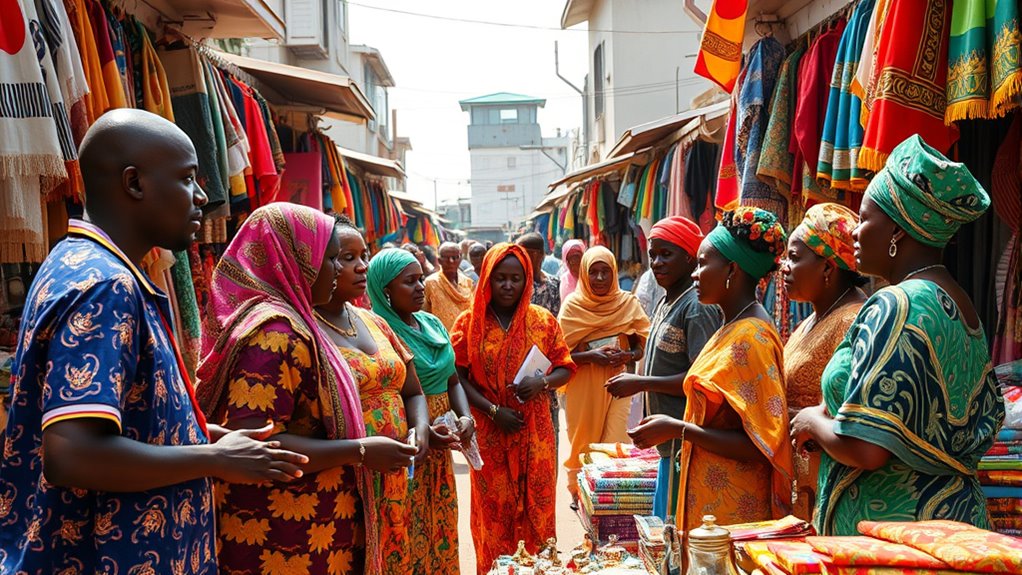
Why is French to Yoruba translation essential in Africa? This process bridges communication gaps in a continent marked by linguistic diversity, particularly in West Africa where French is an official language in several nations and Yoruba is widely spoken in Nigeria, Benin, and Togo. It enables effective trade and economic partnerships, allowing businesses to navigate cross-border transactions without language barriers. In education, it facilitates access to French resources for Yoruba speakers, enhancing learning opportunities and knowledge sharing. Culturally, translation fosters mutual understanding, preserving and promoting Yoruba heritage while engaging with Francophone traditions. Socially, it supports diplomacy and community interactions, reducing misunderstandings in multicultural settings. Ultimately, this translation empowers inclusivity, driving social cohesion and development across Africa’s multilingual landscape.
Historical Background of French and Yoruba Languages

The origins of French trace back to the Latin spoken in Gaul during the Roman Empire, evolving through various historical influences in Europe. Yoruba, in contrast, developed as a Niger-Congo language among communities in West Africa, shaped by cultural and migratory patterns over centuries. Understanding these backgrounds provides essential context for exploring French to Yoruba translation in Africa.
French Origins
French evolved from Vulgar Latin in the Roman province of Gaul around the 3rd century AD, influenced by local Celtic languages and later Germanic invasions. This fusion created a distinct Romance language, evolving into Old French by the 9th century under the Frankish Empire. The language absorbed elements from Frankish dialects, enriching its vocabulary and phonetics. During the Middle Ages, the Capetian dynasty standardized French as a literary and administrative tool, especially through texts like the Chanson de Roland. By the 14th century, Middle French emerged, incorporating influences from the Renaissance and expanding trade. Standardization efforts peaked in the 17th century with the Académie Française, shaping modern French. This historical trajectory highlights French’s adaptability, making it a global language today, rooted in its Gallo-Roman heritage.
Yoruba Evolution
Yoruba, a Niger-Congo language, emerged in the forested regions of West Africa, particularly among the Yoruba ethnic groups in modern-day Nigeria. Its evolution traces back to ancient kingdoms like Ife and Oyo, shaped by trade, migrations, and cultural interactions. French, originating from Latin in medieval Gaul, spread through conquests and colonialism, eventually influencing African contexts. This historical divergence highlights language dynamics in translation.
- Ancient Roots: Yoruba’s development from proto-Niger-Congo dialects around 1000 BCE reflects early societal structures in West Africa.
- Cultural Exchanges: Trade routes facilitated Yoruba’s absorption of Arabic and other influences, enriching its vocabulary.
- Colonial Impacts: French expansion in the 19th century led to bilingualism in regions like Benin, intersecting with Yoruba speakers.
- Modern Adaptations: Both languages evolved through globalization, with Yoruba gaining literary forms and French incorporating African elements for translation purposes.
Key Steps for Effective French to Yoruba Translation

Translating between French and Yoruba demands a structured approach to guarantee accuracy and cultural sensitivity. Effective translation begins with thorough research into linguistic nuances, including grammar, vocabulary, and idiomatic expressions unique to each language. Next, translators should break down text into manageable segments, guaranteeing literal accuracy before adapting for cultural context. Collaboration with native speakers enhances authenticity, while using specialized tools aids precision. Finally, rigorous review guarantees the final output maintains fidelity.
| Step | Description |
|---|---|
| 1. Research | Analyze language structures and cultural elements. |
| 2. Segmentation | Divide text for accurate initial translation. |
| 3. Adaptation | Adjust for cultural relevance and idioms. |
| 4. Collaboration | Consult native experts for verification. |
| 5. Review | Proofread and refine for quality assurance. |
Common Challenges in Translating Between French and Yoruba
In the process of bridging diverse languages, translators often encounter significant hurdles when adapting French to Yoruba, stemming from structural differences such as tonal variations in Yoruba and complex grammar in French. This mismatch can distort intended meanings, making accurate translation a delicate task that demands deep linguistic insight.
- Tonal nuances: Yoruba’s reliance on tone to change word meanings poses challenges, as French does not use tone, leading to potential misinterpretations.
- Grammatical disparities: French’s intricate verb conjugations and gender agreements contrast with Yoruba’s simpler structures, complicating sentence construction.
- Idiomatic expressions: Cultural idioms in French often lack direct equivalents in Yoruba, resulting in loss of nuance or unintended humor.
- Vocabulary limitations: The absence of precise word-for-word matches requires translators to navigate semantic gaps, risking altered contexts.
Essential Tools and Resources for Translation
Essential tools and resources form the backbone of effective French to Yoruba translation, enabling professionals to navigate linguistic complexities with greater accuracy. Bilingual dictionaries, such as those offered by platforms like Glosbe or specialized Yoruba-French databases, provide quick access to vocabulary nuances. Translation software, including CAT tools like MemoQ or SDL Trados, streamlines processes by suggesting contextually appropriate terms and managing large texts. Online resources, such as the Yoruba Language Institute’s digital archives, offer grammar references and phrase banks for precise rendering. Mobile apps like Duolingo’s language pairs enhance real-time practice, while collaborative platforms foster peer reviews to refine outputs. These aids guarantee efficiency, reducing errors in syntax and terminology, ultimately elevating translation quality in professional settings.
Cultural Aspects of French and Yoruba Communication
Cultural nuances profoundly shape communication between French and Yoruba speakers, influencing how messages are conveyed and interpreted. In French culture, directness and formality often prevail, as seen in structured conversations and emphasis on etiquette, while Yoruba communication favors indirectness, rich proverbs, and communal storytelling to maintain harmony and respect. These differences can lead to misunderstandings in cross-cultural exchanges, highlighting the need for sensitivity to avoid offense.
- Greetings and Respect: French speakers use formal titles and handshakes, whereas Yoruba greetings involve prostrations or deep bows, signaling hierarchy and age deference.
- Non-Verbal Cues: French communication relies on eye contact and facial expressions for emphasis, contrasting with Yoruba’s subtle gestures and body language to convey respect or disagreement indirectly.
- Language of Emotion: French discourse often expresses emotions openly, while Yoruba speakers may use metaphors to soften emotional content, preserving social bonds.
- Contextual Interpretation: Yoruba conversations are context-heavy, drawing from oral traditions, unlike the linear, logic-driven French style that prioritizes clarity and efficiency.
Applications of Translation in African Communities
Translation from French to Yoruba plays key roles in African communities, encompassing educational uses that facilitate learning and knowledge sharing. Business communication tools enable smoother interactions in trade and professional contexts. Cultural preservation efforts leverage these translations to maintain and revitalize traditions amidst linguistic diversity.
Educational Translation Uses
In African communities, French to Yoruba translation facilitates access to educational resources, enabling students to engage with curricula in their native languages. This process enhances learning outcomes by making complex concepts more relatable and culturally relevant, while fostering inclusivity in multilingual environments. By translating textbooks, lectures, and digital content, it empowers learners to overcome language barriers and build stronger academic foundations.
- Improves comprehension: Students grasp scientific and historical topics faster when translated into Yoruba, boosting engagement.
- Supports cultural integration: It incorporates Yoruba folklore and traditions into French-based education, preserving heritage.
- Enables digital access: Online platforms use translations for e-learning, expanding reach in remote areas.
- Aids teacher development: Educators receive training materials in Yoruba, enhancing their ability to instruct effectively.
Business Communication Tools
Business communication tools in African communities harness French to Yoruba translation to streamline trade and negotiations, overcoming language barriers for more effective interactions. These tools, such as digital apps and software platforms, enable seamless exchanges between French-speaking traders in regions like West Africa and Yoruba-speaking partners in Nigeria. For instance, real-time translation features in apps like Google Translate or specialized business software facilitate contract discussions, market expansions, and supply chain management. This integration reduces misunderstandings, accelerates deal-making, and fosters cross-border partnerships, ultimately boosting economic growth. In markets where linguistic diversity poses challenges, such as in Benin or Ivory Coast, accurate translations enhance email correspondence, video conferences, and document sharing. By prioritizing efficiency, these tools empower entrepreneurs to navigate multilingual environments, promoting fairer and more productive business outcomes without delving into broader societal impacts.
Cultural Preservation Efforts
Cultural heritage in African communities flourishes through French to Yoruba translations, safeguarding traditions and languages amid evolving societies. These efforts enable the documentation of oral histories, folklore, and rituals, fostering intergenerational knowledge transfer. By adapting cultural narratives into accessible formats, translations combat language erosion and promote inclusivity in a globalized world.
- Preserves oral traditions: Translating Yoruba stories and proverbs from French sources maintains cultural authenticity for future generations.
- Supports educational initiatives: Schools use translated materials to teach history, enhancing youth engagement with heritage.
- Facilitates community archiving: Digital platforms store translated texts, protecting endangered customs from extinction.
- Encourages cultural exchanges: Events and collaborations leverage translations to share Yoruba practices internationally, boosting global appreciation.
Professional Services for French to Yoruba Translation
Professional services for French to Yoruba translation have emerged as essential resources in Africa, catering to the needs of businesses, governments, and individuals requiring accurate linguistic expertise. These services are primarily offered by specialized agencies and freelance experts, leveraging local knowledge and advanced tools to bridge language gaps. In West Africa, where French colonial legacies intersect with Yoruba-speaking communities, such translations facilitate international trade, legal documentation, and diplomatic communications. For instance, businesses expanding into Nigeria or Benin rely on these services to navigate contracts and marketing materials effectively. Governments utilize them for policy implementation and public services, ensuring inclusivity. Meanwhile, individuals access them for personal needs like immigration paperwork or cultural projects. This growing sector enhances cross-cultural interactions, fostering economic and social development across the continent, with demand rising in urban centers.
Best Practices for Accurate and Reliable Translation
Achieving accurate and reliable translations from French to Yoruba demands adherence to proven best practices, which emphasize linguistic precision, cultural sensitivity, and rigorous quality checks. Translators should prioritize deep understanding of both languages to avoid misinterpretations, while adapting content to reflect African cultural nuances specific to Yoruba speakers. This approach enhances communication and fosters trust in translated materials.
- Master bilingual proficiency: Make sure translators are fluent in French and Yoruba, including dialects, to handle idiomatic expressions accurately.
- Incorporate cultural adaptation: Research and integrate Yoruba customs, proverbs, and social contexts to make translations culturally resonant.
- Utilize professional tools: Leverage translation software and glossaries for consistency, while cross-verifying with reference materials.
- Enforce quality assurance: Conduct peer reviews, proofreading, and client feedback loops to identify and correct errors before finalization.
Frequently Asked Questions
How Much Does French to Yoruba Translation Cost?
The cost of French to Yoruba translation services varies based on factors like word count, complexity, and provider expertise. Rates typically range from $0.05 to $0.20 per word, with additional charges for rush jobs or specialized terminology. Clients should seek quotes from professionals for accuracy.
Where Can I Find Certified Yoruba Translators?
Certified Yoruba translators can be located through professional associations, online platforms like ProZ or Upwork, certified language agencies, and university language departments specializing in African studies. Verification guarantees quality and expertise in Yoruba translation services.
Are There Free Apps for Instant Translations?
The inquiry concerns the availability of free apps for instant translations. Indeed, several options like Google Translate exist, offering real-time language conversion across numerous languages, accessible on mobile devices without any cost. Users can download these for quick use.
What Qualifications Do Translators Need?
Translators require qualifications such as proficiency in two or more languages, a university degree in translation or related fields, and professional certifications. Experience in specific subjects and cultural sensitivity are essential for accurate and effective translations.
How Long Does a Translation Project Take?
The duration of a translation project varies based on factors like text length, complexity, and resources available. It typically ranges from a few hours for simple tasks to several weeks for extensive documents, ensuring quality and accuracy.