
 Elizabeth123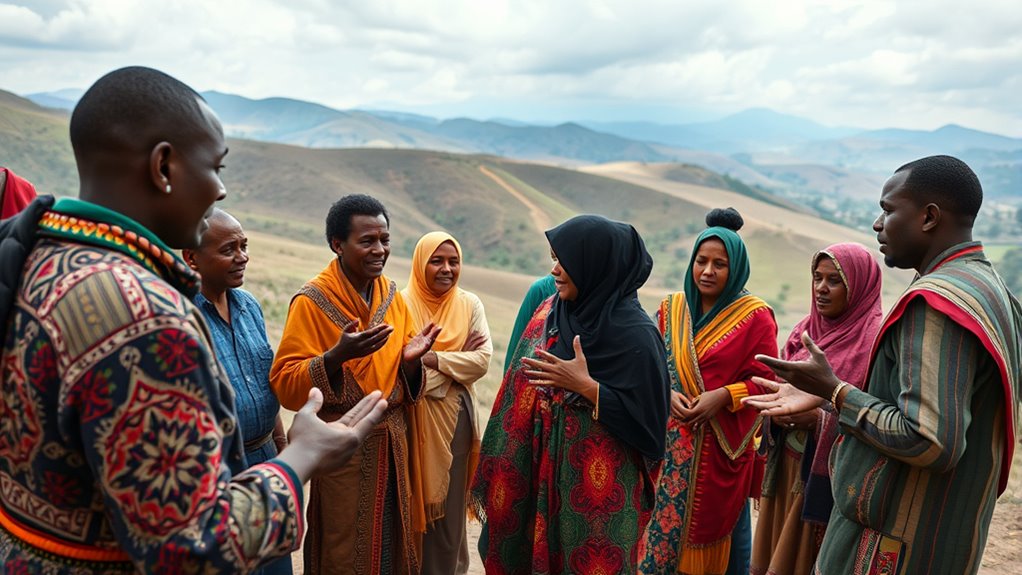
English to Oromo translation in Ethiopia bridges communication gaps and preserves cultural heritage among over 40 million speakers. It supports business, education, and diplomacy by adapting English’s structure to Oromo’s agglutinative features, addressing idiomatic challenges through professional services like Translation Africa. These efforts enhance economic opportunities and cultural exchange while tackling vocabulary discrepancies. Deeper insights into applications await in subsequent sections.
Quick Summaries
- English to Oromo translation services in Ethiopia bridge communication gaps for business, education, and culture.
- Professional translators in Ethiopia use cultural sensitivity to handle Oromo’s unique grammar and idioms.
- Translation resources like SDL Trados and bilingual dictionaries aid accurate English to Oromo conversions in Africa.
- It supports economic opportunities by localizing products and documents for Oromo-speaking markets in Ethiopia.
- Educational programs in Ethiopia integrate English to Oromo translation to enhance student engagement and literacy.
Overview of the Oromo Language
The Oromo language, a member of the Cushitic branch of the Afro-Asiatic family, is primarily spoken by over 40 million people in Ethiopia and parts of Kenya, Somalia, and other East African regions. It serves as an essential cultural and ethnic identifier for the Oromo people, who form the largest ethnic group in Ethiopia. The language features an agglutinative structure, where words are formed by stringing together morphemes, allowing for complex expressions in daily communication. Oromo includes several dialects, such as Borana, Macca, and Wallo, which vary by region but share core grammatical elements. Written in the Latin alphabet since the 1970s, it has gained prominence in literature, education, and media. Efforts to standardize Oromo have enhanced its role in preserving oral traditions and fostering community identity, reflecting its rich historical evolution amid East Africa’s linguistic diversity. Despite challenges from dominant languages, Oromo continues to thrive as a dynamic means of expression.
Importance of English to Oromo Translation

The importance of English to Oromo translation serves as an essential communication bridge between diverse linguistic communities. It plays a key role in cultural preservation by enabling the sharing and documentation of Oromo heritage. Additionally, this translation fosters economic opportunities through enhanced access to global markets and resources.
Communication Bridge
In an increasingly interconnected world, English to Oromo translation serves as a vital bridge for overcoming language barriers. This process enables effective communication across diverse platforms, such as international business negotiations, where accurate exchanges foster partnerships and economic growth. In education, it provides access to global resources, allowing Oromo-speaking students to engage with English-dominant curricula and research materials. Similarly, in diplomacy and media, translation facilitates precise information sharing, reducing misunderstandings and promoting collaboration. For professionals in fields like technology and science, it facilitates knowledge transfer, enabling participation in global discussions. By streamlining interactions, English to Oromo translation enhances efficiency and inclusivity, supporting Ethiopia’s integration into worldwide networks and empowering individuals to navigate complex, multilingual environments. Ultimately, it drives progress by connecting communities and amplifying voices in a shared global dialogue.
Cultural Preservation
English to Oromo translation greatly supports cultural preservation by safeguarding Oromo heritage amid globalization. This process guarantees that traditional stories, folklore, and oral histories are accurately documented and shared, preventing their erosion in a rapidly changing world. By translating Oromo texts into English, communities can archive indigenous knowledge, making it accessible for educational purposes without diluting cultural essence. This fosters intergenerational transmission, allowing younger generations to engage with their roots through bilingual resources. Moreover, it empowers Oromo speakers to participate in international dialogues, promoting mutual respect and understanding of diverse traditions. Ultimately, such translation efforts maintain the vigor of Oromo identity, countering assimilation pressures and enriching global cultural diversity. (124 words)
Economic Opportunities
While promoting cultural preservation, English to Oromo translation generates economic opportunities by enabling access to global markets and employment in translation services. Businesses in Ethiopia can localize products for international consumers, boosting exports and e-commerce. For instance, agricultural exporters use translations to negotiate deals with foreign buyers, enhancing trade revenues. This service also creates jobs for linguists, interpreters, and content creators, fostering a skilled workforce. Furthermore, it supports tourism by translating promotional materials, attracting more visitors and stimulating local economies. Educational institutions benefit through translated resources, preparing students for global careers. Overall, these efforts drive economic growth, reduce unemployment, and integrate Ethiopia into the global economy, promoting sustainable development.
Professional Translation Services in Ethiopia

Professional translation services in Ethiopia facilitate accurate communication across languages, particularly for English to Oromo conversions, by employing certified linguists and advanced tools to guarantee precision and cultural sensitivity. These services operate through specialized agencies and freelance experts, often adhering to international standards like ISO certifications. In Ethiopia’s diverse linguistic landscape, providers focus on rigorous quality control, including proofreading and editing processes. They utilize technology such as computer-assisted translation software to handle complex texts efficiently. Demand spans sectors like business, education, and government, where accurate renditions maintain original intent. Ethiopian translators receive training in both language nuances and cultural contexts, ensuring adaptations that respect local customs without altering meaning. This structured approach supports reliable cross-cultural exchanges in a professional setting.
Benefits of Accurate Language Translation
Accurate language translation enhances communication by preserving original intent and cultural nuances, enabling seamless interactions across diverse linguistic communities. In the context of English to Oromo translation, this accuracy fosters global connectivity by bridging gaps in Ethiopia’s multilingual landscape. It supports effective knowledge sharing, where ideas flow without distortion, and empowers individuals and organizations to engage meaningfully. The benefits extend to various sectors, as outlined below:
- Facilitates business expansion: Enables companies to access new markets in Ethiopia, boosting trade and economic growth.
- Improves educational access: Allows Oromo speakers to engage with English resources, enhancing learning opportunities.
- Promotes cultural exchange: Preserves traditions and fosters mutual understanding between English and Oromo communities.
- Ensures effective healthcare and services: Delivers precise information in critical areas, improving outcomes for diverse populations.
Challenges in Translating English to Oromo
Translating English to Oromo involves significant linguistic and cultural hurdles that can distort meaning and impede accuracy. Structurally, English follows a subject-verb-object order, while Oromo typically uses subject-object-verb, which can disrupt sentence flow and require restructuring. Oromo’s agglutinative grammar, with its extensive use of suffixes and prefixes, complicates the translation of English verbs and nouns, often leading to overly complex or inaccurate renditions. Vocabulary discrepancies pose another challenge; many English terms, especially in technical fields, lack direct Oromo equivalents, forcing translators to create new words or use approximations that may alter intent. Idiomatic phrases in English, such as phrasal verbs or metaphors, rarely align with Oromo expressions, increasing the risk of miscommunication. Phonetic differences, including Oromo’s unique consonants and tones, further hinder precise oral translations. These linguistic barriers demand specialized skills to preserve original meanings, yet inconsistencies often persist due to the languages’ inherent disparities. (124 words)
Cultural Aspects of Oromo Translation
Cultural aspects profoundly influence English-to-Oromo translation, as they encompass traditions, values, and social norms that often lack direct equivalents in English. Translators must navigate the Oromo people’s rich oral heritage, where concepts like “gadaa” (a democratic system) require nuanced adaptation to convey deeper meanings without distortion. This maintains cultural integrity while bridging linguistic gaps.
- Idiomatic Expressions: Oromo idioms, rooted in pastoral life, may not translate literally, demanding contextual equivalents to preserve humor or wisdom.
- Social Hierarchies: Terms related to age, gender, or clan structures influence word choices, avoiding offense in hierarchical contexts.
- Rituals and Festivals: Descriptions of ceremonies, such as Irreecha, need cultural sensitivity to capture spiritual essence accurately.
- Proverbial Wisdom: Oromo proverbs often embed moral lessons, requiring translators to select English parallels that maintain their instructive value.
In essence, effective translation respects these elements to foster cross-cultural understanding.
Tools and Resources for Translation Work
Translators undertaking English-to-Oromo work depend on specialized tools and resources to enhance accuracy and efficiency. Computer-assisted translation (CAT) software, such as SDL Trados or MemoQ, helps manage terminology and streamline workflows. Bilingual dictionaries and online glossaries provide precise vocabulary, while grammar references guarantee syntactic accuracy in Oromo’s unique structure. Digital platforms like Ethnologue offer language data and phonetic guides, aiding pronunciation and contextual understanding. Mobile apps and AI tools, including Google Translate adaptations, support initial drafts but require human refinement for idiomatic fidelity. Professional networks and forums enable collaboration, allowing translators to share best practices and verify translations. Training modules and certification courses build expertise, fostering reliable results in this specialized field. Overall, these resources minimize errors and promote high-quality outcomes.
Business Uses of Translation in Ethiopia
In Ethiopia’s dynamic business landscape, translation facilitates essential communication for multinational trade, contract negotiations, and market expansion. It serves as a crucial tool for Ethiopian companies traversing global markets, where accurate English to Oromo translation guarantees seamless interactions and reduces risks in cross-cultural dealings. By overcoming language barriers, businesses can enhance operational efficiency and foster trust in international relations.
- Facilitating multinational trade through precise translation of import/export documents, minimizing misunderstandings and legal issues.
- Aiding contract negotiations by providing accurate renditions of terms, guaranteeing enforceable agreements in diverse linguistic contexts.
- Supporting market expansion with localized marketing content, allowing products to resonate with Oromo-speaking consumers.
- Enhancing business partnerships via real-time interpretation services, promoting effective collaboration in meetings and alliances.
This strategic application of translation drives economic growth in Ethiopia’s competitive environment. (124 words)
Educational Applications of Oromo Language
Oromo language plays a key role in education, particularly in Ethiopia’s schools, where it supports bilingual programs and curriculum adaptation to improve student engagement and cultural relevance. In these environments, Oromo enhances literacy and cognitive development by integrating indigenous knowledge into lessons, allowing students to connect deeply with content. It also aids in teacher training, ensuring educators deliver culturally sensitive instruction. This approach boosts overall academic performance.
| Educational Aspect | Key Benefits |
|---|---|
| Bilingual Programs | Improved language skills |
| Curriculum Adaptation | Enhanced cultural identity |
| Teacher Training | Better instructional quality |
| Student Literacy Outcomes | Higher retention and success |
Historical Context of Translation in Africa
The historical context of translation in Africa reveals a rich tapestry of linguistic exchange that predates colonial eras. Early African societies facilitated translation through oral traditions and trade networks, enabling communication across diverse ethnic groups. For instance, ancient empires like Axum employed translation for diplomatic and religious purposes, while the Swahili coast saw linguistic blending via Indian Ocean commerce. This evolution highlights translation’s role in cultural preservation and adaptation.
- Pre-colonial exchanges: Oral storytelling and trade routes fostered multilingual interactions, such as in the Kingdom of Mali.
- Colonial influences: European powers imposed language policies, leading to translations of administrative and biblical texts in local tongues.
- Post-colonial resurgence: Independence movements spurred efforts to translate indigenous languages, including Oromo, for education and identity.
- Modern digital shifts: Contemporary platforms enhance historical translation practices, promoting African linguistic heritage.
Tips for High-Quality Translations
Achieving high-quality translations demands a focus on accuracy, cultural nuance, and linguistic fidelity. Translators must thoroughly understand the source text’s intent while adapting it to Oromo’s unique grammatical structures and idioms. Cultural sensitivity is vital; for instance, incorporating Oromo customs and proverbs guarantees the translation resonates authentically with speakers. Employing native Oromo speakers with expertise in English enhances fidelity, preventing literal errors that could distort meaning. Regular collaboration with subject-matter experts helps verify terminology in fields like law or medicine. Proofreading and iterative revisions are essential to eliminate ambiguities, maintaining clarity and precision. Tools like glossaries aid consistency, but human judgment remains paramount. Ultimately, prioritizing these elements fosters translations that bridge languages effectively without compromising integrity.
Real-World Examples of Translation Projects
Numerous translation projects demonstrate the practical application of English to Oromo conversions in diverse fields. These initiatives bridge communication gaps, fostering understanding in various sectors. For instance, projects often involve adapting educational materials, medical documents, and business communications to reach wider audiences in Ethiopia.
- Education Sector: Translating textbooks and online courses to support Oromo-speaking students in rural schools.
- Healthcare Initiatives: Converting health guidelines and patient information for better access in clinics serving Oromo communities.
- Legal Documents: Rendering contracts and policies to guarantee fair representation in courts and government offices.
- Cultural Preservation: Adapting literature and media to maintain Oromo heritage while incorporating global knowledge.
Such efforts enhance accessibility and promote inclusivity across Ethiopia’s multilingual landscape.
Role of Translation Africa in Ethiopia
Translation Africa plays a significant role in Ethiopia by offering essential translation services that connect English and Oromo languages. It acts as a cultural bridge, fostering mutual understanding among diverse ethnic groups. Moreover, its contributions enhance economic growth through improved communication in business and education sectors.
Translation Services
In Ethiopia, Translation Africa emerges as a key player in facilitating language services, particularly for English to Oromo conversions, by addressing communication gaps in diverse sectors such as education, business, and government. The company offers specialized translation services that guarantee accuracy and efficiency, leveraging skilled linguists and advanced technology to meet client needs. These services extend beyond basic conversions, providing tailored solutions for documents, websites, and communications.
- Professional Expertise: Employs certified translators proficient in English and Oromo for precise linguistic adaptations.
- Sector-Specific Solutions: Customizes services for educational materials, business contracts, and governmental reports.
- Quality Assurance: Implements rigorous editing and proofreading processes to maintain high standards.
- Efficient Delivery: Utilizes digital tools for fast turnaround times without compromising accuracy.
Cultural Bridge
Beyond its services in English to Oromo conversions, Translation Africa acts as a cultural bridge in Ethiopia, fostering mutual understanding and exchange between diverse communities through precise linguistic adaptations that preserve cultural nuances. By translating texts such as folklore, educational resources, and media content, the organization guarantees that Oromo heritage remains intact while making it accessible to English speakers. This process promotes empathy and respect among Ethiopia’s ethnic groups, mitigating potential misunderstandings in social and diplomatic interactions. Moreover, Translation Africa’s efforts in workshops and collaborations with local linguists enhance cultural dialogue, allowing traditions to thrive in a globalized world. Ultimately, it strengthens social cohesion by highlighting shared values and histories, encouraging a more inclusive national identity.
Economic Contributions
Innovation in language services drives Translation Africa‘s economic impact in Ethiopia, where its translations enable smoother international trade and business operations. By facilitating cross-border communication, the company enhances market access for local enterprises, contributing to job creation and sustainable growth in the service sector.
- Facilitates international trade: Accurate English-to-Oromo translations streamline export agreements, reducing misunderstandings and boosting Ethiopia’s export volumes.
- Supports business expansion: Companies gain tools for global negotiations, enabling partnerships that drive foreign direct investment.
- Enhances market accessibility: Localization services help businesses reach Oromo-speaking consumers, increasing sales and economic diversification.
- Boosts service sector GDP: Translation Africa’s operations create employment opportunities and contribute to Ethiopia’s overall economic resilience through specialized language expertise.
Emerging Trends in Language Services
The language services industry is witnessing transformative trends driven by technological advancements. Artificial intelligence and machine learning are revolutionizing translation processes, delivering faster and more precise results. Neural machine translation systems, for example, are improving accuracy in English to Oromo conversions in Ethiopia, minimizing errors through advanced algorithms. The proliferation of mobile apps and online platforms is democratizing access, enabling seamless language services for businesses and individuals. Cloud-based tools facilitate real-time collaboration and tailored solutions, addressing the rising demand in Africa’s multilingual environments. Integration with big data analytics enhances pattern recognition, boosting efficiency and adaptability. Ethical issues, including data security and bias mitigation, are increasingly prioritized. These developments are fostering innovation, making language services more reliable and inclusive overall.
Comparisons Between Oromo and Other Languages
Oromo, a Cushitic language spoken primarily in Ethiopia, exhibits distinct phonological, grammatical, and lexical features when compared to languages like Amharic or English. These differences stem from Oromo‘s Afro-Asiatic affiliation, contrasting with Amharic’s Semitic structure and English’s Indo-European patterns. For example, Oromo employs agglutinative morphology for word building, while English relies on analytic methods, and Amharic uses complex verb conjugations.
- Phonology: Oromo includes ejective consonants and vowel harmony, features largely absent in English and less prominent in Amharic.
- Grammar: It features a subject-object-verb order, differing from English’s subject-verb-object and Amharic’s variable structures.
- Lexicon: Oromo vocabulary draws from Cushitic roots with loanwords from Arabic, unlike English’s Germanic and Latin influences or Amharic’s Geez heritage.
- Syntax: Oromo allows flexible word order for emphasis, in contrast to the more rigid rules in English and Amharic.
Frequently Asked Questions
How Much Does English to Oromo Translation Cost?
The cost of English to Oromo translation varies based on factors like word count, complexity, and provider expertise. Rates typically range from $0.05 to $0.20 per word. For accurate pricing, individuals should seek quotes from certified translation services.
What Is the Typical Turnaround Time for Projects?
The typical turnaround time for projects varies based on factors like complexity and size. Generally, simple tasks may be completed in 2-3 days, while larger endeavors could take up to two weeks or more. Efficiency and resources play key roles in timelines. Professionals prioritize timely delivery.
Do You Offer Certified Translators for Legal Documents?
The current question inquires about the availability of certified translators for legal documents. Certified translators are indeed offered, specializing in legal contexts to guarantee accuracy, compliance, and professional standards in translations.
How Can I Request a Free Translation Quote?
One can request a free translation quote by visiting the company’s website and completing the online form, or by emailing or calling their support team for assistance. This process guarantees quick responses and tailored options for potential clients.
What Payment Methods Are Accepted for Services?
The question pertains to payment methods accepted for services. Typically, these include major credit cards like Visa and MasterCard, bank transfers, and digital platforms such as PayPal. Providers may also accept wire transfers or online wallets, with specifics varying by company. Verification is advised.

