
 Elizabeth123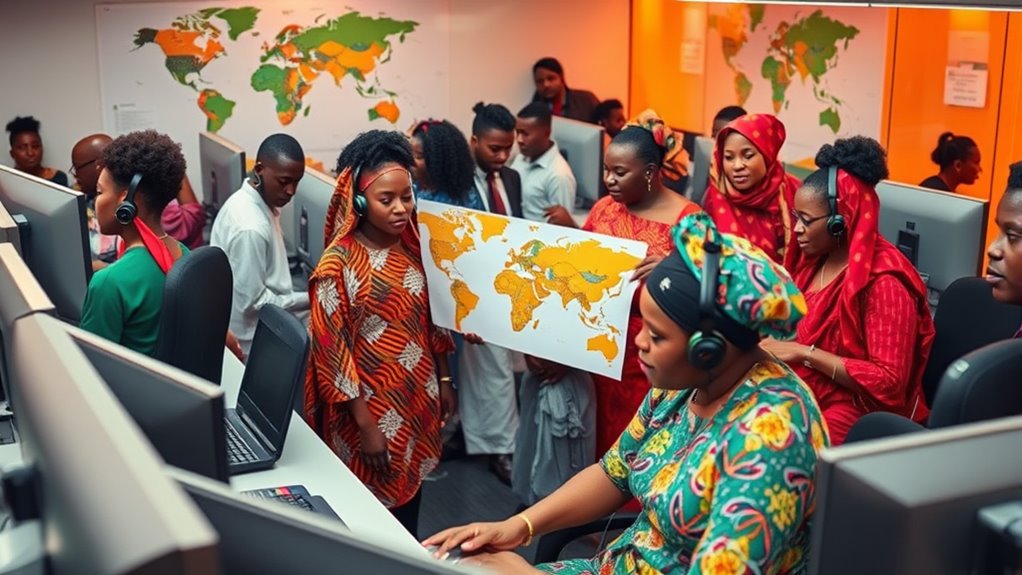
In Nigeria’s linguistically diverse society, multilingual customer support enhances communication and trust across ethnic groups. Key languages like Hausa, Yoruba, Igbo, and English bridge barriers, improving access to services and fostering economic growth. Professional translation tools, such as AI-driven apps, address cultural nuances and boost satisfaction. Further strategies and partnerships await in the details that follow.
Quick Summaries
- Multilingual support in Nigeria improves customer satisfaction by addressing key languages like Hausa, Yoruba, and Igbo.
- AI-driven translation tools enable real-time language conversion for efficient customer interactions in Africa’s diverse regions.
- Training programs build proficiency in Nigerian languages and cultural nuances to enhance support accuracy.
- Strategies include integrating offline translation apps for accessibility in remote areas with poor internet.
- Cultural considerations, like respectful greetings and active listening, ensure empathetic and effective customer service.
The Importance of Multilingual Support in Nigeria

Multilingual support plays a crucial role in Nigeria, where over 500 languages reflect the nation’s rich ethnic diversity and facilitate effective communication across communities. In this situation, it fosters national unity by bridging divides in a multi-ethnic society, promoting social cohesion and reducing misunderstandings. Economically, it enhances access to markets, education, and healthcare, enabling broader participation and empowerment. For instance, in governance and public services, multilingual approaches guarantee inclusive policies that address diverse needs, preventing marginalization. This support also aids cultural preservation, allowing traditions and knowledge to thrive amid globalization. Ultimately, by prioritizing multilingualism, Nigeria strengthens its internal stability and global interactions, underscoring its significance in Africa’s development landscape.
Key Languages for Effective Customer Interactions

In Nigeria’s diverse linguistic landscape, identifying key languages is essential for businesses to foster effective customer interactions, particularly in sectors like retail, finance, and telecommunications. English serves as the primary language for official communications, enabling broad accessibility across regions. However, Hausa, spoken by millions in the north, Yoruba in the southwest, and Igbo in the southeast, are essential for engaging local customers and building trust. Pidgin English also plays an essential role as a lingua franca, bridging communication gaps in urban areas. Additionally, minority languages such as Fulfulde and Kanuri in the north, and Edo or Ibibio in the south, should not be overlooked for targeted outreach. By prioritizing these languages, companies can enhance comprehension and satisfaction, tailoring interactions to Nigeria’s multilingual reality while avoiding cultural misunderstandings. This strategic focus guarantees messages resonate clearly with diverse audiences.
Benefits of Professional Translation Services

Professional translation services offer substantial advantages in Nigeria’s multilingual context, ensuring accurate and culturally sensitive communication that enhances business operations and customer engagement. These services facilitate seamless interactions across diverse linguistic groups, such as Hausa, Yoruba, and Igbo speakers, boosting customer satisfaction and loyalty. By employing expert translators, businesses avoid costly errors in marketing materials and support queries, leading to increased sales and market expansion. Additionally, they enable efficient handling of inquiries in local dialects, fostering trust and inclusivity. In Africa’s dynamic economy, such services streamline global partnerships, allowing companies to navigate regional nuances effectively. Ultimately, investing in professional translation optimizes resource allocation and drives sustainable growth in competitive sectors like e-commerce and telecommunications.
Challenges in Cross-Cultural Communication
Cross-cultural communication in Nigeria’s diverse linguistic landscape poses notable obstacles, particularly in business and social interactions. With over 500 languages spoken, misunderstandings often stem from linguistic diversity and varying cultural contexts, leading to inefficiencies and strained relationships. This complexity can exacerbate issues in customer support and professional settings, where subtle nuances are easily overlooked.
- Language barriers: Inaccurate translations can distort messages, causing confusion in multilingual exchanges.
- Cultural misinterpretations: Differences in idioms and customs may lead to unintended offense or misaligned expectations.
- Non-verbal discrepancies: Gestures and body language vary by region, potentially signaling disrespect unintentionally.
- Regional dialect variations: Pronunciations and slang differences hinder comprehension across ethnic groups.
Strategies for Implementing Language Solutions
Effective strategies for implementing language solutions in Nigeria and Africa focus on bridging linguistic divides to enhance communication. Key approaches include integrating advanced translation technologies, such as AI-driven tools, to provide real-time language conversion for customer interactions. Training programs for support staff emphasize cultural sensitivity and multilingual proficiency, ensuring accurate conveyance of information across diverse dialects. Collaboration with local linguists helps develop tailored glossaries and resources, fostering inclusivity in business operations. Additionally, policy frameworks that promote standardized language protocols can streamline implementation, reducing errors and improving efficiency. Regular assessment of these strategies through feedback mechanisms allows for continuous refinement, ultimately strengthening cross-border relations and customer satisfaction in multilingual environments. This proactive stance addresses the continent’s linguistic diversity without relying on specific case studies.
Case Studies From African Translation Providers
This section examines case studies from African translation providers, focusing on their experiences in multilingual contexts. Success examples illustrate how these providers have addressed language challenges in Nigeria and across the continent. Such instances offer valuable insights into effective translation strategies and outcomes.
African Case Studies
African case studies from translation providers across the continent demonstrate the practical application of multilingual strategies in diverse linguistic environments, addressing challenges such as language diversity and cultural nuances in regions like Nigeria. These studies highlight how providers adapt to Africa’s linguistic mosaic, including over 2,000 languages, to enhance communication in sectors like healthcare and education. By examining real-world implementations, they reveal effective approaches to bridging language barriers and fostering inclusivity.
- Language adaptation techniques: Providers tailor translations to local dialects, ensuring accuracy in contexts like Nigerian Pidgin.
- Cultural sensitivity training: Case studies show integration of cultural knowledge to avoid misinterpretations in sensitive communications.
- Technology integration: Use of AI tools combined with human expertise to handle high-volume multilingual demands efficiently.
- Community engagement: Involving local speakers for feedback, improving translation quality and relevance in African settings.
Provider Success Examples
Several translation providers in Africa have demonstrated success through targeted case studies, showcasing innovative strategies that build on the continent’s linguistic diversity. For instance, a Nigerian firm enhanced customer support for a telecommunications giant by translating services into Hausa, Yoruba, and Igbo, resulting in a 40% increase in user engagement. In South Africa, another provider leveraged AI-driven tools to handle multilingual queries for e-commerce platforms, reducing response times by 50% while maintaining cultural accuracy. These examples highlight how Kenyan translators adapted content for East African markets, boosting cross-border trade. Overall, such successes underscore the value of localized expertise, fostering economic growth and improving global accessibility in sectors like healthcare and finance, where precise language adaptation is essential for effective communication.
Tools for Real-Time Language Conversion
Real-time language conversion tools are essential for overcoming linguistic barriers in Nigeria and broader African contexts, enabling instantaneous translation of speech and text through advanced technologies like mobile applications and AI algorithms. These tools enhance customer support by providing seamless communication across diverse languages such as Hausa, Yoruba, and Igbo, fostering efficiency in business interactions. By leveraging machine learning, they deliver accurate, context-aware translations that adapt to regional dialects, improving user experiences in real-time scenarios.
- Instantaneous Speech Translation: Apps like Google Translate convert spoken words instantly, aiding live conversations in multilingual settings.
- Text-Based AI Integration: Tools such as Microsoft Translator integrate with chat platforms for quick text conversion, ensuring smooth support exchanges.
- Offline Capabilities: Certain applications allow downloads for areas with poor internet, maintaining accessibility in remote Nigerian regions.
- Customizable Accuracy: AI algorithms learn from user feedback to refine translations, boosting reliability for African linguistic nuances.
Training Programs for Support Teams
The article now examines training programs for support teams in multilingual translation across Nigeria and Africa. Central to these programs are the development of a thorough training curriculum, innovative skill development techniques, and effective strategies for program implementation. These elements guarantee that support teams are equipped to handle diverse linguistic challenges in the region.
Training Curriculum
Developing training curricula for support teams is essential in advancing multilingual translation initiatives across Nigeria and Africa, where programs emphasize language mastery, cultural awareness, and technical proficiency to enhance service delivery. Effective curricula integrate structured learning modules tailored to regional linguistic diversity, ensuring teams are equipped to handle complex customer interactions. These programs focus on foundational knowledge while fostering adaptability in dynamic environments.
- Core Language Modules: Cover key Nigerian and African languages, including Hausa, Yoruba, and Igbo, with practical translation exercises.
- Cultural Integration Training: Incorporate regional customs and sensitivities to improve empathetic communication.
- Technical Tools Proficiency: Teach software for real-time translation, emphasizing accuracy and speed.
- Assessment and Feedback Mechanisms: Include regular evaluations to measure progress and refine skills for peak performance.
Skill Development Techniques
Skill development techniques for training programs equip support teams with practical methods to master multilingual translation, emphasizing interactive simulations and role-playing exercises tailored to Nigeria’s linguistic diversity. These approaches immerse participants in realistic scenarios, such as simulating customer inquiries in languages like Hausa, Yoruba, or Igbo, fostering quick adaptation and error reduction. Role-playing sessions encourage teams to navigate cultural nuances and idiomatic expressions, enhancing empathy and precision in responses. Additionally, interactive tools like language apps and group drills build vocabulary and grammar skills, ensuring teams handle complex queries effectively. By focusing on hands-on practice, these techniques boost confidence and accuracy, preparing support staff to deliver seamless multilingual service in Nigeria’s vibrant linguistic landscape. This targeted training ultimately elevates overall team performance without overlapping implementation details.
Program Implementation Strategies
Effective implementation of training programs for support teams in Nigeria focuses on structured strategies that integrate multilingual translation into daily operations. These programs emphasize practical approaches to enhance language skills, cultural awareness, and customer interaction efficiency. By prioritizing real-world application, organizations can guarantee teams handle diverse linguistic needs while maintaining high service standards.
- Conduct needs assessments: Identify language gaps and cultural nuances through surveys and team evaluations to tailor programs effectively.
- Develop interactive modules: Create multilingual training materials using role-playing and digital tools to simulate customer scenarios.
- Incorporate ongoing coaching: Assign mentors for regular feedback sessions to reinforce translation skills and adapt to evolving needs.
- Measure program outcomes: Use metrics like customer satisfaction scores and error rates to refine strategies and guarantee long-term success.
Enhancing User Satisfaction Through Translations
Enhancing user satisfaction in multilingual contexts, such as Nigeria and Africa, relies on precise translations that align with cultural nuances and user needs. Accurate translations bridge communication gaps, enabling customers to interact seamlessly with support services. For instance, in Nigeria’s diverse linguistic landscape, high-quality translations reduce misunderstandings, fostering trust and loyalty. Businesses leveraging advanced translation tools experience quicker query resolutions, as users receive responses in their preferred languages. This efficiency minimizes frustration and enhances overall experiences, leading to higher retention rates. Furthermore, tailored translations guarantee content accessibility, empowering users to engage confidently. Ultimately, prioritizing translation accuracy directly correlates with improved satisfaction metrics, as evidenced by positive feedback in multilingual markets like Africa. By focusing on user-centric approaches, organizations can optimize support interactions for better outcomes.
Cultural Considerations in Customer Service
In the context of multilingual translation in Nigeria and Africa, cultural considerations in customer service encompass cultural etiquette basics that shape effective interactions. These basics guarantee translations respect local norms and avoid misunderstandings. Regional customs insights further inform strategies to adapt services to specific African contexts.
Cultural Etiquette Basics
Cultural etiquette basics underpin respectful interactions in customer service, particularly in multicultural contexts like Nigeria and Africa, where diverse customs influence communication and expectations. These fundamentals promote harmony by emphasizing respect, politeness, and adaptability in daily exchanges. Understanding them helps avoid miscommunications and fosters trust in service environments.
- Prioritize respectful greetings: Begin interactions with warm, formal salutations to establish rapport and show courtesy.
- Maintain appropriate body language: Be mindful of gestures and eye contact to convey attentiveness without invading personal space.
- Use clear and polite language: Speak slowly, avoid jargon, and employ courteous phrases to guarantee comprehension and respect.
- Practice active listening: Focus on the customer’s words, respond thoughtfully, and confirm understanding to build positive relationships.
Incorporating these basics enhances overall service effectiveness.
Regional Customs Insights
Regional customs in Nigeria and Africa shape customer service practices by highlighting specific cultural nuances that influence interactions. In Nigeria, respect for hierarchy often requires addressing elders or superiors first, fostering patience and deference in service encounters. Across Africa, communal values emphasize group harmony, so customer service must incorporate family input and avoid confrontation. Time perceptions vary, with many regions prioritizing relationships over punctuality, necessitating flexible scheduling. Understanding these elements enhances trust and satisfaction.
| Region | Key Custom | Customer Service Implication |
|---|---|---|
| Northern Nigeria | Greeting elders first | Prioritize senior clients in queues |
| Southern Nigeria | Communal decision-making | Involve family members in discussions |
| East Africa | Flexible time attitudes | Allow for delays in appointments |
| West Africa | Emphasis on hospitality | Provide warm, personalized greetings |
| Central Africa | Indirect communication | Read non-verbal cues for true intent |
These insights guarantee culturally sensitive support, improving outcomes in multilingual settings. (124 words)
Growing Demand for Translation in African Markets
The burgeoning demand for translation services in African markets reflects the continent’s expanding economic opportunities and multilingual challenges. With over 2,000 languages spoken, businesses must navigate linguistic diversity to drive growth in trade and innovation. This trend is accelerating due to globalization, urbanization, and digital expansion, positioning translation as a key enabler for market access and efficiency.
- Economic Growth Drivers: Rapid GDP increases in nations like Nigeria and South Africa necessitate translated business documents for international partnerships.
- Trade and Investment Surge: Heightened foreign direct investment requires accurate localization of marketing materials to penetrate diverse markets.
- Digital Market Expansion: E-commerce platforms in Africa demand multilingual interfaces to serve a broader online audience effectively.
- Cultural and Educational Needs: Rising demand in education and media sectors calls for translation to promote knowledge sharing across linguistic divides.
Partnerships With Local Language Experts
Collaborations with local language experts bolster translation capabilities amid Africa’s linguistic diversity. These partnerships guarantee accurate, culturally nuanced interpretations in Nigeria and beyond, drawing on indigenous knowledge to bridge communication gaps in customer support. By engaging experts from various ethnic groups, companies enhance service quality and foster trust, making translations more effective and contextually appropriate.
Experts provide insights into dialects, idioms, and cultural subtleties, as illustrated below:
| Language Group | Key Benefits | Impact on Services |
|---|---|---|
| Hausa Speakers | Cultural accuracy | Improved customer satisfaction |
| Yoruba Specialists | Idiomatic precision | Faster resolution times |
| Igbo Language Pros | Regional adaptation | Higher engagement rates |
| Swahili Collaborators | Broad accessibility | Expanded market reach |
Such alliances drive reliable multilingual solutions across the continent.
Future Developments in Multilingual Services
As the landscape of multilingual services evolves, advancements in artificial intelligence and machine learning promise to enhance translation accuracy and accessibility across Africa. These innovations are poised to transform customer support in Nigeria by integrating real-time language processing and adaptive algorithms, fostering more inclusive communication in diverse linguistic environments. Experts anticipate broader adoption, with potential applications in e-commerce, healthcare, and education.
- AI-driven real-time translation: Enabling instant, accurate conversions for customer interactions, reducing wait times.
- Customized language models: Tailoring systems to African dialects, improving relevance and cultural accuracy.
- Integration with mobile tech: Allowing seamless use on smartphones for wider accessibility in remote areas.
- Ethical AI development: Focusing on data privacy and bias reduction to build trust in multilingual tools.
Frequently Asked Questions
How Much Do Translation Services Cost?
The cost of translation services varies based on factors like language pairs, document length, complexity, and urgency. Rates typically range from $0.05 to $0.25 per word, with specialized services costing more. Potential clients should request quotes for accurate estimates.
How Do I Sign up for Your Services?
The inquiry regarding signing up for services involves a straightforward process. Individuals must visit the official website, locate the registration page, enter necessary details such as contact information, and submit the form to complete enrollment.
What Payment Options Are Available?
The question regarding available payment options is addressed as follows: customers can choose from credit cards, debit cards, bank transfers, and digital wallets like PayPal or Apple Pay. This variety provides flexibility and convenience for transactions.
Do You Offer Free Trial Periods?
The inquiry regarding free trial periods is common among potential users. The service provider offers a 14-day free trial for select plans, allowing evaluation of features without commitment. This policy aids informed decisions and enhances user satisfaction.
How Can I Request a Custom Quote?
The current question addresses how an individual can request a custom quote effectively. To do this, one should visit the company’s website, complete the online form, or contact support via email or phone for assistance.

