
 Elizabeth123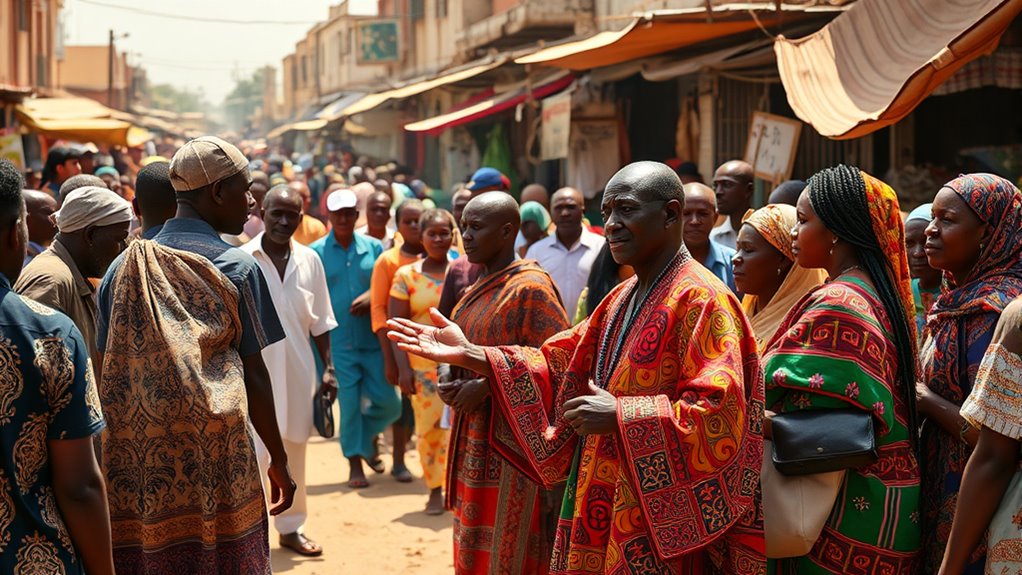
English to Wolof translation plays a vital role in Senegal, enabling communication for about 40% of the population who use Wolof as their primary language. It bridges global opportunities in education, business, and healthcare while addressing challenges like tonal elements, dialect variations, and cultural nuances in this Niger-Congo language. Essential phrases include “Nanga def?” for hello and “Jerejef” for thank you, enhancing daily interactions. A closer look at Wolof’s grammar and regional applications will uncover further insights into African linguistic practices.
Quick Summaries
- Wolof is the main language in Senegal, spoken by about 40% of the population and used as a lingua franca in urban areas.
- English to Wolof translation enhances access to global education, business, and healthcare for Senegalese communities.
- Wolof’s subject-verb-object structure and tonal elements require specialized techniques for accurate English translations.
- Challenges in African translations include dialect variations in Wolof and the need for cultural adaptations.
- Common phrases like “Nanga def?” for “Hello” help bridge communication in everyday Senegalese interactions.
Overview of Wolof Language in Senegal
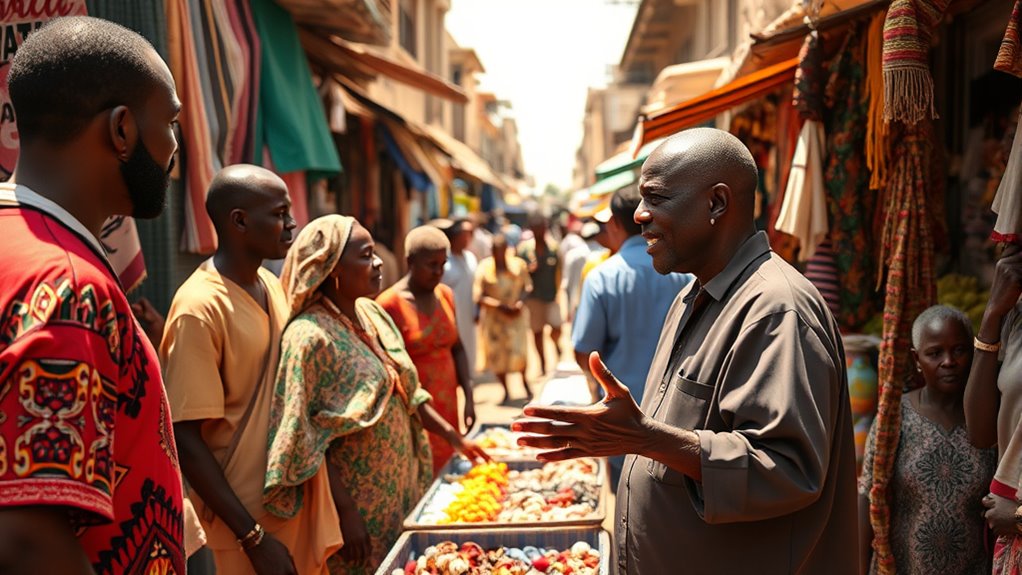
The Wolof language is one of Senegal’s most widely spoken tongues, serving as a primary means of communication for approximately 40% of the population and influencing cultural, social, and educational contexts. Originating from the Wolof ethnic group, it belongs to the West Atlantic branch of the Niger-Congo language family and has evolved over centuries through trade and migration. In Senegal, Wolof serves as a lingua franca, bridging diverse ethnic communities and facilitating everyday interactions in urban centers like Dakar. Its phonetic structure features tonal elements and a rich vocabulary drawn from Arabic, French, and indigenous roots, reflecting Senegal’s historical exchanges. Wolof’s oral traditions, including griot storytelling and proverbs, preserve cultural heritage, while its use in radio, television, and print media promotes national unity. As an agglutinative language, it employs prefixes and suffixes to convey complex meanings, aiding in efficient expression. Despite regional dialects, a standardized form supports literacy efforts, underscoring its role in Senegal’s linguistic landscape.
Importance of English to Wolof Translation
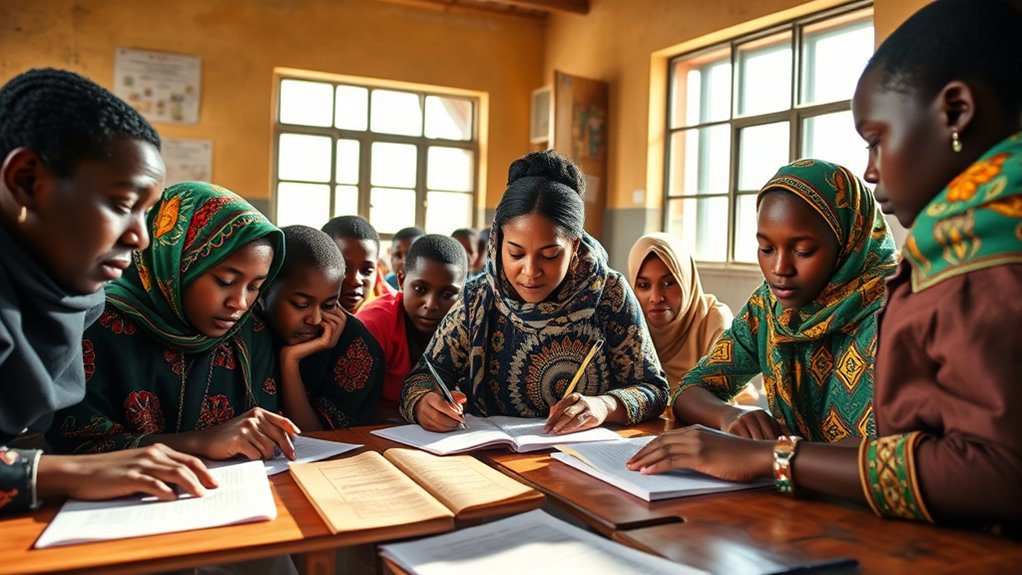
In an increasingly globalized context, translating English to Wolof bridges communication barriers in Senegal, enabling access to international education, technology, and business opportunities for Wolof-speaking communities. This process empowers individuals by facilitating participation in global dialogues, where English dominates, therefore enhancing personal and professional development. For instance, it allows access to online resources, job markets, and educational platforms that were previously inaccessible due to language constraints. Furthermore, English to Wolof translation supports economic advancement, as businesses can reach wider audiences, fostering trade and innovation. In healthcare, it guarantees crucial information reaches rural populations, improving outcomes and public health initiatives. Overall, such translation promotes inclusivity, cultural exchange, and sustainable development without eroding local identities. This linguistic bridge is essential for Senegal’s integration into the global economy.
Key Features of Wolof Grammar and Vocabulary
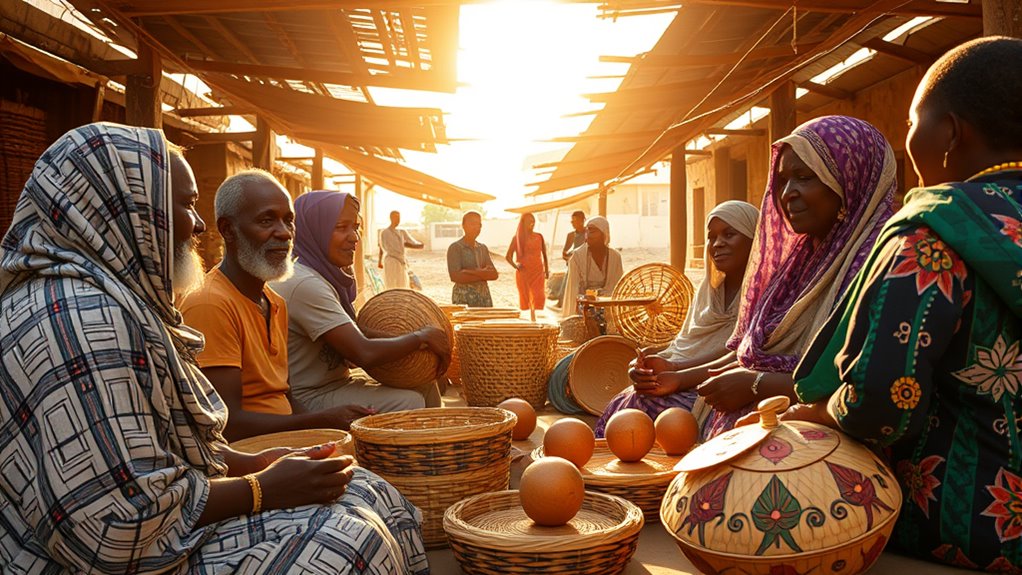
Wolof’s grammar relies on a subject-verb-object structure, distinguishing it among West African languages through features like noun classes and tone systems that alter word meanings. This structure aids in clear communication, with noun classes categorizing words by attributes such as animacy or size, while tone systems add layers of nuance. Wolof vocabulary is rich in agglutinative forms, where affixes modify roots to convey tense, aspect, and possession. Common borrowings from French and Arabic enhance its adaptability, reflecting Senegal’s cultural diversity.
| Feature | Description | Example |
|---|---|---|
| Noun Classes | Categorize nouns by traits like size or animacy | Defar (man, class for humans) |
| Tone Systems | Use pitch to change word meanings | Bopp (to enter, varies by tone) |
| Agglutination | Combine affixes to roots for complexity | Demna (to build, with prefixes) |
| Vocabulary Borrowing | Incorporate words from other languages | Computer (directly from English) |
Translation Challenges in African Contexts
Translation efforts in African contexts, such as English to Wolof in Senegal, often encounter linguistic diversity issues that complicate accurate rendering of meanings. Cultural adaptation barriers further hinder the process by requiring nuanced adjustments for local customs and idioms. Technological resource shortages exacerbate these challenges, limiting access to essential tools for effective translation.
Linguistic Diversity Issues
Linguistic diversity in Africa poses significant challenges for English to Wolof translation, particularly in Senegal where over 30 languages coexist. This multilingual environment often leads to lexical borrowing and code-switching, complicating accurate rendering of English concepts into Wolof. For instance, Wolof incorporates elements from French, Arabic, and other local languages, creating ambiguities that translators must navigate carefully. Variations in Wolof dialects across regions further exacerbate issues, as rural and urban forms differ in vocabulary and pronunciation, potentially altering meaning. Translators face difficulties in maintaining fidelity due to the absence of direct equivalents for certain English terms, requiring extensive linguistic expertise. Consequently, these factors demand specialized training to guarantee precise and effective translations in Senegal’s dynamic linguistic landscape, enhancing communication in educational and professional contexts. (124 words)
Cultural Adaptation Barriers
Cultural adaptation in translation poses unique barriers in African contexts, where English concepts often clash with local customs and values. In Senegal, translating from English to Wolof requires negotiating deep cultural nuances, such as the emphasis on communal harmony in Wolof society versus individualistic Western ideals. For instance, English idioms rooted in European history may lack equivalents in Wolof oral traditions, leading to misinterpretations that alter intended meanings. Translators must grapple with taboos, like references to ancestry or spirituality, which hold sacred status and demand sensitive handling to avoid offense. This cultural dissonance can result in inaccurate renditions, hindering effective communication in fields like education and diplomacy. Ultimately, these barriers underscore the need for culturally informed translation practices to bridge divides and preserve authenticity in African languages.
Technological Resource Shortages
In Senegal, technological resource shortages compound translation challenges from English to Wolof, particularly in resource-limited African contexts. These shortages hinder access to essential tools, leading to inaccurate renditions and slowed progress in linguistic projects. Without reliable infrastructure, translators struggle to bridge language gaps, affecting education, business, and cultural preservation. This issue underscores the need for targeted investments to enhance translation capabilities.
- Limited internet access: Many areas lack stable connections, delaying online translation tools and research.
- Scarce specialized software: Few programs support Wolof, forcing reliance on manual methods that increase errors.
- Insufficient hardware: Outdated or unavailable devices restrict practice, exacerbating inefficiencies in resource-poor settings.
Common English Phrases Translated to Wolof
Several common English phrases have straightforward translations in Wolof, a language widely spoken in Senegal, enabling effective daily interactions among speakers. For example, “Hello” translates directly to “Nanga def?”, a common greeting. “Thank you” becomes “Jerejef”, used to show appreciation in conversations. “Goodbye” is rendered as “Ba beneen”, signaling farewells. “How are you?” corresponds to “Nanga def?”, fostering rapport. “Yes” is “Waaw”, while “No” is “Déedéet”. Additionally, “Please” can be “Demna” or “Akk”, depending on context, and “I’m sorry” is “Nunga”. These translations facilitate clear communication in markets, homes, and social settings, helping learners build practical language skills. Mastering such phrases enhances cross-cultural exchanges without requiring advanced fluency. Overall, they bridge linguistic gaps effectively.
Cultural Significance of Wolof in Daily Life
Wolof plays a central role in Senegal’s daily interactions, as seen in traditional greetings that strengthen social ties. Within families, it remains the dominant language for communication, ensuring the preservation of cultural customs. Moreover, Wolof enhances cultural storytelling, serving as an essential medium for sharing Senegal’s historical narratives.
Wolof Daily Greetings
Daily greetings in Wolof culture foster social bonds and convey respect, reflecting the language’s role in maintaining community harmony in Senegal. These exchanges, often starting with phrases like “Nanga def?” (How are you?), serve as rituals that acknowledge social hierarchies and promote mutual understanding in public interactions. In urban and rural settings, Wolof greetings adapt to contexts, emphasizing politeness and community cohesion without delving into personal matters.
- Common Phrases: Key greetings like “Salaam aleikum” (Peace be upon you) blend Islamic influences with Wolof traditions, fostering immediate rapport.
- Etiquette Rules: Greetings typically involve eye contact and a handshake, signaling sincerity and reinforcing social norms in marketplaces or streets.
- Cultural Impact: Regular use of Wolof greetings strengthens collective identity, encouraging inclusivity among diverse ethnic groups in Senegal’s daily life.
Family Language Use
Within family settings, Wolof reinforces cultural bonds by serving as the primary language for daily communication and storytelling, preserving traditions and strengthening intergenerational ties in Senegal. This linguistic practice fosters a sense of identity among family members, where Wolof phrases and expressions convey emotions, resolve conflicts, and teach social norms during everyday interactions. For instance, parents use Wolof to instill values like respect and community in children, ensuring cultural continuity across generations. In homes, it promotes unity during meals and gatherings, allowing families to navigate daily life with authenticity. As an essential tool, Wolof adapts to modern contexts while safeguarding Senegal’s heritage, enhancing familial cohesion and resilience against external influences. This everyday use underscores its role in maintaining social fabric, even as globalization pressures persist.
Cultural Storytelling Role
Storytelling in Senegal, deeply intertwined with Wolof, serves as a cornerstone of cultural preservation and daily life. Through oral traditions, Wolof narratives convey moral lessons, historical events, and social values, fostering a sense of identity amid Senegal’s diverse cultures. This practice integrates seamlessly into everyday routines, from family gatherings to community events, ensuring the language’s vibrancy in a globalizing world.
- Preserves Heritage: Wolof storytelling safeguards ancestral wisdom, preventing cultural erosion in rapidly changing societies.
- Builds Community Bonds: It strengthens social ties through shared narratives at festivals and daily interactions, promoting unity.
- Adapts to Modernity: Wolof stories evolve with translations, like English to Wolof, making them accessible and relevant to new generations.
Tools for Accurate English to Wolof Conversion
Effective tools for accurate English to Wolof conversion are essential in Senegal, where precise linguistic translation supports cultural exchange and education. Digital platforms, such as specialized translation software and apps, leverage machine learning algorithms to capture Wolof’s tonal nuances and complex grammar, ensuring higher fidelity in conversions. Bilingual dictionaries and glossaries offer reliable reference for vocabulary, while offline tools like phrasebooks aid remote areas with limited internet. Integration of AI-driven systems, including neural machine translation, enhances accuracy by learning from diverse linguistic data sets. Customizable interfaces allow users to input context-specific terms, reducing errors in everyday or technical translations. Professional-grade tools, such as CAT (Computer-Assisted Translation) software, incorporate feedback loops for refinement. Ultimately, these resources bridge language barriers, fostering better communication in Senegal’s multilingual landscape. (124 words)
Benefits of Professional Translation Services
Professional translation services in Senegal deliver key advantages for English to Wolof conversions, ensuring high accuracy and cultural sensitivity that automated tools often miss. These services leverage expert linguists who understand the nuances of Wolof, a language rich in cultural context, to produce reliable results for businesses, education, and communication. By prioritizing precision, they bridge language gaps effectively, fostering better cross-cultural interactions.
- Enhanced Accuracy: Human translators catch subtle idioms and contextual errors, reducing misunderstandings in critical documents.
- Cultural Adaptation: Services tailor content to Wolof-speaking audiences, respecting traditions and social norms for authentic engagement.
- Time and Cost Efficiency: Professional teams deliver faster, error-free translations, minimizing revisions and supporting long-term projects.
Historical Evolution of Wolof Language
The Wolof language, a key West Atlantic tongue in the Niger-Congo family, traces its roots to pre-colonial West Africa, evolving through centuries of trade, migration, and cultural exchanges that shaped its structure and vocabulary. During the medieval era, Wolof flourished in the Jolof Empire, absorbing influences from Arabic through Islamic scholarship, which enriched its lexicon with religious and scholarly terms. Colonial encounters with European powers, particularly the French in the 19th century, introduced loanwords related to administration and technology, altering phonetics and grammar subtly. Post-independence in 1960, Senegal’s nation-building efforts standardized Wolof via education and media, preserving its oral traditions while adapting to modern contexts. This evolution reflects broader African linguistic dynamics, maintaining Wolof’s vibrancy as a cultural cornerstone amidst global influences.
Practical Applications in Business and Travel
In business and travel contexts within Senegal, English to Wolof translation serves as an essential tool for bridging communication gaps, enabling smoother negotiations with local partners and enhancing traveler experiences through accurate cultural exchanges. This service fosters effective business dealings by ensuring precise interpretation of contracts and marketing materials, while in travel, it promotes meaningful interactions that enrich cultural immersion. Professionals often rely on it to navigate daily operations, from market transactions to guided tours, minimizing misunderstandings and building trust.
- Facilitates seamless business negotiations: Accurate translations help avoid costly errors in deals, improving partnerships and market expansion.
- Enhances traveler safety and enjoyment: It aids in clear communication for directions, services, and cultural etiquette, leading to memorable experiences.
- Boosts efficiency in daily interactions: Quick translations streamline transactions, from hotel bookings to local purchases, promoting productivity.
Regional Variations of Wolof in Senegal
Wolof exhibits notable variations across Senegal’s regions, shaped by local dialects, geography, and cultural influences. In urban centers like Dakar, the language features rapid speech patterns and borrowed vocabulary from French and Arabic, reflecting cosmopolitan lifestyles. Coastal areas, such as the Petite Côte, incorporate maritime terms and subtle phonetic shifts due to fishing communities’ interactions. Inland, towards the Senegal River valley, Wolof adopts tonal nuances and agricultural lexicon influenced by neighboring ethnic groups like the Fulani. These differences affect pronunciation, vocabulary, and grammar; for instance, rural dialects may emphasize aspirated consonants, while urban ones simplify them for efficiency. Such regional diversity enriches Wolof’s adaptability, aiding communication in diverse social contexts without altering its core structure. Understanding these variations enhances accurate translation efforts in Senegal.
Resources for Enhancing Translation Skills
Numerous resources support the development of translation skills for English to Wolof, particularly in addressing Senegal’s regional dialects. These tools help translators navigate linguistic nuances, such as variations in vocabulary and pronunciation across areas like Dakar and Casamance. By leveraging digital platforms and educational materials, individuals can improve accuracy and cultural sensitivity in their work.
- Online Language Apps: Platforms like Duolingo or specialized Wolof apps offer interactive exercises tailored to regional dialects, enhancing practical translation skills.
- Bilingual Dictionaries: Resources such as the Wolof-English dictionary by the Senegalese government provide detailed entries on local variations, aiding precise word choices.
- Workshops and Courses: Training programs from organizations like Translation Africa deliver hands-on sessions focused on Senegal’s dialects, fostering professional expertise.
Frequently Asked Questions
What Is the Cost of English to Wolof Translation?
The question addresses the cost of translating from English to Wolof, which varies based on factors like word count, complexity, and service provider. Typically, professional rates range from $0.05 to $0.20 per word, influenced by market conditions and expertise required.
How Long Does It Take to Learn Basic Wolof?
The time required to learn basic Wolof varies depending on individual factors like prior language experience, study habits, and immersion opportunities. Generally, dedicated learners may achieve fundamentals in three to six months through consistent practice.
Are Wolof Translators Certified in Senegal?
In Senegal, the certification of Wolof translators is not universally mandated. Some pursue formal credentials through language institutions or exams, while others rely on experience, leading to varied professional standards across the region. This lack of standardization impacts translation quality and reliability.
What Apps Support Real-Time Wolof Translation?
The question pertains to applications supporting real-time Wolof translation. Popular options include Google Translate and Microsoft Translator, which enable instant conversions. Users can explore these tools for seamless communication, though accuracy varies by context and updates. Emerging apps may also offer specialized features.
How Does Wolof Handle English Loanwords?
Wolof handles English loanwords through phonetic adaptation, modifying sounds to fit its phonological system, such as altering vowel lengths or consonant clusters. Grammatically, these words integrate via affixes, ensuring seamless incorporation into sentences for everyday use.