
 Elizabeth123
Translation Africa provides professional English to Somali translation services in Kenya, essential for overcoming language barriers in business, education, and healthcare. Certified translators deliver accurate, culturally sensitive results by addressing nuances in grammar, vocabulary, and local dialects, ensuring effective communication and confidentiality. These services facilitate market expansion, knowledge access, and community engagement, benefiting diverse users. Further insights on selecting translators, costs, challenges, success stories, and trends await exploration in the sections below.
Quick Summaries
- Translation Africa offers professional English to Somali translation services in Kenya, focusing on accuracy and cultural sensitivity.
- These services bridge communication gaps in sectors like business, education, and healthcare for effective information exchange.
- Certified translators with expertise in Somali dialects ensure high-quality, reliable conversions while maintaining confidentiality.
- Clients can select translators by verifying credentials, experience, and reviews to overcome linguistic and cultural challenges.
- Affordable pricing, fast turnaround, and success stories like business expansions make these services accessible and impactful.
Importance of English to Somali Translation Services
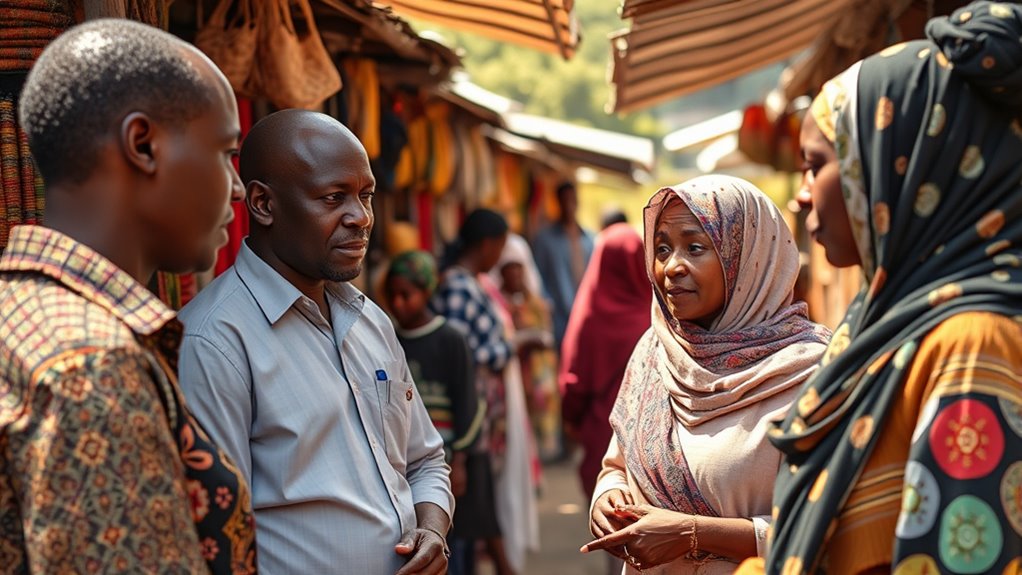
English to Somali translation services play an essential role in bridging communication gaps between English-speaking entities and Somali communities. These services facilitate essential interactions in business, education, and healthcare, ensuring accurate exchange of information. For instance, businesses expand into Somali markets by overcoming language barriers, leading to successful partnerships and economic growth. In education, translated materials allow Somali learners to access global knowledge, enhancing skills and opportunities. Healthcare providers rely on precise translations to deliver effective care, preventing misunderstandings that could affect patient outcomes. Legal and governmental communications also benefit, as accurate translations promote fairness and compliance. Overall, these services foster cultural understanding and inclusion, supporting community integration in a globalized world.
Professional Translators in Kenya

In Kenya, professional translators specialize in bridging linguistic divides, particularly for languages like Somali and English, by providing accurate and culturally nuanced services. These experts often hold certifications from recognized bodies, ensuring precision in diverse fields such as legal, medical, and educational contexts. With a deep understanding of both languages’ intricacies, they facilitate effective communication for individuals and organizations.
- Linguistic Expertise: Translators master grammar, vocabulary, and idioms to deliver flawless conversions, minimizing errors.
- Cultural Adaptation: They incorporate local customs and nuances, making translations resonate with Somali-speaking audiences in Kenya.
- Ethical Standards: Professionals adhere to confidentiality and accuracy, building trust through reliable, impartial work.
This dedication helps maintain the integrity of translated content across platforms.
Benefits of Using Translation Africa

Translation Africa delivers key benefits for users seeking reliable English-to-Somali translation services, particularly in Kenya. By employing native speakers and advanced technology, it guarantees high accuracy and cultural sensitivity, reducing miscommunication in diverse contexts. The service offers fast turnaround times, ideal for business and legal applications, while maintaining cost-effectiveness without sacrificing quality. Users enjoy customized solutions tailored to sectors like education and healthcare, enhancing overall communication efficiency. Additionally, robust security measures protect sensitive information, fostering trust and reliability.
| Benefit | Key Feature | Impact in Kenya |
|---|---|---|
| Accuracy | Native speaker expertise | Minimizes errors in official documents |
| Speed | Rapid processing systems | Supports time-sensitive projects |
| Affordability | Competitive pricing | Enables access for SMEs |
| Customization | Sector-specific tailoring | Improves sector relevance |
| Security | Confidential protocols | Builds user confidence |
How to Select a Reliable Translator
Selecting a reliable translator involves evaluating credentials, experience, and reputation to guarantee accurate and culturally appropriate results. In the context of English to Somali translation services in Kenya, such as those offered by Translation Africa, clients must prioritize professionals with verified qualifications in linguistics and cultural expertise. This guarantees translations resonate with Somali-speaking audiences while maintaining precision.
- Verify credentials: Look for certifications from recognized bodies like the American Translators Association or local Kenyan equivalents to confirm expertise.
- Assess experience: Choose translators with a proven track record in English-Somali projects, especially in fields like business or education.
- Check reputation: Read client reviews and seek references to gauge reliability and satisfaction from past work.
Common Challenges in Language Translation
Language translation often encounters obstacles such as linguistic nuances, cultural differences, and technical complexities, particularly in contexts like English to Somali services in Kenya. Linguistic nuances pose significant hurdles, as Somali’s complex grammar and vocabulary differ markedly from English, leading to potential misinterpretations in sentence structure or word choice. For instance, idiomatic expressions may not translate directly, requiring skilled interpreters to adapt meanings accurately. Technical complexities arise in specialized fields like legal or medical translation, where precise terminology must be maintained, often demanding advanced tools and expertise. In Kenya, these issues are compounded by regional dialects and limited resources, making accurate English to Somali conversion challenging. Effective strategies, such as using certified professionals and quality assurance processes, help mitigate these problems, ensuring reliable outcomes in diverse applications. (124 words)
Cultural Aspects of Somali Language
Somali culture deeply influences its language, embedding elements like oral poetry, clan-based expressions, and historical narratives that reflect nomadic heritage and social structures. The language serves as a vessel for cultural identity, with proverbs drawn from pastoral traditions conveying wisdom and social norms. It adapts through storytelling, ensuring that linguistic nuances preserve community bonds and historical resilience in a rapidly changing world.
- Oral poetry enriches communication, using rhythmic verses to express emotions and mediate conflicts, fostering a sense of shared heritage.
- Clan-based expressions highlight kinship and alliances, with terms varying by lineage to reinforce social hierarchies and group solidarity.
- Historical narratives weave tales of migration and endurance into vocabulary, making language a dynamic archive of Somali resilience and values.
Steps for High-Quality Translation
The process of achieving high-quality translation, particularly from English to Somali, involves a methodical approach that prioritizes accuracy, cultural sensitivity, and linguistic precision to bridge communication gaps effectively. First, translators conduct a thorough analysis of the source text, identifying key nuances and context to guarantee faithful interpretation. Next, they apply bilingual expertise, drawing on native Somali proficiency to convey idiomatic expressions accurately while avoiding literal translations that could distort meaning. Subsequent steps include rigorous editing, where collaborators review for grammatical errors and cultural appropriateness, refining the draft iteratively. Finally, a thorough proofreading phase verifies consistency, fluency, and adherence to standards, culminating in a polished output. This structured process minimizes errors and enhances overall reliability, fostering effective cross-linguistic exchange.
Industries Relying on Translation Services
Various industries depend on translation services to overcome language barriers and guarantee effective communication in global contexts. In Kenya, English to Somali translation is essential for sectors engaging with diverse linguistic communities, fostering inclusivity and operational efficiency. This support enables smoother interactions and better outcomes in key areas.
- Healthcare: Guarantees accurate conveyance of medical information, improving patient care and trust in Somali-speaking regions.
- Education: Facilitates the translation of learning materials, making knowledge accessible and promoting equitable education opportunities.
- Business: Aids in negotiations and market expansion by bridging language gaps, enhancing partnerships and trade relations.
Cost Factors for Translation in Kenya
Cost factors for English to Somali translation services in Kenya depend on elements such as text complexity, translator expertise, and project urgency. Text complexity, for instance, increases costs when dealing with specialized terminology in legal, medical, or technical documents, requiring deeper research and accuracy. Translator expertise plays a key role; certified professionals with years of experience or advanced qualifications often charge higher rates to guarantee quality and cultural nuance. Project urgency can substantially elevate fees, as expedited timelines demand overtime or priority scheduling. Additionally, the volume of text influences pricing, with larger projects potentially offering economies of scale, while minimum charges apply to smaller ones. Other variables include the need for proofreading, editing, or certification, which add layers of expense in Kenya’s competitive market. Businesses must weigh these against budget constraints for effective service procurement. (124 words)
Client Success Stories With Translation
Clients in Kenya have reported transformative outcomes from English to Somali translation services, with businesses expanding into new markets and individuals overcoming language barriers in personal and professional contexts. These services have empowered users by enhancing communication in diverse settings, such as trade negotiations and community outreach, leading to measurable gains in efficiency and relationships.
- Business Expansion Example: A Kenyan firm translated marketing materials into Somali, resulting in a 40% increase in cross-border sales and stronger partnerships in the Horn of Africa.
- Personal Triumph Story: An individual used translated documents to navigate immigration processes, reuniting with family and resolving long-standing personal challenges.
- Community Impact Case: A nonprofit organization employed these translations for health campaigns, enabling better engagement with Somali-speaking communities and improving overall program outcomes.
Emerging Trends in African Translation
The African translation landscape is evolving rapidly, driven by technological advancements and cultural shifts that enhance accessibility and accuracy. Artificial intelligence and machine learning are revolutionizing translation services, enabling real-time, high-quality conversions for African languages like Somali. For instance, neural machine translation systems are increasingly tailored to handle linguistic nuances, improving efficiency in regions such as Kenya. Additionally, the rise of mobile apps and digital platforms is democratizing access, allowing users to bridge language barriers in education, business, and healthcare. Collaborative efforts among linguists and tech developers are fostering multilingual databases that preserve indigenous dialects, ensuring cultural fidelity. This integration of innovation with traditional knowledge is fostering a more inclusive translation ecosystem across the continent, adapting to global demands while maintaining local relevance. Emerging collaborations between African governments and international organizations are also accelerating the adoption of standardized translation tools, promoting economic growth and cross-cultural exchange.
Tips for Seamless Language Communication
Effective communication in English to Somali translation relies on key strategies for accuracy. Choosing reliable translators guarantees high-quality and trustworthy outcomes. Practicing active listening further improves comprehension and minimizes misunderstandings.
Choose Reliable Translators
Selecting reliable translators is essential for accurate English to Somali conversions in Kenya, particularly to maintain clear and efficient communication across cultural contexts. In Kenya’s vibrant linguistic environment, choosing the right professionals helps avoid misunderstandings and preserves the integrity of messages. Prioritizing translators with expertise in Somali dialects and local customs guarantees high-quality results.
- Verify credentials and experience: Opt for translators certified by recognized bodies, such as those with degrees in linguistics or proven portfolios in English-Somali work.
- Assess cultural knowledge: Make sure they understand Kenyan-Somali nuances, including idioms and social contexts, to deliver relatable and precise translations.
- Seek references and reviews: Check client testimonials or recommendations to confirm reliability and accuracy in past projects.
This approach fosters effective communication without unnecessary complications.
Practice Active Listening
Active listening strengthens communication by encouraging full engagement with speakers, particularly in English-Somali exchanges where nuances matter. In these contexts, it fosters mutual understanding by focusing on verbal and non-verbal cues, such as tone and gestures, which can alter meanings across cultures. For instance, Somali speakers may use indirect phrasing, requiring listeners to probe gently for clarity without interrupting.
To practice effectively, one should paraphrase responses to verify comprehension, maintain eye contact to convey respect, and avoid distractions like multitasking. This technique reduces misinterpretations in translation scenarios, enhancing accuracy in Kenya’s multilingual environments. Ultimately, active listening builds trust, ensuring seamless exchanges that bridge language barriers and promote collaborative outcomes. (124 words)
Frequently Asked Questions
What Is the Average Delivery Time for Translations?
The average delivery time for translations varies widely in the industry, typically ranging from one to seven business days. Factors such as document length, language complexity, and service urgency influence this timeframe greatly.
Do You Offer Certified Translation Services?
The current question inquires whether certified translation services are offered. These services are indeed provided, encompassing verified translations for documents like passports, degrees, and contracts. They guarantee accuracy, notarization, and compliance with international standards, meeting diverse client needs effectively.
Can Translations Be Done Over the Phone?
The question of whether translations can be done over the phone is addressed here. Oral interpretations are often possible via phone calls for real-time needs, but certified written translations typically require secure, in-person or digital methods to guarantee accuracy and validity.
What Other Languages Do You Support?
The current inquiry seeks details on languages supported beyond English and Somali. Translation services in Kenya offer support for French, Arabic, Swahili, Amharic, and numerous other African and international languages, ensuring extensive communication solutions.
How Do I Request Revisions After Delivery?
Requesting revisions after delivery involves clients contacting the service provider through designated channels, such as email or an online portal. They must specify details of required changes clearly. The provider then reviews and processes the revisions efficiently.

