
 Elizabeth123
Website localization for African hospitality, as demonstrated by Translation Africa, adapts websites to cultural nuances like communal traditions and Ubuntu philosophy, while prioritizing languages such as Swahili and Yoruba for broader accessibility. This process enhances user engagement, boosts conversion rates, and expands market reach by incorporating regional symbols and responsive designs. Technical optimizations address infrastructure challenges for seamless performance. Practical strategies and real-world examples await in the following sections.
Quick Summaries
- Adapt website designs to incorporate African cultural motifs, like Adinkra symbols, for relatability and trust.
- Optimize language selection by prioritizing regional languages, such as Swahili, based on demographic data and user trends.
- Boost user engagement through culturally tailored content, fostering emotional connections and higher conversion rates.
- Implement UTF-8 encoding and responsive designs to handle multilingual scripts and varying device capabilities.
- Address linguistic challenges by testing translations with native speakers to ensure authenticity and avoid cultural missteps.
Understanding Cultural Nuances in African Hospitality
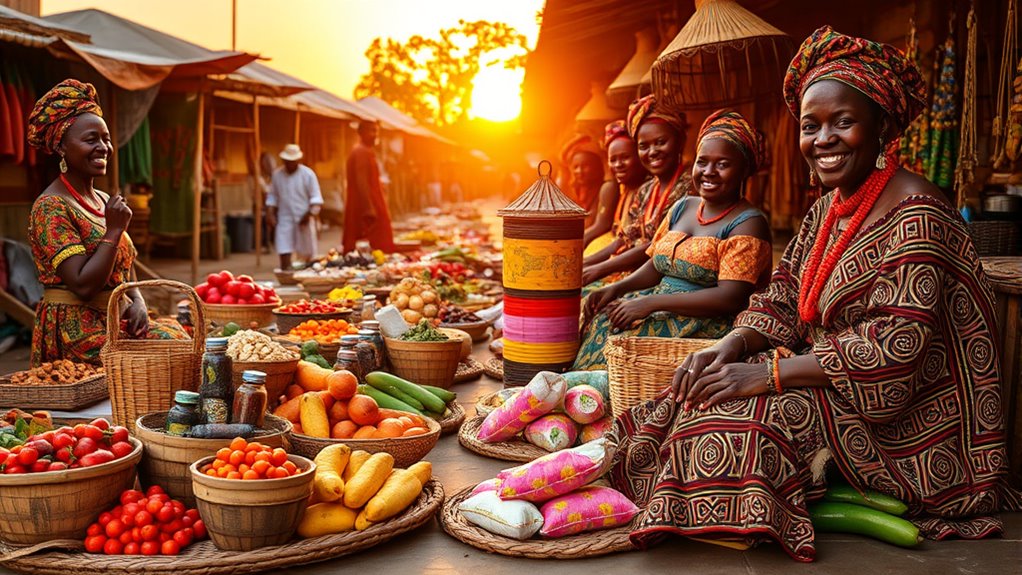
Understanding cultural nuances is essential for effective website localization in African hospitality, as these subtleties encompass diverse customs, languages, and social norms across the continent. In regions like West Africa, communal dining traditions influence how booking interfaces should highlight group experiences, fostering a sense of belonging. Southern African cultures, such as those in South Africa, emphasize ubuntu—emphasizing interconnectedness—which can be reflected in website designs that prioritize community reviews and shared stories. Visual elements must consider color symbolism; for instance, red may signify danger in some areas but celebration in others, affecting button choices or promotional imagery. By integrating these insights, websites avoid cultural missteps, enhancing user trust and engagement. North African influences, like Islamic hospitality norms, require modest imagery and timing features for prayer schedules, ensuring relevance. East Africa’s vibrant festivals demand adaptive content that celebrates local rhythms, making sites more intuitive and appealing. Ultimately, respecting these nuances drives authentic connections, boosting conversion rates in a competitive market.
Selecting Appropriate Languages for Localization

Selecting appropriate languages for localization in African hospitality involves identifying key languages based on target audience demographics and regional prevalence. This process requires evaluating language suitability by considering factors such as user proficiency, content complexity, and cultural relevance. Effective choices can enhance user engagement and accessibility across diverse African markets.
Identify Key Languages
Determining the key languages for website localization in African hospitality requires analyzing demographic data, such as population sizes, internet usage rates, and tourism patterns across regions like East, West, and Southern Africa, where languages such as Swahili, French, and Arabic often dominate due to their widespread use. Businesses must prioritize languages based on regional prevalence and visitor demographics to enhance accessibility. For instance, focusing on high-traffic areas guarantees broader reach. Key languages can be outlined as follows:
| Region | Key Languages |
|---|---|
| East Africa | Swahili, English |
| West Africa | French, English |
| Southern Africa | Zulu, English |
| North Africa | Arabic, French |
This approach helps tailor content effectively, fostering greater engagement in diverse markets.
Evaluate Language Suitability
Evaluating language suitability for website localization in African hospitality involves analyzing factors like market demand, user proficiency, and cultural relevance to guarantee effective communication. Market demand requires examining visitor data and search trends to prioritize languages spoken by potential customers in regions like East or West Africa. User proficiency entails gauging literacy levels and common dialects, ensuring content matches the audience’s language skills to avoid alienation. Cultural relevance demands sensitivity to nuances, such as idioms or taboos, to foster trust and inclusivity. For instance, in Nigeria, selecting Hausa or Yoruba over less prevalent options can enhance engagement. Businesses should use tools like surveys and analytics for data-driven decisions, ultimately boosting conversion rates and user satisfaction. This strategic evaluation prevents costly errors and supports sustainable growth in diverse markets.
Benefits of Website Adaptation for African Markets

Adapting websites for African markets yields key advantages, such as enhanced user engagement and higher conversion rates, by addressing cultural nuances, linguistic diversity, and varying technological access. This approach fosters deeper connections with local audiences, as content resonates with their unique customs and preferences, ultimately boosting brand loyalty. For instance, incorporating relevant imagery and narratives tailored to African contexts helps overcome cultural barriers, making interactions more intuitive and relatable. Consequently, businesses experience expanded market penetration, attracting a broader customer base that might otherwise overlook generic sites. Furthermore, by prioritizing accessibility for users with limited bandwidth or devices, companies can reduce bounce rates and encourage prolonged visits, translating to sustained revenue growth. Overall, these adaptations empower hospitality firms to thrive in competitive African landscapes through inclusive, user-centric strategies.
Technical Aspects of Localizing Hospitality Sites
Localizing hospitality websites requires careful attention to technical elements, such as multilingual coding and responsive design, to accommodate diverse languages, devices, and internet conditions prevalent in African markets. Effective multilingual coding guarantees proper handling of non-Latin scripts, like those in Amharic or Swahili, while avoiding encoding errors that could disrupt user experience. Responsive design optimizes for varying screen sizes and slower connections, enhancing accessibility across urban and rural areas.
| Technical Aspect | Key Considerations | Implementation Tips |
|---|---|---|
| Multilingual Coding | Script compatibility | Use UTF-8 and test locales |
| Responsive Design | Device and bandwidth issues | Apply CSS frameworks |
| SEO Optimization | Local search algorithms | Incorporate meta tags |
Beyond these, performance testing for load times and cross-browser compatibility is essential to maintain engagement and trust in dynamic African environments.
Real-World Examples in African Tourism
In African tourism, companies like those in Kenya and South Africa demonstrate effective website localization through practical applications. In Kenya, safari operators have translated sites into Swahili and other regional languages, enabling seamless access for local users and boosting engagement. South African hospitality firms adapt content with culturally specific imagery and terminology, fostering deeper connections with diverse audiences.
- Kenyan Safari Localization: A leading operator integrated Kiswahili interfaces, resulting in increased user retention and higher conversion rates among East African visitors.
- South African Cultural Adaptation: Hotels in Cape Town incorporated Afrikaans and indigenous visuals, enhancing authenticity and drawing more regional traffic.
- Regional Expansion Impact: These strategies have helped tourism brands expand market reach, as seen in measurable growth in user interactions across sub-Saharan Africa.
Common Challenges and Solutions in Localization
While website localization offers significant benefits, African hospitality businesses frequently encounter obstacles such as linguistic nuances, cultural sensitivities, and technical constraints that can hinder effective implementation. These issues often stem from diverse languages across regions like Swahili in East Africa or French in West Africa, requiring precise translation to avoid miscommunications. Cultural sensitivities demand careful adaptation of imagery and content to respect local customs without offending audiences. Technical constraints, such as varying internet speeds, necessitate optimized site performance.
| Challenge | Solution |
|---|---|
| Linguistic nuances | Employ professional translators familiar with regional dialects |
| Cultural sensitivities | Perform thorough cultural reviews and testing |
| Technical constraints | Use scalable platforms and mobile-friendly designs |
Addressing these proactively enhances user experience and market reach in Africa’s dynamic hospitality sector.
Integrating Local Elements for User Engagement
To enhance user engagement, African hospitality websites can integrate local elements like cultural motifs and regional languages. This strategy creates a more authentic experience, drawing users into the vibrancy of African cultures. By weaving in indigenous designs and narratives, websites foster emotional connections, encouraging longer visits and repeat interactions. Such integration not only boosts accessibility but also differentiates the site in a competitive market, ultimately driving loyalty.
- Cultural Motifs in Design: Incorporate traditional patterns, such as Adinkra symbols from Ghana, to visually represent heritage and evoke curiosity.
- Regional Languages and Dialects: Feature multilingual options, including Swahili or Yoruba, to make content feel personal and inclusive.
- Interactive Local Stories: Embed multimedia elements like folktales or virtual tours of landmarks, allowing users to explore cultural depth interactively.
Best Practices for Content Adaptation
Effective content adaptation in website localization for African hospitality requires implementing cultural adaptation strategies to resonate with diverse audiences. Language style optimization guarantees that text is natural and engaging for local speakers. Visual elements adjustment further enhances user experience by aligning imagery and design with regional preferences.
Cultural Adaptation Strategies
Cultural adaptation strategies in website localization for African hospitality involve tailoring content to align with diverse regional customs, languages, and values, ensuring relevance and engagement for local users. This process requires a deep understanding of Africa’s multicultural landscape, where elements like traditional greetings, festivals, and social norms must be integrated seamlessly. By adapting visuals and narratives to reflect local heritage, businesses can foster trust and connection, avoiding cultural missteps that might alienate audiences.
- Incorporate regional symbols and motifs: Use imagery of local landmarks, art, or attire to resonate with users’ cultural identity.
- Respect social hierarchies and etiquette: Adjust content to acknowledge community structures, such as elder respect in many African societies.
- Align with seasonal events: Tailor promotions around key cultural holidays, like Eid or Yam Festival, to enhance timeliness and appeal.
Language Style Optimization
Language style optimization in website localization for African hospitality requires adapting content to match regional dialects, idioms, and communication preferences, thereby enhancing accessibility and user engagement. This involves researching local nuances, such as Swahili proverbs in East Africa or Yoruba expressions in West Africa, to guarantee content resonates culturally without alienating users. Best practices include using simple, conversational tones that reflect oral traditions, avoiding literal translations that lose meaning, and testing with native speakers for authenticity.
| Region | Dialect/Idiom Example | Adapted Content Imagery |
|---|---|---|
| East Africa | “Hakuna matata” (No worries) | A welcoming message like “Relax and enjoy your stay.” |
| West Africa | “Ebi kò sẹ́” (Family is key) | Emphasizing community with “Join our family experience.” |
| Southern Africa | “Sawubona” (Hello, I see you) | Greeting as “We see and value you here.” |
| North Africa | Arabic hospitality phrases | Inviting with “Make yourself at home, honored guest.” |
| Central Africa | Lingala storytelling elements | Narrating services as “Embark on your adventure tale.” |
Visual Elements Adjustment
Adjusting visual elements in website localization for African hospitality involves adapting imagery, colors, and layouts to align with regional cultural norms, ensuring content feels authentic and inclusive. This approach fosters trust and resonance among users by incorporating elements that reflect Africa’s diverse heritage, such as vibrant patterns or symbolic motifs. By prioritizing cultural sensitivity, businesses can enhance user experience and boost conversion rates in markets like Nigeria or South Africa.
- Incorporate culturally relevant imagery: Select photos and graphics that depict local landscapes, traditions, and people to avoid stereotypes and promote relatability.
- Adapt color schemes thoughtfully: Choose hues inspired by regional symbolism, like earth tones for stability in East Africa, to evoke emotional connections without overwhelming the design.
- Optimize layouts for accessibility: Guarantee responsive designs accommodate varying screen sizes and loading times, making navigation intuitive for users with diverse technological access.
Evaluating and Optimizing Localized Websites
Once a website has been localized for African hospitality markets, evaluating its performance is essential to guarantee it meets user needs and drives engagement. This process involves analyzing key metrics like user engagement, conversion rates, and bounce rates using tools such as Google Analytics. Regular assessments guarantee the site resonates culturally and functionally, addressing potential issues like slow loading times or inaccurate translations.
| Evaluation Metric | Optimization Strategy |
|---|---|
| User Engagement | Enhance interactive elements for better navigation |
| Conversion Rate | Refine calls-to-action based on user feedback |
| Bounce Rate | Improve page load speed and mobile optimization |
Optimization focuses on iterative improvements, such as A/B testing content variations tailored to diverse African audiences, ultimately boosting bookings and satisfaction while maintaining accessibility and relevance.
Frequently Asked Questions
How Much Does Website Localization Cost?
The cost of website localization varies based on factors like the number of languages, site complexity, and service provider expertise. It typically ranges from a few hundred to several thousand dollars per language, depending on project scope and requirements.
What Is the Typical Timeline for Localization?
The typical timeline for localization processes varies based on project scope, content volume, and languages involved. For simple tasks, completion might take 2-4 weeks, while complex endeavors could extend to 1-3 months, depending on resources.
How Do I Choose a Localization Provider?
Choosing a localization provider involves evaluating factors like expertise in target languages, industry experience, client testimonials, cost-effectiveness, and delivery timelines. One should compare options based on these criteria, ensuring cultural sensitivity and quality assurance processes are prioritized.
What Legal Considerations Apply to Localization?
Legal considerations for localization include compliance with data protection laws like GDPR, safeguarding intellectual property rights, and adhering to local regulations on content and contracts. Businesses must navigate these to avoid fines, lawsuits, and cultural disputes.
How Can I Measure ROI of Website Localization?
Measuring the return on investment (ROI) for website localization involves tracking metrics like increased traffic, conversion rates, and revenue growth. Businesses compare localization costs against these gains to calculate net benefits, ensuring data-driven decisions for best outcomes.