
 Elizabeth123
English to Chewa translation bridges communication in Malawi, where Chewa serves as the national language spoken by over 12 million people, fostering unity across ethnic groups. This process addresses tonal variations, noun classes, and cultural nuances to guarantee accurate conveyance, while driving economic growth in Africa through trade and job creation. It also enhances cultural exchange and social cohesion in education and healthcare. Further examination of tools and practices reveals enhanced opportunities for broader applications.
Quick Summaries
- Chewa is Malawi’s national language, spoken by over 12 million people, facilitating daily communication and unity.
- English to Chewa translation requires handling tonal variations, noun classes, and agglutinative structures for accuracy.
- Translation services in Africa, including Malawi, drive economic growth by enabling trade, exports, and international business.
- It fosters cultural exchange by adapting English content to Chewa, preserving traditions and promoting social cohesion.
- Professional tools and translators in Malawi offer reliable English to Chewa conversion for education, healthcare, and business sectors.
Overview of Chewa Language in Malawi
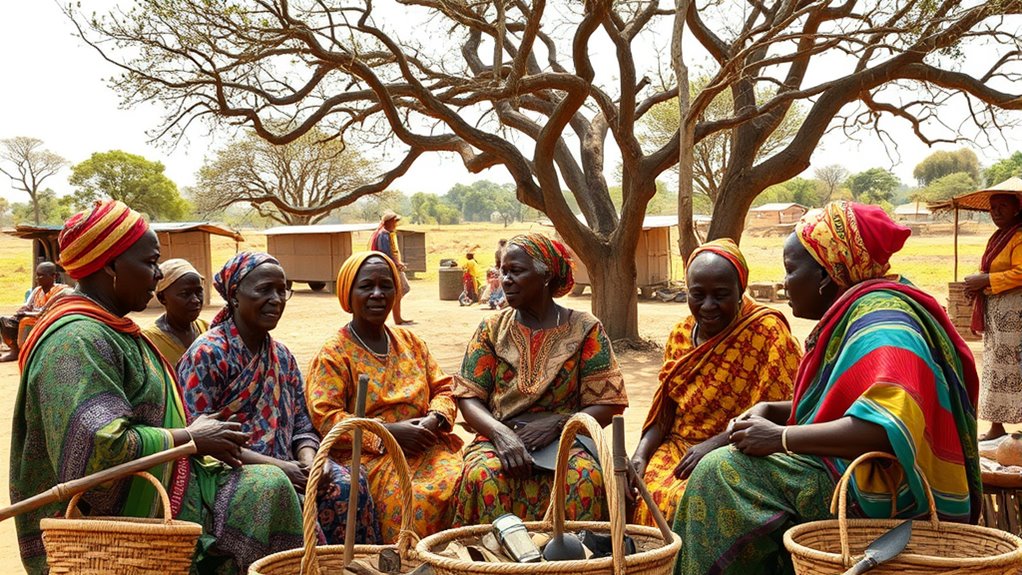
Chewa, a Bantu language, serves as Malawi’s national tongue, spoken by a majority of the population as a key medium for daily communication and cultural expression. Originating from the Bantu migrations, it belongs to the Niger-Congo family and is primarily used in central Malawi, including regions like the Central Region. With over 12 million speakers, it fosters unity among diverse ethnic groups, such as the Chewa, Yao, and Tumbuka. The language plays an essential role in education, with it being a primary instructional medium in schools, and in media, where radio and television broadcasts promote literacy and preserve folklore. Government policies promote Chewa to maintain national identity, alongside English. Its tonal structure and rich proverbs reflect Malawi’s heritage, aiding in storytelling and social cohesion. Despite regional dialects, a standardized form guarantees broad accessibility, underscoring its enduring significance in Malawian society.
Key Features of English to Chewa Translation
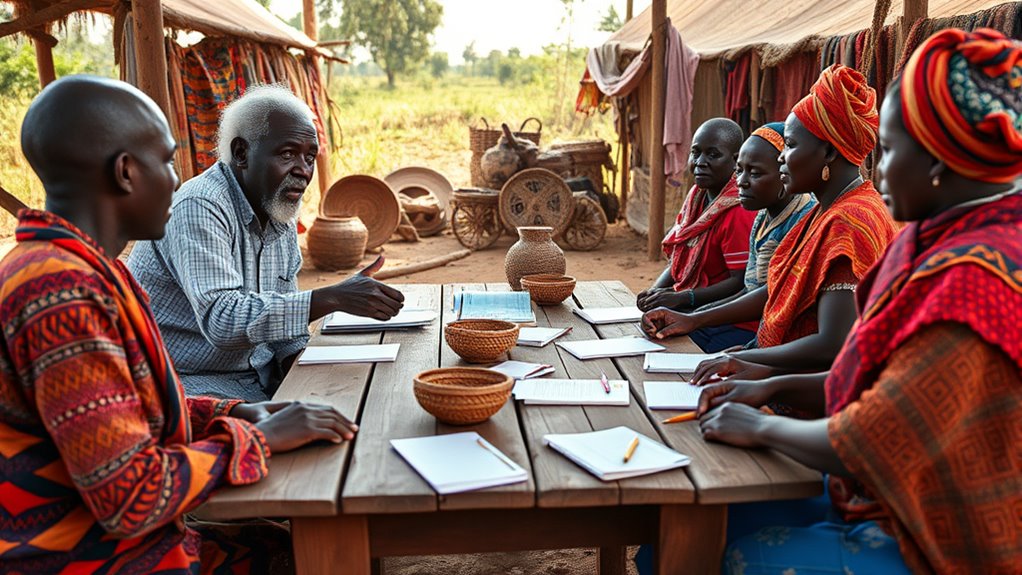
Translating from English to Chewa involves handling key features like tonal variations, which are essential for accurate meaning conveyance. Chewa’s tonal system alters word meanings, demanding precise intonation in translations. The language also employs agglutinative structures, where morphemes combine to form complex words, contrasting with English’s more isolated vocabulary. Additionally, Chewa features noun classes that influence agreement and verb conjugations, requiring translators to navigate these for fidelity. Grammatical aspects, such as aspectual markers, further complicate the process, ensuring cultural nuances are preserved.
| Key Feature | Description |
|---|---|
| Tonal Variations | Changes word meanings based on pitch. |
| Agglutinative Structure | Combines morphemes into single words. |
| Noun Classes | Determines agreement in sentences. |
Benefits of Translation Services in Africa
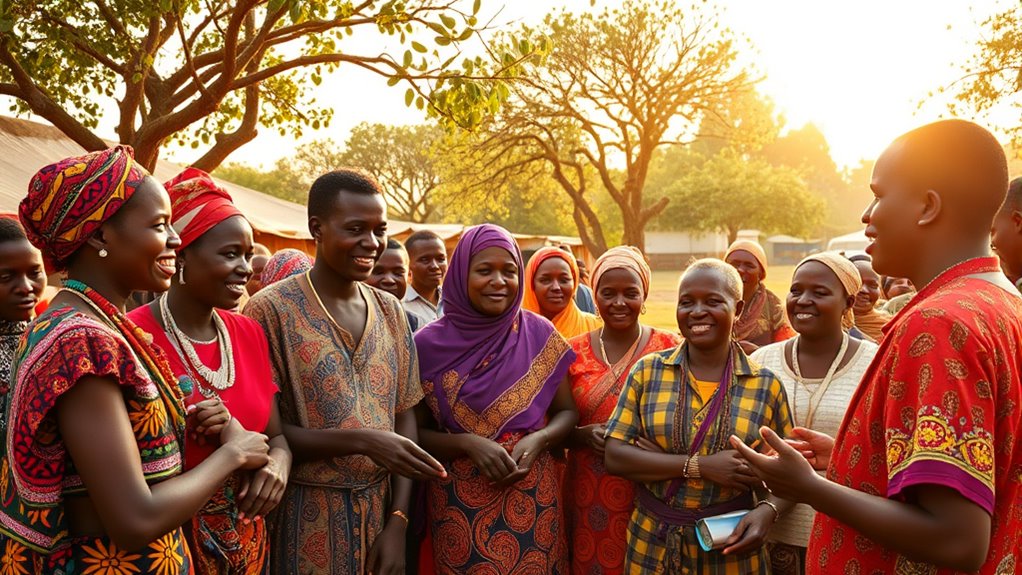
Translation services in Africa greatly drive economic growth by enabling smoother business transactions and market access. They foster cultural exchange by connecting diverse communities and preserving local languages. Additionally, these services enhance communication, reducing misunderstandings in education, healthcare, and daily interactions.
Economic Growth
Economic growth in Africa is increasingly fueled by the role of translation services in bridging linguistic divides. These services facilitate international trade by enabling businesses to communicate effectively across languages, reducing barriers in negotiations and contracts. For example, they help African companies access global markets, attract foreign investment, and enhance export capabilities, directly contributing to GDP increases. Translation also supports job creation in sectors like e-commerce and manufacturing, fostering sustainable development.
| African Country | Key Economic Sector | Impact of Translation Services |
|---|---|---|
| Malawi | Agriculture | Enables export deals and market access |
| Nigeria | Oil and Gas | Facilitates international contracts |
| South Africa | Mining | Supports global trade agreements |
Cultural Exchange
Beyond mere economic advantages, translation services in Africa greatly enhance cultural exchange by enabling the sharing of diverse traditions, literature, and artistic expressions across linguistic boundaries. For instance, translating Chewa folklore into English allows global audiences to appreciate Malawi’s rich oral histories, fostering mutual respect and understanding among communities. This process preserves endangered languages and cultural narratives, as seen in initiatives that adapt African novels for international platforms, promoting inclusivity. Artistic collaborations flourish, with musicians and artists exchanging ideas through translated works, bridging divides and enriching creative landscapes. Ultimately, such services empower African societies to showcase their heritage, encouraging a deeper global appreciation of the continent’s multifaceted identities while strengthening social cohesion through shared stories and traditions. (124 words)
Improved Communication
While linguistic barriers often hinder interactions in Africa’s multilingual societies, translation services play a pivotal role in enhancing communication by facilitating clear and accurate exchanges. In Africa’s diverse contexts, these services bridge gaps in business, education, healthcare, and community interactions, fostering inclusivity and efficiency. Key improvements include:
- In business negotiations, executives visualize seamless deal-making, with translated discussions painting pictures of prosperous cross-border partnerships and economic collaboration.
- In education, students imagine vibrant classrooms where translated materials reveal knowledge, evoking scenes of enthusiastic learners from varied linguistic backgrounds engaging deeply.
- In healthcare, patients picture life-saving consultations, as accurate translations depict clear exchanges between doctors and families, ensuring precise understanding of treatments.
- In community events, participants evoke images of harmonious gatherings, where translation enables shared stories and cultural dialogues without isolation or misunderstanding.
This connectivity drives societal progress.
Common Phrases for Daily Use
Daily interactions in Malawi frequently require common phrases in Chewa, making them essential for English speakers seeking effective communication. These phrases cover everyday scenarios, such as greetings, where “Moni” means “Hello,” fostering initial connections. For instance, “Kodi bwanji?” translates to “How are you?” and is crucial for polite inquiries. Basic requests like “Ndifuna chakudya” (I want food) aid in markets or meals, while “Zikomo” (Thank you) expresses gratitude in transactions. Directions might involve “Ili kuti?” (Where is it?), helping with navigation. Politeness phrases, such as “Chonde” (Please), enhance interactions in social settings. Mastering these equips travelers and professionals to engage confidently, reducing misunderstandings and building rapport in daily exchanges. Overall, incorporating these phrases promotes smoother, more authentic conversations in Chewa-speaking environments.
Cultural Aspects in Translation Practices
Translating English to Chewa requires attention to cultural nuances, as these elements influence the accuracy and sensitivity of the output. In Malawi’s context, translators must navigate differences in social customs, proverbs, and taboos to avoid misinterpretation. For instance, English idioms often clash with Chewa’s agrarian roots, demanding adaptations that preserve meaning without offense.
Cultural sensitivity guarantees translations resonate authentically, fostering better communication.
- Greetings and Respect: Imagine elders receiving formal Chewa salutations, unlike casual English hellos, to honor hierarchy.
- Proverbs and Nature: Picture Chewa proverbs drawing on farming imagery, such as rain symbolizing blessings, unlike urban English metaphors.
- Taboos in Language: Envision avoiding direct references to death or illness, as Chewa culture uses euphemisms to maintain harmony.
- Festivals and Rituals: Visualize translations for events like Lake of Stars festival, incorporating rhythmic language that evokes communal joy.
This approach enhances cross-cultural understanding, making translations more impactful. (124 words)
Steps for Accurate English to Chewa Conversion
The steps for accurate English to Chewa conversion begin with gathering resources, such as reliable dictionaries and cultural references. Following this, applying techniques guarantees that nuances in meaning are preserved during translation. These approaches form the foundation for effective language transfer in Malawi’s context.
[LIST OF 3 SUBHEADING DISCUSSION POINTS IN ENGLISH
Three essential steps facilitate accurate English to Chewa conversion: first, identifying linguistic differences such as grammar and vocabulary; second, utilizing reliable translation tools for initial drafts; and third, verifying outputs with native speakers for cultural accuracy. This process guarantees translations capture Malawi’s linguistic nuances, avoiding common pitfalls in cross-cultural communication. By focusing on these steps, translators can bridge language gaps effectively.
The following numeric list illustrates key imagery elements to visualize the conversion process:
- Grammar contrasts: Imagine English’s rigid sentence structures morphing into Chewa’s fluid, tonal patterns, like rivers adapting to terrain.
- Vocabulary adaptation: Picture words transforming from English roots to Chewa equivalents, akin to seeds sprouting in Malawi’s fertile soil.
- Tool-assisted drafting: Envision digital interfaces as bridges, linking source text to preliminary Chewa versions under a digital sky.
- Cultural verification: See native speakers as guardians, refining translations with cultural symbols, guaranteeing authenticity in every phrase.
Gather Resources
Gathering essential resources lays the groundwork for precise English to Chewa translation, encompassing dictionaries, online tools, and cultural references to address linguistic nuances effectively. Reliable dictionaries, such as those from academic sources or apps like Google Translate’s Chewa options, provide core vocabulary and grammar rules. Online tools, including language databases and forums, offer real-time access to evolving terminology. Cultural references, like ethnolinguistic studies or Malawian literature, guarantee sensitivity to idioms and context. Translators should seek reputable publishers and verified websites for accuracy, prioritizing materials from Malawi’s linguistic institutions. This preparation minimizes errors by building a thorough knowledge base, fostering translations that respect Chewa’s tonal and structural complexities without overgeneralization.
Apply Techniques
Applying effective techniques transforms English text into accurate Chewa translations by systematically addressing linguistic differences. Translators must navigate nuances like tonal variations, idiomatic expressions, and grammatical structures unique to Chewa, ensuring cultural fidelity and precision in communication. This process demands a methodical approach to bridge language gaps effectively.
- Break down sentences: Imagine dissecting a complex English sentence into simple components, like unraveling a woven basket, to identify core meanings before reconstructing in Chewa’s rhythmic flow.
- Incorporate cultural context: Picture weaving local proverbs into the translation, as if threading vibrant Malawian fabrics, to evoke the same emotional resonance in Chewa speakers.
- Adapt vocabulary precisely: Envision swapping English words for Chewa equivalents, like exchanging foreign seeds for native plants, ensuring natural growth in the target language.
- Review and refine iteratively: Visualize polishing the text like smoothing a carved wooden artifact, eliminating errors to achieve a seamless, authentic final product.
Professional Translators in Malawi
Professional translators in Malawi specialize in converting text between English and Chewa, ensuring accurate cultural and linguistic adaptation for various sectors. These experts possess deep knowledge of both languages, often holding certifications from recognized institutions to maintain high standards. In education, they translate curricula and materials, facilitating learning for Chewa-speaking students. In healthcare, they handle patient information and instructions, promoting better access to services. Business sectors rely on them for contracts and marketing, aiding international trade. Government agencies employ these professionals for official documents, enhancing public communication. Their work fosters cultural preservation and economic growth, making them essential in Malawi’s multilingual landscape. Despite challenges like resource limitations, they continually improve through training, ensuring reliable translations that support national development.
Differences Between English and Chewa
While English and Chewa both serve as essential languages in Malawi, they exhibit fundamental differences in grammar, vocabulary, and phonetics that reflect their distinct linguistic origins. English, rooted in Indo-European traditions, features rigid sentence structures and complex tenses, while Chewa, a Bantu language, relies on noun classes and agglutinative forms for nuanced expression. These contrasts highlight how language shapes cultural communication.
- Grammar Imagery: Picture English sentences with fixed word orders like “The dog runs,” versus Chewa’s fluid noun agreements, such as prefixes altering meaning in “Galimoto yabwera” (The car has come).
- Vocabulary Contrast: Imagine everyday English words like “book” transforming into Chewa’s “buku,” evoking entirely different lexical worlds rooted in local heritage.
- Phonetic Variations: Envision English’s crisp consonants, like the “th” in “think,” against Chewa’s tonal melodies, where pitch changes word meanings, painting auditory landscapes.
- Structural Differences: Visualize English’s straightforward subject-verb-object flow, compared to Chewa’s emphasis shifts, like fronting nouns for focus, creating dynamic narrative rhythms.
Applications in Business Communication
In Malawi’s business landscape, English and Chewa facilitate effective communication by addressing linguistic diversity, enabling smoother negotiations, document translations, and client interactions while leveraging the strengths of each language’s structure. English often serves as the formal medium for contracts and international dealings, providing precision and global accessibility, whereas Chewa enhances local rapport in marketing and community-based enterprises. This dual-language approach fosters trust in supplier relationships, where Chewa’s relational nuances build alliances, and English guarantees legal clarity. In customer service, switching between languages improves satisfaction by tailoring messages to cultural contexts, boosting loyalty and market penetration. Overall, integrating English and Chewa in business minimizes misunderstandings, streamlines operations, and supports sustainable growth in Malawi’s diverse economy.
Tools for Effective Language Translation
Effective tools for English to Chewa translation include digital applications, online platforms, and reference materials that streamline the process in Malawi. These resources enhance accuracy and accessibility for users, from business professionals to educators, by leveraging technology to bridge language gaps. They facilitate real-time conversion, cultural adaptation, and learning, making communication more efficient.
- Mobile apps like translation software visualize instant word swaps, imagining a traveler effortlessly converting phrases on a screen amidst bustling Malawian markets.
- Online platforms depict collaborative interfaces, where users see virtual glossaries evolving like a digital tapestry of shared knowledge in community forums.
- Reference books conjure images of well-worn dictionaries on desks, guiding precise term selections under the warm light of rural study sessions.
- Specialized software illustrates automated tools that paint scenarios of seamless document translation, as if words morph fluidly across screens in vibrant, evolving patterns.
Historical Evolution of Chewa Dialects
The historical evolution of Chewa dialects began with early forms that emerged in central Africa, laying the groundwork for the language’s structure. These initial variants influenced regional communication patterns among communities. Over time, external dialect influences from neighboring languages contributed to the diversification and adaptation of Chewa.
Early Chewa Forms
Early Chewa forms emerged from proto-Bantu languages during migrations in Southern Africa, shaping the dialect’s foundational structures in what is now Malawi. These early iterations featured simplified phonetics and basic tonal systems, drawing from ancestral roots to form a robust verbal framework. As communities settled, Chewa developed distinct elements that influenced daily communication and oral traditions.
The evolution can be visualized through:
- Phonetic shifts: Imagine soft vowel harmonies echoing across ancient grasslands, blending into melodic speech patterns.
- Basic vocabulary: Picture everyday words for nature, like “nsomba” for fish, rooted in survival needs near rivers.
- Grammatical cores: Envision noun classes organizing concepts, much like classifying tools in a hunter’s kit.
- Tonal nuances: Think of rising pitches signaling emotions, akin to bird calls in misty forests.
This foundation laid essential groundwork for Chewa’s growth.
Dialect Influences Over Time
As external migrations and cultural exchanges unfolded, Chewa dialects underwent significant transformations, influenced by interactions with neighboring languages such as Yao, Tumbuka, and Ngoni. Historical records show that in the 18th and 19th centuries, Bantu migrations facilitated linguistic blending, with Yao contributing vocabulary for agriculture and trade in southern Malawi. Tumbuka influences in the north introduced phonetic shifts and new expressions, enriching everyday communication. Ngoni incursions added terms related to governance and warfare, creating regional variations that reflected social dynamics. Over time, these evolutions enhanced Chewa’s adaptability, as seen in its use during colonial periods and post-independence. Modern dialects continue to evolve through urbanization, education, and media, blending traditional elements with contemporary needs for effective translation and cross-cultural dialogue in Malawi.
Tips for Improving Translation Skills
Improving translation skills in English to Chewa requires consistent practice and strategic approaches, particularly for those working in Malawi’s linguistic context. To enhance proficiency, translators must focus on methods that build linguistic intuition and cultural sensitivity without delving into regional specifics.
- Immerse in everyday scenarios: Picture translators eavesdropping on bustling Malawian markets, absorbing colloquial phrases to bridge language gaps vividly.
- Utilize interactive tools: Envision using apps for real-time practice, where words transform into dynamic dialogues, sharpening accuracy like a craftsman honing tools.
- Analyze native materials: Imagine poring over Chewa stories and songs, visualizing characters’ emotions to grasp subtle nuances in translations.
- Collaborate with peers: See groups exchanging feedback in workshops, painting mental images of evolving translations refined through shared insights.
Regional Variations in Chewa Usage
Chewa usage in Malawi exhibits regional variations that include dialect differences, vocabulary distinctions, and pronunciation shifts. These elements influence how translations from English adapt to local contexts. Recognizing such variations enhances the accuracy of language conversion efforts.
Dialect Variations
Regional variations in Chewa dialects across Malawi stem from geographical and cultural influences, resulting in differences in vocabulary, pronunciation, and grammar that reflect local communities’ unique histories. These dialects evolve through interactions with neighboring languages and environments, shaping how Chewa is spoken in everyday life. For instance, northern areas may feature softer tones influenced by lake-side settings, while southern regions incorporate rhythmic patterns from diverse cultural exchanges.
- Northern Dialects: Imagine rolling hills echoing with elongated vowels, as speakers drawl words to mimic the vast landscapes of the north.
- Central Dialects: Picture bustling markets where rapid consonant clusters convey the energy of central Malawi’s agricultural heartland.
- Southern Dialects: Envision urban tones softening grammar structures, reflecting the blend of traditional and modern influences in lively cityscapes.
- Eastern Dialects: Visualize border areas with melodic intonations that flow like rivers, adapting to cross-cultural dialogues.
Vocabulary Differences
Beyond variations in pronunciation and grammar, differences in vocabulary among Chewa speakers reflect the diverse influences of local environments and cultural exchanges. In Malawi, for instance, rural communities might use specific terms for agricultural tools or crops, such as “mthiko” for hoe in some areas, while urban dialects incorporate loanwords from English or neighboring languages like Yao or Tumbuka. In Zambia, Chewa vocabulary often adapts to mining contexts, introducing words related to industry and trade not common in Malawian variants. These regional nuances arise from historical migrations, inter-ethnic marriages, and economic activities, enriching the language’s adaptability. Translators must navigate these variations to guarantee accurate English-to-Chewa conversions, as a word’s meaning can shift subtly across borders. This diversity underscores the importance of context in effective communication, fostering cultural preservation amid globalization.
Pronunciation Changes
Pronunciation variations in Chewa reflect geographical influences, with speakers in Malawi often softening consonants in rural dialects, while those in Zambia may emphasize vowel lengths to adapt to local environments. These changes highlight how terrain and culture shape speech patterns, affecting word clarity and meaning in everyday use. For instance, in Malawi’s highlands, sounds mimic flowing streams, whereas Zambian variations echo rhythmic village chants.
Regional differences create vivid auditory imagery, as follows:
- Softened consonants in Malawi: Imagine whispers through misty forests, where ‘k’ softens to a gentle breath, like wind rustling leaves.
- Extended vowels in Zambia: Picture elongated sounds stretching like vast plains, turning short ‘a’ into a drawn-out call echoing across savannas.
- Tone shifts in border areas: Envision rising pitches like rolling hills, altering word emphasis to signal questions or emotions in conversations.
- Blended accents in urban settings: Think of merged pronunciations fusing like market crossroads, where rural softness meets urban crispness for dynamic exchanges.
Role of Translation in Education
Translation plays a pivotal role in Malawi’s education system by bridging language gaps between English, the official instructional language, and Chewa, which many students speak natively. This process enables students to comprehend complex subjects, enhancing academic performance and inclusivity in classrooms. For instance, translated textbooks and teaching materials make abstract concepts accessible, reducing dropout rates among Chewa-speaking learners. Teachers often rely on translation tools to deliver lessons effectively, fostering bilingual proficiency that supports cognitive development. Furthermore, it promotes cultural relevance in education, as incorporating Chewa narratives alongside English content helps preserve local heritage while meeting global standards. By facilitating clear communication, translation empowers educators to address diverse linguistic needs, ultimately improving literacy and educational equity in Malawi’s multilingual environment.
Future Trends in African Language Services
As African language services expand, advancements in technology and digital platforms are shaping their evolution, particularly in regions like Malawi where demand for tools supporting indigenous languages such as Chewa continues to grow. Emerging trends emphasize AI-driven translation, mobile accessibility, and cultural integration to bridge linguistic divides.
Future developments will likely include:
- AI-powered real-time translators visualizing seamless conversations in bustling Malawian markets, where traders switch effortlessly between English and Chewa.
- Mobile apps with voice recognition depicting farmers in remote villages accessing weather updates in their native tongue, fostering empowerment.
- Online learning platforms illustrating classrooms alive with interactive Chewa modules, enhancing educational equity.
- Global collaboration tools portraying international conferences where Chewa speakers engage via virtual interfaces, promoting cultural visibility.
These innovations promise to preserve and promote African languages effectively.
Frequently Asked Questions
How Much Does English to Chewa Translation Cost?
The query seeks information on the cost of English to Chewa translation services. Costs typically vary based on factors like word count, complexity, and provider expertise, often ranging from $0.05 to $0.20 per word. For accurate quotes, contacting professional agencies is recommended.
Are Your Translators Certified Professionals?
The question of whether translators are certified professionals is vital for ensuring translation quality. Reputable services often employ individuals with certifications from recognized bodies like the ATA, guaranteeing expertise, accuracy, and adherence to industry standards.
What Is the Typical Turnaround Time for Translations?
The typical turnaround time for translations in professional services usually ranges from one to three business days for standard documents. Factors such as document length, complexity, and urgency can influence this period, while expedited options may reduce it.
Do You Offer Discounts for Bulk Translations?
The question regarding discounts for bulk translations is pertinent in the industry. Many translation services offer such incentives, typically applying reduced rates for projects exceeding a specified volume, like 10,000 words, to encourage larger commitments and foster client loyalty.
How Can I Request a Sample Translation?
One can request a sample translation by contacting the service provider through their official website or email. Submitting details such as the source text and desired languages guarantees an accurate and timely response from the team.