
 Elizabeth123
In Senegal, English to Wolof translation services, such as those from Translation Africa, deliver culturally sensitive solutions through certified translators fluent in Wolof’s tonal nuances and regional dialects. These professionals follow structured protocols, including peer reviews and tools like SDL Trados, to guarantee grammatical accuracy and natural flow in fields like business, education, and healthcare. Such services bridge language gaps, fostering cultural preservation and economic opportunities. Additional aspects unfold in the following sections.
Quick Summaries
- Translation Africa provides specialized English to Wolof translation services in Senegal.
- Certified translators with expertise handle legal, medical, business, and educational documents.
- Services emphasize cultural sensitivity for accurate and contextually appropriate adaptations.
- Quick turnaround times ensure efficient completion of translation projects.
- Utilizes tools like SDL Trados and bilingual dictionaries for high-quality results.
Overview of Wolof Language
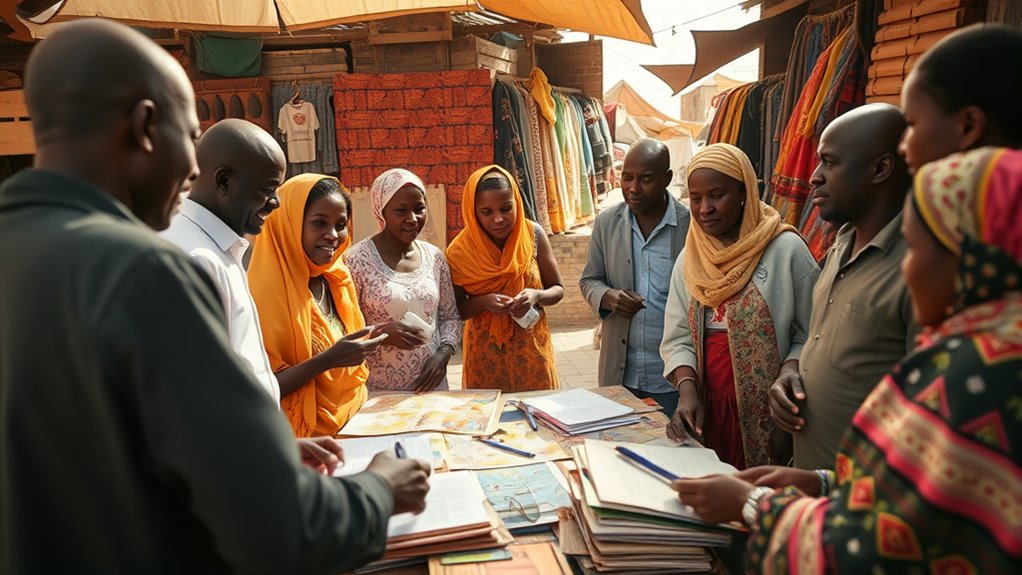
The Wolof language belongs to the Niger-Congo family and is primarily spoken in Senegal, Gambia, and Mauritania. As part of the West Atlantic branch, it features tonal elements where pitch distinguishes meaning, alongside a straightforward phonology with five vowels and distinctive consonants like implosives. Wolof employs a Latin-based script, adapted during colonial times, though it remains deeply rooted in oral traditions. The language boasts several dialects, varying by region, such as the urban variety in Dakar versus rural forms, reflecting cultural diversity. Approximately 5 million people speak Wolof as a first language, with many more using it as a second, influencing daily life, folklore, and artistic expressions. Its grammar includes noun classes, subject-verb-object structure, and reduplication for emphasis, while vocabulary has absorbed influences from Arabic and French through historical exchanges. This evolution underscores Wolof’s role in regional identity and heritage preservation efforts.
Importance of Translation in Senegal
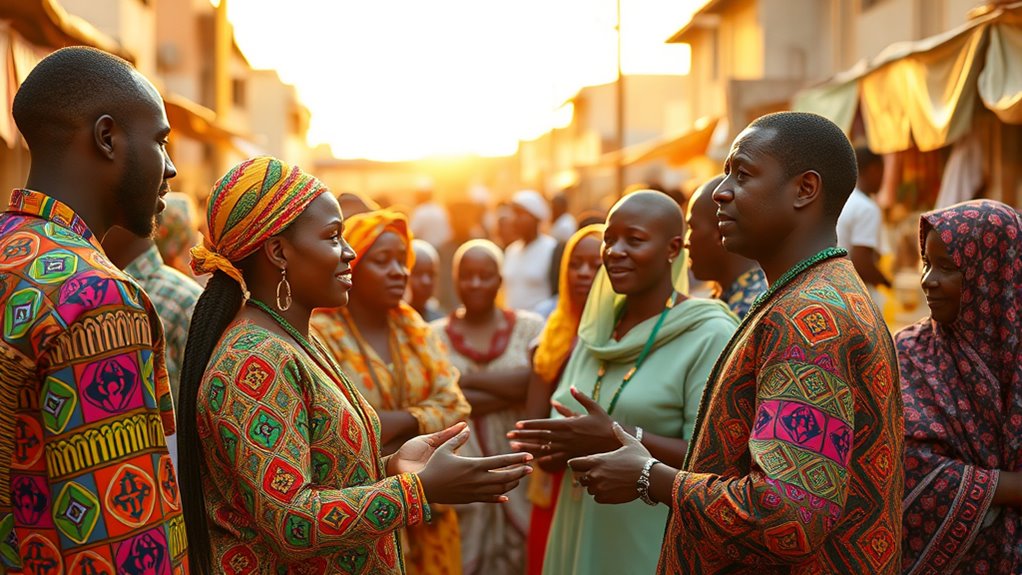
Translation holds significant importance in Senegal by aiding cultural preservation, as it helps maintain and transmit Wolof traditions through accessible language resources. This process supports economic benefits by facilitating communication in trade and education, thereby enhancing opportunities for local communities. Overall, these aspects underscore the role of translation in bridging linguistic divides within the country.
Cultural Preservation
Cultural preservation in Senegal hinges on translation as an essential mechanism for safeguarding indigenous languages and traditions, guaranteeing that oral histories and customs endure amidst globalization’s pressures. Translation facilitates the documentation and revitalization of Wolof and other local languages, enabling communities to adapt cultural narratives to contemporary challenges without losing authenticity. It empowers educators and storytellers to transmit heritage effectively, fostering a sense of identity amid external influences.
- Documenting oral traditions: Translating folktales from Wolof to English preserves them in archives for future generations.
- Educational integration: Rendering cultural texts into multiple languages enriches school curricula, embedding traditions in daily learning.
- Cultural exchanges: Translation in festivals allows Senegalese artists to share customs globally while maintaining original meanings.
- Intergenerational transmission: Converting elders’ stories into written forms guarantees knowledge passes to youth, combating language erosion.
Economic Benefits
Economic benefits of translation in Senegal extend to trade and tourism, where accurate language conversion facilitates international business dealings and cultural exports. This process enhances market access for local products, boosting exports and foreign investment. For instance, translating Wolof materials into English supports negotiations with global partners, while tourism thrives as cultural sites become more accessible to English-speaking visitors. Additionally, translation services create jobs in language sectors, contributing to economic diversification and GDP growth.
| Economic Sector | Key Benefits of Translation |
|---|---|
| Trade | Facilitates international deals and market expansion |
| Tourism | Attracts more visitors through accurate cultural information |
| Education | Enables access to global resources and partnerships |
| Agriculture | Improves export negotiations and quality standards |
| Technology | Enhances collaboration on innovations and funding |
Steps for English to Wolof Translation
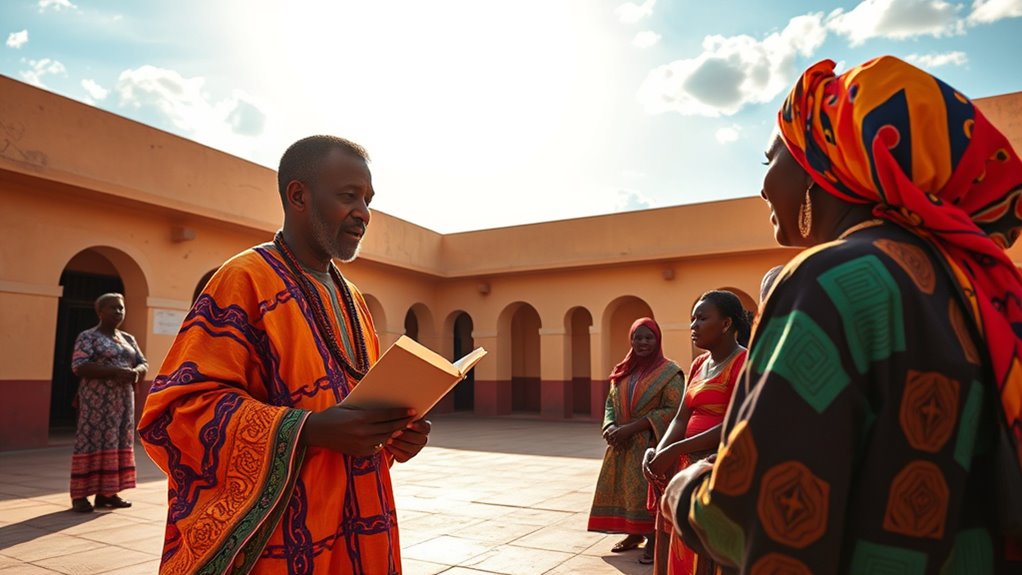
A structured approach is essential for translating English to Wolof, encompassing key steps to guarantee accuracy and cultural fidelity. This methodical process helps translators navigate linguistic differences while preserving the original intent and context, fostering effective cross-cultural communication.
- Understand the source material: Begin by thoroughly analyzing the English text, identifying key themes, tone, and nuances to establish a solid foundation.
- Adapt to cultural contexts: Research and incorporate Wolof cultural elements, ensuring the translation aligns with local customs and avoids potential sensitivities.
- Execute the translation: Convert the text step-by-step, focusing on grammatical accuracy and natural flow in Wolof while maintaining the core message.
- Verify and refine: Conduct a thorough review, including self-editing and peer feedback, to correct errors and enhance overall clarity and precision.
Essential Vocabulary and Phrases
Building on the translation steps, familiarity with key Wolof vocabulary and phrases supports accurate English conversions. Essential words encompass basic greetings, such as “Nanga def?” for “How are you?” and “Maa ngi fi” for “I am fine.” Numerals are crucial; for example, “Ben” means one, “Dool” means two, and “Ndek” means three, aiding in precise numerical translations. Common phrases include “Jerejef” for “Thank you” and “Demna” for “Please,” which facilitate polite exchanges. Directional queries like “Dafa ci market bi?” for “Where is the market?” enhance practical communication. Everyday expressions, such as “Jaam nga am?” for “Good morning” and “Ba beneen” for “Goodbye,” facilitate smooth interactions. This foundational knowledge minimizes errors, allowing translators to maintain clarity and fidelity in English to Wolof renditions. Mastery of these elements sharpens linguistic accuracy, promoting effective language bridging.
Cultural Context in Translations
While linguistic proficiency forms the foundation of translation, cultural context is essential for accurately conveying English to Wolof, as it addresses subtleties like idioms and social norms that influence meaning. In Wolof translations, cultural awareness guarantees meanings resonate with Senegalese audiences, avoiding errors from literal interpretations. This involves grasping local customs, historical influences, and contextual variations that shape language use.
- Idioms and Proverbs: Wolof expressions often draw from oral traditions, like comparing situations to animal folktales, which require cultural equivalents in English.
- Social Hierarchies: Language reflects respect for age and status, such as using honorifics in greetings, to maintain social harmony.
- Regional Variations: Dialects in Senegal vary by area, incorporating local flavors that affect word meanings and pronunciation.
- Cultural Taboos: Certain topics, like family matters, demand indirect phrasing to align with societal values and prevent offense.
Professional Services for Wolof Translation
Professional services for Wolof translation rely on expert translators with specialized linguistic skills to bridge English and Wolof effectively. Service accuracy remains essential, as it guarantees translations are faithful to the source material and minimize errors. Together, these factors enhance the overall quality and reliability of translation outcomes.
Expert Translators
Expert translators specializing in Wolof language services deliver precise and reliable English-to-Wolof conversions through established professional firms. These professionals, often based in Senegal, combine linguistic expertise with cultural insights to bridge communication gaps effectively. They work within structured environments that prioritize quality and client needs, drawing from a pool of vetted specialists.
- Linguistic proficiency: Translators hold advanced degrees and certifications in languages, ensuring adept handling of complex texts.
- Cultural immersion: Many have lived experiences in Wolof-speaking regions, incorporating local customs into translations.
- Team collaboration: Firms employ multidisciplinary teams for thorough project management and review processes.
- Ethical standards: Adherence to industry codes maintains confidentiality and professional integrity in every assignment.
Service Accuracy
Service accuracy in professional Wolof translation hinges on rigorous protocols that minimize errors and preserve meaning. This involves employing certified translators with native fluency and cultural expertise, who utilize advanced tools like computer-assisted translation software to maintain consistency. Multiple review stages, including peer editing and quality assurance checks, guarantee fidelity to the source text while adapting to Wolof’s nuances, such as regional dialects and idiomatic expressions. In Senegal, where accurate communication supports sectors like healthcare, education, and business, these protocols prevent misunderstandings and enhance trust. Translation services prioritize ongoing training and standardized processes, such as back-translation and client consultations, to deliver precise results. By focusing on error minimization, providers like Translation Africa foster effective cross-cultural exchanges, ultimately strengthening global connections in Wolof-speaking communities.
Tools and Resources for Translators
Translators handling English to Wolof conversions benefit from a range of specialized tools and resources that enhance accuracy and streamline workflows. These assets help maintain linguistic fidelity while reducing errors in complex translations. Essential options include digital platforms for quick reference and collaborative work.
- Translation software: Tools like SDL Trados or MemoQ provide automated suggestions and memory banks for efficient English-Wolof pairs.
- Bilingual dictionaries: Resources such as Wolof-English glossaries offer detailed vocabulary and idiomatic expressions for precise rendering.
- Online corpora: Databases like those from African language archives enable context-specific term verification.
- Mobile apps: Applications with voice recognition support on-the-go translation practice and quick lookups for field accuracy.
Real-World Applications in Africa
In Africa, English to Wolof translations play a key role in sectors like education, healthcare, and business, facilitating communication in diverse communities. In education, these translations enable access to curricula and learning materials for Wolof-speaking students, bridging language barriers to improve literacy and academic outcomes. For instance, schools in Senegal use translated resources to teach science and mathematics effectively. In healthcare, accurate translations of medical instructions and patient information guarantee better treatment adherence and health education, reducing miscommunication in clinics. Meanwhile, in business, translations support negotiations, marketing, and trade agreements, fostering economic growth in multilingual markets. Beyond these, applications extend to government services, where translated documents promote civic participation, and tourism, enhancing cultural exchanges. Overall, such translations empower communities by promoting inclusivity and understanding across linguistic divides.
Frequently Asked Questions
How Much Does Wolof Translation Cost?
The query seeks information on the cost of Wolof translation services. Various factors, including word count, document complexity, and provider expertise, determine pricing. Professional rates typically range from $0.05 to $0.20 per word, with additional fees for rush jobs or specialized content, varying by region and agency.
What Is the Typical Turnaround Time?
The typical turnaround time for translation services varies based on project complexity and volume. Simple documents often take 1-2 days, while larger assignments may require 3-5 days or more, depending on the provider and resources involved.
Can I Translate Legal Documents Myself?
Translating legal documents oneself is possible but generally inadvisable due to complexities and risks of inaccuracies. Professional translators guarantee precision, cultural nuances, and compliance with legal standards, preventing potential disputes or invalidations.
How Do I Verify Translation Accuracy?
Verifying translation accuracy requires comparing the source text with the translated version for fidelity and meaning. Independent experts or bilingual reviewers can assess errors, while back-translation and automated tools provide additional validation for reliability.
Are There Free Wolof Learning Apps?
The current query asks whether free Wolof learning apps exist. Several platforms, such as Duolingo and Memrise, offer free language courses that may include Wolof. Users are advised to check app stores like Google Play or the App Store for availability and updates.