
 Elizabeth123
Certified translations are essential for Kenya’s immigration processes, providing accurate, legally verified renditions of documents like passports and visas by qualified professionals. Translation Africa offers reliable services, employing certified linguists who guarantee precision, confidentiality, and compliance with international standards, including notarized seals and affidavits. This approach minimizes errors and supports seamless applications for immigrants. Deeper insights into processes, benefits, and requirements await in the following details.
Quick Summaries
- Certified translations ensure accurate, legally compliant renditions of documents for Kenyan immigration processes.
- Translation Africa provides specialized services for visas, passports, and other immigration-related documents.
- Professional translators follow international standards, offering notarized seals and affidavits for authenticity.
- Key documents like birth certificates and marriage certificates require precise translation for official acceptance.
- Verification includes side-by-side comparisons and error audits to maintain accuracy and integrity.
What Is Certified Translation for Immigration?

Certified translation for immigration refers to a professionally verified translation of documents, such as birth certificates or passports, that meets specific legal standards for accuracy and authenticity. This process typically involves a qualified translator or agency adhering to international guidelines, ensuring the original document’s intent is preserved without alterations. In practice, translators must be certified by recognized bodies, often requiring them to sign affidavits attesting to the translation’s fidelity. Common requirements include bilingual proficiency and familiarity with legal terminology to handle nuances across languages. For instance, translations may need to include the original text alongside the rendered version for verification purposes. Overall, this certification process safeguards the document’s integrity, facilitating its acceptance in official contexts without endorsing its substantive value.
Importance of Certified Translations in Kenya
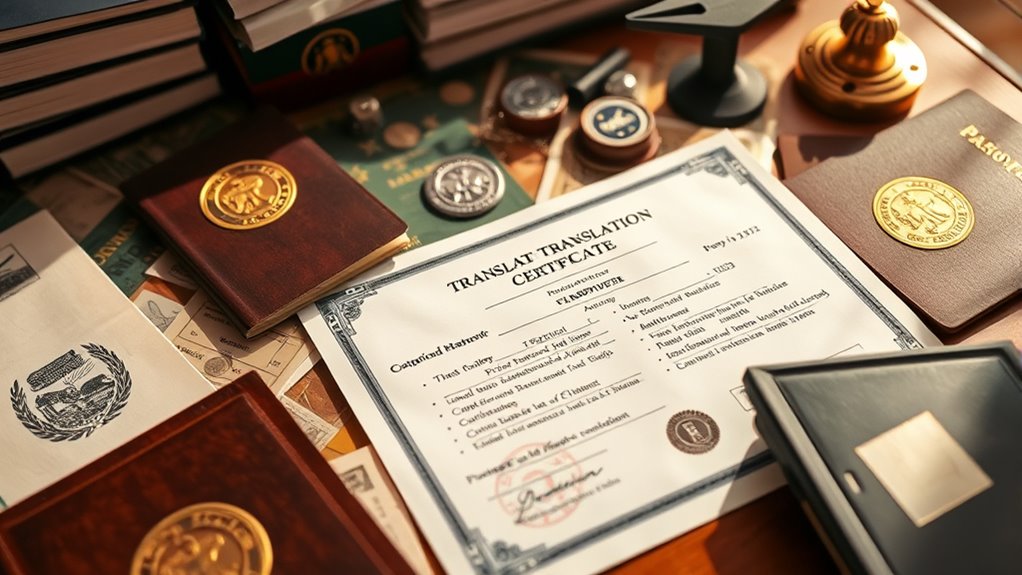
In Kenya, certified translations play a pivotal role in immigration and legal processes by ensuring documents like passports and certificates are accurately rendered and officially accepted. This precision is essential for immigrants seeking visas or residency, as inaccuracies can lead to delays, denials, or legal complications. Certified translations maintain the integrity of official records, adhering to stringent Kenyan regulatory standards that demand verifiable accuracy from qualified translators. For individuals and organizations, these translations foster trust in cross-border dealings, preventing misinterpretations that could undermine applications or disputes. In a diverse nation with multiple languages, they enable seamless communication with government bodies, courts, and international entities, ultimately supporting efficient administrative functions and upholding justice. By prioritizing authenticity, certified translations safeguard personal and professional interests in an increasingly globalized world.
Services Offered by Translation Africa

Translation Africa offers certified translations that meet international standards for accuracy and reliability. The company specializes in handling immigration documents, such as visas and passports, to facilitate seamless processes in Kenya. Additionally, its language services extend to a variety of needs, ensuring effective communication across different languages.
Certified Translations
The services of Translation Africa encompass certified translations tailored for immigration processes in Kenya, ensuring documents meet official standards. These translations are performed by qualified linguists who adhere to international best practices, verifying accuracy and authenticity through a notarized seal. Translation Africa employs experts fluent in English, Swahili, and other key languages, guaranteeing precise renditions that comply with Kenyan governmental requirements. This service emphasizes confidentiality and rapid delivery, minimizing delays in applications. By maintaining high ethical standards, Translation Africa builds trust, helping clients navigate bureaucratic hurdles effectively. Their process includes thorough proofreading and certification, which bolsters document credibility. Overall, these offerings provide a reliable foundation for seamless immigration procedures, reflecting the company’s commitment to excellence in linguistic services.
Immigration Documents
Immigration documents receive specialized services from Translation Africa, focusing on accurate translations of passports, birth certificates, and visas to meet Kenyan immigration standards. These translations are essential for applicants handling the complexities of immigration processes, ensuring all details align with official requirements to prevent delays or rejections. Translation Africa’s team of certified experts employs rigorous quality checks, including verification against original documents and adherence to Kenyan legal protocols. This precision helps clients secure approvals for residency, work permits, or citizenship applications. By prioritizing confidentiality and timely delivery, the service streamlines the documentation process, offering peace of mind through professionally stamped and sealed translations. Clients benefit from tailored support that emphasizes reliability and compliance, making Translation Africa a trusted partner in immigration matters.
Language Services
Language services from Translation Africa cover translation, interpretation, and localization, catering to businesses and individuals handling multilingual challenges. Translation services specialize in accurate, certified document conversion, such as immigration forms, visas, and legal papers, ensuring compliance with Kenyan authorities. Interpretation includes simultaneous and consecutive options for meetings, court sessions, or interviews, facilitating seamless communication in languages like Swahili, English, and others. Localization adapts content culturally, making materials relevant for diverse audiences in Kenya’s multicultural environment. These services employ certified linguists with expertise in immigration processes, guaranteeing precision and confidentiality. Businesses benefit from efficient multilingual support, while individuals navigate bureaucratic hurdles with ease. Translation Africa’s commitment to quality enhances global mobility and cross-cultural interactions in Kenya.
Key Documents Needing Certified Translation
Certified translations play a crucial role in Kenya’s immigration processes, particularly for documents that verify personal identity, qualifications, and relationships. These translations guarantee accuracy and official acceptance for applications like visas and residency, bridging language barriers for non-English or non-Swahili documents. In Kenya, key documents often require this service to facilitate seamless immigration.
- A birth certificate, envisioning the foundational record of one’s life journey from infancy.
- A marriage certificate, illustrating the formal seal of partnerships and family ties.
- Academic diplomas, depicting hard-earned educational milestones and career qualifications.
- Passport biodata pages, portraying essential identity markers like photos and stamps.
- Employment verification letters, capturing professional histories and skill endorsements.
The Certification Process Step-by-Step
Several steps outline the certification process for document translations in Kenya, ensuring compliance with official standards. The process begins with submitting the original document to a certified translator or agency, who must be accredited by relevant authorities. Next, the translator produces an accurate rendition, meticulously comparing it against the source for fidelity. Following this, a quality check is performed to confirm linguistic precision and adherence to legal requirements. The translator then prepares a certification statement, declaring the translation’s authenticity under oath. This includes affixing an official stamp or seal, along with the translator’s credentials. Finally, the certified document is finalized and returned, ready for submission to immigration bodies, while maintaining chain-of-custody integrity. This structured approach upholds reliability in official contexts.
Benefits of Using Professional Translators
Professional translators offer key advantages for document handling in immigration contexts, particularly in Kenya. They guarantee precise and culturally sensitive translations that minimize errors, which can otherwise delay processes or lead to rejections. Their expertise streamlines communication between applicants and authorities, fostering smoother interactions and reducing potential misunderstandings. By adhering to high standards, professional services enhance document credibility and reliability, ultimately supporting successful immigration outcomes.
- Flawless accuracy: Imagine documents transformed with meticulous word-for-word precision, like a skilled artisan polishing a gem.
- Cultural insight: Picture translators bridging gaps, as if traversing a vibrant Kenyan marketplace with ease.
- Swift efficiency: Envision timelines accelerating, similar to a swift river carrying essential papers to their destination.
- Secure confidentiality: Think of sensitive information guarded like a fortress, guaranteeing trust in every transaction.
- Certified excellence: Visualize official seals affirming quality, akin to a badge of honor on critical immigration files.
Common Requirements for Kenyan Immigration
Understanding the common requirements for Kenyan immigration begins with identifying the required documents, which applicants must prepare to support their applications. These documents often include passports, visas, and translated records to meet official standards. Eligibility criteria, such as age, health status, and financial stability, also play a vital role in determining approval.
Required Documents
For Kenyan immigration applications, essential documents typically include a valid passport, proof of financial means, and a completed visa form, among other requirements that vary by visa category. Applicants must also prepare supporting paperwork to demonstrate compliance and authenticity, such as identification and financial records. These documents guarantee a smooth process, emphasizing the need for accuracy and translation where necessary.
- Passport pages: Visualize crisp, stamped pages chronicling international journeys, each visa a gateway to new opportunities.
- Bank statements: Picture detailed ledgers with transaction histories, stacks of paper proving stable financial footing like a fortress of numbers.
- Visa application forms: Imagine neatly filled forms with personal details in black ink, a blueprint of one’s identity on official templates.
- Identity photographs: Envision clear, professional headshots against a plain background, capturing a focused gaze that speaks of determination.
- Supporting letters: Think of typed endorsements on letterheads, seals and signatures evoking trust and formal alliances.
Eligibility Criteria
Beyond the preparation of required documents, eligibility for Kenyan immigration hinges on meeting common requirements that vary by visa category. Applicants must generally possess a passport valid for at least six months beyond their intended stay. Financial proof is essential to demonstrate the ability to cover expenses without becoming a burden on the state. A clean criminal record is scrutinized to guarantee public safety. Health checks, including specific vaccinations, are required to prevent the spread of diseases. For work visas, an employment contract with a licensed Kenyan company is necessary, whereas student visas demand enrollment in an accredited educational institution. Family reunification visas require proof of familial relationships. Additionally, all applicants should show intent to depart Kenya upon visa expiry, often through return tickets or property ties. These criteria help maintain national security and promote orderly migration, guaranteeing only qualified individuals proceed.
How to Verify Translation Accuracy
Verifying the accuracy of a translation is essential for immigration processes in Kenya, where errors can lead to delays or rejections. To maintain precision, individuals must adopt rigorous methods that guarantee the translated document mirrors the original in meaning and context. This involves systematic checks to avoid misinterpretations that could affect legal outcomes.
- Visualize side-by-side comparisons: Picture original and translated texts aligned, highlighting discrepancies in wording or phrasing for immediate detection.
- Envision linguistic reviews: Imagine experts scrutinizing terminology against official Kenyan standards, guaranteeing cultural and legal nuances are intact.
- Conceptualize error audits: See a detailed scan for grammatical flaws, like misplaced words that alter intent, fostering flawless accuracy.
- Illustrate consistency checks: Envision tracking repeated terms across documents to confirm uniform usage, creating a seamless narrative flow.
- Depict final validation: Imagine a thorough read-through, where the translation’s essence is confirmed through logical and contextual alignment.
Choosing the Right Translation Provider for Immigration
Selecting a reputable translation provider is key to handling immigration documents in Kenya effectively. Providers must be certified by recognized bodies, such as the Association of Translators and Interpreters of Kenya, to guarantee accuracy and official acceptance. Experience in immigration-specific translations is vital, as it guarantees familiarity with legal terminology and cultural nuances that could impact document validity.
When evaluating options, individuals should assess turnaround times, cost transparency, and client reviews. A provider with a proven track record minimizes risks of errors that could delay visa processes or lead to rejections. In Kenya, choosing a local firm like Translation Africa offers advantages, including adherence to national standards and quick access to experts.
Ultimately, prioritizing quality over price safeguards the immigration journey, guaranteeing seamless compliance and peace of mind.
Frequently Asked Questions
How Much Does Certified Translation Cost?
The cost of certified translation varies depending on factors such as document length, language pair, and provider rates. Typically, it ranges from $20 to $100 per page. Individuals seeking services should obtain multiple quotes for accurate pricing.
What Languages Do You Support?
The current question inquires about the languages supported by the service. It offers translations in a wide array, including English, French, Swahili, Arabic, Spanish, German, and various African languages like Amharic and Yoruba, ensuring versatile options.
Can I Submit Documents Electronically?
The question at hand is whether one can submit documents electronically. In the field of professional services, electronic submission is commonly offered, allowing for seamless operations, time savings, and environmental benefits through reduced paper use.
Do You Offer Rush Translation Services?
The current question inquires whether rush translation services are offered. Such services are indeed available, providing expedited options for clients needing quick turnaround on documents, typically within 24 to 48 hours, based on complexity and language requirements.
What Payment Methods Are Accepted?
The inquiry regarding accepted payment methods involves options like credit cards, bank transfers, and digital wallets such as PayPal. The organization typically processes these securely, advising customers to confirm availability and any associated fees for transactions.