 directlineauthors
The Ewe language stands as one of West Africa’s most significant linguistic bridges, connecting millions of people across Ghana and Togo in ways that go far beyond simple communication. This vibrant language carries the cultural DNA of entire communities, weaving together traditions, business relationships, and family connections that span national borders.
For anyone working with West African markets, understanding legal documents, or connecting with Ewe-speaking communities, professional Ewe translation services become not just helpful but absolutely necessary.
Ewe translation presents unique challenges that require deep cultural understanding and linguistic expertise. The language’s tonal nature, complex grammatical structures, and rich idiomatic expressions demand translators who don’t just speak the language but live within its cultural context.
At Directline Translators, we’ve witnessed firsthand how poor translations can derail business deals, create legal complications, and damage relationships that took years to build.
Whether you’re a multinational corporation expanding into West African markets, a legal firm handling immigration cases, or a healthcare provider serving Ewe-speaking patients, the quality of your translation services directly impacts your success. The stakes are high, and the margin for error is slim.
This comprehensive guide will walk you through everything you need to know about Ewe translation services, helping you make informed decisions that protect your interests and honor the communities you serve.
Stay with us as we explore the intricate world of Ewe translation, from understanding the language’s unique characteristics to choosing the right translation partner for your specific needs.
Professional Ewe Translation Services for Cross-Border Business Success
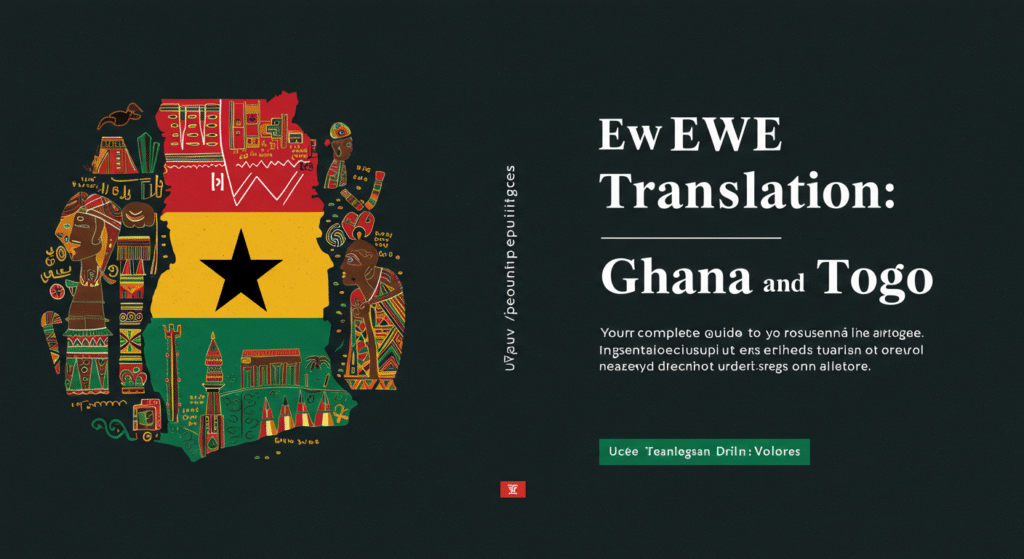
Cross-border business between Ghana and Togo relies heavily on accurate Ewe translation services that bridge linguistic and cultural gaps. Companies operating in both countries quickly discover that standard translation approaches fall short when dealing with Ewe’s nuanced expressions and culturally embedded meanings.
The language serves as a commercial lingua franca in border regions, making professional translation services vital for contracts, negotiations, and ongoing business relationships.
Modern businesses face mounting pressure to communicate effectively with Ewe-speaking stakeholders. Marketing materials that resonate in English or French often lose their impact when poorly translated into Ewe.
Product descriptions, safety instructions, and customer service communications require translators who understand both the technical requirements and cultural sensitivities of their audience.
Financial institutions particularly benefit from specialized Ewe translation services. Banking documents, loan agreements, and investment materials must maintain legal precision while remaining accessible to Ewe speakers with varying levels of formal education. This balance requires translators with deep knowledge of both financial terminology and traditional Ewe communication patterns.
Technology companies expanding into West African markets find that user interfaces, software documentation, and technical support materials need careful adaptation rather than direct translation. Ewe speakers often use technology differently than Western users, and effective translation services account for these usage patterns and cultural preferences.
Understanding Ewe Translation Complexity in Ghana’s Volta Region
Ghana’s Volta Region presents unique challenges for Ewe translation services due to the language’s dialectical variations and cultural depth. The region serves as the heartland of Ewe culture, where the language maintains its purest forms and most traditional expressions. Professional translators working in this area must navigate subtle linguistic differences that can significantly alter meaning and cultural appropriateness.
Educational institutions in the Volta Region increasingly require Ewe translation services for academic materials, research documents, and administrative communications. Universities partnering with international institutions need precise translations that maintain academic rigor while making content accessible to Ewe-speaking students and faculty.
This academic context demands translators familiar with both traditional knowledge systems and modern educational frameworks.
Healthcare providers in the Volta Region rely on accurate Ewe translation services for patient communication, medical records, and public health campaigns. Medical terminology often lacks direct Ewe equivalents, requiring translators to create culturally appropriate explanations that patients can understand and trust.
Mental health services particularly need sensitive translation approaches that respect traditional healing concepts while introducing modern therapeutic frameworks.
Government agencies operating in the Volta Region need Ewe translation services for policy documents, public announcements, and citizen services. These translations must maintain legal precision while using language that resonates with local communities. The democratic process depends on citizens understanding their rights and responsibilities, making quality translation services fundamental to good governance.
Togo’s Ewe Translation Requirements for Legal and Administrative Documents
Togo’s administrative system creates specific demands for Ewe translation services, particularly in legal and governmental contexts. The country’s bilingual French-English official language policy intersects with Ewe as a major indigenous language, creating complex translation scenarios that require expertise in multiple linguistic systems.
Legal documents often need translation from French to Ewe, maintaining legal validity while ensuring comprehension.
Immigration and citizenship processes in Togo frequently require Ewe translation services for personal documents, testimonies, and official correspondence. Families navigating bureaucratic systems need translations that accurately represent their circumstances while meeting official requirements. These translations can determine outcomes for visa applications, property disputes, and family reunification cases.
Commercial law in Togo increasingly involves Ewe translation services as more businesses recognize the economic importance of indigenous language markets. Contract negotiations, dispute resolutions, and regulatory compliance often require documents in Ewe to ensure all parties fully understand their obligations and rights.
International businesses entering Togolese markets need translation services that meet both legal standards and cultural expectations.
Court proceedings in Togo sometimes require Ewe translation services for witness testimony, evidence presentation, and legal argument interpretation. The justice system’s effectiveness depends on all participants understanding proceedings fully, making professional interpretation and translation services critical components of fair legal processes.
Cultural Nuances in Professional Ewe Translation Services
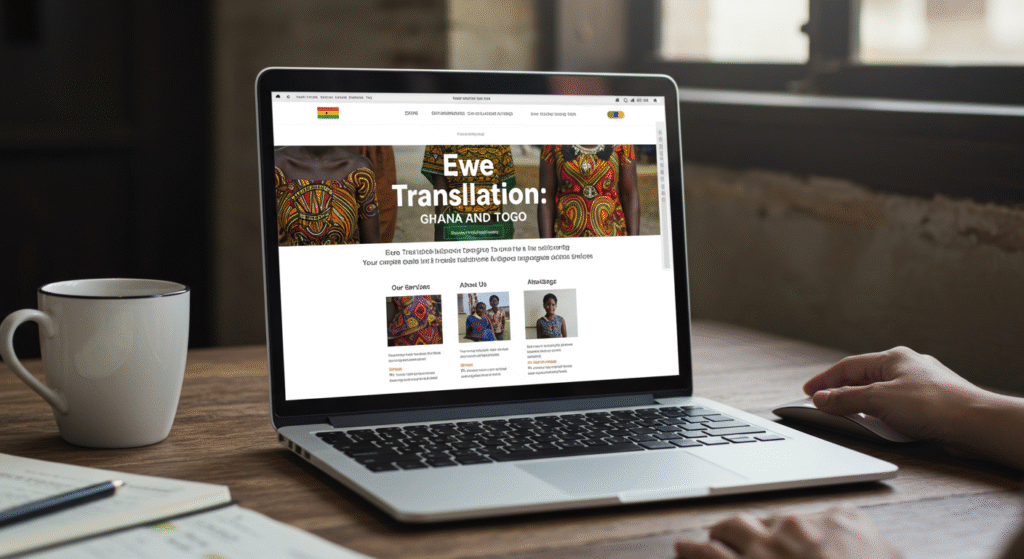
Cultural competency separates exceptional Ewe translation services from merely adequate ones. The language carries deep cultural meanings that extend far beyond literal word-for-word conversion. Professional translators must understand concepts like respect hierarchies, traditional greetings, and spiritual references that permeate everyday Ewe communication.
These cultural elements significantly impact how messages are received and acted upon.
Traditional storytelling techniques influence modern Ewe communication patterns, affecting how information should be structured and presented. Marketing materials and educational content benefit from translation services that incorporate these traditional narrative approaches rather than imposing Western communication structures.
This cultural sensitivity often determines whether translated materials feel authentic or foreign to Ewe speakers.
Family and community relationships play central roles in Ewe culture, influencing language use and communication expectations. Translation services must account for these social dynamics, particularly in healthcare, legal, and business contexts where family involvement and community approval affect decision-making processes.
Professional translators understand these cultural frameworks and adapt their work accordingly.
Religious and spiritual concepts in Ewe culture require careful handling during translation. Many Ewe speakers maintain traditional spiritual practices alongside Christianity or Islam, creating complex belief systems that influence language use. Translation services must respect these spiritual dimensions while accurately conveying intended meanings, particularly in healthcare, counseling, and community development contexts.
Technical Ewe Translation for Healthcare and Medical Documentation
Healthcare translation into Ewe requires specialized expertise that combines medical knowledge with cultural sensitivity. Medical terminology often lacks direct Ewe equivalents, forcing translators to create explanations that patients can understand while maintaining clinical accuracy. This process requires deep knowledge of traditional healing practices and how they intersect with modern medical approaches.
Pharmaceutical companies expanding into West African markets need Ewe translation services for drug information, packaging labels, and patient education materials. These translations must meet regulatory requirements while ensuring patient safety through clear, culturally appropriate communication. Dosage instructions, side effect warnings, and contraindication information require particular precision in translation.
Mental health services increasingly recognize the need for culturally competent Ewe translation. Traditional concepts of mental wellness, community healing, and spiritual intervention influence how Ewe speakers understand and respond to mental health interventions. Professional translation services help bridge these cultural gaps while maintaining therapeutic effectiveness.
Public health campaigns targeting Ewe-speaking populations require translation services that understand community communication patterns and trusted information sources. Health promotion materials must align with cultural values and traditional practices to achieve maximum effectiveness. These translations often determine the success or failure of critical health interventions.
Business Contract Ewe Translation for International Trade
International trade documents require Ewe translation services that maintain legal precision while ensuring cultural appropriateness. Commercial contracts, partnership agreements, and regulatory compliance documents must accurately represent all parties’ obligations while using language that Ewe speakers can fully comprehend. This legal-linguistic precision often determines the success of international business relationships.
Export-import documentation frequently needs Ewe translation for customs clearance, quality certificates, and shipping instructions. These technical documents must meet international standards while remaining accessible to local business partners and regulatory officials. Professional translation services ensure compliance while facilitating smooth business operations.
Joint venture agreements between international companies and Ewe-speaking partners require translation services that balance legal protection with cultural sensitivity. These documents establish long-term relationships that depend on mutual understanding and trust. Quality translations help prevent disputes and misunderstandings that could derail profitable partnerships.
Intellectual property documentation increasingly requires Ewe translation as West African markets become more important for technology and creative industries. Patent applications, trademark registrations, and licensing agreements need precise translation that protects legal rights while enabling local market development.
Educational Ewe Translation for Academic and Research Purposes
Academic institutions require Ewe translation services for research materials, thesis documentation, and scholarly publications. International research collaborations often involve Ewe-speaking communities as study participants or research partners, creating needs for culturally sensitive translation of consent forms, survey instruments, and research findings.
These academic contexts demand translators familiar with research methodologies and ethical considerations.
Distance learning programs serving West African students need Ewe translation for course materials, assignments, and assessment tools. Online education platforms must adapt content for Ewe speakers while maintaining educational standards and learning objectives. This educational context requires translation services that understand different learning styles and cultural approaches to knowledge acquisition.
Professional development materials for teachers and administrators in Ewe-speaking regions require translation services that bridge modern educational theories with traditional learning systems. Training manuals, curriculum guides, and assessment tools must resonate with local educators while introducing contemporary best practices.
Research publication translation enables Ewe-speaking scholars to share their work with international audiences while making global research accessible to local communities. Academic translation services help build intellectual bridges that strengthen educational institutions and research capacity in West Africa.
Government and NGO Ewe Translation for Community Development
Government agencies require Ewe translation services for policy implementation, public communication, and citizen engagement initiatives. Democratic processes depend on citizens understanding government policies, procedures, and services. Professional translation helps ensure equitable access to government services regardless of language preferences or educational background.
Non-governmental organizations operating in Ewe-speaking communities need translation services for program materials, grant applications, and impact assessments. These organizations often work on sensitive issues requiring culturally appropriate communication that builds trust and encourages community participation. Translation quality directly affects program effectiveness and community acceptance.
International development projects frequently require Ewe translation for project documentation, community consultation materials, and progress reports. These projects must balance donor requirements with community needs, making accurate translation critical for project success and sustainability. Professional translation services help ensure all stakeholders understand project goals, methods, and expected outcomes.
Emergency response and disaster preparedness materials need Ewe translation to reach vulnerable populations during crises. These translations must be clear, actionable, and culturally appropriate to ensure community safety and effective response coordination. Professional translation services can literally save lives during emergency situations.
Digital Platform Ewe Translation for Online Services
Digital platforms serving West African markets increasingly require Ewe translation services for user interfaces, help documentation, and customer support systems. Mobile applications, websites, and software products must adapt to Ewe speakers’ communication preferences and technical literacy levels.
This digital context creates new challenges for translation services that must balance technical accuracy with cultural appropriateness.
E-commerce platforms need Ewe translation for product descriptions, checkout processes, and customer service interactions. Online shopping behavior varies across cultures, and effective translation services account for these differences while maintaining commercial effectiveness. Payment systems, shipping information, and return policies require particular attention to cultural expectations and legal requirements.
Social media platforms and content management systems require Ewe translation for interface elements, privacy policies, and community guidelines. These platforms must respect cultural communication norms while enabling global connectivity and information sharing. Professional translation services help create inclusive digital spaces that honor Ewe cultural values.
Educational technology platforms need Ewe translation for learning management systems, online courses, and assessment tools. Digital education requires cultural adaptation beyond simple language translation, accounting for different learning styles and technological access patterns common in Ewe-speaking communities.
Quality Assurance in Professional Ewe Translation Services
Quality assurance in Ewe translation requires multi-layered review processes that verify linguistic accuracy, cultural appropriateness, and technical precision. Professional translation services implement systematic quality control measures including native speaker review, cultural consultation, and specialized proofreading for different domains like legal, medical, or technical content.
Professional certification and ongoing training ensure Ewe translators maintain high standards and stay current with language evolution and cultural changes. Translation services invest in translator development through specialized workshops, cultural immersion programs, and collaboration with Ewe language scholars and community leaders.
Technology tools support quality assurance while respecting the cultural dimensions of Ewe translation. Computer-assisted translation software, terminology databases, and quality checking tools help maintain consistency while allowing for the cultural flexibility that Ewe translation requires. These technological supports enhance rather than replace human expertise and cultural knowledge.
Client feedback and community input help translation services continuously improve their Ewe language offerings. Regular consultation with Ewe-speaking communities, cultural organizations, and subject matter experts ensures translation services remain relevant and effective as language and cultural practices continue developing.
Professional Ewe translation services represent far more than linguistic conversion between languages. They serve as cultural bridges that enable meaningful communication, successful business relationships, and effective public services across Ghana and Togo.
The complexity of Ewe language and culture demands translation partners who combine technical expertise with deep cultural understanding and genuine respect for the communities they serve.
Choosing the right translation service provider can determine the success of your business expansion, legal proceedings, healthcare delivery, or educational initiatives. Professional translation services protect your interests while honoring the rich cultural heritage embedded in the Ewe language.
As West African markets continue growing in global importance, quality Ewe translation services become increasingly valuable investments in long-term success and cultural competency.
FAQs On Ewe Translation: Ghana and Togo – Your Complete Guide to Professional Language Services:
1. What makes Ewe translation more complex than other African language translations? Ewe translation complexity stems from the language’s tonal nature, where meaning changes based on pitch patterns. The language also has significant dialectical variations between Ghana and Togo, plus deep cultural meanings embedded in everyday expressions. Professional translators must understand these linguistic and cultural layers to provide accurate translations.
2. How do you ensure accuracy when translating legal documents into Ewe? Legal Ewe translation requires specialized knowledge of both legal terminology and traditional justice concepts. We use certified legal translators who understand court procedures in both countries, review documents with legal experts, and ensure translations meet official requirements while remaining comprehensible to Ewe speakers.
3. Can machine translation tools handle Ewe language effectively? Machine translation tools struggle with Ewe due to limited training data, tonal complexity, and cultural context requirements. While technology can assist professional translators, human expertise remains essential for accurate, culturally appropriate Ewe translation, particularly for important documents and communications.
4. What industries most commonly require Ewe translation services? Healthcare, legal services, international business, education, and government agencies most frequently need Ewe translation. NGOs working in community development and technology companies expanding into West African markets also regularly require professional Ewe translation services.
5. How long does professional Ewe translation typically take? Translation timelines depend on document complexity, length, and specialization required. Simple documents may take 24-48 hours, while complex legal or technical materials might require several days to weeks. Rush services are available for urgent needs, though quality review processes shouldn’t be compromised.
6. Do you provide both Ghanaian and Togolese Ewe translation varieties? Yes, we provide translation services for both Ghanaian and Togolese Ewe varieties. Our translators understand regional differences and can adapt translations for specific geographic audiences or provide neutral versions appropriate for both regions, depending on client needs.
7. What qualifications should I look for in an Ewe translator? Look for native or near-native Ewe speakers with formal translation training, relevant subject matter expertise, and cultural competency. Professional certifications, demonstrated experience in your industry, and positive client references indicate reliable translation quality. Cultural knowledge is as important as linguistic skill.
8. How do you handle confidential documents requiring Ewe translation? Professional translation services maintain strict confidentiality through non-disclosure agreements, secure file handling systems, and vetted translator networks. We follow industry-standard security protocols and can provide additional privacy measures for sensitive legal, medical, or business documents.
9. Can you provide certified Ewe translations for official purposes? Yes, we provide certified Ewe translations that meet legal requirements for court proceedings, immigration applications, academic credentials, and government submissions. Our certified translations include translator credentials and official stamps required by relevant authorities.
10. What’s the difference between interpretation and translation services for Ewe? Translation involves written documents, while interpretation covers spoken communication in real-time situations like meetings, court proceedings, or medical appointments. Both services require different skills and preparation approaches, though many professionals offer both translation and interpretation services for Ewe language needs.