
 directlineauthors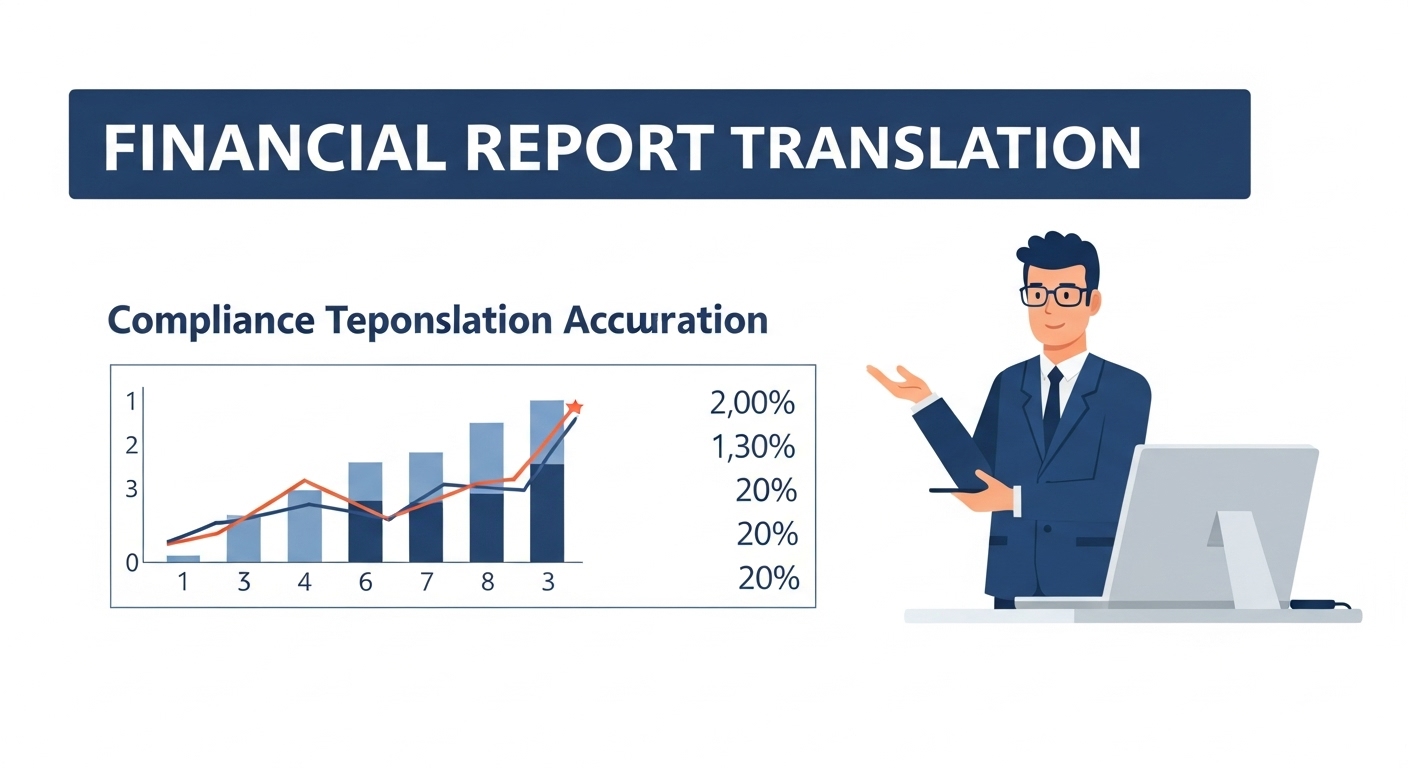
Financial institutions and multinational corporations operating across borders face mounting pressure to deliver translated financial reports that meet stringent regulatory requirements while maintaining absolute accuracy in every numerical detail and contextual interpretation. The stakes in financial report translation extend far beyond simple communication – they encompass legal compliance, investor confidence, regulatory approval, and corporate reputation in international markets.
When companies expand their operations globally or seek investment from foreign markets, their financial documents become subject to multiple regulatory frameworks, each with distinct requirements for format, terminology, and disclosure standards.
A single mistranslation in a financial report can trigger regulatory investigations, delay crucial business transactions, or expose organizations to significant legal liability. This reality makes professional financial report translation not just a business convenience, but an operational necessity for companies engaged in international commerce.
The complexity of financial report translation stems from its dual nature: these documents must satisfy both linguistic accuracy requirements and regulatory compliance standards that vary significantly between jurisdictions. Financial terminology carries precise legal meanings that often lack direct equivalents in other languages, requiring translators to possess deep understanding of accounting principles, regulatory frameworks, and market practices in both source and target countries.
Professional translation services specializing in financial documents understand that accuracy in this field means more than correct grammar and vocabulary. It encompasses proper interpretation of accounting standards, appropriate use of regulatory terminology, and faithful representation of financial relationships and obligations as they exist under different legal systems.
This specialized knowledge becomes particularly critical when translating reports that will be reviewed by auditors, regulators, or potential investors who rely on these documents for major financial decisions.
Throughout this comprehensive analysis, we’ll examine the critical elements that ensure financial report translation meets both compliance requirements and accuracy standards, explore the regulatory challenges that complicate international financial reporting, and provide practical guidance for organizations seeking to maintain their reputation and legal standing across multiple markets.
You’ll discover how leading companies protect themselves from translation-related risks while building confidence among international stakeholders through professionally translated financial communications.
How Financial Report Translation Ensures Regulatory Compliance Across Jurisdictions
Regulatory compliance in financial report translation requires intimate knowledge of reporting standards that govern financial disclosure in each target market. International Financial Reporting Standards (IFRS), Generally Accepted Accounting Principles (GAAP), and local regulatory requirements create a complex web of obligations that translated documents must satisfy without contradiction or ambiguity.
Professional translators specializing in financial reports work closely with regulatory experts to ensure translated documents align with local compliance requirements while preserving the integrity of original financial data. This collaboration involves understanding not just what information must be disclosed, but how it should be presented, formatted, and contextualized for local regulatory authorities.
Cross-border regulatory differences create particular challenges when translating financial reports for multiple jurisdictions simultaneously. Accounting treatments that are acceptable under one regulatory framework might require adjustment or additional disclosure when translated for markets operating under different standards. Experienced financial report translation services navigate these complexities by maintaining current knowledge of regulatory changes and their implications for translated documents.
Documentation standards for financial report translation often require certification processes that verify both linguistic accuracy and regulatory compliance. These certifications provide legal protection for organizations while ensuring that translated reports meet the evidentiary standards required for regulatory submissions, court proceedings, or investor communications.
Quality assurance protocols for regulatory compliance involve multi-stage reviews by translators, financial experts, and legal professionals who collectively ensure that translated reports satisfy all applicable requirements. This comprehensive approach reduces the risk of compliance failures that could result in regulatory sanctions, delayed approvals, or damaged stakeholder relationships.
Precision Standards in Financial Report Translation for International Markets
Precision in financial report translation extends beyond numerical accuracy to encompass proper interpretation of financial concepts, consistent use of technical terminology, and faithful representation of financial relationships as they exist under different accounting frameworks. This level of precision requires translators who understand both the technical aspects of financial reporting and the cultural context in which translated reports will be used.
Numerical precision standards in financial report translation demand zero-tolerance approaches to mathematical errors, currency conversions, and statistical presentations. Professional translation services implement multiple verification systems that cross-check all numerical data, formulas, and calculations to ensure absolute accuracy in translated documents.
Technical terminology management becomes particularly challenging in financial report translation because accounting terms often carry specific legal meanings that vary between jurisdictions. Translators must choose terms that accurately convey the intended meaning while conforming to local professional standards and regulatory expectations.
Contextual accuracy in financial report translation requires understanding how financial information will be interpreted and used by different stakeholder groups in target markets. Investors, regulators, and business partners may have different expectations and requirements that influence how financial data should be presented and explained.
Consistency standards across multi-document financial report translation projects ensure that terminology, formatting, and presentation approaches remain uniform throughout all translated materials. This consistency builds credibility and reduces confusion among stakeholders who may review multiple related documents over time.
Risk Management Through Professional Financial Report Translation Services
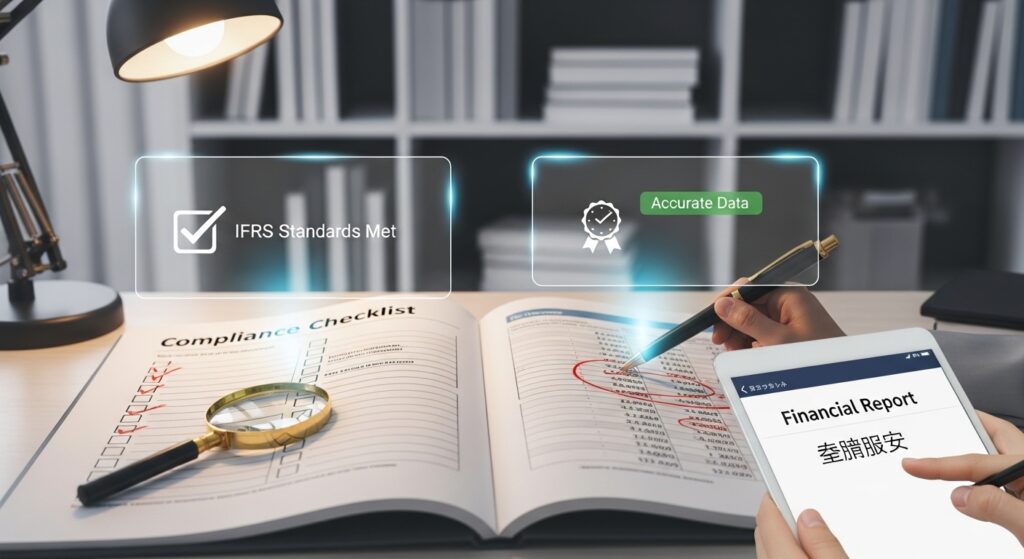
Risk management considerations in financial report translation encompass legal liability, regulatory compliance, and reputational protection that organizations must address when operating in multiple markets. Professional translation services help mitigate these risks through comprehensive quality assurance processes and insurance coverage that protects clients from translation-related losses.
Legal liability risks in financial report translation can arise from mistranslations that mislead investors, violate disclosure requirements, or misrepresent financial conditions. Professional translation services typically carry errors and omissions insurance that provides financial protection for clients while incentivizing the highest quality standards in translation work.
Regulatory risk mitigation requires staying current with changing compliance requirements across multiple jurisdictions and ensuring that translated financial reports reflect these changes appropriately. Professional translation services monitor regulatory developments and adjust their processes to maintain compliance with evolving standards.
Reputational risk management through accurate financial report translation helps organizations maintain credibility with international stakeholders while avoiding negative publicity that could result from translation errors or compliance failures. This protection becomes particularly important for publicly traded companies or organizations seeking to raise capital in foreign markets.
Due diligence support through professional financial report translation services helps organizations demonstrate their commitment to accuracy and compliance when undergoing mergers, acquisitions, or investment processes. High-quality translated financial reports contribute to stakeholder confidence and can facilitate smoother transaction processes.
Technology Integration in Modern Financial Report Translation Workflows
Technology platforms supporting financial report translation combine automation capabilities with human oversight to achieve both efficiency and accuracy in complex translation projects. These systems help manage large volumes of financial data while maintaining the precision standards required for regulatory compliance and stakeholder confidence.
Computer-assisted translation tools specifically designed for financial documents help maintain consistency in terminology usage while providing quality assurance checks for numerical accuracy and formatting standards. These tools work as aids to human translators rather than replacements, ensuring that cultural nuances and regulatory requirements receive appropriate attention.
Data validation systems integrated into financial report translation workflows automatically check for common errors such as mismatched totals, inconsistent currency references, or formatting irregularities that could undermine document credibility. These automated checks supplement human review processes without replacing the expertise needed for complex financial interpretation.
Collaboration platforms enable real-time coordination between translators, financial experts, and client stakeholders throughout the translation process. These systems provide transparency into project progress while facilitating rapid resolution of questions or issues that arise during translation work.
Version control and audit trail capabilities ensure that all changes and approvals in financial report translation projects are properly documented and traceable. This documentation provides legal protection while supporting compliance with regulatory requirements for document integrity and accountability.
Specialized Expertise Requirements for Financial Report Translation Accuracy
Financial report translation demands specialized expertise that combines linguistic skills with deep understanding of accounting principles, regulatory frameworks, and international business practices. This expertise typically requires formal education in both translation studies and financial disciplines, along with ongoing professional development to stay current with evolving standards.
Professional certification requirements for financial report translators often include specialized training in accounting terminology, regulatory compliance, and industry-specific knowledge that goes beyond general translation capabilities. These certifications provide assurance to clients while establishing professional standards for the field.
Industry experience requirements vary by specialization area within financial report translation, with different expertise needed for banking, insurance, investment management, and corporate reporting. Translators typically develop expertise in specific sectors through years of focused work and continuing education in their chosen specialties.
Continuing education obligations for financial report translators include staying current with changes in accounting standards, regulatory requirements, and international reporting practices that affect translation decisions. Professional development activities help translators maintain their expertise while adapting to evolving industry needs.
Team composition strategies for complex financial report translation projects often involve collaboration between linguists, financial professionals, and subject matter experts who collectively ensure both accuracy and compliance in translated documents. This team approach provides comprehensive coverage of the various expertise areas required for successful financial translation.
Quality Control Protocols for Financial Report Translation Projects
Quality control in financial report translation requires systematic verification processes that address linguistic accuracy, numerical precision, regulatory compliance, and formatting consistency throughout translated documents. These protocols provide multiple layers of review and validation to minimize the risk of errors that could have serious consequences.
Multi-stage review processes typically involve initial translation by qualified specialists, followed by independent review by senior translators, verification by financial experts, and final approval by certified professionals. Each stage addresses different aspects of quality while building confidence in the final product.
Numerical verification procedures include automated checks of all calculations, currency conversions, and statistical presentations, supplemented by manual verification of complex formulas and relationships. This dual approach helps catch both systematic errors and unique issues that might escape automated detection.
Terminology consistency checks ensure that technical terms are used appropriately and consistently throughout translated financial reports. These checks often involve comparison against established glossaries and reference materials to maintain professional standards and stakeholder expectations.
Format verification processes confirm that translated financial reports meet presentation standards expected by target audiences while conforming to regulatory requirements for document structure and content organization. This attention to format details contributes to professional credibility and stakeholder confidence.
Cross-Cultural Communication in Financial Report Translation Contexts

Cross-cultural communication considerations in financial report translation address how different business cultures interpret and use financial information, requiring adaptation strategies that go beyond linguistic conversion to address cultural expectations and communication styles.
Business culture differences affect how financial information is presented, discussed, and interpreted in different markets. Professional financial report translators understand these cultural nuances and adapt their translation approaches to align with local business communication norms while maintaining factual accuracy.
Stakeholder expectation management across cultures requires understanding how different groups use financial reports and what information they prioritize in their decision-making processes. This understanding informs translation decisions about emphasis, explanation, and presentation strategies.
Professional communication standards vary between cultures in ways that affect financial report translation choices. Some cultures prefer detailed explanations and context, while others value concise, direct presentations. Skilled translators adapt their approaches to match local preferences without compromising essential information.
Trust-building through culturally appropriate financial report translation helps organizations establish credibility with international stakeholders by demonstrating respect for local business practices and communication preferences. This cultural sensitivity contributes to stronger business relationships and improved stakeholder confidence.
Deadline Management and Scheduling in Financial Report Translation
Deadline management in financial report translation requires careful coordination of multiple stakeholders, complex review processes, and regulatory submission requirements that often leave little room for delays or errors. Professional translation services develop sophisticated project management approaches to meet these demanding timelines while maintaining quality standards.
Regulatory deadline compliance creates non-negotiable timeframes for financial report translation projects, particularly for publicly traded companies or organizations subject to statutory reporting requirements. Missing these deadlines can result in regulatory sanctions, delayed transactions, or damaged stakeholder relationships.
Resource allocation strategies for deadline-sensitive financial report translation involve maintaining relationships with qualified specialists who can be mobilized quickly for urgent projects. This approach requires ongoing investment in translator relationships and capacity planning that enables rapid response to client needs.
Priority management systems help translation teams focus their efforts on the most critical elements of financial reports while ensuring that all components receive appropriate attention. These systems consider regulatory requirements, stakeholder priorities, and risk factors when allocating time and resources.
Contingency planning for financial report translation deadlines includes backup resources, alternative workflow strategies, and risk mitigation approaches that help ensure project completion even when unexpected challenges arise. This planning provides peace of mind for clients while protecting translator reputations.
Cost-Benefit Analysis for Professional Financial Report Translation Services
Cost-benefit analysis for financial report translation must consider not only direct translation expenses but also the potential costs of errors, delays, or compliance failures that could result from inadequate translation services. This comprehensive analysis typically favors investment in professional services over cost-cutting measures that increase risk.
Direct cost components in financial report translation include translator fees, project management expenses, quality assurance processes, and technology platform usage. These costs vary based on document complexity, language pairs, timeline requirements, and level of specialization needed.
Risk mitigation value provided by professional financial report translation services includes legal protection, regulatory compliance assurance, and reputational safeguarding that can prevent much larger costs associated with translation errors or compliance failures. This protection value often exceeds direct translation costs.
Efficiency benefits from professional financial report translation services include faster project completion, reduced internal resource requirements, and streamlined approval processes that save time and money for client organizations. These efficiency gains compound over time as organizations handle multiple translation projects.
Long-term relationship benefits with professional translation services include better understanding of client needs, improved quality over time, and preferred pricing arrangements that provide ongoing value beyond individual project savings. These relationships become valuable business assets for organizations with ongoing translation needs.
Emerging Technologies and Future Trends in Financial Report Translation

Emerging technologies continue reshaping financial report translation through advanced automation, artificial intelligence applications, and integrated workflow solutions that promise greater efficiency while maintaining the accuracy standards required for regulatory compliance and stakeholder confidence.
Artificial intelligence applications in financial report translation focus on terminology consistency, numerical verification, and formatting standardization while preserving human oversight for complex interpretation and cultural adaptation requirements. These applications augment rather than replace human expertise in financial translation work.
Blockchain technology offers potential applications in financial report translation through immutable audit trails, verified translation credentials, and distributed review processes that could enhance security and accountability in translation workflows. However, adoption remains limited pending regulatory acceptance and industry standardization.
Real-time collaboration tools continue evolving to support more efficient coordination between translators, clients, and subject matter experts involved in financial report translation projects. These tools promise faster turnaround times and improved communication throughout the translation process.
Integration platforms connecting translation services with financial reporting systems could streamline workflows while reducing the risk of data transfer errors that sometimes occur in complex financial report translation projects. These integrations require careful attention to security and compliance requirements.
Frequently Asked Questions About Financial Report Translation
What qualifications should financial report translators have beyond language skills?
Financial report translators should possess formal education or certification in accounting, finance, or related business disciplines alongside their linguistic qualifications. Many successful financial translators hold degrees in both translation studies and business fields, plus professional certifications specific to financial translation. Industry experience in banking, accounting, or financial services provides valuable context that improves translation quality and reduces errors.
How do regulatory differences between countries affect financial report translation?
Regulatory differences require translators to understand multiple accounting frameworks (IFRS, GAAP, local standards) and adjust translations accordingly. Some financial concepts exist in one regulatory system but not others, requiring explanatory notes or alternative presentations. Professional financial report translation services maintain current knowledge of these differences and work with regulatory experts to ensure compliance in each target market.
What happens if errors occur in translated financial reports?
Errors in translated financial reports can result in regulatory sanctions, investor confusion, delayed transactions, or legal liability for organizations. Professional translation services typically carry errors and omissions insurance to protect clients, but prevention through rigorous quality control processes remains the best approach. When errors are discovered, immediate correction and stakeholder notification help minimize potential damage.
How long does professional financial report translation typically take?
Timeline varies based on document length, complexity, number of target languages, and regulatory deadline requirements. Simple quarterly reports might be completed in 3-5 business days, while comprehensive annual reports often require 2-3 weeks for proper translation and quality assurance. Rush projects are possible but may incur premium charges and require additional resources to maintain quality standards.
Can machine translation tools be used for financial reports?
Machine translation tools are not recommended for financial reports due to the precision requirements, regulatory compliance needs, and potential liability issues involved. While these tools might assist with preliminary drafts or terminology consistency, human expertise remains essential for accurate interpretation of financial concepts, regulatory compliance, and cultural adaptation requirements.
What security measures protect confidential financial information during translation?
Professional financial report translation services implement comprehensive security protocols including secure file transfer systems, confidentiality agreements, restricted access controls, and secure storage facilities. Many services are certified for handling sensitive financial information and maintain insurance coverage for data breaches. Organizations should verify security credentials before engaging translation services for confidential documents.
How much does professional financial report translation cost?
Costs vary significantly based on language pairs, document complexity, timeline requirements, and level of specialization needed. Financial report translation typically costs more than general document translation due to the expertise required and liability involved. Rates might range from $0.25-0.60 per word or more, with premium charges for rush projects or specialized requirements like regulatory compliance certification.
Should financial reports be translated by the same team consistently?
Consistency benefits make working with the same translation team advantageous for ongoing financial reporting needs. Established teams develop deeper understanding of client terminology, reporting practices, and stakeholder requirements, resulting in better quality and efficiency over time. However, backup resources should be available to handle urgent deadlines or capacity constraints.
What documents beyond basic financial statements require translation?
Comprehensive financial report translation often includes footnotes, management discussion and analysis, auditor reports, regulatory filings, investor presentations, and supporting schedules. Each document type has specific requirements and stakeholder audiences that influence translation approaches. Professional services help clients identify which documents need translation based on their international business objectives and regulatory requirements.
How do currency fluctuations affect financial report translation?
Currency fluctuations don’t typically affect translation costs, which are usually quoted in fixed amounts, but they do impact the financial data being translated. Translators must accurately represent currency conversions, exchange rate assumptions, and hedging activities as they appear in source documents. Professional financial translators understand how to handle multi-currency reporting requirements and present this information clearly for international audiences.
Financial report translation represents a critical business function that demands the highest levels of accuracy, regulatory knowledge, and professional expertise. Organizations that invest in professional financial report translation services protect themselves from significant risks while building confidence among international stakeholders through clear, compliant, and culturally appropriate financial communications.