
 Elizabeth123
Akan to English translation in Ghana supports communication for the Akan language, a Kwa branch of the Niger-Congo family with dialects like Twi and Fante. It handles tonal variations, cultural idioms, and historical contexts to guarantee accuracy in African exchanges. Tools such as AI translators and bilingual corpora enhance precision for everyday and professional use. Deeper applications and challenges emerge through ongoing explorations of these practices.
Quick Summaries
- Akan to English translation services in Ghana provide accurate conversions using tools like Google Translate and Microsoft Translator.
- Professional linguists in Africa specialize in Akan-English adaptations, considering tonal variations and cultural contexts.
- Essential Akan phrases, such as “Maakye” for “Good morning,” are key for everyday translations in Ghanaian settings.
- Techniques like phonetic analysis and iterative revisions ensure precise Akan to English translations for African users.
- Online resources, including dictionaries and courses, support Akan-English learning and translation in Ghana and Africa.
Overview of Akan Language
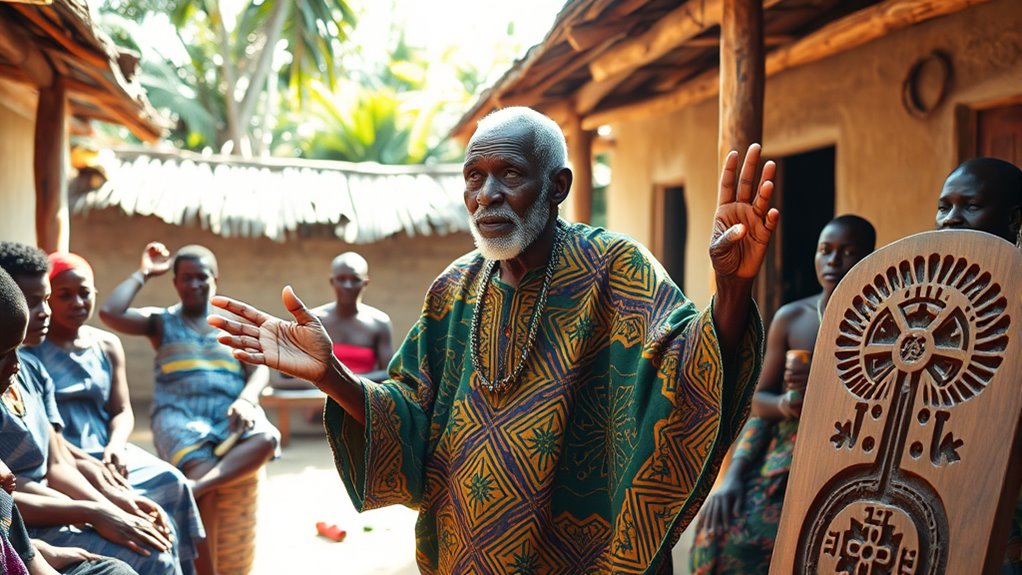
The Akan language is a Kwa branch member of the Niger-Congo family, primarily spoken by millions in Ghana and Ivory Coast. It is a tonal language, where pitch variations—high, low, and mid—significantly alter word meanings, making accurate pronunciation essential for communication. Akan encompasses major dialects such as Twi, Fante, Asante, and Akuapem, which share core grammar but exhibit differences in vocabulary and phonetics, allowing for regional variations while maintaining mutual intelligibility. The language follows a subject-verb-object sentence structure, similar to English, which facilitates translation efforts. Its phonetic inventory includes seven vowels and a range of consonants, including nasals and stops. Akan’s vocabulary draws from cultural, agricultural, and trade contexts, enriching its expressiveness in everyday use, literature, and media. As a crucial tool for cultural preservation, Akan supports bilingual interactions, with translation services adapting its nuances for English audiences to guarantee clarity and fidelity.
Historical Background of Akan in Ghana
The Akan language traces its origins to ancient West African communities that influenced early linguistic developments. Migration patterns brought Akan speakers to present-day Ghana, where they established significant settlements and cultural identities. This historical context sets the stage for understanding the language’s evolution in the region.
Akan Origins
Akan origins trace to migrations from the Sahel region around the 11th century, with groups settling in Ghana’s forested areas and forming early states that influenced West African history. These early Akan communities, including ancestors of the Ashanti and Fante, developed sophisticated social structures and matrilineal systems that shaped their societies. Archaeological evidence, such as artifacts from sites like Begho, indicates a blend of Sahelian and local traditions, fostering rich cultural practices. The Akan people established centralized authority through chieftaincies, emphasizing oral traditions and gold trade networks. This foundation contributed to linguistic diversity, with dialects like Twi emerging as key communication tools. Overall, Akan origins reflect a dynamic interplay of environmental adaptation and cultural innovation, laying the groundwork for enduring legacies in Ghana. (124 words)
Migration to Ghana
During the 11th century, migrations from the Sahel region brought Akan groups into Ghana’s forested areas, where they adapted to local environments and formed early communities. Fleeing drought and conflicts in the north, these groups sought fertile lands for agriculture and resources. They introduced ironworking techniques, enabling them to clear forests and cultivate crops like yams, which supported population growth. Interactions with indigenous peoples fostered cultural exchanges, leading to the development of Akan languages, matrilineal systems, and clan-based societies. By the 15th century, these migrations had coalesced into organized chiefdoms, such as the Bono state, which controlled trade routes for gold and salt. This expansion strengthened Akan influence, paving the way for later empires like the Ashanti. Their resilience and adaptability shaped Ghana’s ethnic landscape, blending Sahelian and forest traditions into a vibrant society. Over centuries, these movements contributed to the region’s political and economic dynamics, influencing West African history.
Essential Akan Vocabulary and Phrases
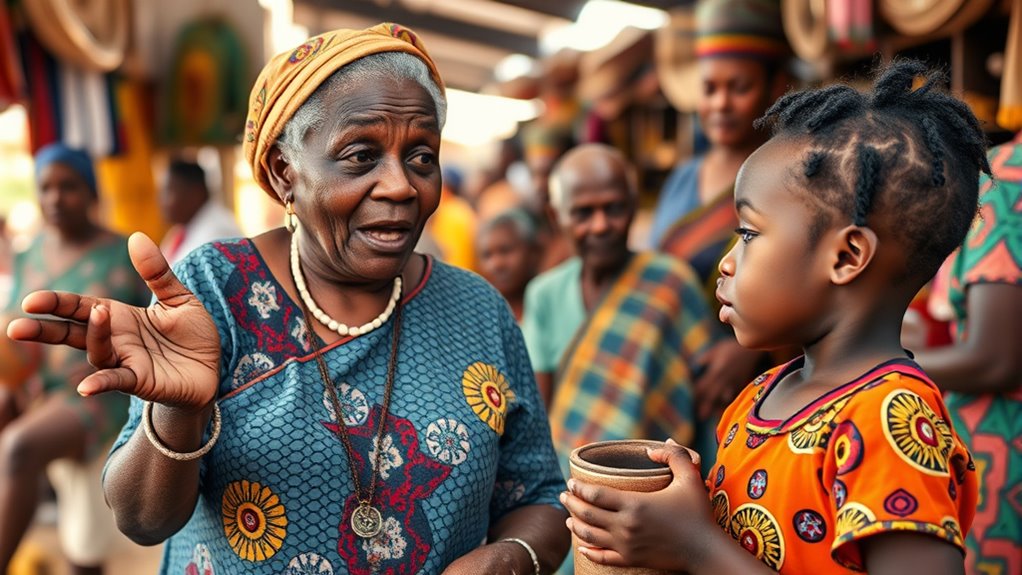
Learning essential vocabulary and phrases in Akan provides a practical starting point for language learners, enabling basic interactions and cultural engagement. This foundation helps travelers and enthusiasts navigate everyday scenarios in Ghana, from greetings to simple inquiries, without overwhelming complexity. By focusing on high-frequency words, learners can appreciate Akan’s tonal nuances and cultural context.
To illustrate key phrases, consider the following table:
| Akan Phrase | English Translation | Usage Example |
|---|---|---|
| Maakye | Good morning | Greeting at dawn |
| Medaase | Thank you | After receiving help |
| Yaa | Goodbye | Parting ways |
These essentials promote respectful communication, enriching experiences in Akan communities and supporting ongoing language acquisition. (124 words)
Techniques for Translating Akan to English
While Akan’s tonal intricacies often complicate direct translation, effective techniques involve phonetic analysis, contextual understanding, and cultural adaptation to produce accurate English equivalents. Phonetic analysis entails breaking down Akan’s tonal variations and vowel harmonies to match English phonemes, preserving rhythm and emphasis in the process. For instance, translators use tone markers to identify high, low, or mid tones, then map them to English stress patterns for natural flow. Contextual understanding requires examining sentence structures and word placements, as Akan’s polysemy demands selecting precise meanings based on narrative or dialogue. This technique often employs bilingual corpora for reference, guaranteeing idiomatic accuracy. Cultural adaptation subtly adjusts phrasing to avoid literal pitfalls, maintaining intent without distortion. Additionally, iterative revision and peer review refine translations, enhancing overall precision and reliability in professional settings. These methods guarantee high-fidelity results for diverse applications.
Cultural Nuances in Akan Translation
Cultural nuances greatly influence Akan to English translation by shaping how meanings are conveyed. Idiomatic expressions often carry context-specific connotations that require careful adaptation. Proverbial meanings and taboo nuances further complicate the process, demanding sensitivity to cultural contexts for effective communication.
Idiomatic Expressions
Idiomatic expressions in Akan often embody cultural nuances that challenge direct translation to English. These phrases draw from Ghanaian traditions, social structures, and environmental contexts, making them rich with implicit meanings. For example, the Akan idiom “W’ani abere” (literally, “your eye is red”) conveys envy or jealousy, reflecting cultural beliefs about emotions tied to physical states, which English equivalents like “green with envy” only partially capture. Translators must navigate these subtleties to preserve the original intent, as literal renditions can distort humor, sarcasm, or social commentary. In Akan communication, such expressions foster community bonds and convey wisdom rooted in everyday life, highlighting the language’s depth. Effective translation requires cultural immersion to avoid misinterpretation, ensuring the essence remains intact for English audiences. This process underscores the interplay between language and heritage in Akan society.
Proverbial Meanings
Akan proverbs serve as vessels of cultural wisdom, often challenging direct translation into English due to their embedded social and historical contexts. Rooted in Ghana’s Akan heritage, these proverbs employ metaphorical expressions to encode moral teachings, community values, and everyday observations. For instance, a proverb like “The mouse that eats the palm nut does not know the size of the farm” illustrates foresight and consequences, requiring translators to convey its implicit lessons rather than literal words. This nuanced approach preserves the proverb’s role in guiding behavior and resolving disputes, drawing from oral traditions that reflect agricultural and familial life. Accurate translation demands cultural immersion, ensuring the wisdom’s depth is captured without distortion. By adapting these elements, English renditions foster appreciation for Akan philosophy, bridging linguistic divides and enriching global discourse on ethics and society. This process underscores the proverbs’ enduring relevance in modern contexts, promoting deeper intercultural exchange.
Taboo Nuances
Taboo nuances in Akan translation demand careful handling, as they encompass unspoken rules and prohibitions that can alter word choices and interpretations in English renditions. In Akan culture, topics such as death, sexuality, ancestral spirits, and family matters are often taboo, necessitating euphemisms to preserve respect and avoid offense. For instance, direct references to death may be softened to phrases like “has traveled” to maintain cultural sensitivity. Translators must navigate these subtleties by consulting native speakers and researching contexts, ensuring accurate conveyance without distortion. This approach prevents misunderstandings that could disrespect Akan heritage or provoke social backlash. Effective handling of taboos not only bridges languages but also promotes cross-cultural respect, making translations more authentic and reliable in professional settings like Ghana’s Translation Africa services. Ultimately, awareness of these nuances enhances global communication while honoring traditional values.
Regional Dialects of Akan
The Akan language encompasses a variety of regional dialects, shaped by geographic and cultural influences across Ghana and Côte d’Ivoire. Major dialects include Asante, spoken in the Ashanti Region with its rich tonal variations and vocabulary tied to historical kingdoms; Fante, prevalent along the coastal areas, featuring distinct pronunciation and expressions influenced by fishing and trade; and Akuapem, used in the Eastern Region, which incorporates elements from neighboring languages. These dialects differ in phonology, lexicon, and grammar, reflecting local traditions and social structures. For instance, Asante may use specific idioms for royalty, while Fante adapts words for maritime contexts. Understanding these variations is essential for effective communication, as they preserve cultural identities and enhance linguistic diversity in West Africa. Despite similarities, subtle differences can lead to misunderstandings, underscoring the need for dialect awareness in broader Akan studies.
Tools and Resources for Translation
The subtopic of tools and resources for Akan to English translation encompasses digital translation tools and essential language resources. Mobile apps further support this process by offering convenient access to translation features. These elements collectively aid in improving translation efficiency and accuracy.
Digital Translation Tools
Digital translation tools provide essential resources for Akan to English translation, encompassing apps, websites, and software that utilize AI algorithms for accurate and efficient conversions. These tools bridge language gaps in Ghana’s multilingual context, offering real-time support for learners, professionals, and travelers. By leveraging machine learning, they handle nuances in Akan dialects like Twi and Fante, improving accessibility and cultural exchange.
- Google Translate App: Provides instant Akan-English conversions via mobile, supporting offline use for on-the-go accuracy.
- DeepL Translator: Delivers high-precision AI-based translations for Akan texts, excelling in context-aware phrasing.
- Microsoft Translator: Features web and API integrations for seamless Akan-English exchanges in professional settings.
- SDL Trados Studio: A robust software for advanced users, incorporating AI to refine translations and manage projects effectively.
Essential Language Resources
Essential language resources for Akan to English translation include dictionaries, phrasebooks, and online courses, offering structured support for vocabulary building, grammar mastery, and cultural context understanding. Dictionaries, such as specialized Akan-English editions, provide accurate word definitions, pronunciations, and usage examples, aiding precise translations. Phrasebooks compile common expressions and idioms, helping users navigate everyday conversations while respecting regional dialects like Asante or Fante. Online courses, available through platforms focused on African languages, deliver interactive lessons that reinforce grammatical rules and sentence structures. These resources foster cultural sensitivity by incorporating Ghanaian customs and nuances, ensuring translations avoid misinterpretations. For learners, combining these tools enhances fluency and accuracy, making them indispensable for professional translators or students. Overall, they bridge linguistic gaps effectively, promoting better cross-cultural communication in Ghana and beyond.
Mobile Apps for Translation
Mobile apps have revolutionized Akan to English translation by providing user-friendly tools that enable real-time language conversion on smartphones and tablets. These applications enhance accessibility for users in Ghana and Africa, offering accurate, on-the-go solutions that bridge language barriers in daily interactions, education, and business. With intuitive interfaces, they support seamless communication, reducing reliance on traditional methods.
- Instant Translation: Apps like Google Translate provide quick Akan-English conversions with voice input for hands-free use.
- Offline Capabilities: Some apps allow downloads of language packs, enabling translations without internet in remote areas.
- Accuracy Enhancements: Features like phrase suggestions and context-based corrections improve reliability for complex sentences.
- Learning Integration: Built-in dictionaries and pronunciation guides help users learn Akan while translating, fostering language proficiency.
Professional Akan Translation Services
Professional Akan translation services deliver precise and reliable conversions between Akan and English, supporting industries like business, education, and legal sectors with expert linguists. These services rely on certified professionals fluent in Akan dialects such as Twi, Fante, and Asante, ensuring linguistic fidelity and cultural nuances are preserved. Expert teams employ specialized software for accurate terminology and context handling, minimizing errors in complex documents. In practice, they handle diverse tasks, from translating business contracts to educational materials and legal texts, with a focus on confidentiality and timeliness. Agencies often collaborate with native speakers for real-time interpretation, maintaining high standards through rigorous quality checks and ongoing linguist training. This approach guarantees effective communication across Ghana and beyond, fostering seamless interactions in multilingual environments.
Benefits of Language Translation in Africa
Language translation greatly enhances communication across Africa’s diverse linguistic landscape, bridging gaps between over 2,000 languages and dialects to foster unity and economic growth. It facilitates cross-border trade, cultural exchange, and educational access, empowering communities to thrive in a globalized world. By breaking down language barriers, translation drives innovation in business and preserves indigenous cultures, contributing to sustainable development and social inclusivity across the continent.
- Boosts economic integration by enabling seamless trade negotiations and market expansion.
- Enhances educational equity, allowing access to global knowledge in local languages.
- Promotes cultural preservation and tourism, fostering mutual understanding.
- Improves public services, such as healthcare, through accurate information sharing.
Common Challenges in Akan-English Conversion
Translating Akan to English involves significant challenges stemming from structural and cultural differences between the two languages. Akan’s tonal system, where pitch alters word meanings, often leads to misinterpretations in English, which is non-tonal. Grammatical variances, such as Akan’s flexible word order and noun classes, complicate accurate rendering. Cultural nuances, like proverbs and idioms, lose their depth when translated literally, risking misrepresentation. Vocabulary gaps further hinder precision, as some Akan terms lack direct equivalents in English.
| Challenge | Description |
|---|---|
| Tonal Variations | Akan tones change meanings, absent in English. |
| Idiomatic Expressions | Cultural idioms don’t translate directly. |
| Grammatical Differences | Divergent structures cause inaccuracies. |
| Vocabulary Shortfalls | Concepts without English parallels emerge. |
These issues demand skilled translators to bridge gaps effectively.
Case Studies of Akan Translation Projects
Case studies of Akan translation projects reveal practical approaches to addressing structural and cultural challenges in real-world scenarios. These studies demonstrate how translators adapt Akan’s tonal system and proverbs for English contexts in fields like education and healthcare. For instance, projects often involve collaborative teams to guarantee accuracy and cultural sensitivity, leading to improved communication outcomes.
- Educational Material Translation: A Ghanaian school project converted Akan folktales into English, resolving tonal ambiguities to enhance student engagement.
- Legal Document Adaptation: In a court case, translators bridged cultural idioms, securing equitable justice for Akan-speaking litigants.
- Healthcare Communication: A clinic initiative translated patient instructions, overcoming structural differences to boost adherence rates.
- Community Media Projects: Translating radio scripts preserved cultural nuances, fostering broader audience understanding and participation.
Future Developments in Translation Practices
As advancements in artificial intelligence and machine learning accelerate, Akan to English translation practices are poised to integrate automated tools that address tonal complexities and cultural nuances more effectively. Neural networks, for instance, will enhance accuracy by learning from vast datasets of Akan dialects, reducing errors in tone-sensitive phrases. Collaborative platforms may emerge, allowing linguists and AI to work together, fostering real-time adaptations for Ghanaian contexts. In Ghana and across Africa, these innovations could democratize access to translation services, supporting education, business, and cultural exchange. Ethical considerations, such as data privacy and bias mitigation, will be essential to guarantee equitable outcomes. Overall, these developments promise to bridge linguistic divides, promoting global connectivity while preserving Akan heritage.
Frequently Asked Questions
How Much Does Akan-English Translation Cost?
The query seeks information on the cost of Akan-English translation services. Costs vary depending on factors such as word count, complexity, and provider expertise. Rates typically range from $0.05 to $0.20 per word, but exact pricing requires consultation with professionals.
Are There Certification Programs for Akan Translators?
Certification programs for Akan translators exist, particularly through educational institutions in Ghana and beyond. These initiatives focus on language proficiency, cultural nuances, and ethical standards, enhancing professional credentials and translation quality in the field.
What Jobs Can Akan Translators Pursue?
The question of what jobs Akan translators can pursue reveals opportunities in translation agencies, freelance services, educational institutions, media outlets, government roles, healthcare, legal fields, and international organizations, fostering cross-cultural communication.
How to Find Akan Language Partners Online?
Finding Akan language partners online involves using dedicated platforms like Tandem, HelloTalk, and italki for exchanges. Individuals can also join relevant Facebook groups, Reddit subreddits, or language forums to connect with speakers and learners.
Can Akan Translations Be Legally Certified?
Akan translations can be legally certified through accredited translators or agencies that meet official standards. This process guarantees accuracy for documents like birth certificates or contracts, making them admissible in courts, immigration, and international dealings. Certification varies by jurisdiction but is widely recognized.

