
 Elizabeth123
Amharic to English translation services are essential in Ethiopia, bridging linguistic divides in business, education, and diplomacy while preserving cultural nuances. They address needs in global trade, official documents, and heritage preservation, ensuring accurate adaptations through expert bilingual skills and advanced technologies. In Africa, these services enhance economic growth and cross-cultural collaboration. Deeper exploration uncovers key strategies and emerging innovations for best results.
Quick Summaries
- Amharic to English translation services in Ethiopia facilitate global business and diplomacy by bridging linguistic barriers.
- These services address diverse needs in education, trade, and governance for Ethiopia’s multilingual population.
- Accurate translations incorporate cultural nuances, idioms, and social hierarchies to ensure authentic communication.
- Technology like AI and translation memory systems enhance precision and consistency in Amharic-English conversions.
- Such services promote economic growth and cultural exchange by enabling access to international resources and markets.
Importance of Amharic-English Translation Services
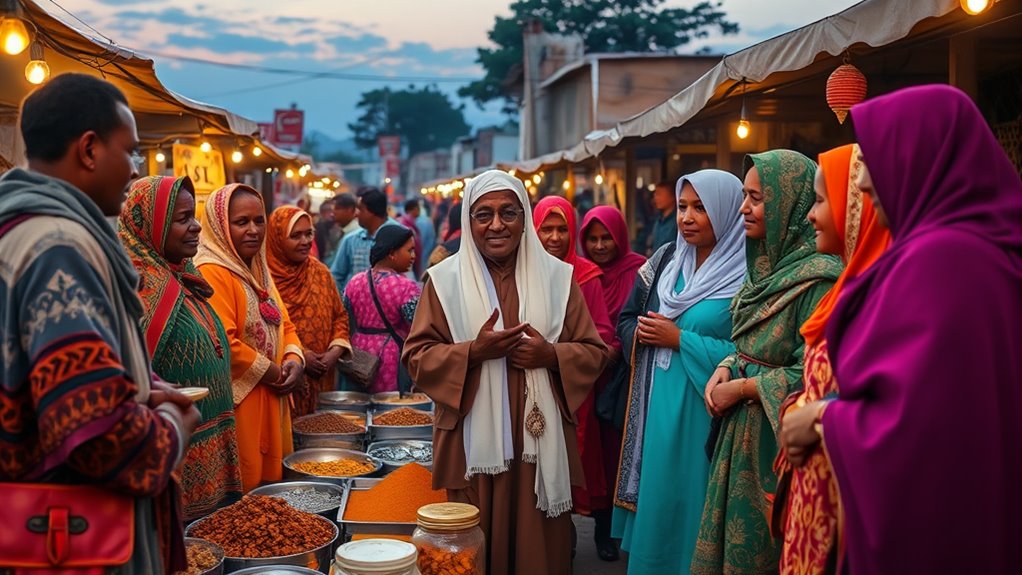
The importance of Amharic-English translation services stems from their essential role in bridging communication barriers between Ethiopia and English-speaking regions. These services enable seamless interactions in global business, where accurate translations foster partnerships and economic growth. In diplomacy, they facilitate international negotiations and treaties, ensuring mutual understanding. Educationally, they provide access to English-language resources, enhancing learning opportunities for Ethiopians. Culturally, translations preserve and share Ethiopia’s rich heritage, promoting global appreciation and exchange. By supporting tourism, these services help visitors navigate Ethiopia’s diverse landscapes and history. Overall, Amharic-English translation services drive inclusivity, innovation, and stronger international ties, making them indispensable in a connected world.
Overview of Translation Needs in Ethiopia

Ethiopia’s translation needs arise from its linguistic diversity and growing global engagements, encompassing sectors like business, education, and diplomacy. With over 80 languages spoken, accurate Amharic-to-English translation is essential for effective communication in a rapidly modernizing nation. These needs extend beyond daily interactions, influencing national development and international relations.
- Multilingual governance: Ethiopia requires translations for official documents, policies, and laws to bridge ethnic divides and guarantee equitable administration.
- Educational access: Schools and universities need reliable translations to integrate global resources, enhancing learning for non-English speakers.
- Economic expansion: Businesses demand precise translations for trade agreements, marketing, and investments to compete in global markets.
- Cultural preservation: Translation efforts support heritage documentation and tourism, fostering cross-cultural understanding and national identity. (124 words)
Key Features of Professional Translation Providers

Professional translation providers in Ethiopia emphasize key features to guarantee effective Amharic to English services. Expert translators with specialized skills form the foundation of reliable outcomes. Accuracy standards and technological integration further enhance the quality and efficiency of translations.
Expert Translators
Expert translators for Amharic to English in Ethiopia deliver key features that define professional services, including linguistic accuracy, cultural expertise, and certified methodologies to guarantee reliable outcomes. These specialists guarantee seamless communication by leveraging their deep proficiency and tailored approaches to meet diverse client demands.
- Native fluency and bilingual mastery: Translators possess exceptional command of both Amharic and English, enabling nuanced handling of everyday and technical content.
- Cultural immersion experience: They incorporate Ethiopia’s rich traditions and social contexts, making translations resonate authentically with target audiences.
- Continuous professional development: Regular training and certifications keep translators updated on industry best practices and emerging trends.
- Client-focused customization: Services are adapted to specific project needs, from business documents to creative works, fostering trust and satisfaction.
Accuracy Standards
Accuracy standards form the foundation of reliable Amharic to English translation services, emphasizing error-free renditions through rigorous protocols. Professional providers employ meticulous processes, including multiple proofreads, cultural adaptation, and terminology consistency checks, to guarantee fidelity to the original text. These standards minimize misunderstandings in contexts like legal, medical, and business translations, upholding client trust and global communication integrity.
| Accuracy Aspect | Description |
|---|---|
| Proofreading Rounds | Multiple layers of error detection |
| Cultural Adaptation | Faithful rendering of idioms |
| Terminology Checks | Consistent use of specialized terms |
| Source Fidelity | Preservation of original meaning |
| Quality Metrics | Adherence to industry benchmarks |
This approach guarantees precision, enhancing the overall value of translations in Ethiopia’s diverse linguistic landscape.
Technological Integration
In the domain of Amharic to English translation services, technological integration equips providers with advanced tools like AI-driven software and translation memory systems, streamlining processes while maintaining precision. These innovations enable faster turnaround times and higher consistency, particularly for Ethiopia’s diverse linguistic contexts.
- AI Enhancements: Machine learning algorithms adapt to Amharic’s unique script and idioms, improving translation accuracy over time.
- Translation Memory Systems: Reuse previous translations to maintain consistency and reduce repetition in large projects.
- Cloud-Based Platforms: Facilitate real-time collaboration among translators, enhancing efficiency for global clients.
- Quality Assurance Tools: Automated checks detect errors and suggest refinements, upholding professional standards.
Benefits for Businesses in Africa
Businesses in Africa can leverage Amharic to English translation to enhance global market access, allowing them to engage with international clients and expand operations beyond local borders. This capability helps overcome language barriers that often hinder trade and partnerships. Moreover, the service contributes to operational efficiency gains by improving communication workflows and reducing errors in multilingual environments.
Global Market Access
Global market access presents key opportunities for African businesses, enabling them to expand beyond local boundaries and tap into international trade networks. Through services like Amharic to English translation, companies in Ethiopia and across Africa can overcome language barriers, fostering cross-border collaborations and enhancing competitiveness in global markets. This access not only drives economic growth but also positions African enterprises as key players in international commerce.
- Enhanced Export Potential: Businesses can market products effectively in English-speaking regions, increasing sales and market share.
- Cultural Bridge Building: Accurate translations promote understanding, leading to stronger international partnerships and trust.
- Digital Visibility: Optimized content for global platforms attracts foreign investors and customers, boosting online presence.
- Regulatory Compliance: Handling international standards becomes easier, facilitating smoother entry into new markets.
Operational Efficiency Gains
Operational efficiency gains from Amharic to English translation enable African businesses to streamline processes and reduce costs. By minimizing language barriers, companies can accelerate internal communications, allowing teams to collaborate more effectively across multilingual environments. For instance, translated documents expedite decision-making, while automated tools cut manual translation expenses. This efficiency extends to supply chain management, where accurate English versions of contracts and specifications prevent delays and errors. Additionally, businesses gain quicker access to global software and resources, boosting productivity without extensive training. Ultimately, these enhancements foster a competitive edge, as firms allocate resources toward innovation rather than administrative hurdles. In Ethiopia and beyond, such translations optimize workflows, supporting sustainable growth in diverse African markets. (124 words)
Cultural Aspects in Amharic Translations
Cultural nuances greatly influence Amharic to English translations, shaping how Ethiopian traditions and idioms are adapted for accurate conveyance. Translators must carefully handle elements like proverbs rooted in Ethiopia’s history, ensuring they resonate without losing cultural depth. This process involves understanding the interplay between language and societal values, where misinterpretations could alter intended meanings in literature, media, and daily communication.
- Idioms and Proverbs: Amharic expressions often draw from Ethiopian folklore, such as metaphors involving agriculture, which require contextual adaptation to avoid literal translations that confuse English audiences.
- Social Hierarchies: Language reflects Ethiopia’s respect-based structures, like honorifics for elders, demanding sensitive rendering to maintain relational nuances.
- Religious Influences: References to Orthodox Christianity in texts necessitate awareness of spiritual connotations, preserving their cultural significance in English.
- Customary Practices: Descriptions of rituals and festivals must convey communal emotions, ensuring translations capture the vibrancy of Ethiopian life authentically.
Techniques for Accurate Language Conversion
Effective techniques for accurate language conversion in Amharic to English translation focus on precise elements such as accurate word choice to maintain original meanings. Translators employ strategies that guarantee words reflect cultural and linguistic nuances without altering intent. Contextual adaptation methods further enhance accuracy by adjusting phrasing to fit the target audience’s environment.
Accurate Word Choice
Accurate word choice is essential in Amharic-to-English translation, as it guarantees that nuances and cultural contexts from Ethiopia are preserved without distortion. Translators must meticulously select equivalents that capture precise meanings, preventing loss of intent or subtle shades in communication. This involves understanding lexical subtleties, such as word roots and idiomatic expressions, to maintain fidelity to the source material.
- Leverage bilingual dictionaries: Consult thorough resources to identify exact English counterparts for Amharic terms, ensuring semantic accuracy.
- Analyze connotations: Evaluate emotional or cultural undertones of words to avoid misrepresentation in translation.
- Examine synonyms carefully: Choose the most appropriate synonym based on context to prevent ambiguity or dilution of meaning.
- Prioritize precision testing: Review translations for word-level accuracy through back-translation or peer feedback to refine choices.
Contextual Adaptation Methods
Contextual adaptation methods enhance Amharic-to-English translation by adjusting for situational and cultural nuances, ensuring seamless integration of the source text’s intent into the target language. These methods include contextual analysis, where surrounding text is examined to clarify ambiguous terms, and cultural substitution, replacing Amharic idioms with equivalent English expressions to maintain original meaning. For example, in Ethiopian folklore, a proverb might be adapted to an idiomatic English counterpart, preserving emotional and social context. Machine learning algorithms play a key role, using data-driven models to evaluate situational factors like formality or regional dialects, therefore preventing misinterpretations in professional or literary settings. In Ethiopia’s multilingual environment, such techniques are essential for accurate communication in diplomacy, business, and education, fostering better cross-cultural understanding while upholding the source material’s authenticity. This approach ultimately improves translation quality by prioritizing intent over literal accuracy.
Common Applications in Ethiopian Contexts
In Ethiopia, Amharic to English translation serves essential functions across education, business, and government sectors, enabling communication in international contexts like diplomacy, academic exchanges, and trade negotiations. This translation facilitates cross-cultural interactions, supporting Ethiopia’s global engagement while preserving linguistic nuances. It plays a pivotal role in bridging gaps for effective collaboration.
- Education: Translating textbooks and research papers allows Ethiopian students and scholars to access global resources, enhancing learning outcomes.
- Business: It aids in negotiating contracts and marketing materials, helping Ethiopian companies expand into international markets.
- Government: Accurate translations support policy documents and international agreements, fostering diplomatic relations.
- Cultural Exchange: Converting literature and media promotes Ethiopia’s heritage worldwide, encouraging tourism and mutual understanding.
Selecting the Right Translation Partner
Choosing a reliable translation partner for Amharic to English services demands evaluation of several factors, including expertise in Ethiopian linguistic contexts and proven accuracy in professional settings. Expertise extends to understanding regional dialects and cultural nuances, which guarantees faithful renditions. Potential partners should hold relevant certifications, such as those from recognized linguistic bodies, and demonstrate a track record in diverse sectors like business and academia. Evaluating their use of advanced translation tools, like CAT software, enhances efficiency and consistency. Furthermore, scrutinize pricing structures for transparency and value, avoiding overly cheap options that may compromise quality. Finally, review client testimonials and portfolio samples to confirm reliability, guaranteeing the partner aligns with project-specific needs in Ethiopia’s dynamic environment. This careful selection process minimizes risks and supports effective outcomes.
Impact on Communication and Collaboration
Effective Amharic to English translation greatly enhances communication by bridging cultural and linguistic divides in Ethiopia. It fosters collaboration across sectors, enabling smoother exchanges of ideas and information. This process reduces misunderstandings, strengthens relationships, and drives collective progress in a diverse society.
- Boosts business efficiency: Accurate translations facilitate international trade, negotiations, and partnerships, minimizing errors in contracts and communications.
- Enhances educational access: It supports knowledge sharing in schools and universities, allowing Ethiopian students and educators to engage with global resources and collaborate on research.
- Improves diplomatic relations: Translation aids government interactions, ensuring clear dialogue in conferences and treaties, which builds trust and cooperation.
- Strengthens community ties: It promotes cultural events and social initiatives, helping local groups connect with English-speaking organizations for mutual benefit.
Future Developments in Translation Technologies
As advancements in artificial intelligence accelerate, translation technologies for Amharic to English are evolving rapidly in Ethiopia. Machine learning algorithms are enhancing accuracy by incorporating more Amharic linguistic nuances, leading to sophisticated neural networks that handle context and idioms better. Developers are focusing on real-time mobile applications, enabling seamless communication in business and education sectors. Integration with voice recognition and augmented reality could soon allow instant translations during conversations or virtual meetings. In Ethiopia, collaborations between local tech firms and international AI giants aim to address data scarcity, improving datasets for Amharic. These advancements promise to bridge language barriers, fostering global opportunities while preserving cultural identity. Challenges like power instability and digital access may slow progress, but investments in infrastructure signal a promising future for inclusive translation tools.
Frequently Asked Questions
How Much Does Amharic to English Translation Cost?
The cost of Amharic to English translation varies based on factors like text length, complexity, and service provider. Rates typically range from $0.05 to $0.20 per word for standard services, with professional options potentially higher due to expertise and urgency.
What Is the Typical Turnaround Time for Services?
The typical turnaround time for translation services varies based on project size and complexity. Standard documents often receive results within 24 to 48 hours, while larger or intricate assignments may take several days to a week or more.
Do You Offer Certified Translation Options?
The current question inquires whether certified translation options are available. The service indeed provides certified translations for various documents, ensuring official recognition, accuracy, and compliance with international standards for legal and professional use.
How Do You Ensure Data Confidentiality?
Ensuring data confidentiality involves implementing advanced encryption protocols, secure data storage, and strict access controls. The organization complies with international regulations like GDPR, conducts regular audits, and trains staff to safeguard client information effectively.
What Payment Methods Are Accepted?
The current question addresses the payment methods accepted by the service. These typically include major credit cards such as Visa and Mastercard, bank transfers, and digital options like PayPal. Customers may also use mobile payment apps, ensuring secure and convenient transactions.