
 Elizabeth123
Amharic to English translation in Ethiopia bridges communication among diverse ethnic groups, serving government, education, and daily life while fostering national unity. Effective techniques emphasize cultural adaptation, linguistic precision, and idiomatic equivalence for accurate results. Across Africa, similar services handle languages like Swahili and Zulu, enhancing regional connectivity and global trade. Common applications include business contracts, educational resources, and tourism materials. Professional translators guarantee nuanced accuracy, minimizing errors in sensitive areas. Additional insights on methods and advantages await exploration.
Quick Summaries
- Amharic to English translation is essential in Ethiopia for official documents, education, and daily interactions across diverse ethnic groups.
- Effective techniques include cultural contextualization, linguistic precision, and idiomatic adaptation to maintain original meanings.
- Across Africa, translation services adapt to languages like Amharic, supporting regional connectivity and global business.
- Common applications involve converting business contracts, educational materials, and tourism content for broader accessibility.
- Professional translators in Ethiopia provide accurate, culturally nuanced services, minimizing errors and enhancing communication effectiveness.
The Role of Amharic in Ethiopian Communication

Amharic functions as Ethiopia’s official language, facilitating essential communication across government, education, and daily interactions among its diverse population. As a Semitic language with ancient roots, it serves as a unifying force in a nation of over 80 ethnic groups, promoting cohesion through official documents, broadcasts, and public discourse. In education, Amharic enables curriculum delivery and knowledge dissemination, fostering literacy and cultural preservation. Daily life sees its use in markets, family conversations, and community events, bridging linguistic divides. This role extends to media, where it shapes news, literature, and entertainment, reinforcing national identity. Despite regional variations, Amharic’s standardization supports administrative efficiency and social integration, underscoring its enduring significance in Ethiopia’s multifaceted society.
Key Techniques for Effective Amharic Translation
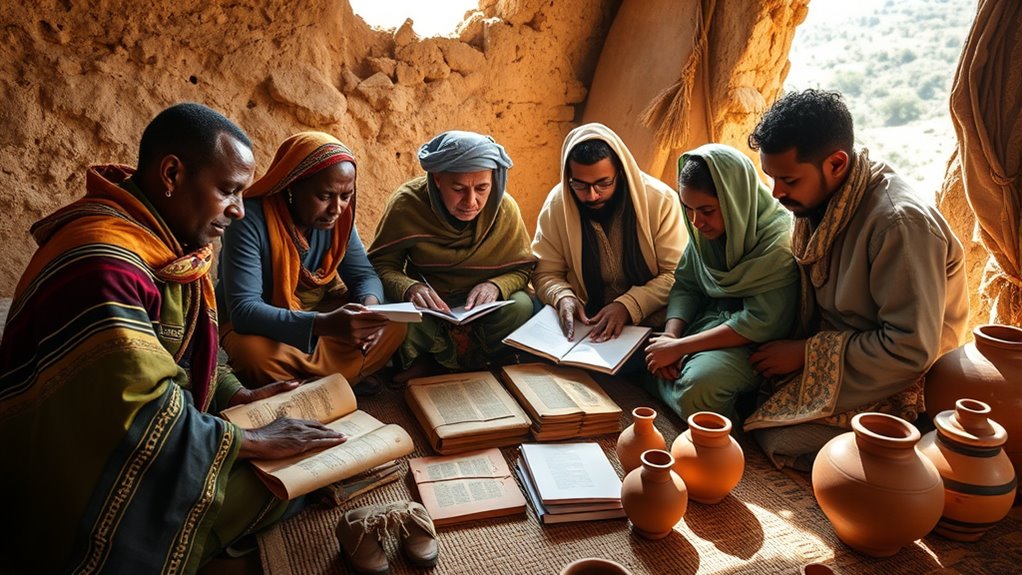
Effective translation of Amharic demands key techniques that bridge linguistic and cultural divides. These approaches guarantee fidelity to the source while adapting to English nuances, preserving meaning and intent. Translators focus on accuracy to avoid misinterpretations, drawing from Amharic’s rich phonetic and semantic layers.
- Cultural Contextualization: Understanding Ethiopian customs to convey implicit meanings accurately.
- Linguistic Precision: Mastering Amharic grammar and vocabulary for word-for-word equivalence without loss.
- Idiomatic Adaptation: Replacing Amharic idioms with English equivalents that retain emotional depth.
- Syntax Flexibility: Restructuring sentences to align with English flow while maintaining original logic.
- Iterative Refinement: Reviewing translations for subtleties, guaranteeing clarity and cultural resonance.
Exploring Translation Services Across Africa

Translation services across Africa address the continent’s linguistic diversity, offering solutions that range from local dialects to global languages. These services bridge communication gaps in a multilingual landscape, with providers adapting to regional needs. For instance, West African firms emphasize French and indigenous tongues, while East African entities focus on Swahili and Amharic conversions. Southern Africa prioritizes Zulu and Afrikaans for business and cultural exchanges. This adaptability enhances global connectivity without redundancy.
| Region | Key Features |
|---|---|
| West Africa | French and indigenous support |
| East Africa | Swahili-Amharic expertise |
| Southern Africa | Zulu-Afrikaans adaptations |
Common Applications of Amharic to English Conversion
In Ethiopia, the conversion of Amharic to English supports a range of practical uses, from business negotiations to educational pursuits. This process bridges linguistic gaps, fostering effective communication in everyday and professional contexts. It enables seamless exchange of ideas and information across diverse fields.
- Business and Trade: Facilitates international deals by translating contracts and communications, guaranteeing clarity in global markets.
- Education and Research: Allows access to English-language resources, enhancing learning and academic collaboration for students and scholars.
- Tourism and Culture: Supports visitor interactions and promotional materials, preserving and sharing Ethiopia’s heritage worldwide.
- Legal and Official Documents: Guarantees accurate translation of forms and agreements, maintaining compliance in cross-border affairs.
- Media and Daily Life: Enables news dissemination and social media engagement, promoting broader connectivity and understanding.
Advantages of Professional Translators in Ethiopia
Professional translators in Ethiopia deliver key advantages by ensuring accurate, culturally nuanced conversions that enhance communication across sectors. Their expertise in both Amharic and English minimizes errors in complex contexts, such as legal documents, where precise terminology is vital for compliance and validity. In business, they facilitate smoother negotiations by interpreting idioms and cultural subtleties, fostering trust and stronger partnerships. Additionally, these professionals maintain high ethical standards, including confidentiality and impartiality, which are essential in sensitive areas like healthcare and diplomacy. By leveraging certified translators, organizations in Ethiopia reduce risks of miscommunication, saving time and resources. This reliability supports educational exchanges and tourism, ultimately driving economic growth and international relations through effective, error-free translations.
Frequently Asked Questions
How Much Does Amharic to English Translation Cost?
The cost of Amharic to English translation varies based on factors like word count, document complexity, and service provider expertise. Rates typically range from $0.05 to $0.20 per word, with higher fees for urgent or specialized projects, averaging around $50–$200 per page.
What Payment Methods Are Accepted for Services?
The query regarding accepted payment methods for services typically includes credit cards like Visa and MasterCard, online platforms such as PayPal, bank transfers, and digital currencies. Providers guarantee secure processing to accommodate client preferences efficiently.
How Do I Submit Documents for Translation?
Individuals seeking to submit documents for translation typically use methods like emailing files, uploading via a secure online portal, or delivering in person. They should consult the service provider for specific guidelines, formats, and any required fees to guarantee smooth processing.
What File Formats Do You Support for Uploads?
The question pertains to supported file formats for uploads. This service accommodates common types such as PDF, DOCX, TXT, JPEG, and PNG, enabling efficient document submission and processing without compatibility issues.
Do You Offer Discounts for Bulk Translations?
The question regarding discounts for bulk translations is common among clients. Translation services often provide reduced rates for large orders to enhance affordability. This approach encourages repeat business and fosters partnerships. Interested parties should inquire directly for tailored options.