
 Elizabeth123
Certified translations for driving licenses in Kenya guarantee legal recognition and compliance with regulations like the Traffic Act. Translation Africa, a reputable provider, employs certified professionals to accurately translate details such as holder information and validity periods, including notarization and adherence to international standards. This service addresses linguistic challenges and supports seamless mobility, preventing penalties or invalidations. Deeper insights into the process, requirements, and benefits follow.
Quick Summaries
- Translation Africa provides certified translations for driving licenses in Kenya, ensuring legal accuracy and compliance.
- The process includes translating key details like holder information and validity, with professional attestation and notarization.
- Certified services meet Kenyan Traffic Act requirements for foreign licenses, aiding international recognition.
- Benefits include avoiding penalties, facilitating vehicle registration, and enhancing document integrity for safety.
- Fees range from a few hundred to several thousand shillings, with standard processing in 2-5 days.
What Is a Certified Translation for Driving Licenses?

A certified translation for driving licenses is an officially verified rendition of a license document from one language to another, ensuring accuracy and legal validity. This service is typically handled by professional translators or certified agencies specializing in legal documents. The process involves translating key elements such as the holder’s personal details, license categories, issuance date, and expiration, while preserving the original format and terminology. To achieve certification, the translator must attest to the document’s fidelity, often through a signed statement, stamp, or seal. This verification process adheres to established standards, like those from translation associations, to guarantee the document’s reliability. Certified translations are prepared by individuals with expertise in both languages and relevant regulations, ensuring the final product is precise and professionally formatted for potential use in various contexts.
Why You Need a Certified Translation in Kenya
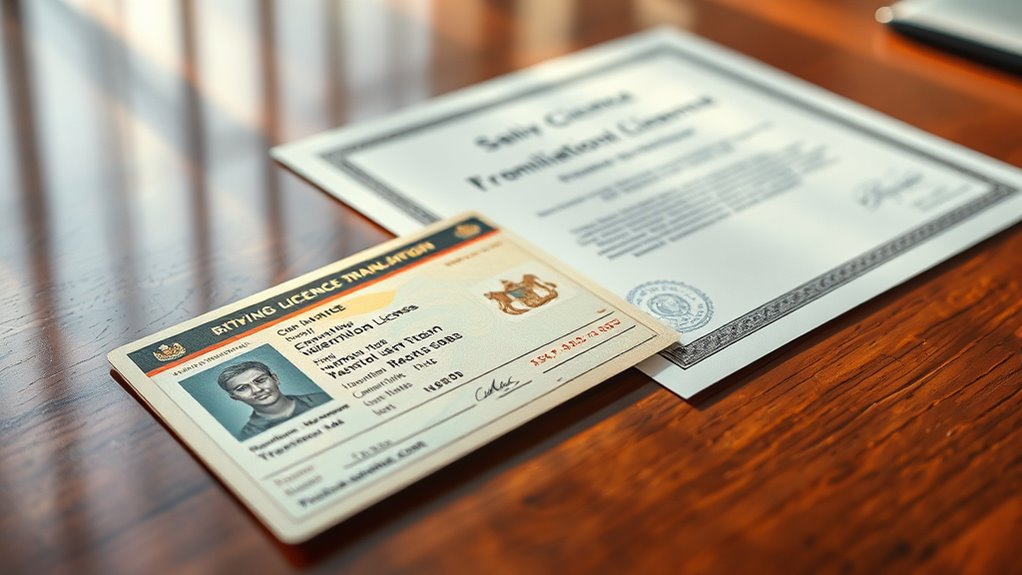
Certified translations of driving licenses are essential in Kenya to meet specific legal requirements set by authorities. These translations guarantee compliance with national regulations, avoiding potential penalties or invalidation of documents. Additionally, they facilitate international recognition, enabling drivers to use their licenses abroad without complications.
Legal Requirements
In Kenya, legal statutes mandate certified translations for foreign driving licenses to guarantee authenticity and compliance with local regulations, particularly when applying for recognition or exchange. Under the Traffic Act and related directives from the National Transport and Safety Authority (NTSA), individuals must submit translations by accredited providers like Translation Africa to validate documents. This guarantees that all details, such as license categories and validity periods, align with Kenyan standards, preventing potential legal disputes or invalidations. Failure to comply can result in application rejections or fines, as authorities prioritize public safety and document integrity. Certified translations also facilitate seamless integration into the local system, underscoring their role in upholding administrative efficiency and legal accountability within Kenya’s framework. This requirement protects both drivers and road users by maintaining high standards of verification.
International Recognition
Foreign driving licenses often necessitate certified translations to achieve international recognition in Kenya, enabling holders to exchange or validate their documents under global standards. This process guarantees compliance with the Vienna Convention on Road Traffic, which promotes seamless mobility for expatriates and tourists. Without certified translations, foreign licenses risk rejection by Kenyan authorities, potentially delaying vehicle registration or leading to fines. Certified services, like those from Translation Africa, provide accurate, notarized documents that align with international norms, safeguarding drivers’ rights and enhancing road safety. For instance, holders from Europe or Asia must navigate these requirements to legally operate vehicles in Kenya, avoiding bureaucratic hurdles. Ultimately, this translation step fosters global interoperability, supporting economic and social exchanges while upholding legal integrity.
Key Requirements for Translating a Driving License
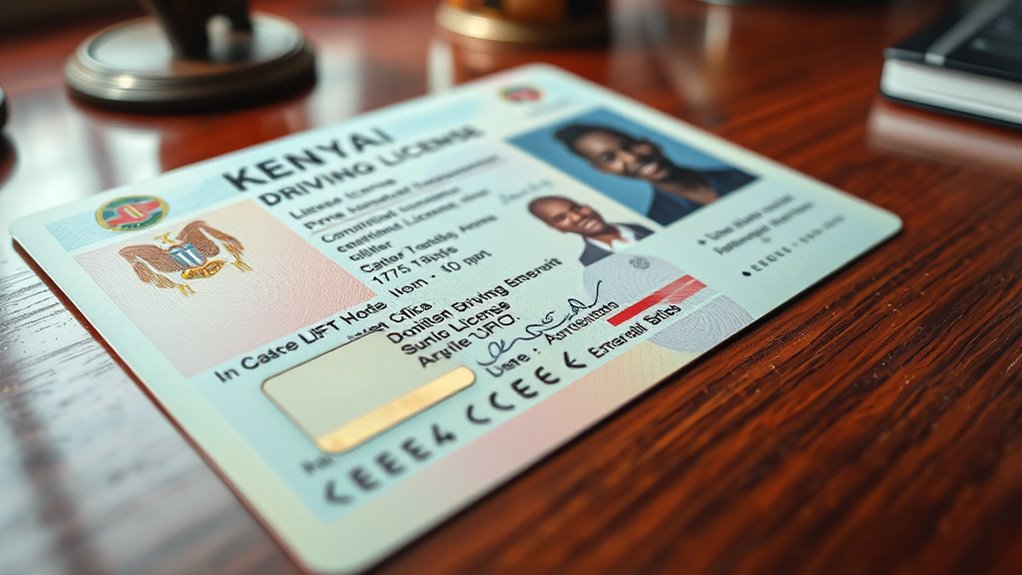
Translating a driving license in Kenya requires specific documents to guarantee accuracy and authenticity. Language needs must align with official standards, typically involving translation into English or Swahili. The certification process verifies the translation’s validity through authorized agencies.
Required Documents
Obtaining a certified translation of a driving license in Kenya demands specific documents to guarantee accuracy and compliance. Individuals must provide originals or certified copies to authorized translators like Translation Africa. Key items include the driving license itself, which serves as the primary source, along with a valid national ID or passport for identity verification. An application form, often available from the service provider, guarantees all details are correctly captured. These documents help maintain legal standards during the process.
| Document | Purpose |
|---|---|
| Driving License | Source material for translation |
| National ID/Passport | Identity and authenticity verification |
| Application Form | Submission and detail confirmation |
This streamlined approach facilitates efficient handling, reducing errors and guaranteeing regulatory adherence.
Language Needs
Key language requirements for translating a driving license in Kenya focus on accuracy and compliance to guarantee legal validity. Translators must handle official languages like English, Kiswahili, and others with precision, ensuring that every detail from the original document is faithfully rendered. This involves understanding local terminology and avoiding any misinterpretations that could affect usability.
To meet these needs effectively:
- Prioritize literal accuracy: Translate text word-for-word while preserving the original meaning, including dates, names, and vehicle codes, to prevent errors.
- Adhere to linguistic standards: Use certified proficiency in relevant languages, ensuring grammar, spelling, and syntax align with Kenyan norms for clarity.
- Incorporate cultural context: Adapt phrasing to reflect local driving regulations without altering facts, maintaining readability and relevance for users.
Certification Process
The certification process for driving license translations in Kenya demands adherence to specific standards to guarantee legal recognition and authenticity. Translators must be certified professionals, often affiliated with recognized bodies like the National Association of Translators and Interpreters or Translation Africa, ensuring linguistic accuracy and cultural nuances. Documents require notarization by a licensed notary public, who verifies the translator’s credentials and the translation’s fidelity to the original. Additionally, translations must include a sworn affidavit, official stamps, and contact details for verification. The process involves submitting the original license and translated copy to relevant authorities, such as the National Transport and Safety Authority, for approval. Failure to meet these requirements can lead to rejection, underscoring the need for precision in every step to facilitate international mobility and compliance with Kenyan law. This structured approach minimizes errors and upholds document integrity.
The Translation Process Explained
Certified translations of driving licenses in Kenya involve a streamlined process to verify accuracy and compliance. This procedure guarantees that documents are translated accurately while adhering to legal requirements, facilitating international recognition. The process begins with document submission and ends with a certified final product, minimizing errors and delays.
- Document Submission: Clients provide the original driving license and any necessary details to the translation service for initial review.
- Translation Execution: Qualified linguists translate the content, focusing on terminology specific to driving licenses to maintain fidelity.
- Quality Review: A final check guarantees the translation aligns with the source material before certification.
This approach helps individuals navigate bureaucratic hurdles efficiently, supporting seamless mobility and compliance. (124 words)
How Translation Africa Ensures Accuracy
Translation Africa maintains accuracy in driving license translations through rigorous protocols and expert oversight. The company employs certified translators with specialized knowledge of Kenyan traffic regulations and Swahili-English nuances, ensuring every detail from vehicle classes to endorsements is precisely rendered. Each translation undergoes a multi-step review process: initial drafting by qualified linguists, followed by cross-verification from in-house experts to catch any discrepancies. Advanced tools, such as terminology databases tailored for automotive and legal contexts, further minimize errors. This commitment extends to cultural adaptations, where idiomatic expressions are accurately interpreted without altering legal intent. By prioritizing ongoing training for staff and adhering to international standards like ISO 17100, Translation Africa delivers reliable, court-ready documents. Clients benefit from this precision, fostering trust in global mobility solutions. (124 words)
Common Challenges in License Translation
Despite meticulous efforts, translating driving licenses in Kenya encounters significant hurdles, such as linguistic nuances in Swahili and English, the precision needed for technical terms like vehicle classifications, and cultural differences that could misrepresent legal intent. This process often leads to errors that affect validity and safety. For instance, translators must navigate complex language barriers while ensuring documents meet international standards.
To highlight these issues:
- Linguistic Nuances: Variations in Swahili dialects and English phrasing can alter meanings, potentially invalidating translations.
- Technical Precision: Inaccurate rendering of terms like “motorcycle” versus “scooter” may confuse authorities and lead to legal complications.
- Cultural Differences: Subtle cultural contexts in license descriptions could misinterpret intent, risking non-compliance with Kenyan regulations.
Addressing these requires careful expertise to maintain accuracy.
Benefits of Professional Translation Services
Professional translation services provide essential advantages for accurately handling driving licenses in Kenya, particularly by addressing linguistic complexities, ensuring technical accuracy, and mitigating cultural misinterpretations to enhance document validity and compliance. These services employ certified experts who specialize in legal and automotive terminology, reducing the risk of errors that could lead to license rejections. By adhering to strict quality standards, they guarantee translations are legally recognized, facilitating smoother processing by Kenyan authorities. This precision saves time and resources for individuals, avoiding costly delays or resubmissions. Additionally, professional translators maintain confidentiality and use advanced verification processes to preserve document integrity, ensuring all details are culturally sensitive and accurate. Ultimately, these benefits promote reliable international mobility, minimizing legal complications for drivers.
Languages Supported for Driving License Translation
The article now addresses the languages supported for driving license translations in Kenya. Key languages include English, Swahili, and several others prevalent in the region. Available translation options encompass certified services from accredited providers to meet official requirements.
Key Languages Supported
Several languages are essential for certified translations of driving licenses in Kenya, primarily including English and Swahili as official options, while additional languages like French or Arabic may be accommodated for international validity. These languages guarantee accurate representation and legal compliance in various contexts.
To highlight their importance:
- English: As Kenya’s key business language, it facilitates global recognition and ease of verification for international travel or work.
- Swahili: Widely spoken nationally, it supports local administrative processes and cultural accessibility for Kenyan residents.
- Additional Languages: Options like French or Arabic address diverse expatriate needs, enhancing cross-border validity without complications.
Available Translation Options
Various languages, including English and Swahili, are available for certified driving license translations in Kenya, with options for additional ones like French or Arabic to support international requirements and guarantee legal accuracy. Translation Africa offers a range of services tailored to diverse needs, ensuring that documents meet global standards for recognition. For instance, English is essential for domestic and Commonwealth exchanges, while Swahili caters to East African mobility. Clients can request translations in languages such as German, Spanish, or Chinese, depending on destination countries, to facilitate seamless international driving. Professional translators, certified by relevant authorities, handle these services with precision, verifying details to prevent errors. This flexibility enhances accessibility for expatriates and travelers, promoting safe and compliant mobility across borders. Overall, these options prioritize accuracy and efficiency in a competitive market.
Costs Associated With Certified Translations
Certified translations of driving licenses in Kenya incur fees that depend on factors such as the service provider, document complexity, and urgency of the request, typically ranging from a few hundred to several thousand Kenyan shillings. These costs reflect the expertise required for accurate, legally binding translations, helping guarantee the document’s validity for international use.
To navigate these expenses effectively, consider the following:
- Provider Comparison: Research agencies like Translation Africa to compare pricing structures, guaranteeing you select one offering value without sacrificing quality.
- Complexity Evaluation: Analyze your license’s details, such as languages or special features, to anticipate higher fees for more intricate documents and budget accordingly.
- Fee Breakdown Options: Inquire about itemized costs, including base translation rates and any add-ons, to identify opportunities for savings through bundled services.
Understanding these elements allows individuals to make informed choices, balancing affordability with professional standards.
Timeline for Completing Your Translation
The timeline for completing a certified translation of a driving license in Kenya generally depends on factors such as the service provider’s workload, document complexity, and rush options, often ranging from a few days to several weeks. During peak periods, like holiday seasons, increased workloads can extend processing to two or three weeks due to higher demand. Simpler documents, such as standard licenses with basic details, typically take 2-5 days, while those with additional elements like endorsements or multiple languages may require up to 10 days for thorough handling. Rush services, when available, can accelerate this to 1-3 days by prioritizing tasks, though availability varies by provider. Clients benefit from early submission to avoid delays, ensuring efficient workflow without unnecessary complications. Translation Africa, for example, provides initial estimates based on these factors to help plan accordingly. This approach maintains quality while meeting time constraints effectively.
Legal Implications of Driving License Translations
Understanding legal implications of driving license translations in Kenya is essential for guaranteeing compliance with national regulations. Inaccurate or uncertified translations can result in invalid documents, leading to legal challenges such as fines, license suspensions, or entry denials at borders. This underscores the need for adherence to the National Transport and Safety Authority’s guidelines to avoid complications.
- Certification Requirements: Translations must be performed by accredited translators to be legally recognized, preventing disputes over authenticity.
- Penalties for Non-Compliance: Using uncertified translations may incur fines up to KSh 20,000 or imprisonment, emphasizing the risks of oversight.
- International Validity: Guarantee translations align with international standards like the Vienna Convention to facilitate cross-border driving without issues.
Tips for Preparing Your Documents
Preparing documents for driving license translations in Kenya involves practical steps to guarantee compliance and avoid legal pitfalls. First, verify that the original license is current and unaltered, as authorities require authentic copies. Guarantee all personal details, such as name, date of birth, and license number, are legible and match official records. Gather supporting documents like identification proofs or residency permits, which may be needed for context. Use high-quality scans or photocopies to prevent errors in translation accuracy. Double-check for any endorsements or restrictions on the license, noting them clearly. Finally, organize documents chronologically or by category to streamline the process, reducing delays and guaranteeing a smooth submission. This preparation minimizes risks and supports efficient handling by translators.
Choosing the Right Translation Service in Kenya
When selecting a translation service for driving licenses in Kenya, prioritize certified providers with proven expertise in legal documents. These professionals adhere to strict accuracy standards, ensuring translations are legally valid and culturally appropriate. This choice minimizes errors that could invalidate licenses during international use.
To make an informed decision, consider the following:
- Verify credentials: Opt for services accredited by bodies like the Association of Translation Companies, guaranteeing qualified translators for official documents.
- Assess expertise: Review portfolios and client testimonials to confirm specialization in legal translations, particularly for driving licenses, to avoid inaccuracies.
- Evaluate cost and turnaround: Compare transparent pricing and delivery times, ensuring competitive rates without compromising quality for timely processing.
Selecting wisely enhances reliability and peace of mind.
Frequently Asked Questions
Can I Use Online Tools for Certification?
The question of whether online tools can be used for certification often arises due to convenience, but reliability is key. Authorities typically require professional services for official documents, as automated tools may not meet legal standards for authenticity and accuracy.
What if My License Is Already in English?
When an individual’s driving license is already in English, translation is typically unnecessary. However, for official purposes in non-English speaking countries, certification may still be required to verify authenticity and guarantee legal recognition. This prevents potential complications.
Is Translation Needed for Temporary Visits?
For temporary visits, the need for document translation depends on the destination country’s regulations. Some nations require it for official papers to guarantee compliance, while others do not for short stays. Travelers should verify specific rules with authorities to avoid issues.
Do You Offer Pickup and Delivery Services?
The inquiry concerns whether pickup and delivery services are offered. In many service industries, these options are commonly available to enhance convenience for clients. Individuals should contact the relevant provider directly to confirm specific details and availability.
Can I Translate an Expired Driving License?
Translating an expired driving license is generally feasible, as translation services focus on content rather than validity. However, acceptance depends on the provider’s policies and the destination country’s requirements, so verification is essential.