
 Elizabeth123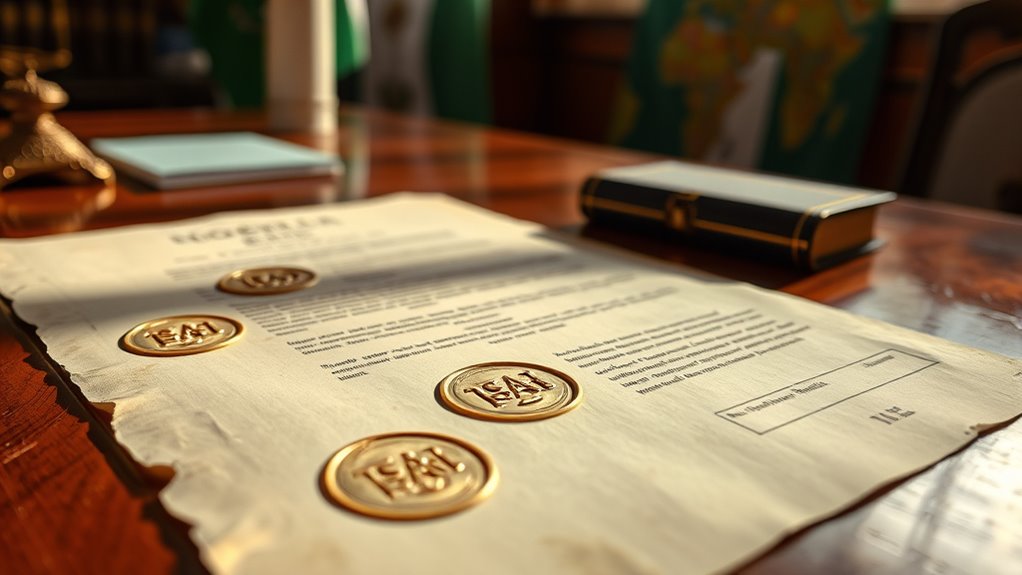
Certified translations for Power of Attorney documents in Nigeria guarantee accurate rendering and legal compliance, using expert linguists to preserve original intent and cultural nuances. Providers like Translation Africa employ qualified translators with legal expertise, adhering to national standards for international recognition in business and estate matters. This process involves rigorous verification and notarization to mitigate disputes. Detailed insights into requirements, benefits, and provider selection follow in the overview.
Quick Summaries
- Certified translations accurately render Power of Attorney documents for Nigerian legal use.
- Qualified translators with legal expertise ensure fidelity to the original text and cultural nuances.
- Choose providers accredited by the Nigerian Institute for reliable certification standards.
- Translations must comply with Nigeria’s Evidence Act and require notarization for validity.
- The process involves expert review, stamping, and notarization for seamless international recognition.
What Is Certified Translation for Power of Attorney?

Certified translation for a power of attorney is the accurate, professionally verified rendering of a legal document that empowers one individual to act on another’s behalf, guaranteeing compliance with international standards for use in contexts like Nigeria. This process involves expert linguists who translate the original text while preserving its legal intent and nuances, often requiring certification by authorized bodies to affirm authenticity. Such translations bridge language barriers in cross-border scenarios, facilitating seamless interactions in business, personal affairs, or estate management. By prioritizing precision, certified translations mitigate risks of misinterpretation, upholding the document’s validity across jurisdictions. Ultimately, this service guarantees that the power of attorney’s core elements—such as authority delegation and scope—are faithfully conveyed, fostering trust and reliability in global legal practices.
Key Requirements for Translations in Nigeria

The key requirements for translations in Nigeria include translation accuracy, certification standards, and legal compliance. These elements guarantee that documents maintain their original intent and reliability. Examining each requirement helps establish a foundation for valid certified translations in legal contexts.
Translation Accuracy
Ensuring translation accuracy is essential for legal documents in Nigeria, where errors can invalidate proceedings. Accurate translations preserve the original document’s intent, avoiding cultural misunderstandings and ensuring compliance with local laws. This precision is crucial for power of attorney forms, where clarity prevents disputes.
- Use qualified translators: Professionals with expertise in legal and Nigerian contexts minimize errors.
- Maintain fidelity to source: Every word and phrase must align precisely with the original text.
- Incorporate cultural nuances: Adapt language to reflect Nigerian customs without altering meaning.
- Employ accurate terminology: Use standard legal terms recognized in Nigeria to avoid ambiguity.
- Verify for consistency: Cross-check translations for grammatical and contextual accuracy before finalization.
This approach enhances reliability in legal matters, supporting effective proceedings.
Certification Standards
Certification standards in Nigeria specify essential requirements for translations, including accreditation by recognized bodies, adherence to national guidelines, and verification processes that validate document authenticity in legal settings. Accredited translators must be certified by organizations like the Nigerian Institute of Translators and Interpreters, ensuring professional competence through rigorous examinations and ongoing training. National guidelines, outlined by the Standards Organisation of Nigeria, mandate accuracy, cultural sensitivity, and format consistency to maintain translation integrity. Verification involves thorough checks, such as official stamping and signatures, to confirm the document’s originality and prevent alterations. These standards promote reliability in translations for power of attorney documents, fostering trust in international dealings. Compliance with these protocols helps safeguard against errors, enhancing overall translation quality in Nigeria.
Legal Compliance
While certification establishes professional standards, legal compliance in Nigeria requires translations to meet stringent regulatory criteria, such as adherence to the Evidence Act and guidelines from the Ministry of Justice. This guarantees documents like Power of Attorney are valid in legal proceedings, preventing disputes and upholding integrity. Compliance involves verifying accuracy, cultural nuances, and official acceptance.
- Accuracy and Completeness: Translations must faithfully represent the original text without omissions or alterations.
- Translator Qualifications: Only certified professionals, often registered with recognized bodies, can perform these services.
- Notarization Requirements: Documents typically need notarization by a licensed notary public for legal validity.
- Adherence to Evidence Act: Translations must comply with sections governing admissible evidence in courts.
- Ministry Guidelines: Follow specific directives on formatting, stamping, and submission to avoid rejection.
Benefits of Professional Translation Services

Professional translation services for power of attorney documents in Nigeria provide significant benefits, including enhanced accuracy that minimizes errors in legal translations. This precision guarantees compliance with regulatory standards and reduces the risk of disputes. Additionally, these services deliver faster turnaround times, enabling efficient handling of time-sensitive matters.
Enhanced Accuracy
Ensuring enhanced accuracy in translations, particularly for critical documents like a Power of Attorney in Nigeria, is a core advantage of professional services. These services employ skilled linguists who minimize errors through specialized knowledge, ensuring documents retain their legal intent and validity.
- Expertise in Legal Terminology: Translators are trained in precise legal language, reducing misinterpretations.
- Cultural Sensitivity: Professionals account for Nigerian cultural nuances, avoiding contextually inaccurate translations.
- Rigorous Proofreading: Multiple review stages catch and correct errors before finalization.
- Use of Technology: Advanced tools aid in maintaining consistency and accuracy without compromising human oversight.
- Certification Standards: Adherence to industry regulations guarantees reliable, error-free results.
Faster Delivery
Faster delivery emerges as a key benefit of professional translation services, enabling clients to meet tight deadlines without compromising quality. In the context of certified translations for Power of Attorney in Nigeria, Translation Africa leverages advanced technology and a network of skilled linguists to streamline processes. This efficiency allows for rapid turnaround times, often within hours or days, depending on document complexity. By utilizing specialized software for real-time collaboration and quality assurance, professionals minimize delays while adhering to legal standards. Consequently, clients avoid costly setbacks in legal proceedings, such as court filings or international dealings. This approach not only enhances productivity but also builds trust, as timely delivery guarantees seamless compliance with Nigeria’s regulatory requirements. Overall, faster delivery empowers individuals and businesses to act decisively in urgent situations.
The Certification Process Explained
The certification process for translations of a Power of Attorney in Nigeria involves official verification by accredited bodies to guarantee document accuracy and legal validity. This guarantees compliance with Nigerian legal standards, where translations must be certified to be admissible in courts or official proceedings. The process typically includes rigorous checks for linguistic precision and cultural appropriateness.
- Verification by Notary: Documents are reviewed and notarized by a licensed notary public.
- Stamp and Seal: Certified translations receive an official stamp and seal from the accrediting body.
- Affidavit Submission: Translators often submit an affidavit attesting to the accuracy of the translation.
- Quality Assurance Review: A second expert reviews the document for errors.
- Final Certification: The document is issued with a certificate confirming its validity.
This structured approach maintains the document’s integrity and reliability.
Choosing the Right Provider in Nigeria
Providers in Nigeria for certified translations of Power of Attorney documents vary in quality and reliability, making provider selection a key step after completing the certification process. Individuals must prioritize accredited translators, such as those certified by the Nigerian Institute of Translators and Interpreters or international equivalents, to guarantee compliance with legal standards. Experience in legal translations is vital, as it minimizes errors that could invalidate documents. Potential clients should evaluate provider reputations through online reviews, testimonials, and professional affiliations. Cost comparisons are important, but not at the expense of accuracy—seek transparent pricing structures. Additionally, assess turnaround times and customer service responsiveness to meet urgent needs. Choosing a provider with specialized expertise in Power of Attorney matters enhances overall reliability and peace of mind. (124 words)
Common Documents Needing Translation
In Nigeria, various legal documents often require certified translation to guarantee compliance with international and domestic standards. These translations are essential for legal proceedings, business transactions, and international dealings, ensuring documents are accurately rendered in the required languages.
- Power of Attorney documents: Used for authorizing representatives in legal matters, often needing translation for overseas enforcement.
- Birth and marriage certificates: Essential for immigration, inheritance, or family law cases, requiring precise translation for official recognition.
- Wills and estate papers: Translated to handle cross-border inheritance disputes and asset distribution.
- Business contracts and agreements: Necessary for international trade, mergers, or partnerships to avoid legal pitfalls.
- Educational credentials: Such as diplomas, translated for job applications, visas, or academic pursuits abroad.
Ensuring Accuracy and Compliance
Accuracy in certified translations requires meticulous verification processes to meet international and Nigerian legal standards, ensuring documents remain legally binding across borders. Certified translators, often affiliated with recognized bodies like the Nigerian Institute of Translators and Interpreters, employ multi-step reviews to cross-check accuracy in terminology, syntax, and cultural context. This minimizes errors that could compromise a Power of Attorney’s validity in legal proceedings. Compliance involves adhering to guidelines from the Hague Convention and local regulations, such as notarization and authentication. By integrating quality assurance tools and peer reviews, translators uphold precision, reducing risks of disputes. Ultimately, these measures safeguard clients’ interests, facilitating seamless international recognition and enforcement of powers granted. In Nigeria, prioritizing such diligence enhances trust in translated documents for estate planning and business affairs.
Frequently Asked Questions
How Much Does Certified Translation Cost?
The cost of certified translation services varies depending on factors such as language pair, document length, and provider expertise. Typically, prices range from $50 to $200 per page, though rates may differ. Individuals should seek quotes from professional translators for accurate estimates.
How Long Does the Translation Process Take?
The question of how long the translation process takes is a common concern in language services. It typically depends on factors like document length, complexity, and service urgency. Generally, standard translations are completed within 2 to 7 business days.
Can I Translate the Document Myself?
The question of whether an individual can translate a document themselves often arises in translation matters. However, for official or legal purposes, professional certified services are typically required to guarantee accuracy, validity, and compliance with regulations.
Are There Discounts for Bulk Translations?
Discounts for bulk translations are often available from various providers to encourage larger orders. Rates typically depend on volume and document types, with potential savings varying. Clients should inquire directly for specific details and eligibility criteria.
What Payment Methods Do You Accept?
The current question addresses the accepted payment methods for the service. It accepts major credit cards like Visa and Mastercard, bank transfers, and online platforms such as PayPal, ensuring secure and flexible options for clients to complete transactions efficiently.