
 Elizabeth123
Chewa to English translation plays a key role in Malawi, bridging communication for trade, cultural exchanges, and economic development across Africa. This process enables smoother interactions in education, healthcare, and business, while preserving indigenous nuances like greetings and idioms. Despite challenges such as dialects, digital tools enhance accuracy and accessibility. Continued engagement with these aspects reveals greater opportunities for growth and understanding.
Quick Summaries
- Chewa is a Bantu language spoken in Malawi, Zambia, and Mozambique, requiring precise tonal and structural handling for accurate English translations.
- Translation services in Africa enhance economic activities by enabling trade, investment, and access to global markets for Chewa-speaking regions.
- Cultural expertise ensures nuances like Chewa proverbs and social hierarchies are faithfully conveyed in English translations to avoid misunderstandings.
- Digital tools, such as AI-powered apps and online platforms, facilitate real-time Chewa to English translation amid Malawi’s linguistic diversity.
- Professional translators in Africa support sectors like education and healthcare by converting Chewa texts into English, promoting accessibility and cultural preservation.
Overview of Chewa Language Basics

Chewa, a Bantu language spoken primarily in Malawi, Zambia, and Mozambique, forms the basis for effective translation to English. As a tonal language, it relies on pitch variations to distinguish meaning, with seven vowel sounds and a consonant system that includes clicks and aspirated stops. The language features noun classes, where prefixes indicate categories like singular or plural, influencing agreement in verbs and adjectives. For instance, verbs conjugate based on tense, aspect, and subject, often using agglutinative structures to add prefixes and suffixes. Common greetings like “Muli bwanji?” (How are you?) highlight its polite, community-oriented vocabulary. Chewa‘s syntax typically follows a subject-verb-object order, though flexibility exists for emphasis. With influences from English, Portuguese, and local dialects, it adapts readily in modern contexts, aiding cross-cultural communication. Its phonology, including nasalization, requires careful attention in translation to preserve nuances. Overall, understanding these basics guarantees accurate English renditions.
Importance of Translation Services in Malawi
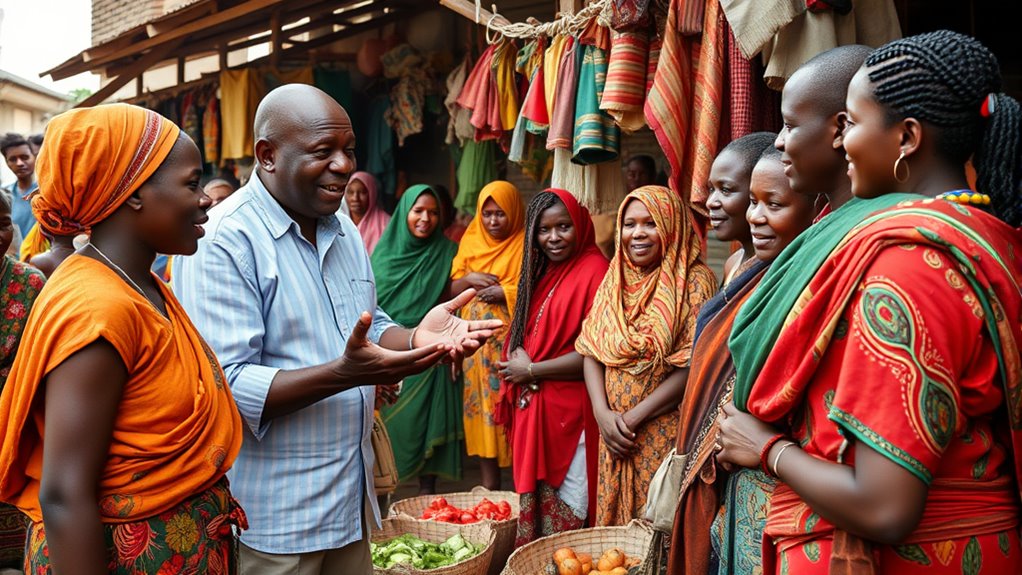
Translation services in Malawi play a vital role in fostering economic development by enabling effective communication in business and international trade. These services also facilitate cultural exchange, allowing communities to share traditions and ideas across linguistic barriers. Overall, they enhance societal connectivity and growth in a multilingual context.
Economic Development
In Malawi, economic development relies heavily on bridging linguistic divides, where translation services play a pivotal role in facilitating trade, investment, and international partnerships. These services enable smooth communication between local businesses and foreign investors, breaking down language barriers that could hinder negotiations and agreements. For instance, accurate Chewa-to-English translations support the export of key commodities like tobacco and tea, ensuring compliance with international standards and market requirements. This accessibility fosters job creation in sectors such as agriculture and manufacturing, boosting overall GDP growth. Additionally, translation aids in accessing global funding and technical expertise, allowing Malawian entrepreneurs to secure loans and partnerships more effectively. By enhancing information flow, these services reduce transaction costs and promote sustainable economic expansion, ultimately driving poverty reduction and national progress.
Cultural Exchange
Cultural exchange in Malawi thrives through translation services, which enable the sharing of traditions and artistic expressions between Chewa-speaking communities and English-dominant global audiences. These services bridge linguistic barriers, allowing Malawian folklore, music, and oral histories to reach international platforms, fostering mutual understanding and appreciation. For instance, translating Chewa literature into English preserves cultural heritage while exposing it to global scholars and tourists, enhancing Malawi’s soft power. This process not only safeguards indigenous languages from erosion but also encourages collaborative projects, such as joint festivals or educational exchanges. By facilitating accurate communication, translation services promote inclusivity, reducing cultural misunderstandings and enriching global diversity. Ultimately, they empower Malawians to participate in worldwide dialogues, strengthening national identity amid globalization. (124 words)
Common Chewa Phrases for Everyday Use
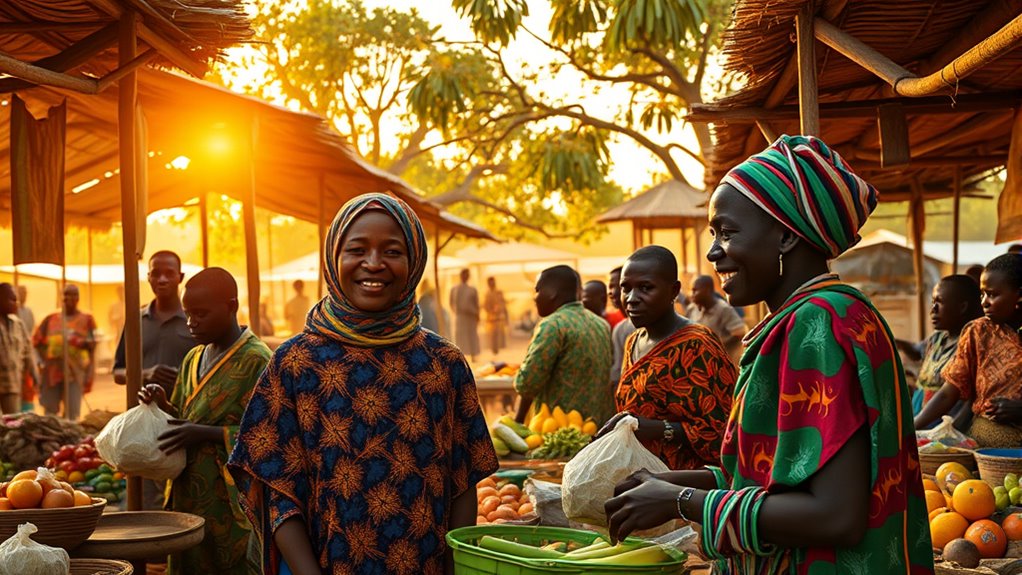
The discussion of common Chewa phrases for everyday use begins with greetings, which form the foundation of polite interactions in Chewa-speaking communities. Daily interaction phrases address routine needs such as asking for directions or making requests. These expressions enable effective communication in everyday scenarios.
Greetings in Chewa
Greetings play an essential role in Chewa communication, encompassing simple phrases that facilitate everyday interactions among speakers in Malawi, Zambia, and beyond. In Chewa culture, greetings often begin with “Moni,” meaning “Hello,” used universally to acknowledge others. A common follow-up is “Muli bwanji?” which translates to “How are you?” and promotes warmth in conversations. Responses like “Ndili bwino” (I’m fine) or “Ndili bwino, kaya inu?” (I’m fine, and you?) show politeness and reciprocity. Greetings vary by time of day, such as “M’mawa bwanji?” for “Good morning,” emphasizing respect for elders and community bonds. These phrases foster social harmony, reflecting the language’s emphasis on interpersonal respect without delving into extended dialogues. Learning them aids cultural understanding and effective engagement in Chewa-speaking regions. (124 words)
Daily Interactions Phrases
Beyond greetings, Chewa speakers rely on everyday phrases for daily interactions, such as “Kodi mukufuna chiyani?” meaning “What do you want?” or “Ndikufuna chakudya,” translating to “I want food,” to navigate routine activities like shopping and asking for directions. For instance, “Kodi ndalama zanga zili pati?” means “Where is my change?” and proves useful in markets. Another common phrase, “Zikomo kwambiri,” signifies “Thank you very much,” fostering politeness in conversations. Phrases like “Ndifuna kupita ku,” or “I want to go to,” aid in seeking directions, while “Bwanji mtengo uyu?” translates to “How much is this?” for bargaining. These expressions enhance communication in social settings, helping learners engage effectively in Malawi’s daily life, promoting cultural understanding and practical exchanges.
Cultural Nuances in Chewa-English Translation
While cultural nuances often complicate Chewa-English translations, they encompass subtle elements like idioms, proverbs, and social customs that demand careful adaptation to preserve original meanings and intent. In Chewa, idioms often draw from local contexts, such as agricultural metaphors or wildlife references, which lack direct English equivalents and require nuanced rephrasing to retain emotional and cultural depth. For example, a Chewa idiom implying resilience through natural imagery might be adapted to an English proverb that evokes similar strength without altering its core message. Proverbs encapsulate communal wisdom, reflecting values like respect for elders or community harmony, necessitating translations that avoid literalism to convey underlying morals accurately. Social customs, including greetings that denote hierarchy or taboos around certain topics, must be handled with sensitivity to prevent cultural misunderstandings. This adaptation guarantees translations foster genuine cross-cultural dialogue, bridging linguistic gaps while honoring Chewa heritage. Ultimately, overlooking these nuances can distort intent, highlighting the translator’s role in maintaining authenticity and context.
Tools and Resources for Chewa Translation
Essential tools and resources for Chewa translation include digital dictionaries, specialized software, and online platforms. Digital dictionaries, such as those available on apps like Google Translate or dedicated Chewa resources, offer quick word lookups and phonetic guides for accurate vocabulary. Specialized software, including computer-assisted translation (CAT) tools like SDL Trados or MemoQ, supports Chewa by integrating glossaries and memory banks to maintain consistency in terminology. Online platforms, such as forums on ProZ or educational sites from African language organizations, provide access to community-driven databases and tutorials. These resources enhance efficiency and precision, enabling translators to handle nuances effectively. Additionally, mobile apps and open-source tools facilitate real-time practice, fostering better language mastery for everyday and professional use. Overall, they bridge linguistic gaps in Malawi’s multilingual context.
Professional Translators in the African Context
Professional translators in Africa fulfill diverse roles, such as bridging linguistic gaps in Chewa to English contexts. They encounter challenges like handling regional dialects and resource limitations that affect accuracy. Cultural expertise remains essential for ensuring translations respect local nuances and traditions.
African Translator Roles
In the multifaceted linguistic environments of Africa, translators serve as essential bridges, facilitating communication across diverse cultures and languages while adapting to unique professional challenges. These professionals play pivotal roles in education, where they translate curricula and texts to make knowledge accessible in local tongues like Chewa. In healthcare, they guarantee accurate medical information reaches communities, preventing miscommunication in critical situations. Business translators bridge gaps in trade, enabling negotiations and contracts between African entities and global partners. Diplomatically, they aid in international relations by interpreting policies and agreements, fostering collaboration. Literary translators preserve and promote indigenous stories, enriching global literature. Through these functions, African translators enhance social cohesion and economic growth, underscoring their indispensable societal contributions.
Challenges in Translation
Translators working in Africa often grapple with linguistic diversity, where multiple languages and dialects intersect, complicating accurate conversions. In the context of Chewa to English translation, regional variations and evolving dialects pose significant hurdles, as standard Chewa forms may differ across Malawi, Zambia, and Zimbabwe. Professional translators must navigate the scarcity of exhaustive bilingual dictionaries and tools, which hampers precision in conveying nuanced meanings. Additionally, technical terminology in fields like agriculture or healthcare often lacks direct equivalents, requiring creative adaptations that risk altering intent. The fast-paced digital age exacerbates these issues, with emerging slang and online language shifts demanding constant updates to skills. Despite these obstacles, dedicated professionals employ rigorous training and collaboration to maintain fidelity, ensuring effective communication in a dynamic linguistic landscape. This underscores the need for enhanced resources and methodologies to support accurate translations.
Cultural Expertise Needed
While linguistic proficiency provides a strong foundation, cultural expertise becomes indispensable for translators operating in Africa’s diverse contexts. In Malawi, for Chewa to English translations, this expertise guarantees accurate conveyance of nuances like proverbs, rituals, and social hierarchies. Without it, literal interpretations risk cultural misunderstandings, undermining effective communication. Professional translators in Africa integrate this knowledge to foster trust and authenticity in their work.
- Idiomatic mastery: Accurately interpreting local expressions that don’t translate directly.
- Cultural sensitivity: Handling taboos and social norms to avoid offense.
- Historical awareness: Understanding context from colonial and traditional influences.
- Audience resonance: Adapting content to align with community values and expectations.
Challenges Faced in Language Conversion
Converting Chewa to English involves significant challenges, including grammatical disparities, idiomatic nuances, and cultural contexts that resist direct translation. Chewa’s tonal structure, for instance, influences meaning in ways that English grammar cannot replicate, leading to potential misinterpretations in verb tenses and sentence flow. Idiomatic expressions, such as Chewa proverbs rooted in agrarian life, often lack direct equivalents, requiring translators to approximate meanings that may alter original intent. Cultural contexts further complicate matters; terms tied to Malawian traditions, like specific kinship roles or spiritual beliefs, demand nuanced adaptation to avoid cultural dilution. These obstacles can result in inaccurate renditions, highlighting the need for skilled translators who navigate these complexities without oversimplifying. Ultimately, the process underscores the intricate balance required to preserve authenticity in cross-language communication.
Benefits of Bilingual Communication in Malawi
In Malawi, bilingual communication—particularly between Chewa and English—fosters key advantages in education, economic development, and cultural exchange. This proficiency allows for improved learning experiences, as students can access English-medium instruction while maintaining their native language. It also boosts economic activities by enabling effective communication in business and trade, leading to increased opportunities and development. Moreover, it facilitates cultural interactions, helping to preserve and share Chewa traditions with a wider audience, while strengthening social cohesion.
- Enhances educational access and academic performance in multilingual settings.
- Promotes economic advancement through better business interactions and global partnerships.
- Fosters cultural understanding and the preservation of local languages and customs.
- Encourages social integration and personal empowerment in diverse communities.
Historical Evolution of Chewa Language
The Chewa language, part of the Bantu family, originated from ancient migrations in southern Africa and has evolved through centuries of cultural exchanges and external influences. Over time, it spread through the Great Lakes region, influenced by trade routes and interactions with neighboring groups like the Ngoni and Yao. Colonialism introduced English and Portuguese elements, altering vocabulary and grammar, while post-independence movements in Malawi emphasized its standardization. This evolution reflects resilience amid social changes.
| Time Period | Key Events | Influences |
|---|---|---|
| Pre-15th Century | Migrations from the north | Bantu proto-languages |
| 15th-18th Century | Kingdom expansions | Trade with Arab merchants |
| 19th Century | Ngoni invasions | Zulu linguistic elements |
| Early 20th Century | British colonial rule | English loanwords |
| Post-1964 | National language status | Modern educational reforms |
Practical Applications of Translation in Africa
Translation plays a key role in facilitating communication across Africa’s diverse linguistic landscapes, particularly in contexts like education and diplomacy. In Malawi and beyond, it bridges gaps in healthcare, business, and cultural exchange, enabling access to essential services and fostering mutual understanding. For instance, translating Chewa documents into English supports development initiatives, while broader applications enhance regional integration and knowledge sharing.
- Education Empowerment: Translated textbooks make learning inclusive for non-English speakers in rural areas.
- Healthcare Access: Accurate translations of medical information save lives during pandemics and routine care.
- Business Growth: It facilitates trade agreements and negotiations across linguistic divides.
- Cultural Preservation: Translation documents oral traditions, ensuring indigenous languages like Chewa thrive.
Frequently Asked Questions
How Much Does Chewa Translation Cost?
The question addresses the cost of Chewa translation services. Several factors, including document size, language complexity, and provider rates, determine the final price. Estimates typically range from $0.05 to $0.20 per word, varying by context and requirements.
Are There Free Chewa Translation Apps?
The query asks whether free Chewa translation apps exist. Indeed, several options like Google Translate and similar platforms offer complimentary services for Chewa, enabling users to convert text and speech easily across devices.
How Do I Become a Chewa Translator?
The question of becoming a Chewa translator involves mastering the language through courses or immersion. Individuals must pursue translation studies, obtain relevant certifications, and gain practical experience via freelance work or professional roles. Persistence and cultural knowledge enhance success.
What Is the Demand for Chewa Translators?
The demand for Chewa translators is growing in Malawi and neighboring regions, driven by globalization, healthcare needs, and educational exchanges. This trend creates expanding opportunities in sectors like NGOs, government, and international business, attracting skilled professionals.
Can Translations Be Notarized in Malawi?
The question of whether translations can be notarized in Malawi involves legal document authentication. In Malawi, translations can be notarized by licensed notaries if certified by qualified translators, ensuring validity for official and legal purposes. This process enhances document credibility.

