
 Elizabeth123
Chewa to English translation is essential in Malawi, a Bantu language that promotes cultural exchange and economic development across Africa. This process involves identifying key idioms, consulting experts, and adapting nuances like noun classes and proverbs to maintain accuracy. It supports education, healthcare, and trade by bridging linguistic gaps and fostering inclusivity. Further insights into its applications reveal enhanced opportunities for global integration and preservation of traditions.
Quick Summaries
- Chewa to English translation services in Malawi specialize in converting Bantu language texts while preserving cultural nuances.
- Professional translators follow steps like consulting native speakers to handle idioms and proverbs accurately.
- Cultural aspects, such as agriculture-related idioms, are adapted to maintain Malawian heritage in English translations.
- These services boost economic development in Africa by facilitating trade, education, and tourism through precise translations.
- Applications include healthcare and governance, where Chewa translations bridge communication gaps for better outcomes.
The Basics of Chewa Language in Malawi
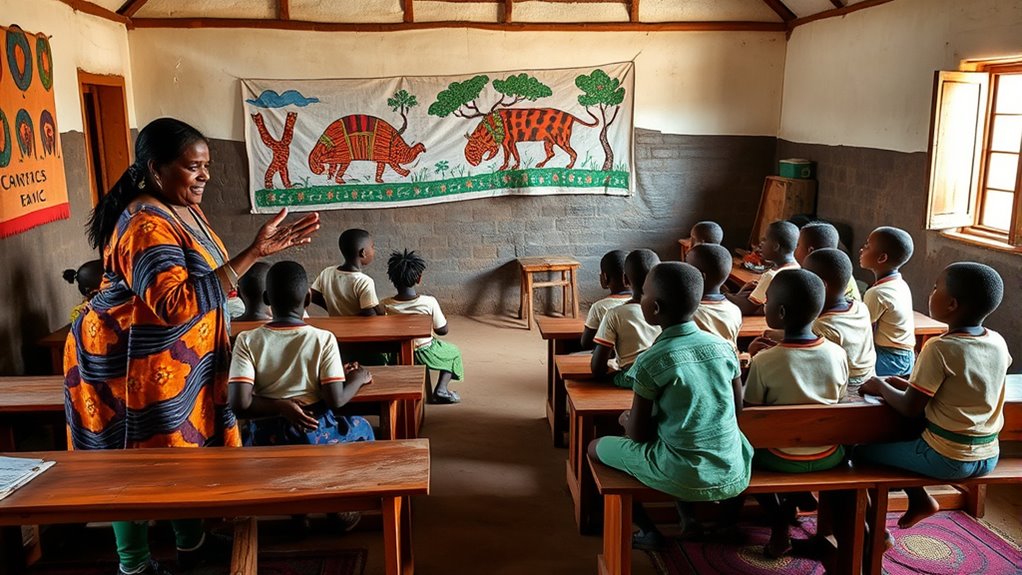
The Chewa language, a Bantu tongue spoken primarily in Malawi, serves as an official language and a key means of communication for millions of residents. As a member of the Niger-Congo family, Chewa features a rich tonal system, where pitch variations alter word meanings, and a noun class system that organizes vocabulary into categories based on gender, number, and animacy. This structure influences sentence formation, with verbs often agreeing with nouns in class and number. In Malawi, Chewa’s prevalence extends to education, media, and cultural events, fostering national unity among diverse ethnic groups. Its vocabulary draws from everyday life, agriculture, and traditions, reflecting the country’s rural heritage. Despite regional dialects, a standardized form promotes consistency in formal contexts. This linguistic foundation underscores Chewa’s enduring role in Malawian identity and daily interactions.
Steps for Effective Chewa to English Translation
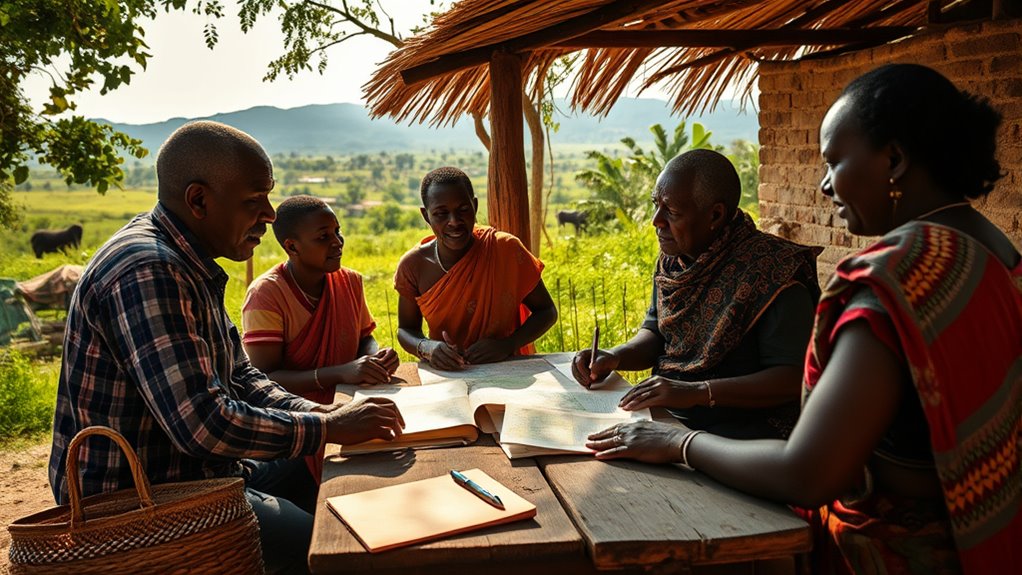
Effective Chewa to English translation involves a structured approach to maintain accuracy and clarity. The key steps encompass researching essential vocabulary, applying suitable translation methods, and performing a thorough accuracy check. These processes form the foundation for reliable linguistic conversion.
Research Key Vocabulary
Researching key vocabulary serves as a foundational step in Chewa to English translation, enabling translators to identify culturally nuanced terms and guarantee precise meaning transfer. This approach minimizes errors by focusing on words with specific historical or social significance in Malawian contexts, ensuring translations remain faithful to the source material.
To effectively research key vocabulary, translators can follow these steps:
- Identify core terms: Scan the text for frequently used words and phrases that carry cultural weight, such as kinship terms or traditional practices.
- Consult reliable resources: Use specialized Chewa-English dictionaries, linguistic databases, and academic texts for accurate definitions and etymology.
- Analyze context: Examine how terms function within sentences to capture subtle nuances, like idioms or proverbs unique to Chewa speakers.
- Verify with experts: Cross-check interpretations with native speakers or cultural consultants to refine understanding and avoid inaccuracies.
Apply Translation Methods
Translators apply proven methods to bridge Chewa and English, guaranteeing accurate conveyance of meaning through structured steps like literal rendering and cultural adaptation. In practice, these methods involve breaking down texts into manageable units, such as sentences or phrases, for initial literal translation. This is followed by cultural adaptation to adjust idioms and nuances specific to Chewa-speaking communities in Malawi. Syntactic adjustments guarantee the English output flows naturally while preserving the original intent.
To illustrate key steps, consider the following table:
| Step | Method | Benefit |
|---|---|---|
| 1 | Literal Rendering | Maintains core structure |
| 2 | Cultural Adaptation | Enhances relevance and context |
| 3 | Syntactic Refinement | Improves readability |
Ensure Accuracy Check
Guaranteeing accuracy in Chewa to English translation requires systematic steps that verify the fidelity of the rendered text. This process minimizes errors and preserves cultural nuances, guaranteeing the final output is reliable and contextually appropriate.
- Verify literal accuracy: Compare the translated text against the original Chewa source to confirm word-for-word fidelity while maintaining natural flow.
- Conduct peer review: Have bilingual experts review the translation for idiomatic correctness and cultural subtleties that might be overlooked.
- Check for consistency: Guarantee terminology and style remain uniform throughout the document, using glossaries to standardize key terms.
- Perform final proofreading: Read the text aloud or use tools to detect grammatical errors, awkward phrasing, or deviations from the intended meaning.
Cultural Aspects of Translating Chewa

Cultural nuances in Chewa translation demand careful handling of traditions, idioms, and proverbs that often lack direct English equivalents. Translators must navigate the rich cultural context of Chewa, a language spoken primarily in Malawi and surrounding regions, where words carry deeper social meanings tied to community life. For instance, Chewa proverbs like “Mimba ndi yathu” (The stomach is ours) encapsulate shared values of family and resourcefulness, requiring adaptive interpretation to convey the original intent without distortion. Idioms related to agriculture, such as those describing seasonal cycles, reflect Malawi’s rural heritage and may not translate literally, potentially altering emotional resonance. Effective translation involves cultural immersion and sensitivity to avoid misrepresentations, ensuring the essence of Chewa storytelling and oral traditions remains intact. This approach preserves authenticity, fostering better cross-cultural understanding in global communications.
Benefits of Professional Translation Services in Africa
Professional translation services in Africa enhance communication across diverse linguistic landscapes, delivering accurate and efficient conversions that support economic growth, cultural exchange, and global integration. These services bridge gaps in multilingual environments, fostering opportunities for businesses, education, and communities. By ensuring precision, they amplify Africa’s global presence.
- Boosts Economic Development: Facilitates trade and investment by overcoming language barriers, enabling smoother international partnerships.
- Promotes Cultural Preservation: Accurately conveys nuances, safeguarding indigenous languages and traditions while encouraging cross-cultural dialogue.
- Enhances Educational Access: Provides reliable translations for learning materials, improving knowledge sharing and skill development.
- Supports Global Integration: Aids diplomacy and tourism, helping African nations engage effectively on the world stage.
Common Challenges in Chewa-English Conversion
While Chewa’s tonal and agglutinative features differ markedly from English’s analytical structure, translators often encounter challenges such as lexical ambiguities, cultural idioms that lack direct equivalents, and grammatical shifts that can alter intended meanings. Lexical ambiguities arise when Chewa words have multiple interpretations, complicating precise English renditions and potentially leading to misunderstandings. For instance, a single Chewa term might encompass concepts that require several English words, demanding careful context analysis. Cultural idioms pose another hurdle, as expressions rooted in Malawian traditions often carry nuanced connotations without straightforward parallels in English, risking loss of cultural depth. Grammatical shifts, including verb conjugations and noun classes in Chewa, further complicate translations, as English’s rigid syntax may fail to capture subtleties, therefore distorting original intent. Overall, these issues underscore the need for skilled translators to bridge linguistic divides effectively. (124 words)
Applications of Translation in Malawian Contexts
In Malawian contexts, translation serves multiple practical purposes, particularly in bridging Chewa and English for education, healthcare, and governance. This process enhances communication, fosters inclusivity, and supports national development by making information accessible across linguistic divides. Translation adapts cultural nuances, ensuring messages resonate effectively in diverse settings.
- Education: Translating textbooks and curricula enables Chewa-speaking students to grasp complex concepts, improving literacy and academic outcomes.
- Healthcare: It facilitates accurate medical advice and patient interactions, reducing misunderstandings in clinics and public health campaigns.
- Governance: Official documents, laws, and announcements are rendered into Chewa, promoting civic participation and equitable policy implementation.
- Cultural Exchange: Translation aids in preserving traditions through literature and media, while boosting tourism by making cultural content available to English speakers.
Frequently Asked Questions
How Much Does Chewa to English Translation Cost?
The query seeks information on the cost of translating from Chewa to English. Such translation services typically vary based on factors like word count, complexity, and provider expertise, often ranging from $0.05 to $0.20 per word. For accurate pricing, consulting professionals is advisable.
What Is the Typical Turnaround Time for Translations?
The typical turnaround time for translations varies based on factors like document length, complexity, and service provider. Standard projects often take 24 to 72 hours for short texts, while larger ones may require several days to a week, ensuring accuracy and quality.
Are Your Translators Certified Professionals?
The query seeks to determine if translators are certified professionals. Typically, reputable translation services employ individuals with recognized certifications to guarantee accuracy, cultural sensitivity, and adherence to industry standards, thereby enhancing overall quality.
Do You Offer Free Translation Samples?
In response to the query on free translation samples, the service offers them to potential users. This feature allows for evaluation of translation accuracy and quality, ensuring client confidence in the professional services provided.
How Can I Contact a Translation Expert Directly?
The question seeks information on how to directly contact a translation expert. Individuals may visit the company’s official website, fill out the contact form, send an email to the designated address, or make a phone call to the support line for professional guidance.