
 Elizabeth123
English to Tigrinya translation in Eritrea draws on the language’s deep historical roots in the Horn of Africa, incorporating influences from Ge’ez, Arabic, and colonial eras to guarantee cultural accuracy. Professional services from Translation Africa employ skilled linguists to navigate structural differences, such as verb conjugations, and context-dependent meanings for precise results. This approach supports everyday communication and specialized fields like legal and medical translations. Further insights into tools and trends await in the following sections.
Quick Summaries
- Professional English to Tigrinya translation services in Eritrea ensure accurate communication across cultural contexts.
- Tigrinya translations incorporate historical influences from Ge’ez and Arabic for faithful renditions.
- Linguistic challenges, like verb conjugations and word order, require specialized expertise in Eritrea.
- Reliable translation providers in Africa use skilled linguists and tools for precise English to Tigrinya conversions.
- Emerging AI and digital platforms enhance English to Tigrinya translation accuracy and efficiency in African regions.
The History of Tigrinya in Eritrea
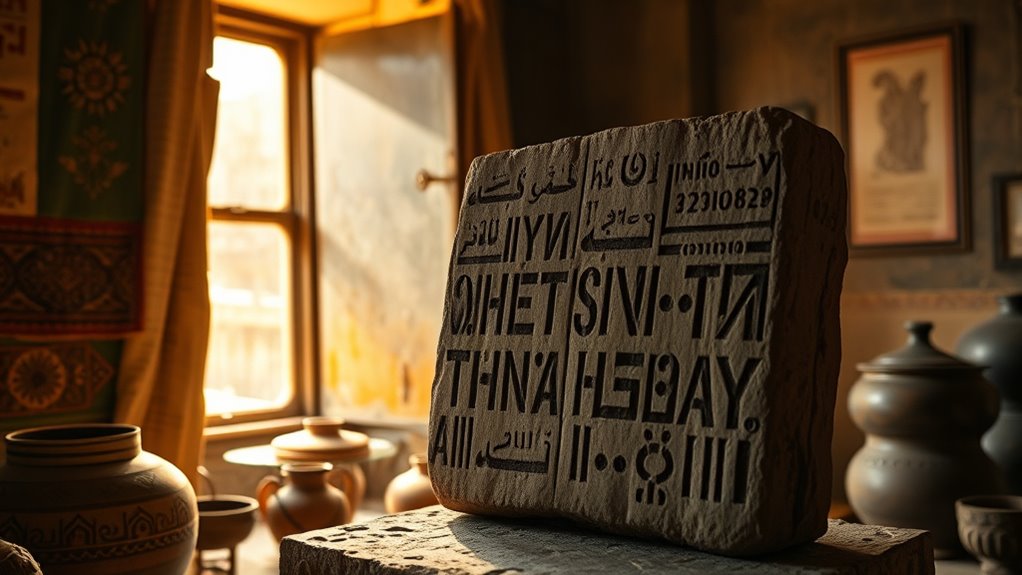
Tigrinya, a Semitic language, emerged in the Horn of Africa, with its roots in ancient Eritrea tracing back to the pre-Axumite era. This period saw Tigrinya evolve from early inscriptions and oral traditions among highland communities, influenced by neighboring Cushitic languages. By the Axumite Kingdom’s rise around the 1st century AD, Tigrinya had developed distinct phonetic and grammatical features, reflecting Eritrea’s diverse cultural exchanges. Over centuries, it absorbed elements from Arabic and Ge’ez during the medieval era, particularly through trade and migration. In the 19th and 20th centuries, colonial influences and Italian occupation further shaped its vocabulary, while post-independence efforts in the 1990s standardized its written form. Today, Tigrinya remains a crucial marker of Eritrean identity, spoken by millions in the highlands and diaspora.
Key Aspects of English to Tigrinya Translation
The key aspects of English to Tigrinya translation encompass translation accuracy, cultural nuances, and linguistic challenges. Translation accuracy guarantees that the original meaning is preserved without errors in the target language. These elements collectively influence the effectiveness and fidelity of the translation process.
Translation Accuracy
Accuracy in English to Tigrinya translation relies on several critical factors, including linguistic nuances, cultural contexts, and fidelity to the source text, to guarantee the intended meaning remains intact. Linguistic nuances, such as grammatical structures and vocabulary differences, play a pivotal role; for instance, Tigrinya’s verb conjugations and English’s tense systems require precise handling to avoid misinterpretation. Fidelity demands that translators adhere strictly to the original content, minimizing additions or omissions that could alter intent. Professional translators employ tools like glossaries and software for cross-verification, ensuring syntactic accuracy and semantic equivalence. In fields like legal or medical translation, even minor errors can lead to significant consequences, underscoring the need for rigorous proofreading. Ultimately, high accuracy enhances communication effectiveness between English and Tigrinya speakers.
Cultural Nuances
Cultural nuances greatly influence English to Tigrinya translation by requiring translators to navigate differences in traditions, idioms, and social contexts that shape meaning. In Eritrea, where Tigrinya is spoken, translators must adapt content to reflect local customs, ensuring messages resonate authentically. This involves understanding how cultural elements alter interpretations, such as indirect communication styles or symbolic gestures, to avoid misrepresentations.
To illustrate these nuances vividly:
- Idioms of kinship: Translating “family ties” might evoke imagery of extended clan gatherings under acacia trees, emphasizing communal bonds in Tigrinya culture.
- Festive traditions: Phrases like “happy holidays” could transform into vivid depictions of Meskel celebrations with bonfires and incense, capturing spiritual essence.
- Social hierarchies: Rendering “respect elders” involves imagining deferential gestures, like bowing or using honorifics, to convey hierarchical respect in everyday interactions.
Linguistic Challenges
Beyond cultural influences, structural differences between English and Tigrinya create formidable barriers in translation. English follows a subject-verb-object structure, while Tigrinya often employs verb-subject-object patterns, complicating sentence rearrangement and meaning preservation. Additionally, Tigrinya’s complex morphology, including intricate verb conjugations and gender agreements, lacks direct equivalents in English, leading to ambiguities in tense and aspect. Vocabulary challenges arise from Tigrinya’s Semitic roots, where words can have multiple meanings based on context, unlike English’s more straightforward lexicon. Translators must navigate these issues carefully to avoid inaccuracies, as literal translations often fail to convey nuances. Phonetic differences, such as Tigrinya’s use of the Ge’ez script, further hinder accurate rendering in Romanized forms. Ultimately, these linguistic hurdles demand specialized expertise to guarantee faithful and effective communication in fields like education and diplomacy. (124 words)
Common Phrases for Everyday Translation
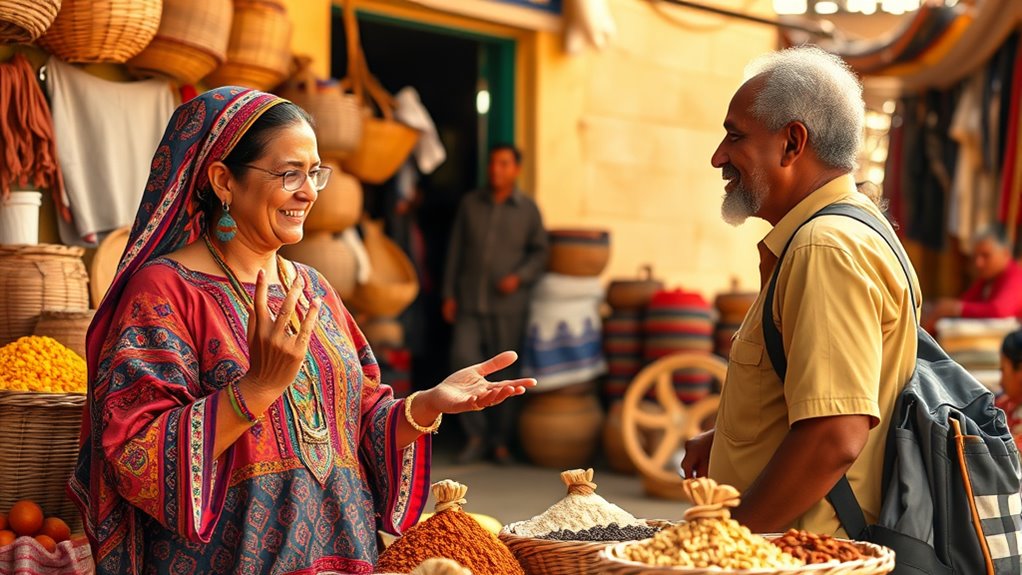
In everyday contexts, common phrases form the backbone of English to Tigrinya translation, enabling seamless communication in routine interactions such as greetings, inquiries, and simple exchanges. These phrases bridge language gaps, fostering clarity in daily life for speakers in Eritrea and beyond. Mastering them enhances practical language use, from casual chats to essential dialogues, without delving into broader cultural aspects.
Translating everyday phrases vividly illustrates their utility:
- Greetings: “Hello” becomes “Selam,” painting a picture of a friendly nod in a bustling Eritrean market, instantly warming interactions.
- Inquiries: “How are you?” translates to “Kemey aleka?,” evoking an image of neighbors exchanging smiles over a shared meal, building rapport.
- Simple exchanges: “Thank you” is “Aybaye,” conjuring scenes of gratitude in shops, where a simple word smooths transactions and promotes goodwill.
Cultural Influences on Tigrinya Language
Cultural influences play a pivotal role in shaping the Tigrinya language, encompassing historical influences that have molded its evolution over centuries. Religious elements, such as those from Christianity and Islam, deeply integrate into its vocabulary and idiomatic expressions. Traditional practices also contribute to its nuances, reflecting the daily life and customs of Tigrinya speakers.
Historical Influences
The Tigrinya language, spoken primarily in Eritrea and northern Ethiopia, reflects a rich tapestry of historical influences from ancient civilizations and cultural exchanges. These influences have shaped its vocabulary and structure through interactions with neighboring societies. Tigrinya evolved amid trade, migrations, and conflicts, drawing from Afro-Asiatic roots while adapting to external pressures.
Key historical factors evoke vivid imagery:
- Aksumite Empire’s trade hubs, where merchants bartered goods, infusing terms for commerce and governance into Tigrinya, like words for “gold” and “ivory.”
- Red Sea interactions, picturing ancient ports bustling with sailors, incorporating nautical and mercantile vocabulary from Arabic influences without religious connotations.
- Ethiopian highland migrations, envisioning nomadic groups crossing landscapes, blending linguistic elements from Cushitic languages for survival and community.
This fusion enhances Tigrinya’s adaptability in modern contexts.
Religious Elements
Religion profoundly influences the Tigrinya language, embedding terms and expressions from Orthodox Christianity and Islam through centuries of cultural practices in Eritrea and northern Ethiopia. For instance, words like “ክብረ ነገር” (kibre negir), meaning “glory of God,” reflect Orthodox Christian theology, while Islamic influences appear in terms such as “ሰላም” (selam), used for peace and greetings derived from Arabic roots. These linguistic elements often integrate into everyday discourse, shaping prayers, sermons, and scriptural interpretations. The Tigrinya lexicon includes numerous loanwords from Ge’ez, the ancient liturgical language of the Ethiopian Orthodox Church, illustrating deep religious ties. Additionally, expressions tied to fasting periods like Lent or Ramadan enrich the language, fostering a sense of spiritual identity. This fusion highlights how faith molds communication, preserving Eritrea’s diverse heritage without overshadowing its core linguistic evolution.
Traditional Practices
Traditional practices in Eritrea and northern Ethiopia embed cultural nuances into the Tigrinya language, influencing vocabulary and idioms through rituals like weddings and harvests. These customs infuse Tigrinya with terms that reflect social structures, seasonal cycles, and communal values, ensuring the language evolves as an essential cultural artifact. For instance, expressions for kinship and fertility arise from age-old ceremonies, preserving oral traditions amid modern changes.
The impact on Tigrinya creates vivid imagery through:
- Wedding rituals, where intricate dances and blessings use metaphors of enduring ties, evoking images of woven threads symbolizing family unity.
- Harvest celebrations, featuring songs that depict golden fields and communal feasts, painting pictures of abundance with words for ripened grains and shared labor.
- Rites of passage, such as initiations, employing proverbs of resilience that conjure visions of mountain treks and ancestral guidance.
This linguistic adaptation keeps Tigrinya dynamic and culturally resonant.
Professional Services for Translation Africa
Professional translation services in Africa specialize in bridging linguistic gaps, particularly for languages like Tigrinya, by offering accurate and culturally nuanced English conversions to support global communication and business needs. These services employ skilled linguists who possess deep knowledge of Tigrinya’s cultural contexts, ensuring translations maintain original intent and sensitivity. In Eritrea and beyond, they facilitate cross-border trade, legal documentation, and educational exchanges, adapting to diverse client requirements with efficiency. By prioritizing quality and confidentiality, such providers enhance international partnerships, helping businesses navigate language barriers without compromising accuracy. This focus on professional expertise fosters trust and reliability, making them indispensable for Africa’s growing multilingual landscape. Ultimately, these services promote inclusivity and economic growth through precise linguistic support.
Tools and Techniques for Accurate Translation
Effective translation from English to Tigrinya relies on a range of specialized tools and techniques that prioritize precision and cultural fidelity. Translators utilize software for real-time accuracy, linguistic databases for contextual depth, and expert consultations to bridge cultural gaps. These methods guarantee that nuances in meaning are preserved, avoiding literal pitfalls that could distort intent.
- Digital translation platforms like CAT tools visualize language as interconnected webs, allowing translators to weave English phrases into Tigrinya tapestries that reflect everyday Eritrean life.
- Bilingual glossaries act as detailed maps, guiding users through terrain of idioms and expressions, evoking images of ancient pathways in the Eritrean highlands.
- Proofreading protocols mirror a sculptor’s refinement, chiseling text to capture subtle emotional tones, as if brushing strokes on a vibrant cultural canvas.
Emerging Trends in Language Translation
Emerging trends in language translation are reshaping global communication through innovations like artificial intelligence and neural machine learning, which offer faster, more adaptive solutions while addressing the nuances of languages such as Tigrinya. These advancements include real-time translation tools that integrate with mobile devices, enabling seamless interactions for Eritrean users accessing English content. Neural networks are enhancing accuracy by processing contextual subtleties, such as Tigrinya’s unique phonetic and grammatical structures, therefore reducing errors in professional and everyday applications. Collaborative platforms allow linguists to refine models with community input, promoting cultural preservation. Additionally, hybrid human-AI systems are emerging, combining algorithmic speed with expert oversight to handle specialized fields like legal or medical translations. This evolution supports Eritrea’s digital inclusion, fostering economic and educational growth through precise, accessible language services. Overall, these trends bridge linguistic divides, making translation more efficient and inclusive.
Frequently Asked Questions
How Much Does English to Tigrinya Translation Cost?
The cost of English to Tigrinya translation varies based on factors like word count, complexity, and service provider. Rates typically range from $0.05 to $0.20 per word, with professional agencies often charging more for specialized or urgent projects. Inquiries should compare multiple options.
Where Can I Find Certified Tigrinya Translators?
Certified Tigrinya translators can be located through professional agencies, online platforms like ProZ, and certification bodies. Educational institutions in Tigrinya-speaking regions, along with government resources and international organizations, offer additional access points for qualified experts.
Is Tigrinya Translation Available for Legal Documents?
The availability of Tigrinya translations for legal documents is indeed possible through certified professionals. These services guarantee accurate renditions, preserving legal intent and compliance in various contexts, including international agreements and court proceedings.
What Are the Typical Turnaround Times for Translations?
In the translation industry, typical turnaround times vary based on factors like document length, complexity, and service provider capabilities. Simple texts often take 24 to 48 hours, while extensive projects may require several days to a week or more.
How Do I Verify the Accuracy of a Translated Text?
Verifying the accuracy of a translated text requires reliable methods such as cross-referencing with native speakers, using advanced translation software, consulting professional linguists, and performing back-translation checks to preserve original intent.