
 Elizabeth123
English to Wolof translation serves as a key bridge in Senegal, where Wolof is an official language spoken by millions, facilitating cultural exchange, economic growth, and access to global resources across Africa. It supports sectors like education, trade, and healthcare by overcoming barriers such as tonal nuances and structural differences. Professional services guarantee accuracy in everyday interactions and business dealings. Continuing with this exploration uncovers strategies for enhancing cross-cultural connections.
Quick Summaries
- Professional English to Wolof translation services are available in Senegal, delivered by certified linguists for accurate communication.
- Translation promotes cultural exchange by preserving Wolof heritage and facilitating interactions in Africa.
- It drives economic growth in Senegal by enabling access to global markets and enhancing trade opportunities.
- Challenges include Wolof’s tonal structure and lack of direct equivalents for English idioms, affecting precision.
- Applications span education, healthcare, and business, helping bridge language barriers in everyday Senegalese contexts.
The Basics of Wolof Language
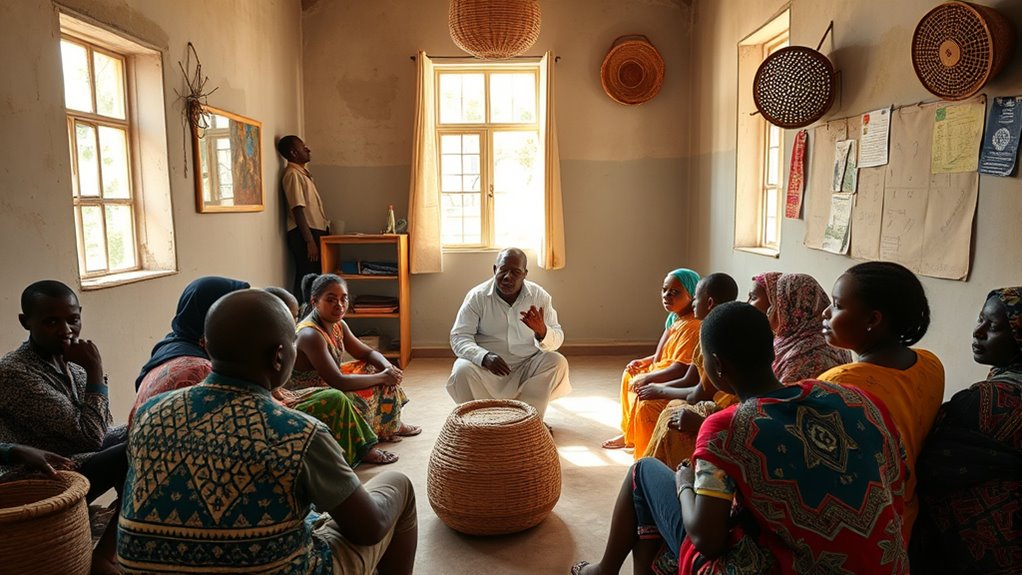
The Wolof language, spoken primarily in Senegal, belongs to the Niger-Congo family and serves as an essential tool for communication and translation. It features a rich phonological system with approximately 20 consonant sounds and seven vowels, often using tone to distinguish meaning. Wolof’s grammar is agglutinative, where words are formed by adding prefixes and suffixes; for instance, nouns are classified by gender and number, while verbs conjugate based on subject and tense. The language employs a subject-verb-object word order, making sentences straightforward. Wolof vocabulary draws from indigenous roots and historical influences, including Arabic and French, reflecting Senegal’s cultural diversity. As a lingua franca, it facilitates social interactions, storytelling, and media in urban areas. Learning basics involves mastering greetings, common phrases, and cultural nuances for effective engagement. Its script primarily uses the Latin alphabet, adapted for local sounds, aiding literacy efforts.
Importance of English to Wolof Translation
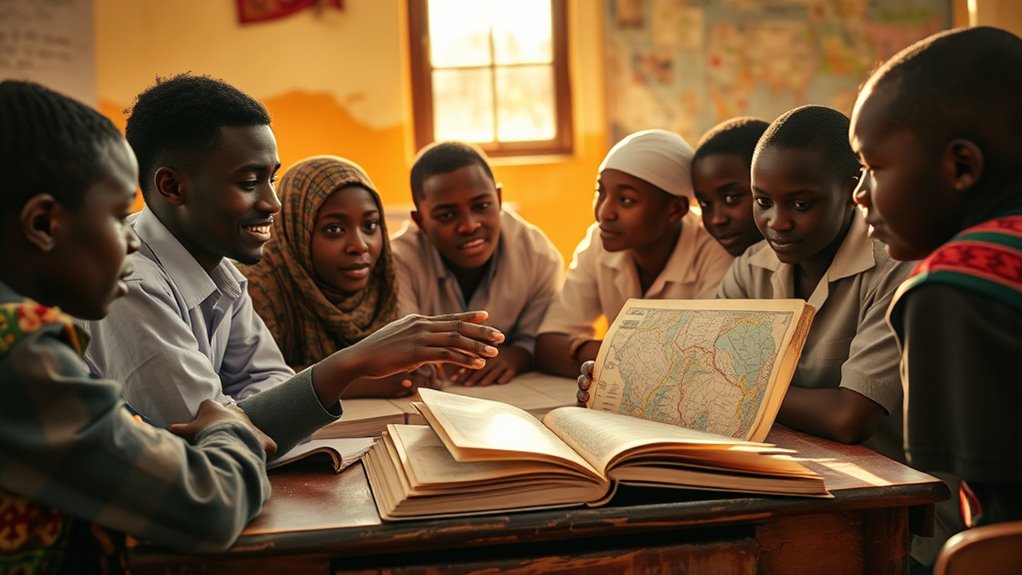
The importance of English to Wolof translation in Senegal extends to its cultural significance, fostering better understanding and preservation of local traditions. This process also offers economic advantages by enhancing communication in trade and business sectors. Overall, these aspects highlight how translation bridges linguistic divides for broader societal benefits.
Cultural Significance
As globalization expands across Senegal, English to Wolof translation emerges as an essential bridge, fostering cultural exchange and preserving indigenous heritage in a rapidly modernizing society. This process enables Wolof communities to share their rich oral traditions, folklore, and customs with English-speaking audiences, promoting mutual understanding and respect. By translating Wolof literature, music, and historical narratives into English, Senegal safeguards its linguistic diversity against erosion from dominant global languages. Moreover, such translations facilitate educational initiatives, where Wolof speakers access international resources while contributing their cultural insights, enriching global discourse. In this way, English to Wolof translation strengthens Senegal’s identity, ensuring that indigenous knowledge systems remain vibrant and influential in an interconnected world. This cultural preservation effort not only honors ancestral legacies but also inspires younger generations to embrace and innovate upon their heritage.
Economic Advantages
English to Wolof translation drives economic growth in Senegal by enabling access to global markets and fostering international trade. This process empowers local businesses to negotiate deals, expand exports, and integrate into the global economy, particularly in sectors like tourism and agriculture. By bridging language barriers, it enhances communication with English-speaking partners, boosting efficiency and competitiveness. For instance, translated materials facilitate smoother transactions and attract foreign investment.
| Economic Sector | Key Advantage | Estimated Impact |
|---|---|---|
| Tourism | Attracts international visitors | 20% revenue increase |
| Business | Enables global partnerships | 15% export growth |
| Agriculture | Improves market access | Higher sales volumes |
| Education | Access to resources | Skilled workforce boost |
Professional Translation Services in Senegal
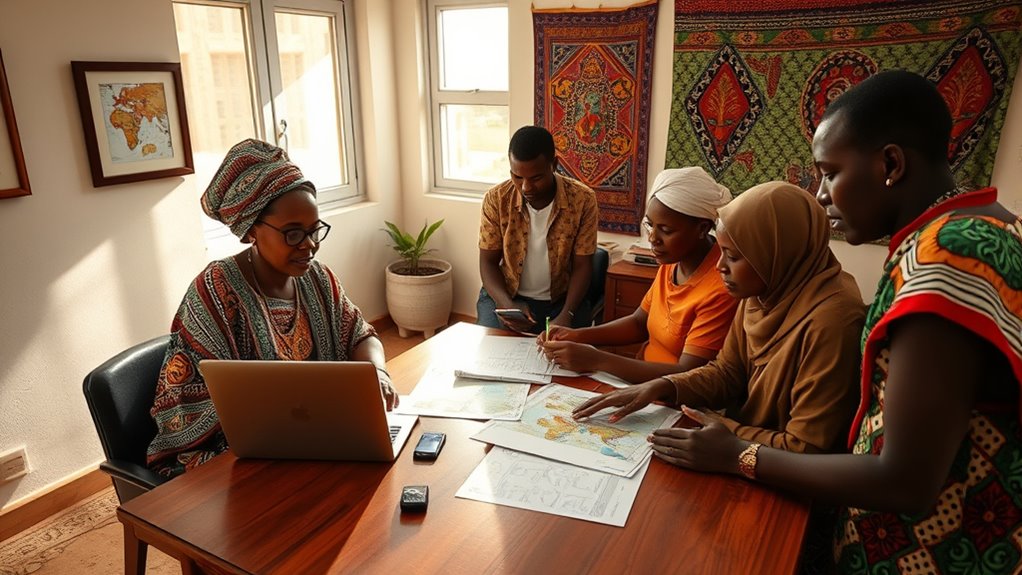
Professional translation services in Senegal provide essential support for accurate cross-language communication, especially in contexts like English to Wolof. These services are delivered by certified linguists and agencies equipped with expertise in various sectors, including legal, medical, and business applications. Utilizing advanced tools such as computer-assisted translation software, they guarantee precision and efficiency in handling complex documents. In Senegal’s dynamic economy, these providers facilitate international trade by translating contracts, reports, and marketing materials, enabling seamless business operations. They also assist educational and governmental institutions with accurate renditions of policies and academic content, promoting operational effectiveness. Quality control measures, like rigorous editing and proofreading, maintain high standards of reliability. Clients benefit from tailored services that emphasize timely delivery, cost-effectiveness, and adherence to international best practices, making them indispensable for global interactions. This professional approach enhances Senegal’s integration into the global marketplace, supporting sustained growth and collaboration.
Cultural Aspects of Wolof Communication
The cultural aspects of Wolof communication greatly influence translation practices in Senegal. Greetings in Wolof, non-verbal cues, and social etiquette norms form essential components of these interactions. Understanding these elements guarantee translations respect local customs and foster meaningful exchanges.
Greetings in Wolof
Greetings in Wolof culture emphasize respect and social harmony, serving as essential rituals that foster community ties through specific phrases and gestures tailored to contexts like age and relationship. In Wolof society, greetings often begin with inquiries about well-being, such as “Nanga def?” meaning “How are you?” which invites reciprocal exchanges to build rapport. These verbal interactions vary by social status; for instance, younger people address elders with phrases like “Asalaam maleekum” to show deference, reinforcing hierarchical bonds. Greetings also adapt to settings, like formal meetings where extended pleasantries affirm alliances, or casual encounters that prioritize warmth. Overall, mastering these phrases enhances cross-cultural communication, promoting mutual understanding in Senegal’s diverse communities and underscoring Wolof values of courtesy and interconnectedness.
Non-Verbal Cues
Non-verbal cues in Wolof communication, such as gestures and facial expressions, reinforce social norms and respect within Senegal’s cultural framework. For instance, subtle hand movements often convey emphasis or agreement without interrupting speakers, emphasizing communal harmony. Eye contact varies by context; prolonged gazes may signal engagement in informal settings, while averted eyes show deference in hierarchical interactions. Facial expressions, like a gentle smile, subtly express warmth and build rapport, avoiding overt displays that could disrupt social balance. Body posture, such as standing or sitting upright, communicates attentiveness and equality among peers. These elements are integral to Wolof interactions, fostering mutual understanding and cultural cohesion. Essentially, non-verbal signals in Wolof society enhance verbal exchanges, ensuring messages align with deeply rooted values of respect and community.
Social Etiquette Norms
Social etiquette norms in Wolof communication shape interpersonal dynamics in Senegal, prioritizing respect, hierarchy, and communal harmony. Greetings often begin with formal titles like “Bàyyi” for elders, emphasizing age-based deference and fostering unity. Handshakes are common but involve a gentle grip and prolonged eye contact to convey sincerity. Interrupting speakers is frowned upon, as conversations prioritize listening and consensus, reflecting communal values. Topics such as family honor or personal finances are approached delicately to avoid offense. In social gatherings, seating arrangements typically honor hierarchy, with elders or authorities positioned prominently. These practices enhance relationships, prevent conflicts, and reinforce cultural identity, making Wolof interactions a model of balanced social conduct in Senegal’s diverse society. Understanding these norms aids effective English-to-Wolof translation by bridging cultural gaps.
Common Challenges in Language Translation
Translating English to Wolof in Senegal presents several challenges, particularly due to structural differences in grammar and the tonal nature of Wolof. English relies on subject-verb-object order, while Wolof often uses subject-object-verb, complicating direct translations and requiring significant restructuring. The tonal aspects of Wolof mean that pitch changes word meanings, a feature absent in English, leading to potential misinterpretations if not handled carefully by translators.
Another obstacle is the scarcity of specialized vocabulary in Wolof for modern concepts, such as technology or legal terms, often forcing adaptations that alter original intent. Idiomatic expressions pose difficulties too; English idioms may not have direct equivalents, risking loss of nuance in cultural contexts. Additionally, regional dialects within Senegal vary, adding complexity as translators must navigate these variations to guarantee accuracy. Overall, these issues demand skilled expertise to maintain fidelity in translations. (124 words)
Benefits of Accurate Translations for Businesses
Accurate translations of English to Wolof offer substantial advantages for businesses in Senegal, enabling seamless communication with local customers and partners. This precision fosters trust, as culturally nuanced language avoids misunderstandings that could alienate audiences. For instance, businesses can expand market reach by tailoring marketing materials to Wolof speakers, boosting customer engagement and loyalty. Accurate translations also streamline negotiations and contracts, reducing errors in international dealings and enhancing operational efficiency. Additionally, they support compliance with local regulations, minimizing legal risks and improving brand reputation. Ultimately, these benefits lead to increased sales and sustainable growth, positioning companies for success in Senegal’s diverse marketplace. By investing in quality translation services, businesses gain a competitive edge in a globalized economy.
Historical Context of Wolof in Africa
The Wolof language, originating from the Senegal River valley, has shaped the cultural and social landscape of West Africa for centuries. As the tongue of the Wolof people, it emerged prominently during the medieval era with the rise of the Jolof Empire in the 14th century, fostering trade networks across the Sahel. Islam’s spread in the 11th century enriched its vocabulary, blending Arabic influences with indigenous traditions. Throughout the colonial period, Wolof served as a resilient medium of resistance against European powers, maintaining its oral and literary forms. This endurance underscores its role in regional identity.
| Historical Period | Key Developments |
|---|---|
| 11th-15th Century | Islamization and empire building |
| 15th-19th Century | Trade expansion and conflicts |
| 20th Century to Present | Post-colonial revitalization |
Despite external pressures, Wolof remains an essential cultural force in Senegal and beyond.
Key Differences Between English and Wolof
The key differences between English and Wolof greatly impact translation practices in Senegal. Grammar differences arise from Wolof’s subject-object-verb structure contrasting with English’s subject-verb-object order. Phonetic variations further complicate matters, as Wolof features unique sounds and tonal elements absent in English.
Grammar Differences
While English relies heavily on subject-verb-object word order and tense-based conjugations, Wolof employs a more flexible structure with topic prominence and noun classes that alter agreement patterns. This flexibility in Wolof allows sentences to prioritize topics over strict sequences, influencing how verbs and nouns interact. For instance, Wolof uses noun classes to determine agreement, unlike English’s reliance on articles and plurals. These differences can challenge translators, as Wolof’s agglutinative nature often combines elements that English separates.
| Aspect | English Example | Wolof Example |
|---|---|---|
| Word Order | Subject-Verb-Object | Topic-Prominent/Flexible |
| Verb Conjugation | Tense-focused (e.g., walked) | Aspect and mood-based (e.g., with particles) |
| Noun Agreement | Based on number/gender | Influenced by noun classes |
| Sentence Structure | Fixed with auxiliaries | Variable with affixes |
Phonetic Variations
English and Wolof diverge in phonetic systems, with Wolof incorporating implosive consonants like /ɓ/ and a tonal structure that alters meaning, while English emphasizes stress-based rhythms and lacks these features, posing challenges for accurate translation. Wolof’s implosives, such as /ɓ/ and /ɗ/, involve inward air pressure, contrasting with English’s purely egressive sounds, which can lead to misarticulations in learning. Additionally, Wolof’s tonal system uses pitch variations—high, low, or falling—to distinguish words, unlike English’s reliance on stress and intonation for emphasis. This tonal aspect often results in semantic errors during translation, as English speakers may overlook pitch nuances. Vowels in Wolof exhibit length distinctions that affect meaning, absent in English, further complicating phonetic mapping. Translators must navigate these differences to guarantee fidelity, employing phonetic guides for effective communication in Senegal’s multilingual context.
Applications of Translation in Everyday Life
Translation permeates daily life in Senegal, particularly through English to Wolof exchanges that enable seamless communication in markets, schools, and social settings. In bustling markets, vendors translate product descriptions and negotiate prices with tourists, bridging language gaps to facilitate trade and cultural exchange. Within educational environments, teachers employ English-Wolof translation to deliver lessons, making learning accessible for students from diverse linguistic backgrounds and enhancing comprehension of global subjects. Socially, families and communities use these translations during gatherings, allowing for storytelling, celebrations, and media consumption that preserve traditions while embracing modern influences. In healthcare, patients and providers translate medical terms to guarantee accurate understanding and better outcomes. Everyday technology, like translation apps, supports business interactions, empowering individuals to navigate Senegal’s multilingual landscape with ease and efficiency. This integration fosters inclusivity and strengthens societal cohesion.
Tips for Effective Cross-Cultural Communication
Effective cross-cultural communication in Senegal requires sensitivity to linguistic and cultural nuances, especially when bridging English and Wolof. Individuals should learn key Wolof phrases to show respect and build rapport, while avoiding direct translations that overlook context. Understanding social norms, such as greetings and gestures, prevents misunderstandings. Active listening and openness to feedback enhance empathy, fostering stronger relationships.
| Barrier | Emotional Impact |
|---|---|
| Ignoring local customs | Leads to feelings of alienation and resentment |
| Language missteps | Causes frustration and cultural disconnection |
| Lack of empathy | Results in hurt and diminished trust |
Frequently Asked Questions
How Much Does English to Wolof Translation Cost?
The query addresses the cost of translating from English to Wolof. Translation services typically charge per word, with rates varying from $0.05 to $0.25 depending on complexity, deadline, and provider expertise in African languages.
What Online Tools Help With Wolof Learning?
Numerous online tools facilitate Wolof learning, including apps like Duolingo and Memrise for structured lessons, YouTube channels for video tutorials, and language exchange platforms like Tandem for conversational practice with native speakers.
Are There Free Wolof Translation Apps Available?
The query asks whether free Wolof translation apps exist. Indeed, apps like Google Translate and others provide accessible, no-cost options for translating Wolof, enabling users to communicate and learn effectively in various contexts.
How Can I Verify a Translator’s Credentials?
Verifying a translator’s credentials involves checking professional certifications from recognized bodies, reviewing their portfolio of past work, seeking references from previous clients, and confirming educational qualifications through official institutions. This guarantees reliability and competence.
What Payment Methods Do Translation Services Accept?
Translation services typically accept various payment methods to facilitate transactions, including credit cards, bank transfers, PayPal, and wire transfers. Clients should verify specific options with providers, as availability varies by service and region. This guarantees smooth financial exchanges.