
 Elizabeth123
English to Wolof translation services in Senegal address key linguistic challenges, converting English content while accounting for tonal variations, noun classes, and cultural nuances unique to Wolof speakers. These services support trade, education, and tourism by ensuring accurate communication across Senegal and broader Africa. Professional translators bridge gaps in grammar and vocabulary differences, promoting inclusivity. Deeper insights into applications and tools await in the following details.
Quick Summaries
- Wolof is a key language in Senegal, spoken by about 40% of the population, making English to Wolof translation essential for communication.
- Professional translation services in Senegal address linguistic differences, such as Wolof’s tonal system and noun classes, for accurate conversions.
- Translation plays a vital role in Senegal’s sectors like education and business, bridging English and Wolof to foster inclusivity.
- Expert translators in Africa combine linguistic proficiency with cultural nuances for reliable English to Wolof interpretations.
- Utilizing digital tools, translation services in Senegal enhance efficiency and accuracy for English to Wolof conversions in various applications.
The Wolof Language Overview
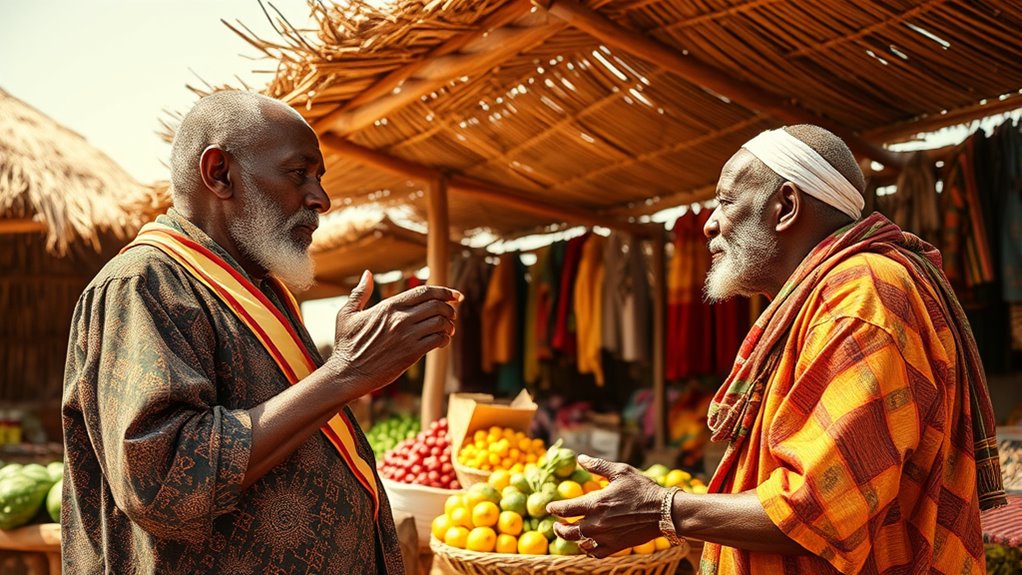
The Wolof language, spoken primarily in Senegal, belongs to the West Atlantic branch of the Niger-Congo family and serves as a lingua franca for millions in the region. It features a tonal system, where pitch distinguishes word meanings, and relies heavily on noun classes and agglutinative structures in its grammar. Wolof vocabulary draws from Arabic, French, and indigenous roots, reflecting Senegal’s diverse history. Approximately 40% of Senegal’s population speaks Wolof as a first language, with many more using it for trade and daily interactions. The language boasts several dialects, such as those in Dakar and rural areas, varying in pronunciation and vocabulary. Its writing system, based on the Latin alphabet, emerged during colonial times, aiding in education and literature. Wolof’s oral traditions, including griot storytelling, preserve cultural heritage through proverbs and epics. This linguistic framework underscores its role in social cohesion.
Importance of Translation Services in Senegal
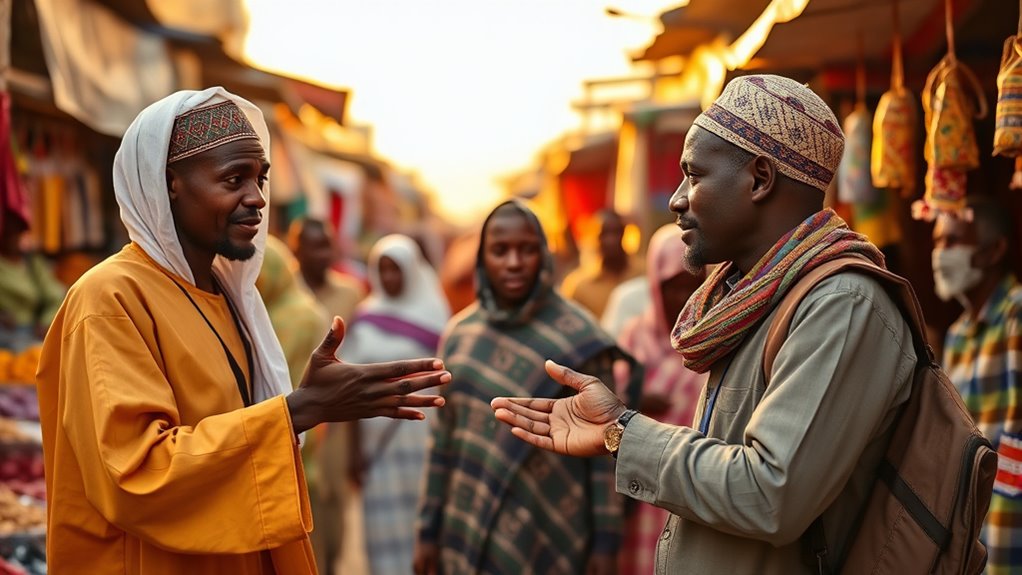
Translation services in Senegal facilitate essential communication across linguistic barriers, enabling interactions in a country where Wolof, French, and other languages coexist. These services play a pivotal role in promoting inclusivity, supporting economic growth, and securing access to global opportunities. By bridging language divides, they enhance daily life, from official dealings to community engagements, while preserving cultural nuances in a multilingual society.
- Facilitates trade and investment: Accurate translations enable Senegalese businesses to engage with English-speaking markets, boosting economic development.
- Supports education and information access: They make educational materials and resources available in local languages, empowering learners and communities.
- Improves public services: In healthcare and government, translations guarantee clear communication, leading to better outcomes and trust.
- Fosters social cohesion: By aiding cross-cultural dialogues, these services strengthen national unity and international relations in Senegal’s diverse landscape.
Key Differences Between English and Wolof
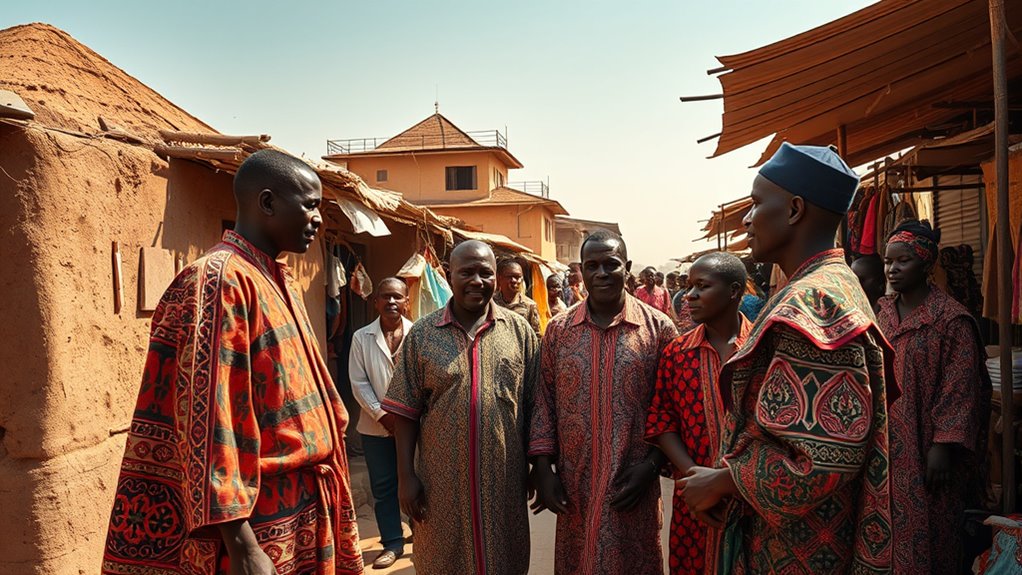
The key differences between English and Wolof greatly influence translation practices in Senegal. These encompass variations in grammar structures, which affect sentence formation and word order. Additionally, differences in vocabulary origins and phonetic systems pose unique challenges for accurate interpretation.
Grammar Structures
While English grammar emphasizes rigid word order and tense-based verb conjugations, Wolof relies on noun classes and aspectual markers to structure sentences, highlighting key differences that impact translation accuracy in Senegal. These contrasts often lead to challenges in conveying nuances, as Wolof prioritizes relational and contextual elements over strict sequencing. Translators must navigate these structures to guarantee faithful renditions.
- Word Order Flexibility: English demands fixed subject-verb-object sequences, while Wolof allows topicalization, altering emphasis and requiring adjustments in translation.
- Verb Systems: English verbs change with tense (past, present, future), but Wolof focuses on aspects like completion or ongoing actions, affecting temporal accuracy.
- Noun Classification: Wolof nouns belong to classes that influence agreement in sentences, unlike English’s simpler system, which can obscure relationships in translations.
- Sentence Complexity: Wolof uses agglutinative forms to build intricate structures, contrasting with English’s reliance on auxiliaries, demanding careful restructuring for clarity.
Vocabulary Origins
Origins of vocabulary in English and Wolof reflect distinct historical influences that shape translation challenges. English draws heavily from Germanic, Latin, French, and Greek roots due to invasions, colonization, and the Renaissance, resulting in a vast, layered lexicon. In contrast, Wolof, a West African language, incorporates native Senegalese elements, Arabic influences from Islamic trade, and traces of French and Portuguese colonialism. These differences create hurdles in translation, as English words often carry abstract or compound meanings absent in Wolof’s more concrete, context-dependent vocabulary.
| English Word | Wolof Equivalent | Primary Origin |
|---|---|---|
| House | Xarit | Wolof (Native African) |
| Book | Buku | English/Portuguese |
| Peace | Ndaa | Wolof (Native African) |
| Market | Souq | Arabic (Trade) |
Translators must navigate these etymological gaps to guarantee accurate cultural conveyance, highlighting the need for contextual adaptation in cross-language communication.
Phonetic Systems
English and Wolof differ markedly in their phonetic systems, with English featuring a complex array of vowels, consonants, and stress patterns influenced by its Indo-European roots. In contrast, Wolof, a Niger-Congo language, relies on a simpler vowel set, tonal distinctions, and distinct consonant inventories, which can challenge English speakers during translation.
- Vowel Inventory: English boasts up to 20 vowel sounds, including diphthongs, while Wolof has about 7, making English pronunciation more intricate for Wolof learners.
- Consonant Differences: English includes clusters like “str,” but Wolof favors open syllables with sounds like implosives (/ɓ/, /ɗ/), absent in English, affecting word flow.
- Tonal Variations: Wolof uses tones to convey meaning (e.g., high vs. low pitch), unlike English’s stress-based system, leading to potential misinterpretations in translation.
- Syllable and Stress Patterns: English permits complex syllables with variable stress (e.g., RE-record vs. re-RECORD), whereas Wolof maintains simpler structures, emphasizing rhythm over stress.
Professional Translators for African Languages
Professional translators are essential for accurate English to Wolof translations in Senegal, addressing the demand for skilled experts in African languages. Mastery of these languages guarantees that nuances and cultural contexts are preserved in the translation process. Quality services from such professionals enhance communication and foster better understanding across linguistic barriers.
Skilled Translators Needed
In Senegal, the demand for skilled translators proficient in African languages, particularly for English to Wolof conversions, is rising as cross-cultural communication expands. This growth stems from sectors like business, tourism, and diplomacy, where precise translations bridge language barriers and foster understanding. As globalization accelerates, organizations seek professionals who can handle complex linguistic tasks without errors, ensuring effective information exchange.
- Enhances accuracy: Skilled translators minimize misinterpretations, preserving original intent in critical communications.
- Boosts efficiency: They expedite processes in international trade and collaborations, reducing delays caused by language gaps.
- Supports inclusivity: These experts enable access to education and services for Wolof-speaking communities, promoting equity.
- Drives economic growth: By facilitating cross-border interactions, they contribute to Senegal’s development and global integration.
African Language Mastery
With the rising demand for precise cross-cultural communication, mastery of African languages plays a pivotal role for professional translators, enabling them to navigate linguistic complexities in fields like diplomacy, education, and global trade. This expertise demands deep immersion in linguistic structures, including tonal variations and idiomatic expressions inherent to languages such as Wolof. Translators must comprehend cultural nuances, regional dialects, and historical influences to deliver faithful interpretations. For instance, understanding Wolof’s roots in Senegal involves grasping its interactions with French and Arabic, ensuring translations capture subtleties that literal renditions might overlook. Professional development through targeted study and practical experience is essential, equipping translators to handle diverse scenarios effectively. Ultimately, this proficiency fosters accurate, contextually appropriate communication, bridging divides in multilingual environments. Achieving such mastery enhances translator credibility and supports effective knowledge exchange across Africa and beyond.
Quality Translation Services
Quality translation services for African languages depend on skilled professionals who combine linguistic expertise with cultural insight to deliver accurate and reliable interpretations. In Senegal, where Wolof is a dominant language, translators must navigate regional dialects and social contexts to avoid miscommunications. This guarantees translations not only convey meaning but also preserve cultural nuances, fostering effective cross-cultural exchanges.
- Cultural Competence: Translators immerse in local traditions, enhancing accuracy beyond literal words.
- Linguistic Proficiency: Fluency in both source and target languages minimizes errors in complex texts.
- Ethical Standards: Adherence to confidentiality and accuracy builds trust in professional services.
- Continuous Training: Ongoing education on language evolution keeps translations relevant and high-quality.
Cultural Context in Wolof Translations
Cultural context profoundly influences Wolof translations from English, as it guarantees meanings align with Senegalese traditions and social norms. In Wolof culture, nuances like familial respect and communal rituals shape language, ensuring translations resonate emotionally and avoid cultural misalignment. For instance, greetings or proverbs carry layers of sentiment tied to heritage, fostering authenticity in communication. This sensitivity prevents misinterpretations that could erode social bonds or offend sensibilities.
Translators emphasize emotional depth in these adaptations, bridging gaps between worlds.
| English Element | Emotional Wolof Nuance |
|---|---|
| Greetings | Evokes warmth and community ties |
| Family References | Conveys deep respect and ancestral love |
| Proverbs | Stirs wisdom and shared heritage |
| Celebratory Terms | Ignites joy and collective celebration |
| Expressions of Loss | Elicits profound grief and support |
Practical Tips for Accurate Translations
Translators enhance English to Wolof accuracy by employing targeted strategies that address linguistic challenges. These approaches focus on the intricacies of Wolof’s structure, such as tonal variations and agglutinative features, to bridge gaps with English. By prioritizing precision, translators maintain the original intent while adapting to Wolof’s unique grammar and lexicon.
- Master Wolof phonology: Learn specific sounds and tones to avoid mispronunciations in spoken translations, ensuring auditory fidelity.
- Analyze sentence structures: Break down English sentences to match Wolof’s subject-verb-object patterns and noun classifications for natural flow.
- Build a specialized glossary: Compile context-specific vocabulary lists to handle ambiguities, enhancing consistency across translations.
- Conduct iterative reviews: Regularly revise drafts against linguistic rules to catch subtle errors, refining accuracy through repetition.
Applications of Wolof in Business
Wolof translation plays a pivotal role in business operations across Senegal, facilitating seamless communication in sectors like trade, tourism, and finance. In trade, it enables effective negotiations with local suppliers, ensuring cultural nuances are preserved for stronger partnerships. Tourism relies on accurate translations for marketing materials and customer interactions, enhancing visitor experiences. In finance, it supports clear contract discussions and client advisories, reducing misunderstandings.
Businesses also use Wolof in agriculture for supply chain coordination and in education for workforce training. This linguistic bridge fosters trust and efficiency.
| Business Sector | Applications of Wolof Translation |
|---|---|
| Trade | Negotiating deals with local vendors |
| Tourism | Guiding tourists and promoting sites |
| Finance | Banking communications and customer service |
| Agriculture | Supply chain discussions |
| Education | Corporate training programs |
Technology and Tools for Language Conversion
In extending business applications, digital tools such as machine translation software and AI-driven platforms enable efficient English to Wolof conversion, supporting accurate communication in diverse contexts. These technologies bridge linguistic gaps, allowing users to navigate cultural nuances while maintaining precision in translations. From mobile apps to web-based systems, they offer real-time support for professionals in Senegal’s dynamic environment.
Advancements in natural language processing further refine accuracy, ensuring tools adapt to regional dialects.
- Enhanced Accuracy: AI algorithms learn from vast datasets, minimizing errors in Wolof translations for business documents.
- Cost-Effectiveness: Automated tools reduce the need for human translators, making language conversion accessible for small enterprises.
- Integration Flexibility: Platforms seamlessly embed into workflows, like CRM systems, for effortless English-Wolof switching.
- Scalability: Cloud-based solutions handle increasing volumes, supporting growth in multilingual projects without compromising speed.
Exploring Senegal’s Linguistic Diversity
Senegal’s linguistic diversity reflects a mosaic of ethnic groups, with over 30 languages spoken alongside French as the official tongue. This rich tapestry includes Wolof, spoken by about 40% of the population as a key lingua franca; Pulaar, associated with the Fulani; Serer, tied to the Serer people; and Mandinka, prevalent among Mandinka communities. Other languages, such as Jola in the Casamance region and Soninke in the east, underscore regional variations and cultural identities. This multilingualism influences daily life, from markets and family interactions to traditional ceremonies, fostering social cohesion and preserving oral histories. Indigenous languages play an essential role in education and cultural expression, despite French’s dominance in formal settings. Such diversity highlights Senegal’s historical migrations and ethnic intermingling, enriching the nation’s social fabric without overshadowing local heritage. Efforts to map and study these languages guarantee their continued vitality in a globalizing world.
Success Stories in Translation Projects
Several translation projects in Senegal have achieved notable successes in converting English content to Wolof. These efforts demonstrate real-world impacts by improving access to education and communication for Wolof-speaking communities. Transformative results include enhanced cultural preservation and economic opportunities through more inclusive language practices.
Project Achievements
Translation projects for English to Wolof in Senegal have achieved significant milestones, with several initiatives enhancing communication and cultural preservation. These efforts have fostered linguistic accessibility through innovative tools and collaborations. Key achievements include the creation of digital resources that bridge language gaps and support community engagement.
- Development of mobile apps: Enabled real-time translation, making information accessible to rural populations.
- Training programs for locals: Built a skilled workforce of translators, ensuring sustainable language services.
- Publication of educational materials: Translated textbooks and resources, promoting literacy in Wolof-speaking areas.
- Cultural documentation projects: Archived oral histories and folklore, preserving Senegal’s heritage for future generations.
Real-World Impacts
Beyond the initial achievements, English to Wolof translation projects in Senegal have delivered measurable benefits, as evidenced by success stories that enhance daily communication and community resilience. In one rural initiative, translated health pamphlets enabled villagers to understand preventive measures against diseases, reducing outbreak impacts through informed decisions. Another project facilitated business dealings, where Wolof versions of contracts empowered local traders to negotiate fairly with international partners, boosting economic stability. Educational programs also succeeded, with translated textbooks helping students grasp complex subjects, leading to improved literacy rates. These efforts have strengthened social bonds, as community meetings now include accessible materials, fostering inclusive dialogues and mutual support among diverse groups. Overall, such projects underscore practical advancements in everyday life.
Transformative Results
Success stories from English to Wolof translation projects in Senegal demonstrate profound community transformations. These efforts have empowered marginalized groups by enhancing access to education, healthcare, and economic opportunities. By converting essential information into Wolof, projects have fostered inclusivity and cultural resilience, leading to measurable societal advancements.
- Educational Access: Translated textbooks enable Wolof-speaking students to excel, boosting enrollment and literacy rates in rural areas.
- Health Outcomes: Accurate medical translations improve understanding of treatments, reducing disease prevalence and enhancing community health.
- Cultural Preservation: Documenting oral traditions in Wolof safeguards heritage, strengthening identity amid globalization.
- Economic Empowerment: Business resources in Wolof facilitate market participation, increasing income and job creation for locals.
Frequently Asked Questions
How Much Does English to Wolof Translation Cost?
The question regarding the cost of English to Wolof translation varies based on factors like word count, complexity, and provider expertise. Typically, professional services charge between $0.05 and $0.20 per word, with additional fees for rush jobs or specialized content, influencing overall expenses.
What Is the Typical Turnaround Time for Translations?
The typical turnaround time for translations varies based on project complexity and volume. Standard documents often take one to three business days, while urgent requests may be completed in hours. Factors like translator availability influence this timeline.
Should I Hire a Freelance Translator or an Agency?
The question of hiring a freelance translator versus an agency involves weighing pros and cons. Freelancers often provide flexibility and lower costs, while agencies offer reliability and thorough support. Ultimately, the choice depends on project needs and risk tolerance.
Are Wolof Translations Legally Recognized in Senegal?
In Senegal, the legal recognition of Wolof translations remains limited, as French serves as the sole official language for governmental and judicial matters. Wolof is widely spoken but typically requires official certification to hold any legal validity, reflecting ongoing linguistic challenges.
Where Can I Find Resources to Learn Wolof?
Individuals seeking resources to learn Wolof can access online platforms like Duolingo, YouTube tutorials, and language apps such as Memrise. Books, community centers, and cultural websites also offer valuable materials, while libraries and exchange programs provide additional support.