
 Elizabeth123
Gikuyu to English translation services in Kenya address the complexities of this Bantu language, including its tonal nuances and agglutinative structures. These services enhance communication in education, business, and cultural contexts, with professionals ensuring accurate, culturally sensitive conversions while adhering to ethical standards. Tools like mobile apps and online resources support accessibility across Africa, despite challenges such as vocabulary gaps. A closer look at techniques and applications reveals deeper ways these services foster inclusivity and heritage preservation.
Quick Summaries
- Professional translation services in Kenya provide accurate Gikuyu to English conversions for business and education.
- Gikuyu-English translation in Africa supports cultural preservation and effective communication across communities.
- Tools like mobile apps and online dictionaries assist with Gikuyu to English translations in remote African areas.
- Ethical standards ensure confidentiality and cultural sensitivity in Kenyan Gikuyu translation services.
- Challenges in Gikuyu translation include tonal variations and agglutinative grammar, requiring expert handling.
The Gikuyu Language and Its Features

The Gikuyu language, also known as Kikuyu, is a Bantu language primarily spoken by the Kikuyu people in Kenya. It belongs to the Bantu family, featuring a complex system of noun classes that categorize words and influence verb agreements. Gikuyu employs agglutinative morphology, where affixes are added to roots to convey grammatical information, enhancing its expressive capacity. The language has a tonal structure, with pitch variations altering word meanings, such as distinguishing between nouns and verbs. Phonetically, it includes a range of consonants like bilabials, alveolars, and palatals, alongside a melodic vowel system. Syntactically, sentences often follow a subject-verb-object order, though flexibility exists for emphasis. Rich in proverbs and idioms, Gikuyu reflects the Kikuyu’s cultural heritage, including agricultural themes and social norms, while adapting to modern influences through borrowed terms. This linguistic framework supports its viability among speakers.
Importance of Gikuyu-English Translation Services
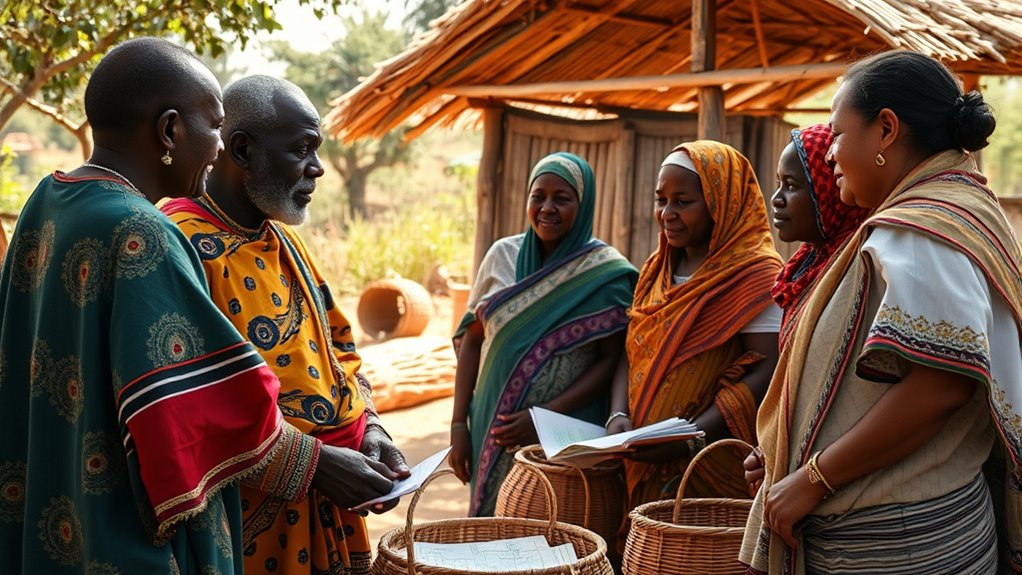
Gikuyu-English translation services bridge communication gaps for Kikuyu speakers in diverse contexts, from education and business to cultural exchange, fostering inclusivity and accurate information sharing in an increasingly interconnected world. These services enable effective knowledge transfer, guaranteeing that Kikuyu communities access global resources without language barriers. By promoting mutual understanding, they support social cohesion and empower individuals in everyday interactions.
- Educational access: Translating curricula and materials allows Kikuyu students to engage with English-language content, boosting learning outcomes.
- Business efficiency: Accurate translations facilitate trade negotiations and market expansion for Kikuyu entrepreneurs.
- Cultural preservation: Services help document and share Gikuyu traditions, preventing loss in multilingual settings.
- Healthcare communication: They guarantee essential medical information reaches Kikuyu speakers, improving health decisions.
- Community empowerment: Translations aid in advocacy, enabling participation in policy discussions and local governance.
Professional Translators in Kenya

Professional translators in Kenya specialize in Gikuyu to English conversions, drawing on expert knowledge to guarantee accuracy. Expert translators in the country provide essential services that bridge linguistic gaps for various sectors. These services in Kenya emphasize cultural nuances and precision in communication.
Expert Translators Kenya
Kenya’s expert translators play an essential role in bridging linguistic gaps, particularly for Gikuyu to English conversions, by delivering precise and culturally informed services through professional agencies. These specialists possess deep linguistic expertise, ensuring accurate interpretations that respect cultural contexts. They contribute greatly to effective communication in various sectors, drawing on their proficiency to foster understanding and preserve nuances in translations.
- Linguistic Mastery: Translators are fluent in Gikuyu dialects and English, mastering subtleties for flawless conversions.
- Cultural Sensitivity: They incorporate Kenya’s diverse heritage, avoiding misinterpretations that could alter meaning.
- Professional Credentials: Many hold certifications from recognized bodies, enhancing their reliability and skill.
- Experience Levels: Seasoned experts with years in the field handle complex texts with precision.
- Ethical Standards: They adhere to confidentiality and accuracy principles, building trust in their work.
Services in Kenya
Translators in Kenya deliver a range of services that support communication across languages and sectors. These professionals excel in Gikuyu to English translations, catering to business, legal, educational, and healthcare needs. Services include document translation for contracts and reports, guaranteeing accuracy and cultural sensitivity to bridge linguistic divides. Interpretation for conferences, meetings, and court sessions facilitates real-time communication, while website localization adapts digital content for Kenyan audiences. Proofreading and editing services maintain high standards of quality and confidentiality. In Kenya’s multilingual society, these offerings enhance international trade, tourism, and community engagement. Professional translators leverage advanced tools and training to deliver timely, cost-effective solutions, fostering inclusivity and economic growth. Demand continues to rise, with experts adapting to evolving technologies like AI-assisted translation while preserving human expertise. This guarantees seamless cross-cultural interactions in a globalized world.
Key Techniques for Accurate Translation
Accurate translation from Gikuyu to English hinges on several core techniques that address linguistic nuances and cultural contexts. These methods maintain fidelity to the source material while adapting it effectively for English audiences. Translators focus on precision to maintain the original text’s intent, drawing from expertise in both languages to avoid misinterpretations.
- Deep linguistic analysis: Examining Gikuyu’s tonal elements and English’s syntactic structures for accurate word choice.
- Cultural adaptation: Incorporating equivalents for Gikuyu traditions, proverbs, and social norms to preserve meaning.
- Contextual interpretation: Examining the surrounding text to guide translations that reflect intended nuances.
- Bilingual resource utilization: Leveraging specialized dictionaries and glossaries for precise terminology.
- Refinement through iteration: Reviewing drafts multiple times to enhance clarity and natural flow in English.
Common Challenges in Gikuyu Translation
Despite the techniques employed for accurate Gikuyu translation, practitioners often face inherent challenges arising from the language’s tonal complexities and cultural specificities. Tonal nuances, where pitch alters word meanings, can lead to significant misinterpretations in English renditions, as subtle variations might be overlooked or inadequately conveyed. For instance, identical spellings with different tones can represent entirely different concepts, complicating fidelity to the original text. Additionally, Gikuyu’s grammatical structures, such as its agglutinative nature, pose difficulties when mapping to English syntax, often requiring creative adaptations that risk losing nuance. Vocabulary gaps further exacerbate issues, with certain Gikuyu terms lacking precise English equivalents, potentially diluting intent. These obstacles demand heightened linguistic expertise to guarantee translations remain coherent and effective, underscoring the need for specialized training in tonal languages. (124 words)
Cultural Aspects of Gikuyu Language
The Gikuyu language serves as an essential repository of Kikuyu cultural heritage, encompassing traditions, values, and social structures. This linguistic system intricately weaves elements of daily life, social interactions, and spiritual beliefs, reflecting the Kikuyu community’s historical resilience and communal ethos. Through its vocabulary and grammar, Gikuyu preserves ancestral knowledge, such as terms for environmental stewardship and social harmony, while adapting to modern influences without losing its core identity. It plays a pivotal role in oral traditions, reinforcing cultural continuity across generations and fostering a sense of belonging.
- Idiomatic expressions convey moral lessons and wisdom from folklore.
- Kinship terminology outlines family roles and social hierarchies.
- Agricultural words highlight sustainable farming practices and land reverence.
- Proverbs encapsulate historical events and ethical guidance.
- Ritual phrases enhance ceremonies, maintaining spiritual and community ties.
Tools and Resources for Translation in Africa
The subtopic of tools and resources for translation in Africa addresses key translation tools that aid language conversion. These tools include software and applications designed for accuracy in contexts like Gikuyu to English. African resource options offer specialized platforms and community-based materials to enhance accessibility.
Key Translation Tools
Key translation tools play a vital role in bridging language gaps for Gikuyu to English conversion across Africa, encompassing software, online platforms, and community resources that enhance accuracy and efficiency. These tools empower users by integrating advanced algorithms for precise linguistic handling, supporting cultural contexts in translation processes, and adapting to Africa’s diverse linguistic needs.
- Machine translation software, such as Google Translate, delivers instant Gikuyu-English conversions with high accuracy.
- Online dictionaries and glossaries offer specialized vocabularies, aiding nuanced translations.
- Mobile applications provide offline capabilities for fieldwork in remote African regions.
- Community forums facilitate collaborative editing and verification of translations.
- Computer-assisted translation (CAT) tools guarantee consistency in professional projects, like document localization.
African Resource Options
Africa provides diverse resource options for Gikuyu to English translation, including specialized tools and platforms adapted to the continent’s linguistic diversity. These resources support accurate, culturally nuanced conversions, addressing challenges like dialects and regional variations. Organizations in Kenya and beyond offer online portals, mobile apps, and community-driven databases to facilitate seamless translation.
Key resources include:
| Resource Name | Description | Benefits |
|---|---|---|
| Gikuyu Translator App | Mobile tool for real-time conversion | User-friendly interface and offline access |
| Africa Language Hub | Web platform with expert databases | Collaborative editing and cultural notes |
| Kenya Translation Network | Community forum and tools | Free resources and peer support |
| Open African Lexicons | Open-source dictionary repository | Cost-effective and customizable options |
Such tools empower translators, fostering better cross-cultural communication across Africa.
Applications of Translation in Kenyan Contexts
Translation serves multiple essential functions in Kenyan societies, particularly in bridging Gikuyu speakers with English-dominant domains such as education, media, and governance, thereby enhancing communication and cultural preservation. In education, it enables Gikuyu students to access curricula and participate in global learning. Media translation promotes inclusive broadcasting, while governance applications guarantee accurate legal interpretations and public policy dissemination. These efforts foster social cohesion and economic development.
- Education: Translating textbooks and lectures allows Gikuyu learners to engage with English-based systems, improving literacy rates.
- Media: Subtitling Gikuyu content for TV and radio expands audience reach, preserving oral traditions in digital formats.
- Governance: Rendering official documents into Gikuyu guarantees equitable access to laws and services for rural communities.
- Cultural Events: Translating folklore and performances supports heritage festivals, bridging generations and tourists.
- Business: Facilitating negotiations and contracts in Gikuyu enhances trade opportunities in multilingual markets. (124 words)
Frequently Asked Questions
How Much Does Gikuyu Translation Cost?
The question concerns the cost of Gikuyu translation services. Costs vary widely based on factors like word count, complexity, urgency, and provider expertise. Typically, rates range from $0.05 to $0.20 per word, though professional quotes are essential for accurate estimates.
How Do I Hire a Translator Quickly?
Hiring a translator quickly requires exploring online platforms, professional agencies, or freelance sites. One should post job listings, review credentials, and select based on availability, ensuring efficient matching while verifying expertise.
What Payment Methods Are Accepted?
The question regarding accepted payment methods is common in service arrangements. Options typically include credit cards, PayPal, bank transfers, and mobile money. Clients should verify specifics with the provider to guarantee compatibility and avoid complications. This promotes smooth transactions.
Can I Get Rush Translation Services?
The question inquires whether rush translation services are available. Such services can typically be arranged through various providers, often for an additional fee, depending on workload and deadlines. Clients should verify options directly with the service provider to confirm feasibility.
Do You Offer Translation Guarantees?
The question concerns whether translation guarantees are offered. Many services provide assurances on accuracy, quality, and timeliness of translations to guarantee client satisfaction, mitigate risks, and build trust in the industry, fostering long-term professional relationships.