
 Elizabeth123
Directline Translators offers specialized Hausa to English translation services in Nigeria, addressing linguistic nuances like tonal elements and cultural idioms for accurate communication in business, education, and media. Their experts guarantee faithful renditions while overcoming challenges such as regional dialects through advanced strategies and rigorous validation. This expertise promotes effective cross-cultural exchange in a multilingual society. Further details on best practices and provider selection await exploration.
Quick Summaries
- Directline Translators provides professional Hausa to English services tailored for Nigeria’s diverse contexts.
- Their experts ensure accurate translations by incorporating Hausa cultural nuances and idioms.
- Services support key sectors like business, education, and media for effective communication in Nigeria.
- They overcome translation challenges using bilingual professionals and advanced AI tools for precision.
- Directline offers timely, reliable deliveries with rigorous proofreading to maintain high-quality standards.
Understanding Hausa Language Basics
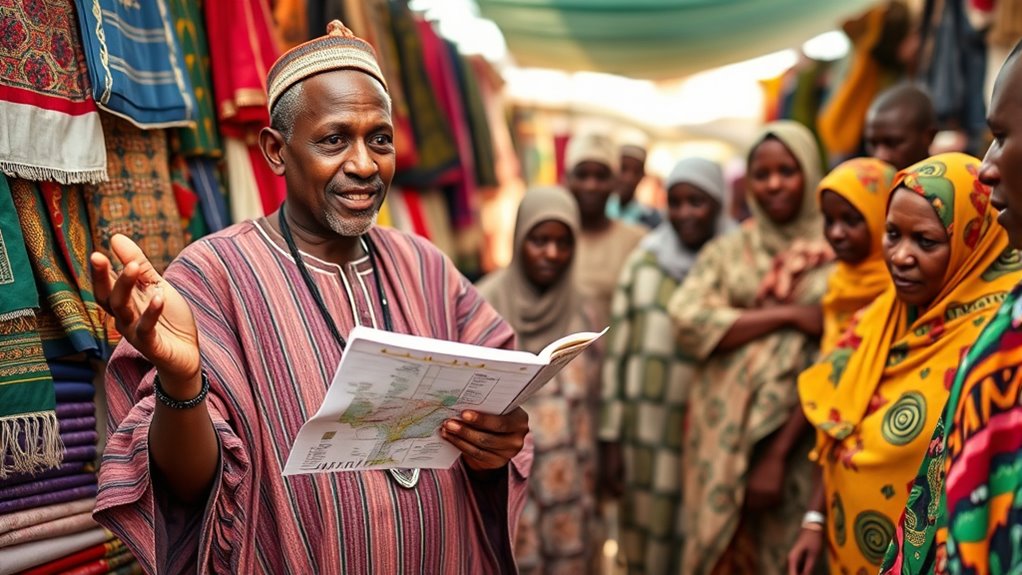
As a prominent language in Nigeria, Hausa belongs to the Afro-Asiatic family and features simple vowel harmony and tonal elements that are essential for basic comprehension and translation to English. Vowel harmony in Hausa requires vowels within a word to share similar traits, such as frontness or backness, which streamlines pronunciation and aids learners in mastering phonetics. The language’s tonal system, with high and low tones, distinguishes meaning; for example, a high tone on a syllable can alter a word’s interpretation entirely, necessitating careful attention in translation exercises. Grammatically, Hausa employs a subject-verb-object structure, akin to English, but includes noun classes and gender agreements that influence sentence construction. Basic vocabulary, drawn from everyday life, includes words for family, food, and environment, providing a foundation for simple dialogues. Understanding these elements enhances accurate rendering of Hausa texts into English, fostering effective communication. Key phrases, such as greetings like “Sannu” (hello), demonstrate how tone and harmony interplay in practical use. Overall, grasping these basics equips individuals with the tools for initial language engagement and precise translation.
Importance of Translation Services in Nigeria
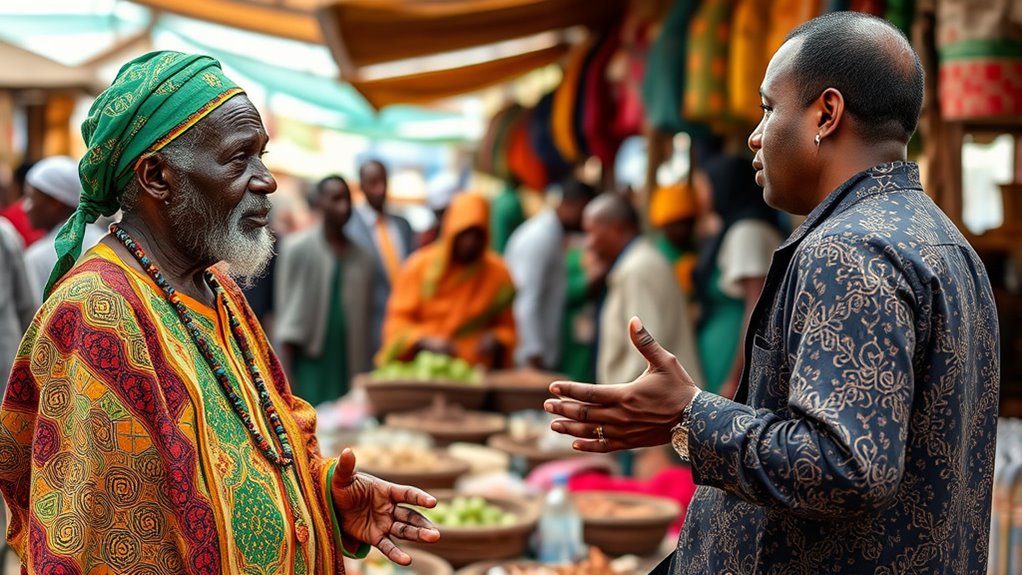
Translation services play a vital role in Nigeria’s multilingual society, bridging communication gaps across over 500 languages and dialects. They enhance business transactions, educational access, and healthcare delivery by ensuring accurate information exchange. In government, translations promote inclusive policies and national unity, while in media, they foster cultural understanding and public engagement. This facilitates economic growth and social cohesion in a diverse nation.
| Sector | Challenges Without Translation | Benefits of Translation Services |
|---|---|---|
| Business | Miscommunication leads to failed deals | Enables international trade and partnerships |
| Education | Limited access for non-native speakers | Improves learning outcomes and inclusivity |
| Healthcare | Misdiagnosis from language barriers | Enhances patient care and health equity |
| Government | Ineffective policies for minorities | Supports equitable governance and compliance |
| Media | Cultural misunderstandings | Promotes accurate information dissemination |
Directline Translators’ Expertise in Hausa-English

Directline Translators’ expertise in Hausa-English translation sets them apart in Nigeria, where accurate linguistic bridging is essential for effective communication. With a team of seasoned linguists fluent in both languages, they navigate cultural nuances and regional dialects to deliver precise translations. This proficiency stems from years of specialized experience, ensuring seamless exchanges in business, education, and media.
Their expertise manifests in several key ways:
- Deep cultural insight: Translators understand Hausa traditions, idioms, and contexts for authentic renditions.
- Rigorous training: Staff undergo continuous professional development in language evolution and translation techniques.
- Proven track record: Handling diverse projects with high accuracy rates, fostering trust among clients.
- Adaptable services: Tailoring translations to specific needs while maintaining fidelity to original meanings.
This approach enhances cross-cultural dialogue effectively.
Key Features of Professional Translation
Professional translation in Hausa to English within Nigeria emphasizes key features such as accuracy in translation, which guarantees faithful conveyance of original meanings. Cultural adaptation plays a vital role by adjusting content to resonate with local nuances and contexts. Timely delivery further supports effective communication by meeting deadlines without compromising quality.
Accuracy in Translation
Ensuring accuracy forms the bedrock of effective Hausa to English translation in Nigeria, where subtle nuances can alter meanings profoundly. Professional translators prioritize precision to preserve the original intent, avoiding errors that could lead to miscommunication in diverse contexts like business and education.
To achieve this, key strategies include:
- Linguistic expertise: Translators must master both Hausa dialects and English variants, ensuring word-for-word fidelity.
- Contextual analysis: Carefully examining sentence structures to capture implied meanings without distortion.
- Proofreading protocols: Implementing multiple review stages to detect and correct inaccuracies.
- Resource utilization: Leveraging specialized dictionaries and glossaries for verified terminology.
Ultimately, these practices uphold translation integrity, fostering trust in services like those from Directline Translators.
Cultural Adaptation
Beyond linguistic accuracy, cultural adaptation plays a crucial role in Hausa to English translation by adjusting content to align with Nigerian cultural contexts, ensuring that idioms, customs, and social norms resonate appropriately with English-speaking audiences. This process involves substituting culturally specific Hausa expressions with equivalent English ones that maintain the original intent without causing misunderstanding. For instance, translators might replace references to traditional Hausa festivals with familiar Nigerian equivalents, preserving emotional and social nuances. Such adaptations enhance communication effectiveness, fostering better cross-cultural understanding in fields like literature, business, and media. By prioritizing cultural sensitivity, professional translators at Directline Translators bridge gaps, making translated materials more relatable and impactful for diverse audiences in Nigeria and beyond. This approach not only upholds authenticity but also promotes inclusivity in global interactions.
Timely Delivery
Timely delivery forms a cornerstone of professional translation services, guaranteeing that projects meet deadlines without compromising quality. In Hausa to English translations in Nigeria, providers like Directline Translators emphasize streamlined processes to maintain client trust and project integrity. This involves meticulous planning to handle linguistic nuances while adhering to schedules.
To achieve timely delivery, professionals follow these key practices:
- Conduct initial assessments: Evaluate project scope, including text volume and complexity, to set realistic timelines.
- Utilize advanced tools: Leverage translation software and AI for efficient drafting and editing, reducing manual delays.
- Coordinate team efforts: Assign tasks to skilled linguists with clear communication channels to monitor progress.
- Implement quality checks: Perform final reviews and revisions within allocated timeframes to guarantee accuracy.
This approach enhances reliability in Nigeria’s translation sector. (124 words)
Applications of Hausa to English Conversion
The applications of Hausa to English conversion in Nigeria extend across education, business, and media, enabling seamless communication in a multilingual society. In education, it supports curriculum development and student resources, bridging language gaps for better learning outcomes. Business leverages it for negotiations and documentation, fostering international partnerships. In media, it enhances content accessibility, allowing broader dissemination of information.
| Sector | Key Applications |
|---|---|
| Education | Translating textbooks |
| Business | Contract agreements |
| Media | News broadcasts |
| Healthcare | Patient information sheets |
| Government | Policy documents |
This conversion promotes cultural exchange and efficiency, ensuring effective interactions in diverse settings.
Overcoming Translation Challenges in Nigeria
In Nigeria, translation challenges from Hausa to English often stem from linguistic nuances and cultural differences, yet innovative strategies such as AI-driven tools and specialized training programs enable effective solutions, improving accuracy and fostering better cross-cultural communication. These obstacles, including idiomatic variations and contextual subtleties, can hinder effective exchange, but targeted approaches help mitigate them. For instance, translators adapt by focusing on core elements like syntax and semantics.
- Utilizing advanced AI algorithms to detect and correct errors in real-time.
- Engaging bilingual experts for nuanced interpretation and validation.
- Incorporating feedback loops to refine translations iteratively.
- Promoting awareness of cultural contexts to avoid misinterpretations.
Best Practices for Accurate Translations
Accurate translations in Hausa to English demand a strategic approach that prioritizes cultural sensitivity, rigorous validation, and technological integration. Cultural sensitivity involves understanding Hausa nuances, idioms, and social contexts to avoid misinterpretations that could alter meaning. For instance, translators must research regional customs to guarantee fidelity to the original intent. Rigorous validation requires multiple review stages, where experts cross-check translations for accuracy and consistency, minimizing errors in grammar or vocabulary. Technological integration leverages tools like CAT software for enhanced precision, aiding in terminology management and real-time corrections without replacing human insight. These practices collectively foster reliable outcomes, bridging linguistic gaps effectively in Nigeria’s diverse settings. Ultimately, they uphold the integrity of communication, guaranteeing translations resonate authentically with audiences.
Selecting the Right Translation Provider
Selecting a qualified translation provider follows naturally from establishing best practices, as it guarantees the application of cultural sensitivity and technological tools in Hausa to English conversions. In Nigeria’s diverse linguistic landscape, choosing the right provider involves evaluating key factors to guarantee accuracy and reliability.
- Assess expertise: Verify the provider’s proficiency in Hausa dialects and English nuances, including native speakers or certified linguists.
- Evaluate cultural knowledge: Confirm their understanding of Nigerian cultural contexts to avoid misinterpretations in translations.
- Check technological integration: Verify they use advanced tools like CAT software for efficiency and quality control.
- Review credentials and feedback: Look for certifications, client testimonials, and a track record of successful projects to gauge dependability.
This approach minimizes errors and enhances communication effectiveness.
Frequently Asked Questions
How Much Does Hausa to English Translation Cost?
Inquiries about the cost of translating from Hausa to English are common and vary widely. Factors such as word count, complexity, urgency, and provider expertise influence pricing. Typical rates range from $0.05 to $0.20 per word, though specialized services may cost more.
What Is the Typical Turnaround Time for Services?
The typical turnaround time for services varies depending on factors like volume, complexity, and provider capabilities. For standard tasks, it often ranges from 24 to 48 hours, while larger projects may take several days to a week. Efficiency is key in service delivery.
Are Your Translators Certified Professionals?
The question of whether translators are certified professionals is vital for ensuring quality in language services. Certified translators typically hold recognized credentials from bodies like the ATA, demonstrating expertise through rigorous training and examinations to deliver accurate results.
Do You Offer Rush Translation Options?
The question regarding rush translation options is pertinent for clients needing quick services. Directline Translators offers expedited options, providing faster turnaround times while maintaining high accuracy and quality standards to meet urgent demands effectively.
How Can I Request a Free Translation Sample?
Individuals interested in requesting a free translation sample should visit the company’s website and fill out the appropriate form. Alternatively, they can email the support team for assistance. This process helps in evaluating quality beforehand.

