
 Elizabeth123
Translation Africa, a premier provider in Nigeria, offers expert multilingual translation services specializing in Hausa, Yoruba, and French for seamless cross-cultural communication. Their team delivers high-quality, culturally sensitive translations tailored to industries like healthcare and education, ensuring accuracy and cost-effectiveness. Businesses benefit from expanded market access and reduced errors in global operations. Further insights await on qualifications, processes, and success stories.
Quick Summaries
- Our company specializes in hiring multilingual translators in Nigeria for languages like Hausa, Yoruba, and French.
- Translators possess formal qualifications, certifications, and cultural expertise for accurate, high-quality work.
- We offer cost-effective rates, 20-30% below global averages, with flexible pricing models like per-word fees.
- Services include translation, interpretation, and localization tailored to industries such as healthcare and education.
- Hiring our translators enables businesses to expand market access and enhance cross-cultural communication effectively.
Benefits of Hiring Multilingual Translators in Nigeria

Hiring multilingual translators in Nigeria offers key advantages for businesses operating in a diverse linguistic environment, such as improved cross-cultural communication and expanded market access in regions where English, Hausa, Yoruba, and other languages prevail. These experts enhance accuracy in negotiations and documentation, minimizing errors that could disrupt operations. By bridging language gaps, they foster stronger relationships with local clients, boosting trust and loyalty. Additionally, multilingual translators enable businesses to adapt content for regional nuances, improving marketing effectiveness and customer satisfaction. In a competitive landscape, they provide insights into cultural contexts, aiding strategic decisions and innovation. This approach not only streamlines international collaborations but also supports sustainable growth by tapping into Nigeria’s linguistic diversity, ultimately driving profitability and global competitiveness.
Overview of Translation Africa Services

Translation Africa Services stands as a leading provider of multilingual translation solutions in Nigeria, catering to businesses managing diverse linguistic landscapes. The company specializes in high-quality translation, interpretation, and localization services, designed to bridge communication gaps in various sectors such as business, legal, medical, and education. With a focus on precision and cultural sensitivity, their expert team delivers tailored solutions that enhance global outreach. Translation Africa employs rigorous quality assurance processes, including proofreading and editing, to maintain accuracy and reliability. Clients benefit from timely delivery and cost-effective options, supported by advanced technology and industry best practices. As a trusted partner, the service empowers organizations to navigate complex international interactions effectively, fostering growth and understanding in a connected world.
Key Languages Covered by Nigerian Translators
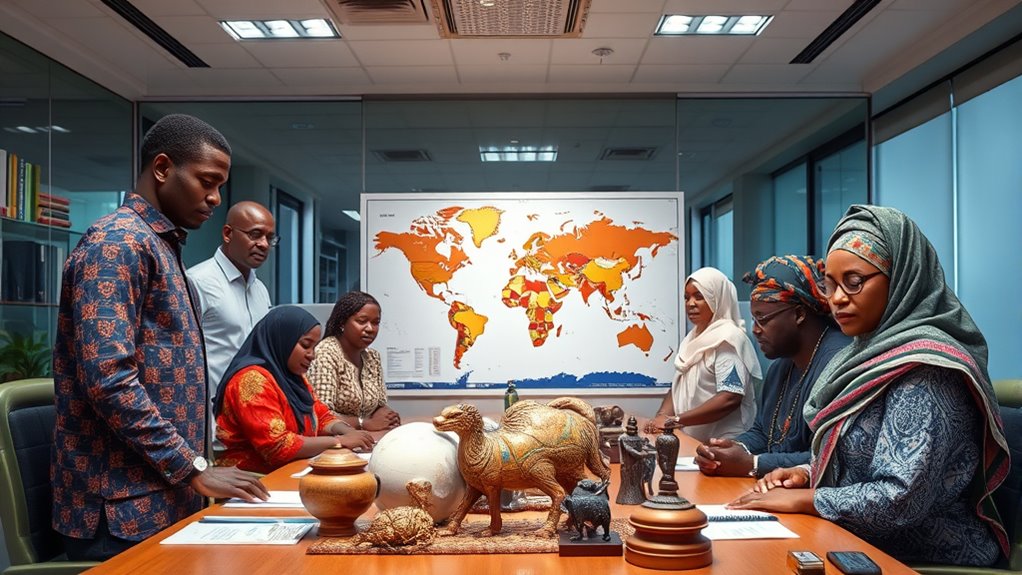
Nigerian translators specialize in several key languages that reflect the country’s linguistic diversity. Hausa serves as a major language in northern regions, facilitating communication across various sectors. Yoruba dialects and Igbo variants further enhance the expertise of these professionals in handling Nigeria’s multilingual landscape.
Hausa Language
Hausa ranks among Nigeria’s most prominent languages, spoken by millions primarily in the northern regions, and so forms a key focus for multilingual translators seeking to bridge communication gaps in diverse sectors. As a Chadic language within the Afro-Asiatic family, Hausa functions as a lingua franca across West Africa, enabling effective cross-cultural interactions. Its extensive vocabulary and tonal system demand skilled translators to capture subtleties in business, education, and media contexts. With over 40 million speakers, Hausa’s influence extends to literature, music, and daily commerce, making precise translation essential for global engagement. Nigerian professionals adept in Hausa guarantee accurate interpretation of idioms and cultural nuances, supporting sectors like healthcare and diplomacy. This expertise enhances accessibility, fostering economic and social development while maintaining linguistic integrity in an interconnected world. Hausa translation services hence play a pivotal role in Nigeria’s multilingual landscape, promoting inclusivity and understanding.
Yoruba Dialects
Yoruba dialects, prevalent in southwestern Nigeria, constitute another cornerstone of the country’s linguistic tapestry, with variations spoken by diverse communities. These dialects, such as Standard Yoruba and regional forms, play an essential role in translation services, ensuring precise cultural and linguistic accuracy for businesses and global interactions. Variations in tone, vocabulary, and phonetics demand expert translators to bridge communication gaps effectively. This diversity enhances Nigeria’s multilingual capabilities, supporting sectors like education and diplomacy.
| Dialect | Key Features |
|---|---|
| Standard Yoruba | Widely used in urban settings, with clear tonal structure |
| Ijebu | Features distinct vocabulary and subtle tonal shifts |
| Ondo | Includes unique phonetic elements and regional idioms |
| Ekiti | Showcases specific pronunciation variations for imagery |
Igbo Variants
Igbo variants, prominent in southeastern Nigeria, represent a key element of the nation’s linguistic diversity, with distinct forms spoken across various communities. These include Standard Igbo, derived from the Onitsha and Owerri dialects, alongside regional variations like Ngwa, Ohuhu, and Ikwerre, each shaped by local cultural influences. Differences in vocabulary, pronunciation, and grammar can greatly impact communication, making precise translation essential for business, legal, and educational contexts.
Nigerian translators specializing in Igbo must navigate these nuances to guarantee accuracy. For instance, translators working with Igbo variants adapt content for specific audiences, such as using Onitsha dialect for northern Igbo regions or Awka forms for central areas. This expertise enhances cross-cultural interactions, supporting global enterprises in Africa. By hiring skilled professionals familiar with these variants, organizations avoid misinterpretations, fostering effective multilingual communication in Nigeria’s dynamic marketplace.
Qualifications and Skills of Professional Translators
Professional translators require a combination of formal qualifications and practical skills to deliver accurate and reliable language services. These encompass academic degrees in linguistics or translation, industry certifications, and hands-on expertise in specialized areas. Such attributes guarantee high-quality outputs that bridge linguistic gaps effectively.
- Language Proficiency: Fluency in multiple languages, including advanced grammar, vocabulary, and idiomatic expressions, to maintain fidelity in translations.
- Cultural Knowledge: Deep understanding of cultural contexts and nuances to avoid misinterpretations and enhance relevance.
- Technical Expertise: Proficiency in translation tools, research methods, and editing techniques to produce precise, error-free results.
The Process of Engaging Translation Services
Engaging translation services begins with clearly defining project needs and identifying suitable providers. This involves evaluating project scope, language pairs, and deadlines to guarantee alignment with organizational goals. Next, potential translators or agencies are evaluated based on qualifications, such as cultural expertise and accuracy in prior work. Proposals are solicited, and samples reviewed to gauge quality. Finally, agreements are formalized to outline deliverables and timelines.
| Step | Action | Key Considerations |
|---|---|---|
| 1 | Define project needs | Scope and language pairs |
| 2 | Identify providers | Expertise and experience |
| 3 | Evaluate proposals | Quality of samples |
| 4 | Select and negotiate | Deliverables and ethics |
| 5 | Commence the project | Monitoring progress |
This structured approach ensures efficient engagement, fostering reliable outcomes for multilingual endeavors.
Cost-Effective Options for Multilingual Projects
Exploring cost-effective options for multilingual projects in Nigeria involves examining affordable translator rates that balance quality and budget. Budget project options provide flexible alternatives for clients seeking efficient services without overspending. Cost-saving strategies, such as leveraging local talent, can further optimize expenses while maintaining high standards.
Affordable Translator Rates
In Nigeria, affordable translator rates provide cost-effective options for multilingual projects, enabling businesses to balance quality and budget constraints. These rates are shaped by factors like language expertise, project volume, and market competition, allowing companies to access skilled professionals without financial strain. By opting for local translators, organizations can maintain high accuracy while managing costs effectively.
- Competitive local rates: Nigerian translators offer services at lower prices due to a vibrant talent pool, often 20-30% below global averages.
- Flexible pricing models: Options include per-word fees, hourly rates, or bulk discounts, tailoring costs to project needs.
- Quality assurance at scale: Affordable rates include revisions and certifications, ensuring reliable outcomes for businesses expanding across languages.
This approach supports efficient multilingual strategies, fostering growth in diverse markets.
Budget Project Options
Budget-friendly options for multilingual projects in Nigeria allow businesses to achieve high-quality translations without exceeding financial limits. These include tiered service packages, where clients select basic, standard, or premium plans based on project needs, ensuring cost alignment with scope. For instance, pay-per-word pricing models enable precise budgeting for documents, while bundled services combine translation, proofreading, and localization at discounted rates. Local freelance networks in cities like Lagos offer competitive rates without compromising accuracy, drawing from Nigeria’s diverse linguistic talent. Additionally, entry-level project options leverage emerging translators for smaller tasks, maintaining professional standards through agency oversight. This approach supports efficient resource allocation, helping companies expand globally while managing expenses effectively. Ultimately, these options foster accessible, reliable multilingual solutions tailored to Nigeria’s dynamic market.
Cost-Saving Strategies
Numerous cost-saving strategies enable businesses to optimize expenses in multilingual projects across Nigeria. These approaches help companies maintain high-quality translations while managing budgets effectively. By focusing on efficiency, firms can reduce costs without compromising accuracy or cultural relevance.
- Utilize local talent: Engaging native Nigerian translators lowers overheads, as they offer region-specific expertise at competitive rates, ensuring cost-effective results.
- Leverage technology: Implementing translation software and AI tools automates repetitive tasks, minimizing manual labor and speeding up processes for faster, cheaper outcomes.
- Opt for bundled services: Combining translation, proofreading, and localization into one package from providers like Translation Africa secures bulk discounts, enhancing overall project affordability.
Industries Benefiting From Translation in Africa
Several industries across Africa leverage translation services to enhance global connectivity and operational efficiency. In healthcare, accurate translations facilitate medical research collaboration and patient care across linguistic barriers, guaranteeing precise communication in diverse settings. The education sector benefits by translating curricula and online resources, promoting inclusive learning and knowledge exchange among multilingual populations. Financial institutions rely on translations for regulatory compliance and international transactions, reducing risks in cross-border dealings. Tourism thrives through translated materials that attract global visitors, boosting local economies. Manufacturing firms use translation to navigate supply chains and export markets, fostering partnerships. Legal services guarantee accurate document handling for international contracts, minimizing disputes. Overall, these applications drive economic growth and cultural integration across the continent.
Success Stories From Translation Africa Clients
Translation Africa’s clients have shared inspiring success stories that highlight the transformative impact of precise language services. These accounts illustrate how tailored translations have propelled businesses forward, overcoming linguistic challenges in dynamic environments. Clients from diverse sectors have reported significant gains, emphasizing the role of expert translators in achieving seamless global operations.
- A Nigerian tech firm expanded into Francophone markets, boosting sales by 40% through accurate French translations of software interfaces.
- An international NGO successfully implemented health campaigns in local dialects, reaching underserved communities and improving outreach effectiveness.
- A manufacturing company resolved supply chain issues via precise Yoruba and Hausa documents, enhancing partnerships and operational efficiency.
These stories underscore the value of reliable language solutions in fostering success.
Tips for Selecting the Right Translator Partner
Selecting the right translator partner can greatly influence a project’s success, especially in multilingual environments like Nigeria. Key considerations include verifying the partner’s linguistic expertise and cultural fluency, as these guarantee accurate translations that resonate with local audiences. Professionals should hold recognized certifications, such as those from the American Translators Association, to guarantee quality and reliability.
Additionally, review client testimonials and case studies to assess track records, like those from Translation Africa. Prioritize partners with efficient project management systems for timely deliveries and error-free results. Cost should balance affordability with high standards, avoiding overly cheap options that risk inaccuracies. Finally, guarantee compatibility with your tools and workflows for seamless collaboration, ultimately enhancing project outcomes in diverse settings.
Frequently Asked Questions
What Payment Methods Do You Accept?
In addressing the question of accepted payment methods, the organization facilitates transactions through bank transfers, major credit cards like Visa and Mastercard, digital wallets such as PayPal, and secure online platforms to guarantee client convenience and security.
How Do You Ensure Document Confidentiality?
The organization guarantees document confidentiality through encrypted data transmission, secure storage systems, and strict access controls. Non-disclosure agreements are required for all personnel, with regular training and audits to maintain compliance and protect sensitive information.
Do You Offer Certified Translations?
The query asks whether certified translations are offered. The service provides certified translation options for various documents and languages, adhering to international standards. These include legal, medical, and business needs, with official seals ensuring accuracy and compliance.
What Is Your Policy on Revisions?
The policy on revisions typically allows clients one free revision within seven days of delivery to address errors and guarantee accuracy. Further revisions may incur fees, depending on project scope, to maintain high standards and client satisfaction.
Are There Options for Urgent Projects?
The inquiry into options for urgent projects reveals that in the translation sector, expedited services are typically available. This encompasses rush delivery options, associated costs, specialized teams, and guarantees for maintaining high standards of accuracy.

