
 Elizabeth123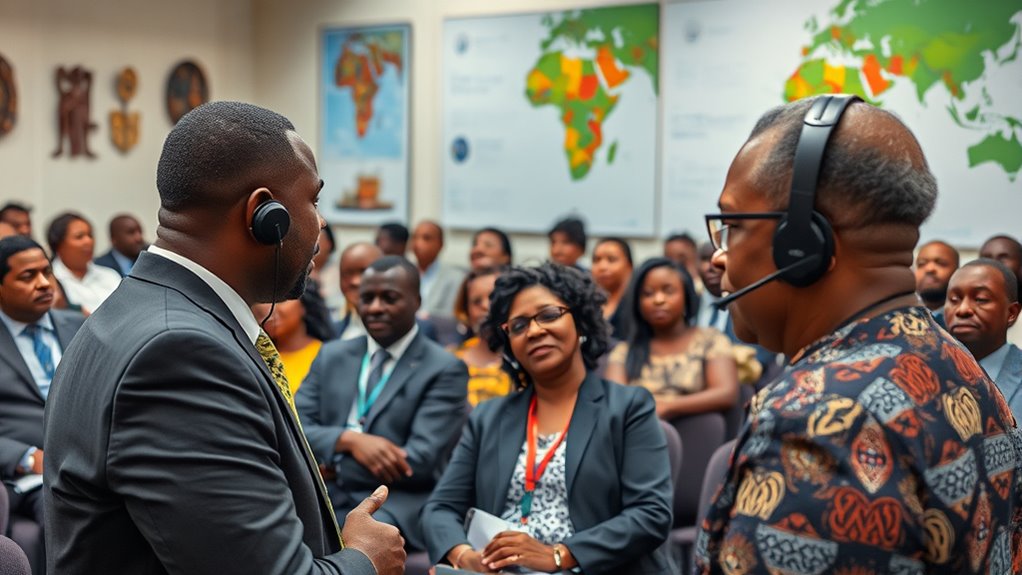
Hiring simultaneous interpreters in Ethiopia through Translation Africa offers seamless real-time translation for events, bridging over 80 languages and enhancing communication in multilingual contexts. Professionals possess certifications, fluency in languages like Amharic and Oromo, and deep cultural expertise to guarantee accurate, nuanced interpretations. This service supports industries from diplomacy to healthcare, with cost-effective options and advanced technology. Further details on qualifications and applications await exploration.
Quick Summaries
- Hire professional simultaneous interpreters in Ethiopia through reputable agencies like Translation Africa for events requiring real-time translation.
- Ensure interpreters are fluent in key Ethiopian languages such as Amharic, Oromo, and Tigrinya, with proven experience in diverse settings.
- Evaluate costs based on factors like interpreter expertise, language rarity, and event duration to budget effectively for your needs.
- Prepare for events by briefing interpreters on context, testing equipment like soundproof booths, and planning for contingencies.
- Benefit from simultaneous interpreting to enhance communication in Ethiopia’s multilingual environment, fostering inclusivity and efficiency.
Benefits of Simultaneous Interpreting in Ethiopia
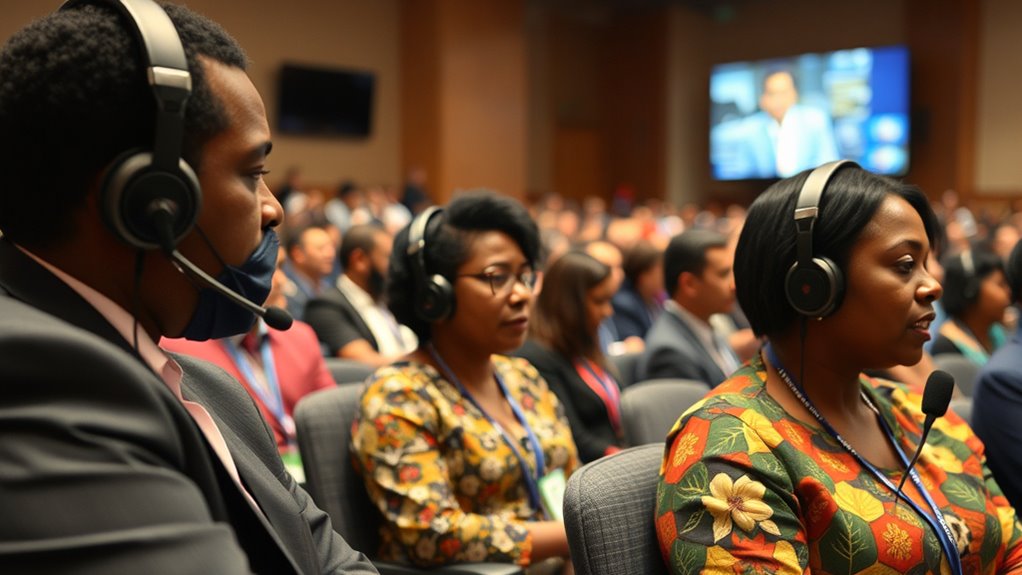
Simultaneous interpreting provides significant advantages in Ethiopia, where linguistic diversity often challenges effective communication. This technique allows for real-time translation during conferences, business meetings, and diplomatic events, enabling participants to understand and respond immediately without interrupting the flow. In a country with over 80 languages, it minimizes misunderstandings and promotes inclusivity, as speakers can express ideas fully while listeners receive accurate renditions. Moreover, it enhances efficiency in sectors like education and healthcare, where timely information exchange is critical. By preserving the original context and emotional nuances, simultaneous interpreting strengthens cross-cultural relationships and supports economic growth. Overall, its adaptability makes it indispensable for Ethiopia’s multilingual landscape, fostering unity and progress in diverse interactions.
How to Hire Professional Interpreters
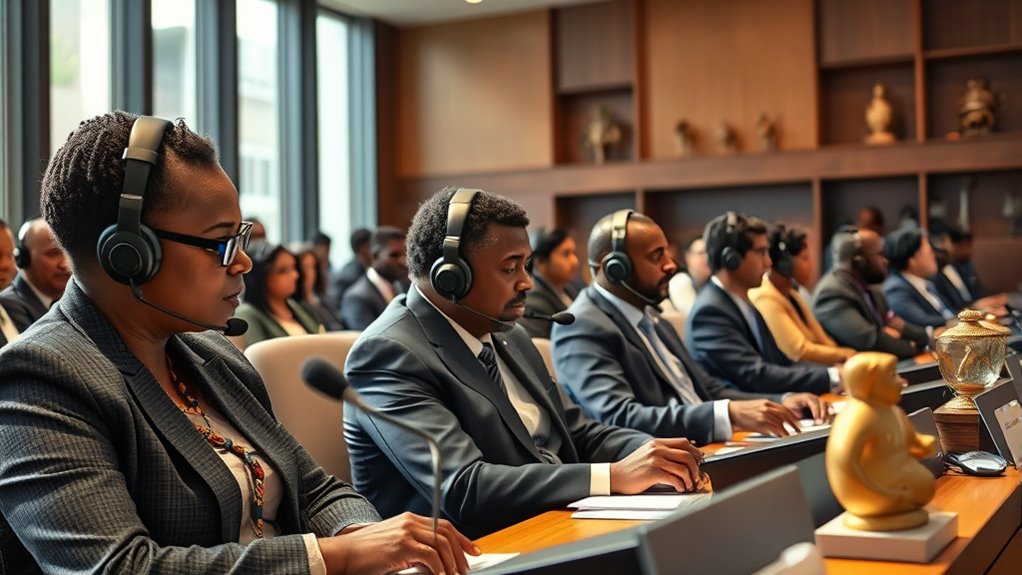
Hiring professional interpreters requires careful planning to guarantee effective communication in Ethiopia’s multilingual environment. Begin by evaluating specific needs, such as languages like Amharic, Oromo, or Tigrinya, and the event’s context. Research reputable agencies or freelancers through recommendations, online directories, or professional networks in Ethiopia. Verify qualifications by checking certifications from recognized bodies, years of experience, and client testimonials to guarantee reliability. Evaluate their familiarity with cultural nuances to avoid misinterpretations. Discuss terms upfront, including fees, availability, and contractual obligations like confidentiality. Prepare a clear brief outlining expectations and prepare for potential contingencies. This structured approach minimizes risks and enhances outcomes, fostering seamless interactions in diverse settings. Ultimately, selecting interpreters with strong ethics and skills leads to successful engagements.
Overview of Simultaneous Interpretation Services
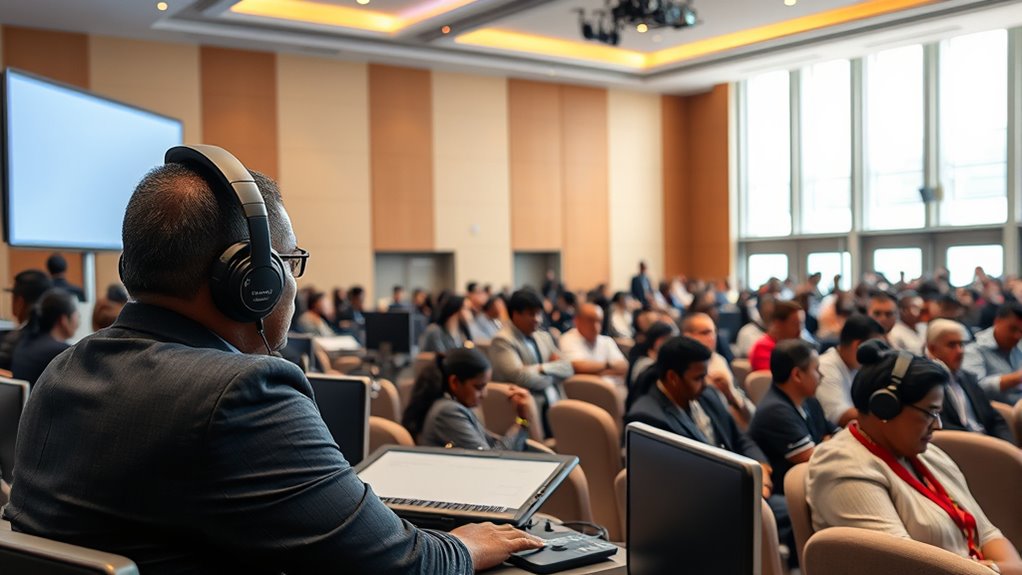
In Ethiopia, simultaneous interpretation services facilitate real-time translation, enabling seamless communication across languages during events. These services involve skilled professionals who listen and interpret speech instantly, often using advanced equipment to bridge linguistic divides in settings like conferences, diplomatic gatherings, and corporate meetings. This approach guarantees that participants remain engaged without delays, fostering effective cross-cultural interactions and enhancing overall event efficiency.
- Vibrant conference halls filled with diverse attendees, where every word echoes in multiple languages through discreet earpieces.
- Soundproof booths where interpreters deftly manage rapid speech, their focused expressions reflecting the intensity of live translation.
- Multilingual panels unfolding smoothly, with speakers and listeners exchanging ideas as if conversing in a single tongue.
- Seamless digital interfaces displaying real-time subtitles, painting a picture of effortless global connectivity in action.
Key Qualifications for Interpreters in Ethiopia
Simultaneous interpreters in Ethiopia must meet specific qualifications to perform effectively in their roles. These qualifications encompass language proficiency, cultural expertise, and professional experience. Examining these aspects reveals their critical role in ensuring accurate and seamless communication during interpretations.
Language Proficiency
Language proficiency serves as a cornerstone qualification for interpreters in Ethiopia, demanding fluency in relevant languages and an acute understanding of cultural contexts to guarantee accurate and effective communication. Interpreters must master languages like Amharic, Oromo, and Tigrinya, enabling seamless real-time translation in diverse settings. This skill set minimizes errors, preserves intent, and enhances overall interaction quality, particularly in professional environments where precision is paramount.
- Fluid verbal exchanges: Envision interpreters effortlessly bridging conversations between English and local dialects, ensuring every word flows naturally.
- Nuanced precision: Picture capturing subtle idioms in heated debates, transforming complex phrasing without losing essence.
- Rapid adaptability: Imagine quick shifts in fast-paced meetings, maintaining rhythm as speakers alternate languages.
- Technical mastery: Visualize handling specialized terminology in fields like business, with flawless accuracy under pressure. (124 words)
Cultural Expertise
Cultural expertise emerges as an essential qualification for interpreters in Ethiopia, requiring in-depth knowledge of local customs, traditions, and social nuances to complement linguistic skills. In Ethiopia’s richly diverse cultural mosaic, encompassing over 80 ethnic groups, interpreters must grasp subtleties like greetings, hierarchical respect, and religious practices to avoid misinterpretations. For instance, understanding the significance of gestures in Amhara or Oromo traditions guarantees messages are conveyed accurately without offending participants. This expertise fosters trust and effective communication in sensitive settings, such as international conferences or business negotiations. By bridging cultural gaps, interpreters enhance mutual understanding, preventing errors that could arise from overlooking contextual cues. Ultimately, such proficiency elevates the quality of simultaneous interpretation, making it indispensable for seamless interactions in Ethiopia’s multifaceted society.
Professional Experience
Professional experience serves as a foundational qualification for interpreters in Ethiopia, equipping them to navigate the complexities of real-time translation with precision. It encompasses years of practical exposure in demanding settings, where interpreters refine their abilities to handle linguistic challenges, adapt to varying contexts, and deliver accurate renditions under time constraints. This expertise not only enhances performance but also builds trust in critical scenarios like international meetings and local events.
- Interpreters swiftly bridge language divides in heated diplomatic negotiations, capturing subtle tones amidst rapid exchanges.
- They adeptly manage multilingual conferences, transforming complex speeches into clear, immediate interpretations.
- In bustling marketplaces, experienced professionals convey nuanced trade discussions, ensuring mutual understanding.
- Seasoned interpreters maintain composure in medical emergencies, relaying crucial information with flawless timing and accuracy.
Industries Utilizing Simultaneous Interpreting
Various industries in Ethiopia, including international conferences, healthcare, and diplomacy, depend on simultaneous interpreting to overcome language barriers and guarantee seamless communication. In international conferences, it enables real-time dialogue among participants from different linguistic backgrounds, fostering productive exchanges on global issues. The healthcare sector employs simultaneous interpreting to guarantee precise doctor-patient interactions, particularly for refugees and expatriates, therefore improving diagnostic accuracy and treatment outcomes. Diplomacy relies on it for high-stakes meetings, where interpreters convey nuances of language to prevent misinterpretations in negotiations. Additionally, the education sector uses this service in seminars and workshops to facilitate knowledge sharing among international scholars. Tourism benefits from it by aiding guided tours and cultural events, enhancing visitor experiences and promoting Ethiopia’s heritage. Legal proceedings also leverage simultaneous interpreting to maintain fairness in multilingual court sessions, supporting equitable justice. Overall, these applications underscore its essential role in Ethiopia’s interconnected society.
Cost Considerations for Interpreter Services
The cost considerations for simultaneous interpreter services in Ethiopia encompass key factors such as equipment needs, interpreter experience, and event duration. Pricing models often vary between per-hour rates, daily fees, or all-inclusive packages tailored to specific needs. Effective expense tips include budgeting for preparation time and exploring group discounts to optimize costs.
Cost Factors
Factors influencing the cost of simultaneous interpreter services in Ethiopia include interpreters’ experience, language pair rarity, and event duration. Highly experienced interpreters often demand higher rates due to their precision in complex settings, while rare language pairs elevate expenses because of scarce expertise. Event length impacts costs through increased resource allocation, such as extended shifts and fatigue management.
- A veteran interpreter guiding a bustling UN conference in Addis Ababa, effortlessly bridging languages with years of honed skill, underscoring premium pricing.
- An expert delving into Ethiopia’s diverse tongues, like Afar or Somali, amidst ancient markets, highlighting the scarcity that drives up fees.
- A prolonged workshop in a historic hall, where hours of uninterrupted translation build tension, reflecting duration’s role in cost escalation.
- Skilled professionals adapting to varying event scales, from intimate meetings to large forums, visualizing the resource intensity that influences expenses.
Pricing Models
Simultaneous interpreter services in Ethiopia often follow structured pricing models that account for variables like hourly rates, daily fees, or per-event charges, ensuring costs align with service demands and client budgets. These models vary based on project scope, interpreter expertise, and event duration. For instance, hourly rates suit short sessions, while daily fees cover full-day engagements, and per-event pricing applies to conferences. Factors such as language pairs and travel also influence costs, allowing clients to select options that fit their needs. Below is a comparative overview:
| Pricing Model | Description | Key Considerations |
|---|---|---|
| Hourly Rate | Charged per hour of service | Ideal for brief meetings |
| Daily Fee | Flat rate for a full day | Covers extended sessions |
| Per-Event Charge | Based on entire event duration | Suited for one-off gatherings |
| Half-Day Rate | For sessions up to 4 hours | Balances cost and flexibility |
| Package Deal | Bundled for multiple events | Offers discounts for volume |
This approach helps clients make informed decisions on interpreter services.
Expense Tips
Clients seeking to minimize expenses for interpreter services in Ethiopia can adopt several practical strategies. These approaches focus on smart planning and resource optimization to reduce costs while maintaining service quality. For instance, early booking and clear communication with providers can lead to better rates and avoid last-minute premiums. By prioritizing efficiency, clients guarantee that investments in interpretation enhance overall project outcomes without unnecessary expenditures.
- Imagine scheduling sessions during off-peak times to negotiate lower fees, picturing empty conference rooms filled only with essential staff.
- Visualize comparing detailed quotes from local Ethiopian interpreters, evoking scenes of bustling markets where bargaining yields the best deals.
- Envision leveraging technology like remote platforms, conjuring images of interpreters working from modest offices, cutting travel expenses.
- Picture bundling services with translation packages, illustrating a streamlined workflow that resembles a well-orchestrated Ethiopian coffee ceremony.
Technology in Simultaneous Interpretation
Technology has profoundly influenced simultaneous interpretation in Ethiopia, with innovations like AI-driven tools and digital platforms enabling real-time accuracy and broader accessibility for interpreters in diverse settings. These advancements, such as machine learning algorithms, enhance translation speed and reduce human error, allowing interpreters to handle complex multilingual conferences with greater efficiency. In Ethiopia, tools like remote interpretation software facilitate virtual events, breaking geographical barriers and integrating seamlessly with local languages like Amharic and Oromo. Digital platforms also provide training resources, empowering interpreters to stay updated with emerging technologies. Furthermore, AI-assisted glossaries guarantee cultural nuances are preserved, fostering more effective communication in sectors like diplomacy and business. As adoption grows, these technologies promote inclusivity, though they complement rather than replace human expertise, maintaining the art of interpretation in a tech-savvy era.
Preparing for Events With Interpreters
Effective preparation is essential for events involving simultaneous interpreters in Ethiopia, where organizers must coordinate logistics such as equipment setup, language matching, and team briefings to guarantee smooth operations. This involves selecting interpreters with expertise in relevant dialects and cultural nuances, ensuring technical reliability, and conducting rehearsals to minimize disruptions. Organizers should also allocate time for on-site testing and contingency planning, fostering an environment where communication flows effortlessly.
- Soundproof booths emerge in conference halls, with interpreters adjusting headsets amid a hum of anticipation.
- Language experts pore over event materials, matching precise terminology to cultural contexts for accuracy.
- Teams huddle for briefings, visualizing seamless translations as speakers deliver key messages.
- Equipment arrays glow under lights, ready to bridge linguistic divides in vibrant Ethiopian settings.
Differences From Other Interpretation Types
While simultaneous interpretation demands real-time translation in a controlled environment, such as soundproof booths used in Ethiopia, other types like consecutive or whispered interpretation rely on pauses or direct proximity, introducing delays and altering the flow of communication. Consecutive interpretation, for instance, requires speakers to halt after segments, allowing the interpreter to relay information, which often extends event durations and risks misinterpretation due to memory reliance. Whispered interpretation involves the interpreter speaking softly to individuals nearby, potentially disrupting the audience and limiting its use to small groups. In contrast, simultaneous methods demand advanced skills and technology for instantaneous accuracy, making them ideal for high-stakes settings like international conferences. This real-time approach minimizes errors from note-taking or recollection, enhancing overall efficiency and engagement without compromising the original message’s integrity. These distinctions underscore the unique demands and advantages of simultaneous interpretation in professional contexts.
Cultural Aspects of Interpreting in Ethiopia
In Ethiopia, where diverse ethnic groups and languages shape daily interactions, simultaneous interpreters must navigate cultural nuances to guarantee accurate and respectful communication. This requires sensitivity to Ethiopia’s rich tapestry of traditions, such as hierarchical respect and indirect speech, which can alter message delivery. Interpreters bridge gaps by adapting to local customs, ensuring that interpretations maintain cultural integrity without distortion.
- Respectful greetings: Envision interpreters incorporating Amharic honorifics, like “Ato” for men, to preserve social deference during conferences.
- Ceremonial contexts: Picture adapting interpretations around traditional coffee rituals, where pauses signify relationship-building rather than delays.
- Non-verbal cues: Imagine handling subtle gestures, such as averted eyes in Oromo culture, to convey humility accurately.
- Ethnic diversity: Visualize interpreters switching between idioms in Tigrayan and Somali settings, evoking shared folklore for deeper understanding.
Selecting the Right Interpretation Agency
Selecting the right interpretation agency requires careful evaluation of factors such as expertise in Ethiopian languages, cultural competence, and proven reliability. Expertise in Ethiopian languages guarantees accurate conveyance of nuances in Amharic, Oromo, or Tigrinya, minimizing miscommunications. Cultural competence involves understanding Ethiopia’s diverse traditions, social norms, and historical contexts, which interpreters must navigate adeptly to foster effective interactions. Proven reliability is assessed through the agency’s track record, including years of experience, client testimonials, and adherence to international standards like ISO certifications. Agencies with these attributes deliver high-quality simultaneous interpreting services, enhancing communication in professional settings. Potential clients should also review the agency’s technology infrastructure, such as soundproof booths and reliable audio systems, to guarantee seamless operations. Ultimately, thorough vetting leads to partnerships that uphold precision and trust.
Real-World Applications of Simultaneous Interpreting
Simultaneous interpreting serves essential functions in Ethiopia’s professional landscape. Conference interpreting facilitates seamless communication at international events, enabling participants to engage fully. Diplomatic meetings further highlight its importance, where accurate real-time translation supports critical negotiations.
Conference Interpreting
Conference interpreting applies simultaneous techniques in dynamic settings like international summits and corporate events, enabling seamless real-time translation for multilingual audiences and fostering effective global dialogue. This method guarantees that speakers and listeners communicate effortlessly, breaking down language barriers in high-stakes environments such as global business forums or academic gatherings. It demands precision from interpreters who work in real-time, enhancing comprehension and engagement among participants.
- Vibrant conference halls filled with delegates wearing headsets, as interpreters’ voices bridge cultural divides instantly.
- Dynamic panel discussions where experts from varied backgrounds exchange ideas, with flawless translations keeping everyone aligned.
- Interactive workshops buzzing with activity, as simultaneous interpreting allows for immediate questions and responses across languages.
- Large-scale presentations on stages, where audiences visualize data and narratives clearly, thanks to fluid, on-the-spot interpretations.
Diplomatic Meetings
Diplomatic meetings rely on simultaneous interpreting to facilitate clear exchanges between international representatives, as seen in negotiations at the United Nations or bilateral summits. This technique guarantees that language barriers do not impede sensitive discussions, allowing diplomats to respond in real time without delays. In Ethiopia, where regional diplomacy often involves diverse linguistic groups, professional simultaneous interpreters play a vital role in events like African Union gatherings or peace talks. Their expertise minimizes misunderstandings, preserving the nuances of diplomatic language and cultural contexts. For instance, interpreters must handle complex terminology in areas such as trade agreements or conflict resolution, maintaining neutrality and accuracy under pressure. Organizations like Translation Africa provide skilled Ethiopian interpreters trained in these high-stakes environments, enhancing global communication and fostering successful outcomes. Ultimately, this service supports Ethiopia’s growing role in international affairs, bridging divides for effective collaboration.
Legal and Ethical Standards for Interpreters
In Ethiopia, interpreters working in simultaneous settings must comply with established legal and ethical standards to guarantee accuracy, confidentiality, and impartiality. These standards, often outlined by bodies like the Ethiopian Translators Association, emphasize adherence to international norms such as those from the International Association of Conference Interpreters. Interpreters are required to remain unbiased, protect sensitive information, and deliver precise renditions in real-time, fostering trust in diverse contexts like conferences and legal proceedings.
- A interpreter in a dimly lit courtroom, headphones on, conveying testimony without altering intent, ensuring justice prevails.
- Whispers of classified discussions echoing in a secure room, with the interpreter’s discretion shielding secrets from exposure.
- Amid a bustling diplomatic hall, an interpreter bridges languages flawlessly, like a neutral bridge over turbulent waters.
- In a high-stakes negotiation, the interpreter stands as a silent guardian, their impartial words painting vivid, unaltered realities.
Why Choose Translation Africa for Your Needs
When considering simultaneous interpretation services in Ethiopia, Translation Africa stands out for its expertise in delivering accurate, reliable, and culturally attuned solutions that meet diverse client needs. The company boasts a team of certified interpreters with extensive experience in various sectors, including business, healthcare, and diplomacy. Their commitment to quality guarantees seamless communication, minimizing errors and enhancing client satisfaction. Translation Africa also prioritizes confidentiality and timely service delivery, making it a trusted partner.
| Feature | Benefit | Why Translation Africa |
|---|---|---|
| Expert Interpreters | High Accuracy | Trained in local dialects |
| Cultural Sensitivity | Effective Communication | Deep Ethiopia knowledge |
| Reliable Support | On-time Delivery | 24/7 Availability |
This combination of skills and dedication positions Translation Africa as the ideal choice for professional interpretation.
Emerging Trends in Interpretation Services
The interpretation services sector in Ethiopia is witnessing significant advancements, driven by technological innovations such as AI-assisted tools and remote platforms that enhance efficiency and accessibility for simultaneous interpreters. These developments are reshaping the industry, with a surge in AI-driven real-time translation and cloud-based solutions that minimize errors and expand reach. As demand grows, integration of mobile apps and virtual reality is fostering more immersive experiences, while training programs adapt to equip interpreters with digital skills.
- Interpreters using high-tech dashboards, with screens flashing live translations in vibrant colors.
- AI bots analyzing accents in dimly lit conference rooms, ensuring flawless multilingual flow.
- Remote sessions unfolding on crystal-clear video feeds, connecting diverse faces across vast landscapes.
- Wearable devices buzzing with instant cues, transforming interpreters into seamless linguistic bridges.
Frequently Asked Questions
What Is the Typical Response Time for Inquiries?
The typical response time for inquiries varies by organization and context. For many services, responses are often provided within 24 to 48 business hours. Factors such as inquiry volume, staff availability, and operational demands influence this timeframe.
Do You Offer Training Programs for Interpreters?
The question pertains to whether training programs for interpreters are offered. Currently, such programs are not provided, with efforts focused on delivering high-quality interpretation services. This approach guarantees skilled professionals are utilized effectively, maintaining industry standards.
How Can Clients Provide Feedback on Services?
Clients can provide feedback on services through channels such as dedicated email addresses, online forms, or direct phone calls to the provider. This input allows companies to evaluate performance, implement improvements, and maintain high standards, ensuring better future experiences.
What Are Your Company’s Operating Hours?
The question pertains to the company’s operating hours. The company maintains standard business hours from 9:00 AM to 5:00 PM, Monday through Friday. It remains closed on weekends and public holidays, with possible variations advised via official channels.
Can Interpreters Assist With Document Notarization?
Interpreters are professionals who specialize in converting spoken language from one language to another in real-time. They do not typically engage in document notarization, which is a distinct legal service requiring certification by authorized notaries.

