
 Elizabeth123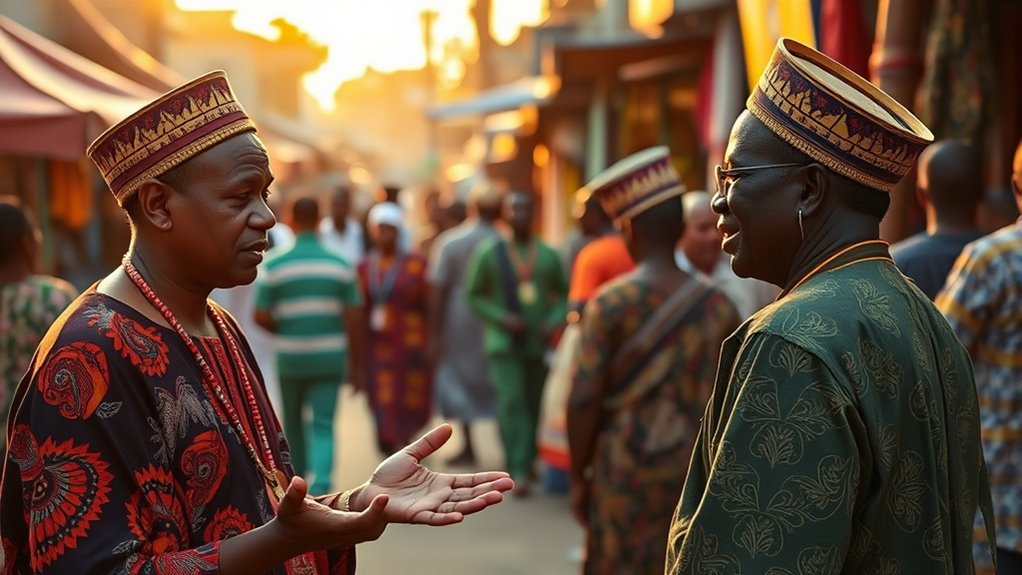
Lingala, a Bantu language from the Democratic Republic of Congo, plays a key role in cultural preservation through English translation, bridging over 200 ethnic languages in Africa. This process adapts grammar, tonal nuances, and idioms while using tools like SDL Trados for accuracy. It fosters economic growth, education access, and social harmony. Exploring these aspects further reveals valuable techniques and broader benefits for global communication.
Quick Summaries
- Lingala is a Bantu language spoken in the Democratic Republic of Congo, facilitating communication across diverse ethnic groups.
- Translation from Lingala to English preserves Congolese cultural heritage and supports global exchange of indigenous knowledge.
- Key techniques for Lingala to English conversion include adapting tonal inflections, idioms, and contextual references for accuracy.
- Essential tools for Lingala translation services include software like SDL Trados and bilingual dictionaries for reliable results.
- Professional translation in Africa enhances economic opportunities and social inclusion by bridging linguistic barriers in multilingual regions.
Understanding Lingala Language Basics
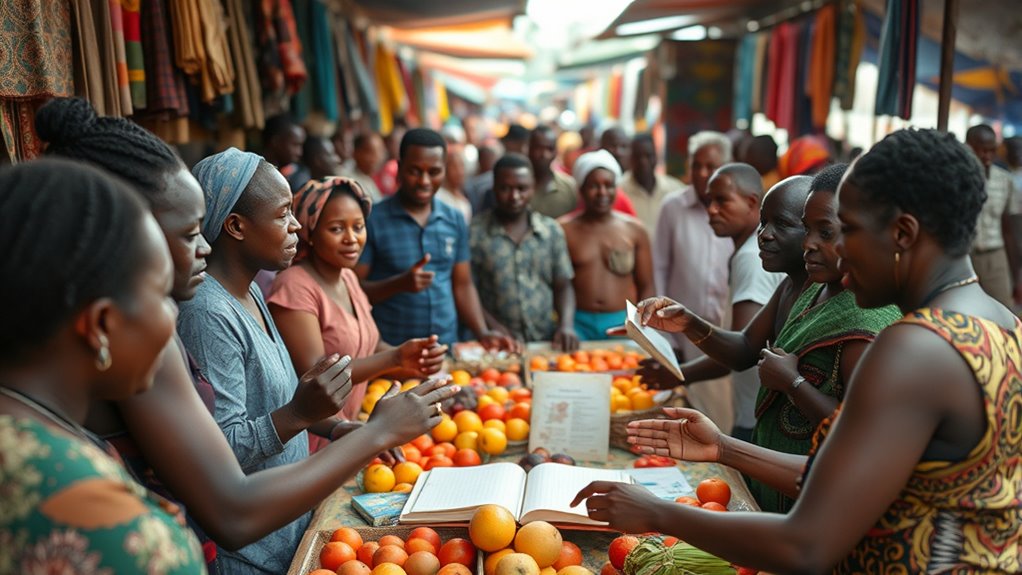
Lingala, a Bantu language primarily spoken in the Democratic Republic of Congo and parts of Central Africa, serves as an essential means of communication for millions. It belongs to the Niger-Congo language family, with roots tracing back to the 19th century along the Congo River, where it evolved as a trade lingua franca. The language features a straightforward phonetic system, including five vowels and approximately 20 consonants, with tonal variations that alter word meanings—high, low, and sometimes mid tones. Grammatically, Lingala employs an agglutinative structure, where prefixes and suffixes modify roots to indicate tense, number, and agreement. Nouns are classified into categories that influence adjectives and verbs, promoting sentence harmony. Common vocabulary draws from daily life, encompassing terms for kinship, nature, and community activities. Its syntax follows a subject-verb-object order, facilitating clear expression. Learners often appreciate Lingala’s rhythmic flow, which aids in oral tradition and storytelling, though mastering it requires practice with its prefixes and tonal nuances.
The Role of Translation in Congolese Culture
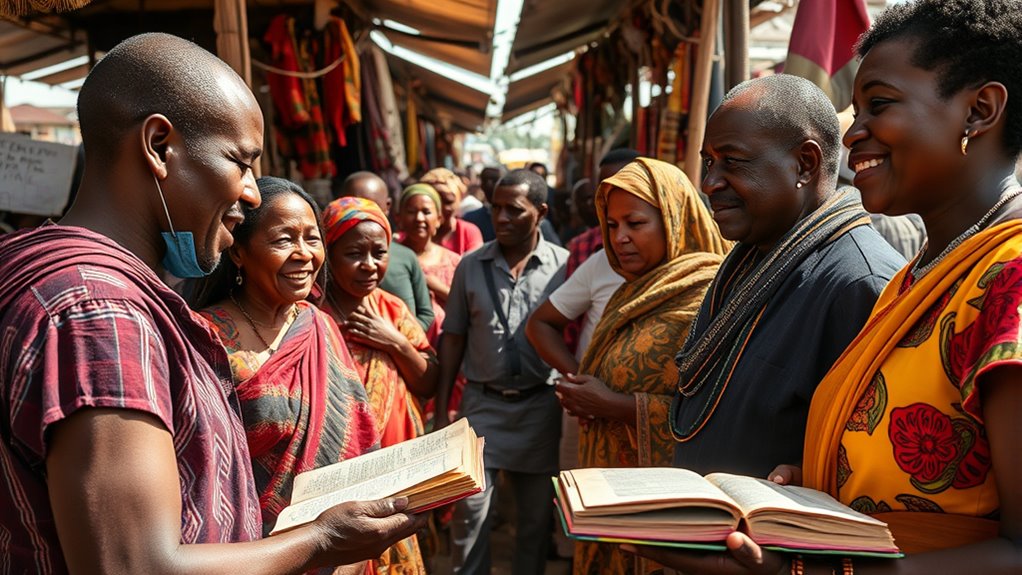
Translation in Congolese culture acts as an essential bridge for preserving and sharing linguistic diversity across communities. In the Democratic Republic of Congo, where over 200 ethnic languages thrive, translation safeguards indigenous knowledge, such as oral traditions and folklore, against globalization’s erosive effects. It promotes cultural exchange by enabling communication between diverse groups, fostering mutual respect and social harmony. For instance, translating Congolese literature into English amplifies local voices on the global stage, enriching international discourse while maintaining cultural authenticity. In education, it facilitates access to resources, empowering learners to bridge local and global contexts without losing heritage. Translation also supports community development, ensuring that historical narratives and customs remain vibrant, therefore reinforcing national unity. Overall, it serves as a cornerstone for cultural resilience, adapting traditions to contemporary challenges while honoring Congo’s rich linguistic tapestry. (124 words)
Techniques for Accurate Lingala to English Conversion

Accurate conversion from Lingala to English requires a multifaceted approach that prioritizes linguistic fidelity and cultural sensitivity. This method guarantees that nuances in meaning, tone, and context are preserved, preventing distortions common in cross-language transfers. Translators must balance literal accuracy with interpretive depth to foster effective communication.
To achieve this, key techniques include:
- Grammatical adaptation: Adjusting Lingala’s flexible word order and tonal inflections to align with English syntax, guaranteeing the translated text flows naturally while retaining original intent.
- Idiomatic reinterpretation: Transforming culturally embedded phrases, such as proverbs in Lingala, into English equivalents that evoke similar emotions and social insights without altering core messages.
- Contextual refinement: Evaluating the surrounding narrative or dialogue to adapt references that are specific to Congolese experiences, thereby maintaining relevance and authenticity for English readers.
These strategies enhance overall translation quality, promoting deeper cross-cultural understanding.
Essential Tools for Lingala Translation Services
Essential tools play a pivotal role in delivering high-quality Lingala translation services, enabling professionals to navigate linguistic complexities with efficiency. Computer-assisted translation (CAT) software, like SDL Trados or MemoQ, streamlines workflows by managing terminology and ensuring consistency across projects. Bilingual dictionaries and specialized glossaries provide accurate vocabulary, while grammar and syntax tools verify structural integrity in English outputs. For spoken Lingala, audio recording devices and transcription software capture dialects and intonations precisely. Online databases offer cultural references, aiding contextually appropriate translations. Integration of these tools enhances productivity, allowing translators to focus on nuances rather than rote tasks. Professional-grade hardware, such as high-quality microphones and computers, supports seamless collaboration in remote settings, ultimately upholding translation standards.
Benefits of Professional Translation in Africa
In Africa, where linguistic diversity spans over 2,000 languages, professional translation services foster economic growth by enabling seamless cross-cultural communication and trade. These services enhance access to education, healthcare, and global opportunities, while promoting cultural exchange and preserving indigenous knowledge. By overcoming language barriers, they drive sustainable development across the continent.
- Economic Expansion: Professional translation facilitates international trade and investment, boosting GDP and job creation in multilingual African markets.
- Social Inclusion: It guarantees equitable access to information, improving education and healthcare outcomes for marginalized communities.
- Cultural Preservation: Accurate translations safeguard local languages and traditions, fostering national identity and global understanding.
Frequently Asked Questions
How Much Does Lingala Translation Cost?
The question addresses the cost of Lingala translation services. Such costs fluctuate based on elements like document length, required turnaround time, and the proficiency of the translator. Typically, fees are quoted per word, ranging from $0.05 to $0.20, with variations by provider.
Where Can I Find Certified Lingala Translators?
Individuals seeking certified Lingala translators can explore professional translation agencies, online platforms like Upwork and ProZ, university language programs, and cultural organizations specializing in African languages, ensuring credentials are verified for reliability.
Is Urgent Lingala Translation Available?
The availability of urgent Lingala translation services is a pressing inquiry for many. Professional agencies specializing in various languages, including Lingala, often provide expedited options to handle immediate needs, ensuring accurate and timely results for clients worldwide.
Can Lingala Be Translated to French Too?
The current question is whether Lingala can be translated to French. Lingala, a Bantu language spoken in Central Africa, is indeed translatable to French, given their overlap in regions like the Democratic Republic of the Congo. Various professional services facilitate this process.
What Payment Options Exist for Translation Services?
Translation services typically offer diverse payment options to suit client needs, including credit cards, bank transfers, online platforms like PayPal, and wire transfers. Some providers also accept cryptocurrencies, checks, or installment plans, depending on their policies and location.