
 Elizabeth123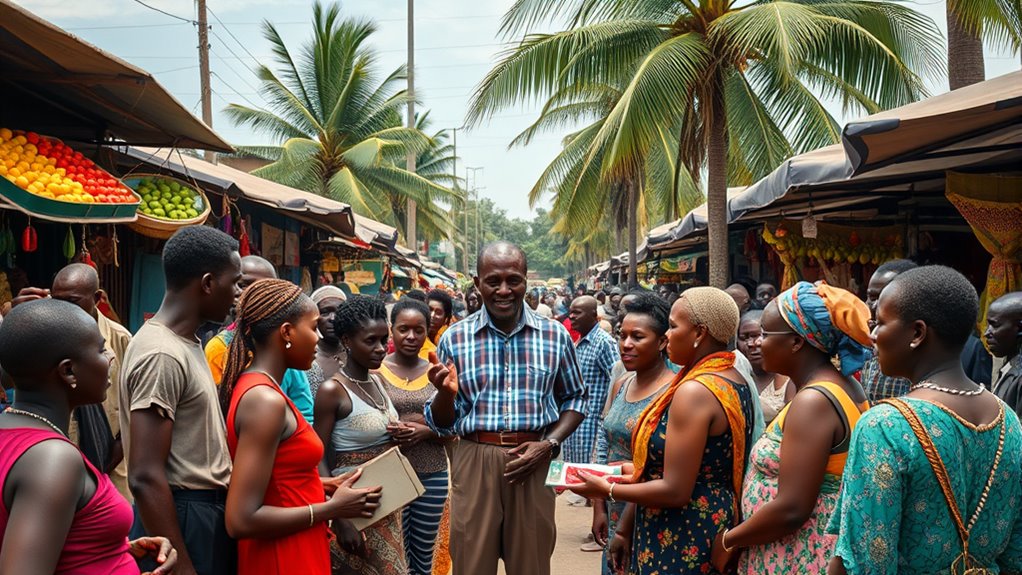
Lingala to English translation in Congo bridges cultural gaps, originating from a 19th-century trade pidgin that now unites millions in daily interactions. Key phrases include “mbote” for hello and “sango nini?” for how are you, while vocabulary like “koloba” for speak demands attention to grammar and regional nuances. Professional services in Africa guarantee accurate renditions for healthcare, business, and legal contexts. Further details on history and practices await in the sections ahead.
Quick Summaries
- Professional Lingala to English translation services are widely available in Congo and across Africa.
- Experts emphasize cultural adaptation to ensure accurate and contextually appropriate translations.
- Grammar and vocabulary challenges in Lingala are addressed through specialized training and techniques.
- Services cover specialized fields like medical, legal, and business translations in African contexts.
- Ethical practices and certifications guarantee reliable and high-quality translation outcomes.
History of Lingala in Congo
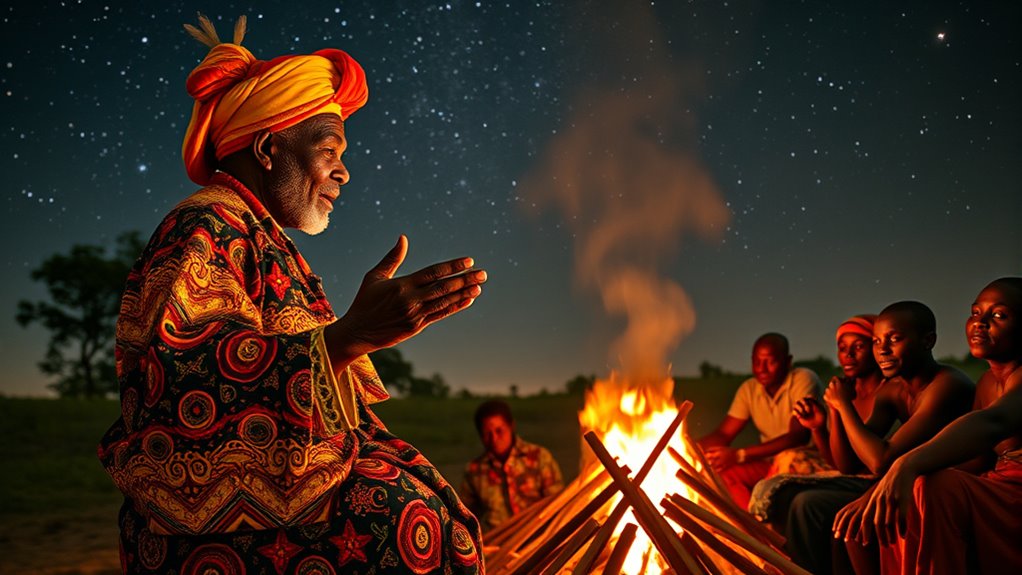
Lingala, a Bantu language, emerged in the 19th century as a trade pidgin along the Congo River in what is now the Democratic Republic of the Congo. Initially used by merchants and explorers for communication, it drew from local Bobangi and other regional dialects, facilitating interactions among diverse ethnic groups. By the late 1800s, during Belgian colonial rule, Lingala gained prominence as a lingua franca in trade networks and military contexts, particularly with the Force Publique. Its simplicity and adaptability allowed it to spread rapidly along riverine routes, evolving into a creole language. In the early 20th century, Lingala’s role expanded into education and administration, influencing urban centers like Kinshasa. Today, it remains an essential symbol of Congolese identity, spoken by millions across Central Africa, though it continues to evolve with modern influences. Its historical resilience underscores its cultural significance in the region.
Basics of Lingala Vocabulary
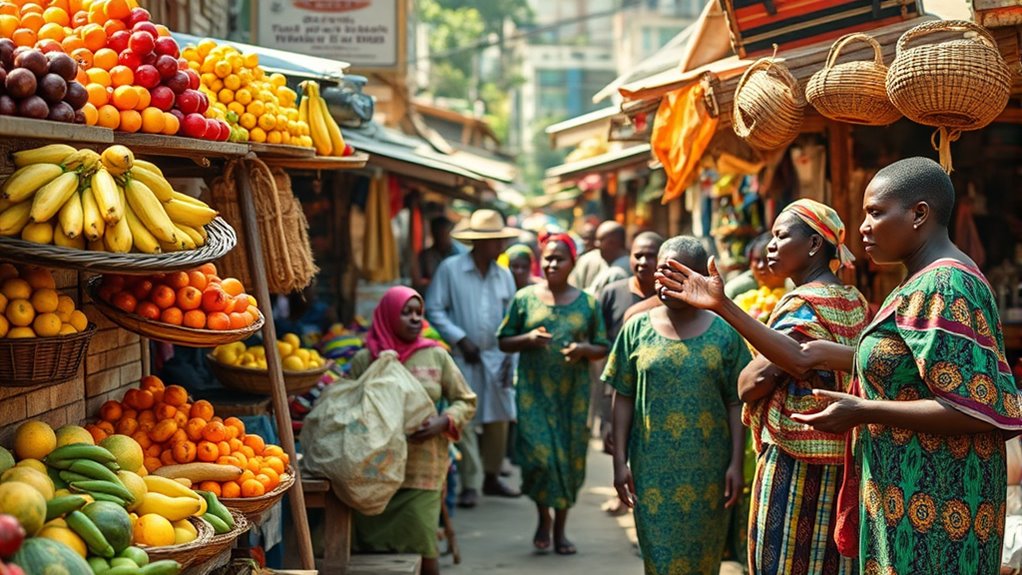
The basics of Lingala vocabulary cover common words that form the core of daily expressions. Basic greeting phrases enable simple social interactions, while essential numbers provide a foundation for counting and quantification. This introduction sets the stage for exploring these key components in Lingala to English translation.
Common Lingala Words
Common words in Lingala, such as greetings and everyday terms, form the foundation of basic vocabulary for language learners aiming to communicate effectively. Lingala, a Bantu language prevalent in the Democratic Republic of Congo, features straightforward words that aid in everyday conversations. These include nouns, verbs, and descriptors essential for building phrases without relying on complex grammar. Mastering them enhances comprehension and expression in various contexts.
- Nouns for daily life: Terms like “mokili” (world) and “ngai” (me) help describe surroundings.
- Basic numbers: “Moko” (one) and “mibale” (two) facilitate counting and simple math.
- Family terms: Words such as “tata” (father) and “mama” (mother) denote relationships.
- Common verbs: “Kobeta” (to beat) or “koloba” (to speak) enable action descriptions.
- Adjectives for description: “Nzuri” (good) and “mabe” (bad) add detail to sentences.
Basic Greetings Phrases
Greetings in Lingala serve as foundational phrases for initiating and concluding interactions, enabling learners to navigate social exchanges with ease. In the Democratic Republic of Congo, these expressions foster rapport and cultural connection. Common greetings include “Mbote” for hello and “Kende malamu” for goodbye, reflecting politeness in daily life.
| Lingala Phrase | English Translation | Usage Example |
|---|---|---|
| Mbote | Hello | Used when meeting someone |
| Sango nini? | How are you? | Inquiring about well-being |
| Kende malamu | Goodbye | Said when parting ways |
Learning these phrases enhances communication, promoting respect and understanding in Lingala-speaking communities. They are simple yet powerful tools for building relationships without complex grammar. Mastery begins with practice in real contexts.
Essential Numbers Vocabulary
Numbers in Lingala form the backbone of basic vocabulary, facilitating everyday tasks such as counting, shopping, and simple arithmetic in the Democratic Republic of Congo. This essential vocabulary enables clear communication in markets, schools, and daily transactions. Learning numbers in Lingala promotes cultural integration and practical language use, as they appear in greetings, negotiations, and basic math. For non-native speakers, mastering these terms builds confidence and accuracy in conversations.
- One: Mo
- Two: Mbɔ́
- Three: Tatu
- Four: Ena
- Five: Mitáno
Common Phrases for Everyday Translation
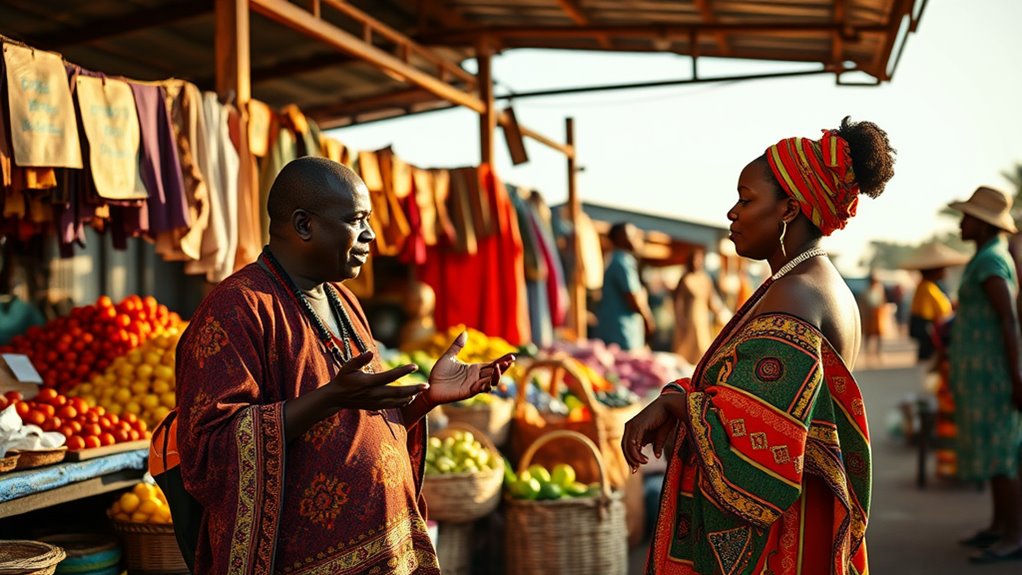
Common phrases in Lingala for everyday translation cover essential areas such as greetings, daily conversation, and shopping expressions. Greetings in Lingala form the foundation for polite interactions in various settings. Daily conversation phrases and bargaining terms further enable practical exchanges in routine activities.
Greetings in Lingala
Lingala greetings form a fundamental part of social interactions in regions where the language is spoken, such as the Democratic Republic of Congo. These phrases foster connections and convey politeness in everyday exchanges. They often reflect cultural nuances, emphasizing community and respect. Understanding them aids effective communication for learners and travelers.
- Mbote: A versatile hello used anytime, equivalent to “Hello” in English.
- Sango nini?: Means “How are you?” and invites a response about well-being.
- Kende malamu: Translates to “Good morning,” ideal for starting the day.
- Lobi ya bolingo: Expresses “I love you,” often in affectionate greetings.
- Tonga na yo: Means “Goodbye,” signaling the end of an interaction respectfully.
Daily Conversation Phrases
Daily conversation phrases in Lingala enable smooth everyday interactions, extending beyond greetings to cover practical exchanges in social and routine settings. These phrases facilitate asking questions, expressing needs, and responding in daily life, such as inquiring about well-being or offering help. They are essential for travelers and locals alike in the Democratic Republic of Congo and surrounding areas, promoting cultural understanding.
| Lingala Phrase | English Translation |
|---|---|
| Naza na yo? | How are you? |
| Nazali malamu. | I am fine. |
| Sango te? | What is your name? |
| Ngai nazali na ye. | I am here. |
| To sali! | See you later! |
In essence, mastering these phrases enhances communication, fostering connections without cultural barriers. They reflect the language’s rhythmic simplicity, aiding in routine dialogues like confirming plans or apologizing.
Shopping and Bargaining
In markets and stores, phrases for shopping and bargaining play a key role in Lingala, aiding negotiations and transactions during everyday purchases. These expressions facilitate smooth interactions in Congo’s bustling marketplaces, where haggling is a cultural norm. Lingala speakers use specific phrases to inquire about prices, counter offers, and finalize deals, promoting mutual understanding and efficiency.
- Naza ngóyé? – Translates to “How much is this?” for asking prices.
- Eza mingi te – Means “It’s too expensive,” used in bargaining.
- Nazokisa na… – “I will give…” followed by a price, for counteroffers.
- Soki oyo, nazokima – “If that’s the case, I’ll buy it,” to agree on a deal.
- Merdeka – “Thank you,” expressed after a successful transaction.
Cultural Aspects of Lingala Communication
Cultural nuances greatly influence interactions in Lingala communication, embedding social values into everyday exchanges. In Lingala-speaking communities, greetings often extend beyond simple hellos, incorporating phrases like “mbote” to convey respect and foster communal bonds, reflecting a collectivist ethos. Non-verbal cues, such as hand gestures and eye contact, play a vital role; for instance, avoiding direct stares with elders signifies deference and maintains harmony. Proverbs, or “misilingi,” are woven into conversations to impart wisdom and resolve conflicts indirectly, emphasizing indirectness as a means of politeness. Social hierarchy shapes speech, with formal address for authorities underscoring respect for age and status. Humor and storytelling enhance social cohesion, turning dialogues into shared cultural experiences that strengthen community ties in the Congo region. These elements guarantee communication remains a dynamic expression of identity and relationships.
Professional Translation Services in Africa
Professional translation services in Africa address the growing demand for accurate Lingala to English conversions. African translation experts bring essential cultural and linguistic insights to these efforts. Specialized language services further enhance communication by providing tailored solutions for businesses and communities.
African Translation Experts
African translation experts play a pivotal role in providing precise services for languages across the continent, including Lingala to English conversions. These specialists bring extensive linguistic knowledge and cultural insight, fostering effective communication in diverse African contexts. They guarantee high-quality translations that maintain original intent while adapting to local nuances, supporting sectors like commerce and community development.
- Expertise in indigenous languages and dialects for accurate renditions.
- Strong emphasis on cultural context to avoid misinterpretations.
- Rigorous training and certifications from recognized institutions.
- Collaboration with global networks for broader reach and resources.
- Focus on ethical practices and client satisfaction in every project.
Specialized Language Services
Specialized language services in Africa address the growing demand for accurate translations and interpretations across diverse sectors. These services, particularly in regions like Congo, provide professional expertise in Lingala to English conversions, supporting healthcare, legal, business, and technical fields. They guarantee precision by incorporating cultural contexts and specialized knowledge, bridging communication gaps for international trade and development.
| Service Type | Key Applications in Africa |
|---|---|
| Medical Translation | Healthcare diagnostics and patient care in Congo |
| Legal Translation | International contracts and dispute resolution |
| Business Interpretation | Corporate negotiations and trade agreements |
| Technical Translation | Engineering projects and technology transfers |
| Cultural Adaptation | Media content and educational materials |
This approach enhances efficiency, with trained experts delivering tailored solutions that foster cross-cultural understanding and economic growth.
Grammar Rules for Lingala Speakers
Understanding grammar rules is essential for Lingala speakers adapting to English, as these structures bridge linguistic differences and enhance communication. By mastering key English grammar elements, speakers can improve clarity and precision in daily interactions. This involves adapting from Lingala’s fluid structures to English’s more rigid frameworks, focusing on foundational aspects like word order and verb usage to build proficiency.
- English sentence structure primarily follows Subject-Verb-Object order, contrasting with Lingala’s flexibility.
- Verb tenses, such as simple present or past, must align with time references, unlike Lingala’s aspect-based system.
- Nouns require articles (e.g., “a,” “the”) to indicate specificity, a feature absent in Lingala.
- Plural forms often add suffixes like “-s” or “-es,” differing from Lingala’s context-dependent plurals.
- Adjectives in English precede nouns and may need agreement, requiring adjustment from Lingala patterns.
Challenges in Language Conversion
Translating Lingala to English presents significant obstacles due to linguistic differences. Key issues involve the impact of dialect variations, the loss of idiomatic expressions, and problems with grammatical structures. Addressing these challenges facilitates more effective communication across languages.
Dialect Variations Impact
Dialect variations in Lingala, shaped by regional differences across Central Africa, present key challenges in translating to English by introducing inconsistencies in vocabulary, pronunciation, and grammar that can alter intended meanings. These variations often stem from influences like urban versus rural dialects, complicating accurate conveyance in professional contexts. Translators must navigate how regional nuances affect communication, potentially leading to errors in diplomatic, educational, or business settings. This underscores the need for specialized knowledge to maintain fidelity.
- Vocabulary Inconsistencies: Words for everyday items may differ between Congolese regions, causing mistranslations.
- Pronunciation Shifts: Subtle sound changes can alter word interpretations, challenging audio-based translations.
- Grammar Flexibilities: Variations in sentence structure might invert meanings, requiring careful adaptation.
- Regional Idioms’ Roots: Dialect-specific terms tied to local customs demand context-specific handling.
- Standardization Issues: Lack of a unified Lingala standard hinders consistent English equivalents across dialects. (124 words)
Idiomatic Expression Loss
One of the primary challenges in Lingala-to-English translation involves the loss of idiomatic expressions, where culturally embedded phrases often fail to retain their original nuances or emotional depth. These idioms, rooted in Congolese customs and folklore, carry layers of meaning tied to local history and social contexts that English equivalents rarely capture. For instance, a phrase like “kobanga na motema” (to think with the heart) evokes profound emotional resonance in Lingala, but in English, it might reduce to a flat “to feel deeply,” stripping away its cultural specificity. This erosion occurs because English lacks parallel metaphors, often derived from Western experiences, leading to diluted interpretations. Consequently, translated texts risk misrepresenting Congolese narratives, as humor, proverbs, or wisdom lose their vibrancy. Effective translation demands creative adaptations that preserve intent, fostering better cultural exchange in Africa’s linguistic diversity.
Grammatical Structure Issues
Grammatical discrepancies between Lingala and English often complicate translations, as Lingala’s complex noun classes, verb conjugations, and flexible word order lack direct equivalents in English’s more rigid structure. These differences can lead to inaccuracies, where nuances are lost or altered during conversion. Translators must navigate these challenges to maintain meaning, ensuring cultural and contextual fidelity in professional settings like business or literature.
- Noun class agreements: Lingala’s system requires gender and number markers, which English omits, causing potential confusion in subject-verb relations.
- Verb conjugation variations: Lingala’s extensive tenses and aspects, such as habitual or completive forms, don’t align with English’s simpler system, often requiring rephrasing.
- Flexible word order: Lingala allows emphasis-driven arrangements, unlike English’s fixed subject-verb-object, leading to awkward translations.
- Agreement particles: Lingala uses particles for emphasis or modification, absent in English, which may result in overly literal or unclear renditions.
- Auxiliary and modal complexities: Lingala’s intricate auxiliaries for probability or obligation have no precise English counterparts, demanding interpretive adjustments.
Business Applications of Lingala Translation
The business applications of Lingala translation are essential for companies operating in Central Africa and beyond. In regions like the Democratic Republic of Congo, where Lingala is a dominant trade language, accurate translations facilitate seamless communication in negotiations, contracts, and market expansions. Businesses leverage these services to localize marketing materials, ensuring messages resonate with local consumers and partners. For example, international firms in mining, agriculture, and retail use Lingala-English translation to navigate regulatory documents and supply chain interactions, minimizing risks and fostering trust. E-commerce platforms also benefit by translating product descriptions and customer support, boosting sales in Lingala-speaking markets. Furthermore, in diplomatic and corporate events, precise translation enhances collaboration, enabling global enterprises to penetrate new territories effectively. This strategic tool drives efficiency, profitability, and sustainable growth without cultural barriers. Overall, Lingala translation is a crucial asset for competitive advantage in Africa’s dynamic business landscape.
Educational Tools for Language Learners
Educational tools play a pivotal role in facilitating Lingala to English language acquisition for learners worldwide, offering interactive and accessible resources that enhance comprehension and retention. These tools bridge cultural and linguistic gaps, enabling self-paced learning through technology-driven methods that emphasize practical application and accuracy.
- Language Apps: Platforms like Duolingo or Babbel provide bite-sized Lingala lessons with English translations, gamifying the process for better engagement.
- Online Courses: Websites such as Coursera offer structured modules on Lingala grammar and vocabulary, with audio exercises for pronunciation practice.
- Digital Flashcards: Tools like Anki allow users to create customizable decks for memorizing Lingala words and phrases in English context.
- Translation Software: Programs such as Google Translate assist with real-time conversions, helping learners verify their understanding during conversations.
- E-Books and Resources: Interactive PDFs and websites compile Lingala-English glossaries, including exercises to build conversational skills effectively.
Regional Variations in Lingala Usage
Lingala varies across regions in Central Africa, with differences in pronunciation, vocabulary, and grammar shaped by local cultures and influences. In the Democratic Republic of Congo (DRC), urban centers like Kinshasa feature faster speech and slang, while rural areas incorporate elements from indigenous languages, affecting word choice and sentence structure. In the Republic of Congo, Brazzaville’s version leans toward more standardized forms due to French colonial impacts, contrasting with eastern DRC variations influenced by neighboring ethnic groups. These divergences pose challenges for translators, requiring adaptation to guarantee accurate meaning transfer.
| Region | Key Variations |
|---|---|
| Kinshasa (DRC) | Faster pronunciation, slang |
| Brazzaville | Formal vocabulary |
| Rural DRC | Local dialect integration |
Understanding these patterns enhances cross-regional communication and translation precision.
Music and Media in Lingala
Music and media have profoundly shaped the use of Lingala in Central Africa, serving as dynamic platforms for cultural expression and communication. Lingala thrives in genres like soukous and rumba, where it amplifies stories of daily life, love, and social issues. Radio and television broadcasts in Lingala foster community bonds, while digital platforms expand its reach globally. This integration preserves linguistic heritage and influences modern identity.
- Lingala’s rhythmic beats in popular music, such as by Fally Ipupa, captivate audiences worldwide.
- Radio programs in Lingala deliver news and entertainment, maintaining its everyday relevance.
- Television shows and films use Lingala to portray authentic Congolese narratives.
- Music videos on platforms like YouTube promote Lingala, blending tradition with contemporary styles.
- Media collaborations in Lingala enhance cross-border cultural exchanges in Central Africa.
Accuracy Tips for Translators
Ensuring accurate translations from Lingala to English demands meticulous attention to linguistic nuances and cultural contexts. Translators must grasp Lingala’s tonal variations, which can alter word meanings, and avoid direct word-for-word conversions that lose intent. For instance, idiomatic expressions like “kokoma na maboko” (to applaud) require cultural equivalents in English to convey the same sentiment without distortion. Effective strategies include consulting native speakers for verification, utilizing specialized bilingual dictionaries, and cross-referencing historical or regional contexts. Additionally, familiarity with Lingala’s grammatical structures, such as verb conjugations, helps maintain fidelity. Proofreading for consistency and employing translation software as a supplementary tool can further enhance precision, ensuring the final output respects the source material’s essence while being accessible in English.
Global Impact of Lingala Language
The global impact of Lingala extends far beyond its origins in Central Africa, shaping music, media, and cultural exchanges worldwide. As a lingua franca in the Democratic Republic of Congo and beyond, Lingala influences global pop culture, appearing in international collaborations and diaspora communities. It fosters cross-cultural dialogue, aiding in the preservation of African heritage amid globalization. Its rhythmic elements have permeated world music genres, while media outlets use it to reach diverse audiences, enhancing global connectivity.
- Lingala’s integration into global hip-hop and Afrobeat tracks amplifies African voices on international stages.
- It facilitates cultural festivals in Europe and North America, promoting Congolese traditions.
- The language appears in global media, such as BBC and RFI broadcasts, bridging African and Western narratives.
- Lingala supports diaspora networks, maintaining ties between Congo and migrant communities in France and the U.S.
- Its use in international trade and diplomacy underscores its role in regional economic integration.
Resources for Language Practice
Numerous resources aid in practicing Lingala, from mobile apps and online platforms to community workshops. Mobile apps like Duolingo and specialized Lingala programs offer interactive exercises, vocabulary drills, and pronunciation tools to build foundational skills. Online platforms, such as YouTube channels and language-learning websites, provide accessible video lessons, grammar tutorials, and downloadable resources for self-study. Community workshops, often facilitated by language centers, deliver structured group sessions focused on conversational practice and cultural context. Additionally, audio-based tools like podcasts and digital phrasebooks enhance listening and speaking abilities through repetitive exposure. Books and online courses emphasize practical application, allowing learners to progress systematically. These varied options guarantee effective, tailored practice for diverse proficiency levels, fostering steady improvement in Lingala mastery.
Community Stories From Congo Speakers
Personal narratives from Congo speakers illuminate the lived experiences and cultural depth of Lingala, providing authentic perspectives that complement formal practice. These accounts reveal how Lingala fosters community ties and preserves traditions amidst modern challenges. Through shared stories, readers gain vivid insights into the language’s role in daily life, from marketplaces to family gatherings.
- Daily life anecdotes: Speakers describe using Lingala in markets, highlighting barter negotiations and social bonds.
- Cultural festivals: Narratives from events like the Nganda festival showcase Lingala songs that unite communities.
- Language evolution: Stories trace how colonial influences shaped Lingala, blending indigenous and external elements.
- Personal identity: Accounts of immigrants maintaining Lingala abroad emphasize its role in cultural heritage.
- Educational impacts: Tales from schools illustrate how Lingala stories aid children’s learning and moral development.
Frequently Asked Questions
How Much Does Lingala Translation Cost?
The question of how much Lingala translation costs is common among users. Costs vary based on factors like word count, complexity, and provider expertise. Typical rates range from $0.05 to $0.25 per word, so obtaining multiple quotes guarantees accurate pricing.
What Is the Typical Turnaround Time?
The typical turnaround time for translation services varies based on factors like document length, complexity, and provider capacity. Standard projects often take 24 to 72 hours, while larger ones may require several days to a week for accurate delivery.
Are There Discounts for Bulk Orders?
The question inquires about discounts for bulk orders. Many service providers offer such incentives to encourage larger transactions, often based on volume thresholds. Discounts may vary by company policy, potentially reducing costs substantially for high-volume clients. Customers are advised to inquire directly for details.
How Do I Hire a Freelance Translator?
Hiring a freelance translator requires careful planning; one first identifies project needs and language pairs. They then explore platforms like Upwork, review portfolios, conduct interviews, negotiate rates, and secure a contract to guarantee reliable service.
What Payment Methods Are Accepted?
The query regarding accepted payment methods for hiring freelance translators typically includes bank transfers, PayPal, credit cards, and digital platforms like Wise or Venmo. These options vary based on the translator’s preferences, location, and service agreements. Freelancers often prefer secure, traceable methods to guarantee timely payments.

