
 directlineauthors
Healthcare knows no borders, and in our interconnected world, patients frequently seek medical treatment across different countries and healthcare systems. When a patient’s medical history exists in multiple languages, the challenge of maintaining continuity of care becomes critically important.
Medical records translation serves as the vital bridge that ensures healthcare providers can access complete patient information, make informed treatment decisions, and provide safe, effective care regardless of language barriers.
The complexity of medical records translation extends far beyond simple language conversion. Medical documentation contains highly specialized terminology, diagnostic codes, treatment protocols, and legal requirements that vary between healthcare systems. When a patient moves from one country to another, or when specialists need to review records from foreign healthcare providers, accurate translation becomes essential for patient safety and treatment effectiveness.
Medical records translation for patient care continuity requires expertise that combines linguistic mastery with deep understanding of medical terminology, healthcare systems, and regulatory requirements across different countries. Healthcare providers rely on these translated documents to understand patient histories, avoid dangerous drug interactions, and continue treatment plans without interruption. A single mistranslated medication name, dosage instruction, or allergy notation could have life-threatening consequences.
Professional translation services like Directline Translators recognize that medical translation work demands specialized expertise that goes beyond general language skills.
The process involves understanding complex medical terminology in both source and target languages, maintaining strict confidentiality requirements mandated by healthcare regulations, and ensuring that translated records preserve their clinical accuracy while remaining accessible to healthcare providers who need this information to deliver optimal patient care.
Medical records translation impacts every aspect of healthcare delivery, from emergency room treatment decisions to long-term chronic disease management. As we examine this critical field, you’ll discover how professional medical translation services ensure that language barriers never compromise patient safety or treatment quality, and why choosing qualified medical translators makes the difference between effective healthcare delivery and potentially dangerous miscommunication.
Why Medical Records Translation Requires Specialized Healthcare Expertise
Healthcare systems worldwide have developed their own medical terminologies, diagnostic classifications, and treatment protocols that create unique challenges for medical records translation. Medical professionals use precise language where each term carries specific clinical meaning, and general translators often lack the specialized knowledge needed to accurately convey these medical concepts between languages. Professional medical translators spend years developing expertise in anatomy, pharmacology, diagnostic procedures, and treatment methodologies.
Patient safety depends on accurate medical records translation because healthcare providers make critical treatment decisions based on translated information. When emergency room doctors treat international patients, they need immediate access to accurate medical histories, current medications, and known allergies. Mistranslated information about drug allergies, previous surgeries, or chronic conditions can lead to dangerous treatment decisions that put patient lives at risk.
Regulatory compliance adds another layer of complexity to medical records translation. Healthcare systems maintain strict documentation requirements, privacy protections, and legal standards that translated records must meet. HIPAA regulations in the United States, GDPR requirements in Europe, and similar privacy laws worldwide impose specific obligations on how medical information gets handled, stored, and transmitted during the translation process.
Medical records translation for patient care continuity also requires understanding the cultural and systemic differences between healthcare approaches in different countries. Traditional medicine practices, alternative treatments, and varying diagnostic criteria must be accurately represented while ensuring that receiving healthcare providers understand the clinical significance within their own medical framework.
Essential Types of Medical Records Requiring Translation for Patient Care Continuity
Diagnostic reports form a critical category of medical records translation because they contain detailed findings that guide treatment decisions. Laboratory results, imaging studies, pathology reports, and specialist consultations require precise translation to ensure that healthcare providers can interpret findings accurately. Blood test results, for example, may use different reference ranges or measurement units that require explanation alongside accurate translation of medical terminology.
Treatment histories provide essential information about previous interventions, medication responses, and treatment outcomes that influence future care decisions. Surgical reports, hospitalization summaries, and therapy notes help healthcare providers understand what treatments have been attempted and their effectiveness. Medical records translation of these documents helps prevent unnecessary repetition of failed treatments and supports continuity of successful interventions.
Medication records require particularly careful attention in medical records translation because drug names, dosages, and administration instructions vary significantly between countries. The same medication may have different brand names, different available dosages, or different regulatory approval status in different countries. Professional medical translators maintain databases of international drug equivalencies and work with healthcare providers to ensure safe medication transitions.
Chronic disease management documents become increasingly important as patients live longer with complex medical conditions requiring ongoing care coordination. Diabetes management plans, cardiac treatment protocols, and cancer care summaries require accurate translation to maintain treatment consistency when patients receive care from multiple providers or across different healthcare systems.
Emergency medical information takes priority in medical records translation because acute care situations don’t allow time for extensive translation processes. Allergy alerts, emergency contact information, advance directives, and critical medication lists require immediate availability in local languages to support rapid, safe treatment decisions during medical emergencies.
How Professional Medical Records Translation Ensures Patient Care Continuity
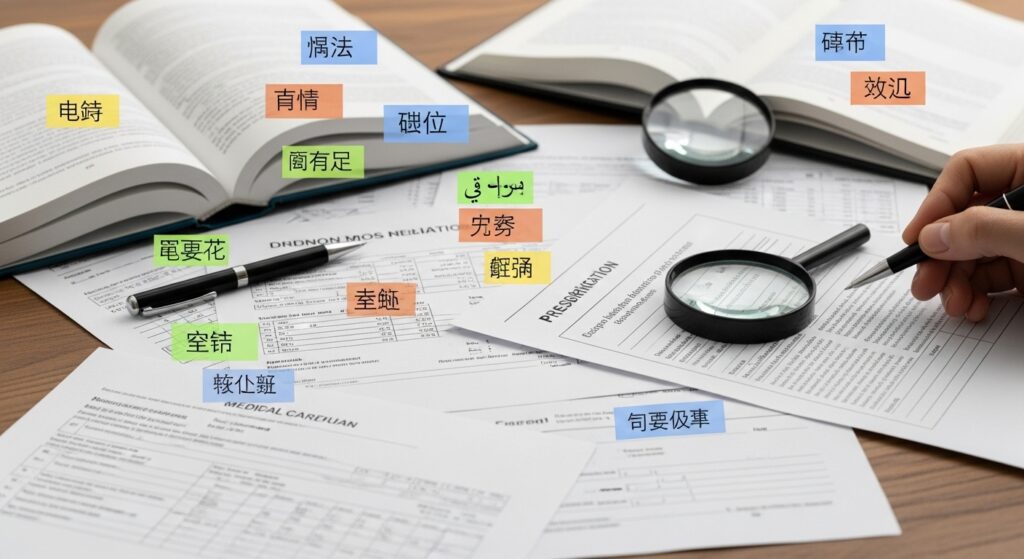
Professional medical records translation begins with comprehensive assessment of each document’s clinical significance and translation requirements. Qualified medical translators evaluate whether records require standard translation, certified translation, or sworn translation based on their intended use and regulatory requirements. This initial assessment ensures that translated medical records meet the specific needs of receiving healthcare providers.
Quality assurance procedures in medical records translation involve multiple review stages where different medical translation specialists examine documents for accuracy, consistency, and clinical appropriateness. Medical terminology databases, drug reference systems, and specialized software help maintain consistency across large medical record sets while human expertise ensures that nuanced medical concepts receive appropriate treatment.
Confidentiality protocols protect sensitive patient information throughout the medical records translation process. Professional medical translators sign comprehensive confidentiality agreements, use encrypted file transfer systems, and maintain strict data protection measures that comply with healthcare privacy regulations. These security measures become particularly important given the sensitive personal and medical information contained in healthcare records.
Clinical review coordination allows medical translation services to work with healthcare providers and medical consultants to verify that translations accurately convey clinical information. This collaboration ensures that medical records translation preserves both linguistic accuracy and clinical meaning, helping receiving healthcare providers make informed treatment decisions based on complete, accurate patient information.
Urgent care support addresses the immediate translation needs that arise in emergency medical situations. Professional services maintain resources for rapid turnaround of critical medical documents when patients require immediate care and language barriers could compromise treatment safety. These emergency services help ensure that patient care continuity remains uninterrupted even in crisis situations.
Accuracy Standards for Medical Records Translation in Healthcare Settings
Clinical accuracy represents the highest priority in medical records translation because patient safety depends on healthcare providers receiving precise, reliable information about patient conditions and treatment histories. Professional medical translators must understand not just medical terminology but also the clinical context that gives medical information its significance within different healthcare systems.
Terminology consistency becomes particularly important when translating large sets of medical records where the same conditions, medications, or procedures appear multiple times. Professional medical translation services maintain specialized medical glossaries and pharmaceutical databases to ensure that specific terms receive consistent treatment throughout patient records. This consistency helps healthcare providers understand complex medical relationships without confusion from varying terminology.
Regulatory compliance standards vary between healthcare systems but consistently demand that translated medical records maintain their clinical validity while meeting local documentation requirements. Professional medical translators understand these regulatory frameworks and ensure that translated records comply with applicable healthcare standards, privacy requirements, and legal obligations.
Cultural adaptation addresses situations where medical practices, treatment approaches, or diagnostic criteria differ between healthcare systems. Medical records translation must accurately represent original medical information while providing context that helps receiving healthcare providers understand clinical significance within their own medical framework. This cultural adaptation helps ensure effective communication between different medical traditions.
Quality control measures typically involve multiple qualified medical translators examining each translation for accuracy, completeness, and clinical appropriateness. Back-translation procedures, where different translators convert translations back to original languages, help identify potential accuracy issues in complex medical content. These quality assurance processes help ensure that medical records translation meets the exacting standards required for patient safety.
Technology and Innovation in Medical Records Translation for Patient Care
Electronic health record (EHR) integration represents a growing area of innovation in medical records translation where translation services work directly with healthcare information systems to provide seamless access to translated patient information. These integrated systems help healthcare providers access translated medical records through their normal workflows without delays that could impact patient care decisions.
Medical terminology databases support accurate, consistent translation of specialized healthcare language by providing translators with comprehensive references for medical terms, drug names, and clinical procedures. These databases include information about regional variations in medical terminology and help ensure that translated records use language familiar to receiving healthcare providers.
Artificial intelligence tools assist professional medical translators by providing initial translation drafts and terminology suggestions, but human expertise remains essential for medical records translation. Medical language contains too many nuances, context-dependent meanings, and critical safety implications to rely solely on automated translation systems. Professional services use AI tools to support human translators while maintaining the clinical accuracy that patient safety requires.
Secure communication platforms enable real-time coordination between medical translators, healthcare providers, and medical consultants when complex translation questions arise. These platforms support rapid clarification of medical terminology, treatment protocols, or diagnostic criteria while maintaining the confidentiality protections required for medical information.
Mobile translation applications provide healthcare providers with immediate access to basic medical translation resources for urgent communication needs. While these tools cannot replace professional medical records translation for comprehensive patient care, they support basic communication in emergency situations where language barriers could delay critical treatment decisions.
Regulatory Requirements for Medical Records Translation Across Healthcare Systems
Healthcare privacy regulations impose strict requirements on medical records translation processes to protect patient confidentiality and ensure secure handling of sensitive medical information. HIPAA compliance in the United States requires specific safeguards for medical information handling, while GDPR regulations in Europe impose additional requirements for patient consent and data protection during translation processes.
Professional certification standards help establish translator qualifications for medical records translation work. Healthcare translation certifications from professional organizations, relevant medical education, and demonstrated experience with medical translation contribute to translator credibility. Healthcare institutions increasingly scrutinize medical translator qualifications to ensure patient safety.
Quality assurance documentation requirements mandate that medical translation services maintain detailed records of their quality control processes, reviewer qualifications, and accuracy verification procedures. Healthcare regulatory authorities may audit these quality assurance records to verify that medical records translation meets established safety standards.
International standards coordination becomes necessary when medical records translation involves healthcare systems in different countries with varying regulatory requirements. Professional medical translation services understand these international differences and ensure that translated records meet the standards expected by receiving healthcare institutions.
Liability considerations address the legal responsibilities that medical translators and translation services bear for the accuracy and safety of their medical records translation work. Professional services carry specialized medical translation insurance and maintain quality assurance procedures that help protect both patients and healthcare providers from the risks associated with translation errors.
Emergency Medical Records Translation for Critical Patient Care Continuity
Emergency room scenarios often require immediate access to translated medical records when patients arrive unconscious, unable to communicate, or with family members who don’t speak the local language. Medical records translation services maintain rapid response capabilities for these critical situations where delays in accessing patient medical histories could compromise treatment decisions and patient safety.
Critical medication information takes priority in emergency medical records translation because drug allergies, current medications, and contraindicated substances require immediate identification to prevent dangerous drug interactions. Emergency translation protocols focus on these safety-critical elements while ensuring that healthcare providers receive accurate information about patient medical conditions that could influence emergency treatment decisions.
International medical emergency coordination involves translating medical records and communication between healthcare providers in different countries when patients require medical evacuation or specialized treatment abroad. These situations require rapid, accurate translation of complex medical information while coordinating between medical teams who may use different treatment protocols and medical terminology.
Trauma care documentation requires immediate translation when accident victims from other countries arrive at emergency facilities with medical records that could influence treatment decisions. Previous surgeries, implanted devices, chronic conditions, and medication histories all impact trauma treatment approaches, making accurate medical records translation essential for optimal patient outcomes.
Family communication support helps healthcare providers communicate with patient families who speak different languages, ensuring that medical decision-making includes appropriate family input while maintaining patient confidentiality requirements. Medical records translation services often provide interpretation services alongside document translation to support comprehensive patient care coordination.
Chronic Disease Management Through Medical Records Translation
Long-term care coordination requires comprehensive medical records translation to ensure that patients with chronic conditions receive consistent, appropriate care when they move between healthcare providers or healthcare systems. Diabetes management plans, cardiac treatment protocols, and medication regimens must be accurately translated to maintain treatment effectiveness and prevent dangerous interruptions in care.
Specialist consultation records require precise medical records translation because complex medical conditions often involve multiple specialists who need access to complete patient information. Cardiology reports, oncology treatment summaries, and neurological assessments contain highly specialized terminology that requires expert medical translation to ensure accurate communication between healthcare providers.
Treatment history documentation helps healthcare providers understand the progression of chronic conditions and the effectiveness of previous interventions. Medical records translation of these historical documents prevents unnecessary repetition of failed treatments and supports evidence-based decisions about future care approaches.
Medication management becomes particularly complex in medical records translation for chronic disease patients because drug names, dosages, and availability vary between countries. Professional medical translators work with pharmacists and healthcare providers to identify equivalent medications and ensure safe transitions between different pharmaceutical systems.
Quality of life assessments and patient-reported outcomes require careful medical records translation because cultural differences may influence how patients describe symptoms or treatment effects. Professional medical translators understand these cultural nuances and work to ensure that patient perspectives are accurately communicated to receiving healthcare providers.
Choosing Professional Services for Medical Records Translation
Medical translator qualifications should be the primary consideration when selecting services for medical records translation. Look for translators with specific medical translation experience, relevant healthcare education, and professional certifications in medical translation. Experience with your specific medical specialty—cardiology, oncology, pediatrics, or mental health—provides additional value for accurate translation of specialized medical content.
Healthcare compliance capabilities vary between translation services, and not all providers can meet the strict confidentiality and security requirements that medical records translation demands. Ensure that your chosen service maintains HIPAA compliance, appropriate data security measures, and staff training in healthcare privacy requirements. Services like Directline Translators maintain specialized healthcare translation capabilities that meet medical industry standards.
Emergency response capabilities become important for medical translation services because healthcare needs don’t follow normal business schedules. Professional services maintain staffing and resources to handle urgent medical translation requests when patient care continuity depends on immediate access to translated medical records.
Quality assurance procedures deserve careful evaluation because patient safety depends on accurate medical records translation. Professional medical translation services maintain multi-stage review processes, medical terminology databases, and clinical review capabilities that help ensure translation accuracy for complex medical content.
Communication standards become important for medical translation projects because healthcare providers need timely updates on translation progress and immediate notification of any questions that arise during the translation process. Professional services provide direct access to medical translation specialists who can address clinical questions quickly and accurately.
Cost Considerations and Value in Medical Records Translation for Patient Care
Investment in professional medical records translation represents a critical component of patient safety and quality healthcare delivery. While medical translation typically costs more than general translation due to specialized expertise and stringent quality requirements, the value provided through accurate, reliable medical communication far exceeds the investment when measured against potential consequences of translation errors in healthcare settings.
Emergency translation premiums reflect the additional resources required to provide rapid medical records translation without compromising accuracy or patient safety. Healthcare emergencies often require immediate translation support, and professional services maintain specialized capabilities to respond quickly to these critical needs while preserving the quality standards that patient safety requires.
Volume considerations may provide cost advantages for healthcare institutions that regularly require medical records translation services. Hospitals, specialty clinics, and healthcare systems often benefit from establishing ongoing relationships with professional medical translation providers who understand their specific needs and can provide consistent, reliable service for their patient populations.
Value assessment should focus on the clinical accuracy, regulatory compliance, and patient safety measures that professional medical translation services provide rather than simply comparing basic pricing. The stakes involved in medical records translation justify investing in services that provide the expertise, reliability, and quality assurance that patient safety demands.
Long-term partnership benefits emerge when healthcare providers work with established medical translation services that understand their patient populations, medical specialties, and operational requirements. These ongoing relationships support more effective medical records translation through familiarity with institutional preferences and accumulated expertise in relevant medical areas.
Medical records translation serves as the foundation for maintaining patient care continuity in our globalized healthcare environment. Professional medical translation services like Directline Translators understand that medical translation work requires specialized expertise in both medical terminology and healthcare systems, combined with unwavering commitment to patient safety and confidentiality. The investment in professional medical records translation ensures that language barriers never compromise patient care, treatment decisions, or health outcomes. Whether supporting emergency care, chronic disease management, or routine medical services, expert medical translation maintains the communication foundation that effective healthcare requires across all language and cultural boundaries.
Frequently Asked Questions About Medical Records Translation
1. What makes medical records translation different from other types of translation? Medical records translation requires specialized knowledge of medical terminology, healthcare systems, and regulatory requirements that general translators don’t possess. Medical translators must understand clinical context, patient safety implications, and healthcare privacy laws while maintaining absolute accuracy that patient care depends upon.
2. How quickly can medical records be translated for emergency situations? Professional medical translation services maintain emergency response capabilities for critical patient care situations. Simple records like medication lists or allergy information can often be translated within hours, while complex medical histories may require 24-48 hours even under urgent circumstances.
3. Are medical record translations legally accepted by healthcare providers? Healthcare providers generally accept professional medical record translations, though some institutions may require specific certification or formatting. Professional services ensure their translations meet healthcare industry standards and regulatory requirements for medical documentation.
4. Can I use online translation tools for medical records? Online translation tools are completely inadequate for medical records translation due to patient safety risks. Medical terminology requires specialized expertise, and translation errors in medical records could lead to dangerous treatment decisions. Always use qualified medical translation professionals.
5. What information do medical translators need to maintain confidentiality? Professional medical translators follow strict confidentiality protocols including HIPAA compliance, secure file handling, and limited access procedures. They sign comprehensive confidentiality agreements and use encrypted systems to protect sensitive patient information throughout the translation process.
6. How much does professional medical records translation cost? Costs vary based on document complexity, medical specialty, language pair, and urgency. Medical translation typically costs more than general translation due to specialized expertise and quality requirements, but this investment protects patient safety and ensures accurate healthcare communication.
7. Do different countries accept the same medical record translations? Medical record translation requirements vary between countries and healthcare systems. Professional services understand these international differences and ensure that translations meet the specific standards expected by receiving healthcare institutions and regulatory authorities.
8. Can the same translator handle all types of medical records? Medical translation often benefits from specialization in specific healthcare areas. Cardiology, oncology, pediatrics, and other medical specialties each have their own terminology and procedures. Professional services match translators with appropriate medical expertise to ensure accurate translation of specialized content.
9. What happens if there’s an error in medical record translation? Medical translation errors can have serious patient safety implications, which is why professional services maintain comprehensive quality assurance procedures and carry specialized medical translation insurance. Multi-stage review processes help prevent errors before translations reach healthcare providers.
10. How do medical translators handle medications that don’t exist in other countries? Professional medical translators maintain pharmaceutical databases and work with healthcare providers to identify equivalent medications or provide detailed explanations when direct equivalents don’t exist. This ensures safe medication transitions while preserving treatment effectiveness across different healthcare systems.