
 Elizabeth123
Translation Africa delivers specialized medical translation services in Ethiopia, ensuring accurate and culturally sensitive handling of healthcare documents, interpretations, and materials across languages like Amharic, Oromo, and Somali. Certified linguists with medical expertise prevent miscommunications, enhance patient safety, and comply with international standards for confidentiality. Their tailored solutions bridge linguistic divides in diverse settings. This introduction opens pathways to explore advanced tools, benefits, and provider selection strategies.
Quick Summaries
- Medical translation services in Ethiopia provide accurate translation of healthcare documents like patient records and prescriptions.
- Translation Africa offers certified linguists with medical expertise for precise and confidential services in languages such as Amharic and Oromo.
- These services include real-time interpretation for consultations, emergencies, and patient interactions to bridge language barriers.
- Providers ensure compliance with international standards like HIPAA equivalents for data security and quality assurance.
- Advanced tools, including CAT and AI, are used to enhance consistency, speed, and cultural adaptation in medical translations.
Importance of Accurate Medical Translations in Ethiopia
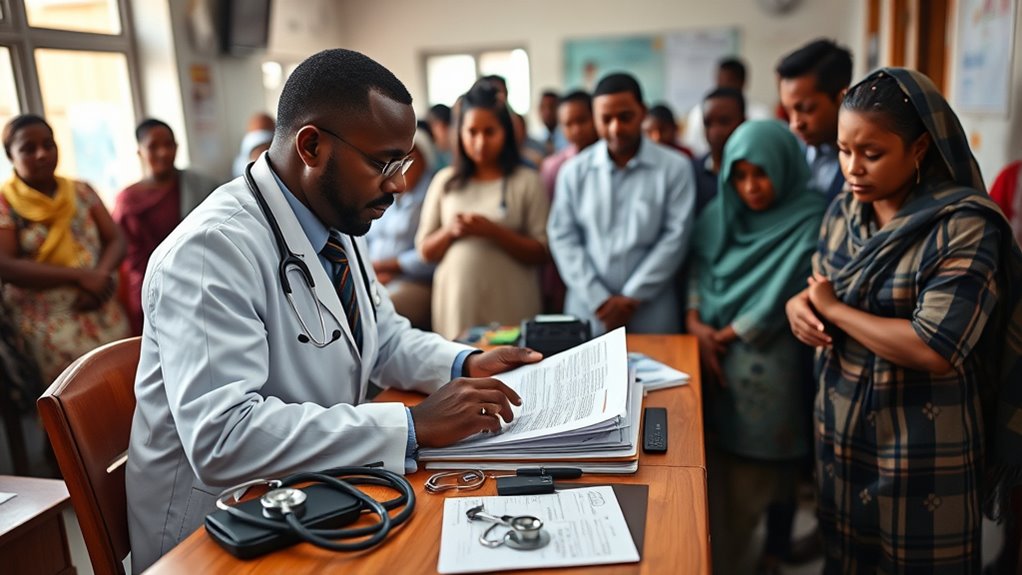
Accurate medical translations are essential in Ethiopia, where linguistic diversity among its population can lead to critical miscommunications in healthcare settings. Ethiopia’s over 80 languages and dialects create significant barriers, potentially causing misdiagnoses, incorrect treatments, or delayed care. For instance, errors in translating symptoms or medication instructions can exacerbate health conditions, leading to increased morbidity and mortality rates. Accurate translations enable clear doctor-patient interactions, ensuring patients understand their illnesses, consent to procedures, and follow treatment regimens effectively. This clarity reduces medical errors, enhances patient safety, and supports equitable healthcare access across diverse communities. In a country with varying literacy levels, precise translations bridge gaps, fostering better health education and preventive measures, ultimately improving overall public health outcomes.
Services Offered by Translation Africa for Healthcare
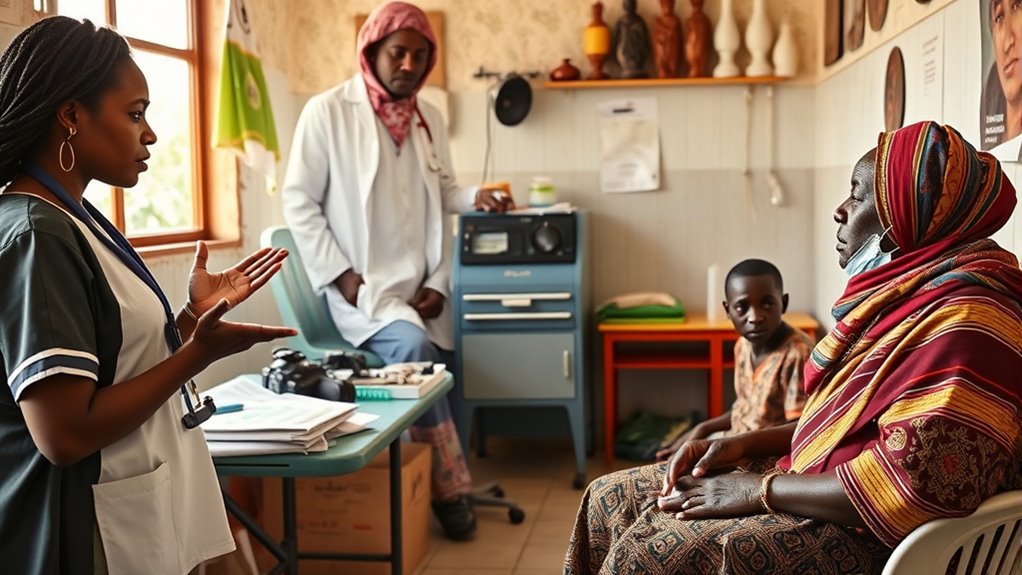
Translation Africa offers a range of services tailored for healthcare in Ethiopia, including medical document translation to guarantee accuracy in critical communications. The company also provides healthcare interpretation services, facilitating real-time language support in medical settings. Additionally, language localization options help adapt materials to cultural and regional contexts for better effectiveness.
Medical Document Translation
In Ethiopia’s healthcare landscape, Translation Africa delivers specialized medical document translation services that guarantee effective communication across languages. These services focus on accurate, culturally sensitive translations of essential healthcare materials, employing certified linguists with medical expertise to maintain precision and confidentiality. By prioritizing quality, Translation Africa supports Ethiopia’s medical sector in bridging language gaps effectively.
- Accurate Translation of Documents: Handles patient records, prescriptions, and clinical reports with meticulous attention to medical terminology for error-free results.
- Compliance and Security: Guarantees translations adhere to international standards like HIPAA, safeguarding sensitive data through secure processes.
- Customized Solutions: Offers tailored services for various formats, including digital and printed materials, to meet specific healthcare needs efficiently.
Healthcare Interpretation Services
Healthcare interpretation services from Translation Africa enable real-time language support in Ethiopia’s medical settings, deploying trained professionals to guarantee precise and culturally attuned communication during consultations, emergencies, and patient interactions. These experts, fluent in languages such as Amharic, Oromo, and Somali, handle in-person, over-the-phone, and video interpretations, bridging gaps for non-native speakers in diverse healthcare environments. By prioritizing accuracy and confidentiality, Translation Africa guarantees interpreters undergo rigorous medical training and cultural sensitivity programs, reducing miscommunication risks and enhancing patient trust. This support extends to hospitals, clinics, and public health initiatives, facilitating smoother doctor-patient exchanges and improving overall care quality. Furthermore, services adhere to international standards like HIPAA equivalents, promoting ethical practices that safeguard sensitive information while boosting healthcare accessibility across Ethiopia’s regions.
Language Localization Options
Building on interpretation services, Translation Africa delivers language localization options that adapt healthcare materials for Ethiopia’s diverse linguistic groups. These services focus on culturally sensitive translations, ensuring medical content aligns with local customs, dialects, and contexts to enhance accessibility and effectiveness in healthcare delivery. By integrating expert linguists and cultural consultants, Translation Africa bridges language barriers, promoting better patient understanding and trust.
- Document Adaptation: Translates and customizes medical forms, brochures, and guidelines into languages like Amharic or Oromo, incorporating regional idioms for clarity.
- Digital Localization: Adapts healthcare apps and software interfaces to local preferences, ensuring intuitive navigation and culturally relevant terminology.
- Training Customization: Tailors educational programs for providers, emphasizing cultural nuances to improve communication and reduce misunderstandings.
Benefits of Professional Translators in Medical Fields

Professional translators in medical fields provide enhanced accuracy by ensuring precise interpretation of technical terms and patient information. This accuracy minimizes errors that could compromise treatment effectiveness. Consequently, improved safety results from clear communication, reducing risks in healthcare settings in Ethiopia.
Enhanced Accuracy
In medical contexts, accuracy in translations can prevent critical errors that jeopardize patient safety. Professional translators greatly enhance this through their expertise, ensuring precise conveyance of complex medical information. Their specialized training allows for meticulous handling of terminology, reducing misunderstandings in diagnostics and treatments.
- Expertise in Medical Terminology: Translators with medical backgrounds accurately interpret and translate specialized terms, avoiding ambiguities.
- Rigorous Quality Checks: They employ proofreading and peer reviews to catch subtle errors, maintaining high fidelity in translations.
- Cultural Adaptation: Professionals adapt content to cultural nuances, ensuring concepts are accurately understood in Ethiopia’s diverse linguistic landscape.
This focus on accuracy bolsters reliable communication in healthcare settings. (124 words)
Improved Safety
How do professional translators enhance safety in medical settings? They bridge language barriers, guaranteeing accurate conveyance of critical information during consultations, diagnoses, and treatments. This precision prevents misinterpretations that could lead to errors, such as incorrect medication dosages or delayed interventions, ultimately safeguarding patient outcomes. Professional translators also uphold confidentiality and cultural nuances, fostering trust and compliance in diverse Ethiopian healthcare contexts.
To illustrate the impact, consider the following comparison:
| Potential Safety Risk | Benefit Provided by Translators |
|---|---|
| Miscommunication in emergencies | Enables rapid, accurate responses |
| Errors in patient instructions | Delivers clear, precise guidance |
| Cultural misunderstandings | Promotes culturally sensitive care |
| Data breaches or confusion | Guarantees secure and confidential exchanges |
Ensuring Quality in Medical Document Translation
Guaranteeing the accuracy of medical document translations is essential in Ethiopia, where misinterpretations can lead to serious health risks. Quality assurance involves rigorous processes to prevent errors in critical documents like patient records and clinical trials. Translation services in Ethiopia prioritize expertise and adherence to international standards to safeguard public health.
- Certified Translators: Only use professionals with medical backgrounds and language certifications to guarantee precise terminology.
- Quality Control Protocols: Implement multi-step reviews, including initial translation, editing, and final proofreading by experts.
- Technology Integration: Employ translation management systems and glossaries to maintain consistency and reduce human error in specialized texts.
This approach minimizes risks, enhancing reliability in Ethiopia’s healthcare sector. (124 words)
Industries That Rely on Medical Translation Services
Several industries in Ethiopia depend on medical translation services to facilitate accurate communication in healthcare settings. The healthcare sector itself, including hospitals and clinics, relies on these services to translate patient records, consent forms, and treatment instructions, ensuring effective care for diverse linguistic groups. Pharmaceutical companies utilize translations for drug packaging, clinical trial documents, and regulatory submissions, maintaining safety and compliance. Government health agencies and NGOs depend on accurate translations for public health campaigns, vaccination programs, and emergency responses, reaching remote or multilingual communities. Additionally, research institutions and educational bodies require translations for medical studies, training materials, and international collaborations, fostering innovation and knowledge sharing. Insurance firms also benefit from these services for policy documents and claims processing, streamlining operations in a multicultural environment. This support enhances overall healthcare accessibility and efficiency across Ethiopia.
Cultural Considerations for Healthcare Translations
Cultural considerations greatly shape healthcare translations in Ethiopia, where diverse ethnic traditions and languages demand sensitivity to avoid misinterpretations. In this multilingual nation, translators must account for cultural nuances like beliefs in traditional healing practices, which can influence patient trust and compliance. Effective translations require adapting medical terminology to align with local customs, ensuring messages resonate without causing offense or confusion.
- Respect cultural taboos: Avoid terms that might imply disrespect, such as those related to spiritual beliefs in illness causation.
- Incorporate gender dynamics: Consider roles where women may need female translators for sensitive topics like reproductive health.
- Adapt to communication styles: Recognize indirect speech patterns in some ethnic groups to prevent misunderstandings in medical advice.
Technology and Tools in Medical Translation
Advancements in technology are reshaping medical translation in Ethiopia, offering tools that enhance efficiency alongside cultural adaptations. Computer-aided translation (CAT) software streamlines processes by managing terminology and ensuring accuracy in healthcare documents. Machine translation, powered by AI, accelerates large-scale projects while integrating local dialects for better comprehension. These innovations reduce errors and support real-time collaboration among professionals.
| Technology Tool | Key Benefits |
|---|---|
| CAT Tools | Improves consistency and speed |
| Machine Translation | Enables rapid processing |
| AI-Driven Systems | Enhances adaptability to contexts |
| Terminology Databases | Maintains medical accuracy |
| Integration Platforms | Facilitates seamless workflows |
Selecting the Right Translation Provider in Ethiopia
Choosing the right translation provider in Ethiopia requires careful evaluation of factors such as expertise in medical terminology, cultural sensitivity, and technological capabilities to guarantee accurate and reliable services. In Ethiopia’s diverse linguistic landscape, providers must handle languages like Amharic and Oromo while adhering to strict medical standards. This process minimizes risks in healthcare delivery, guaranteeing translations support patient safety and effective communication across regions.
Selecting a provider involves key considerations:
- Expertise in medical terminology: Providers should have certified translators with backgrounds in healthcare to accurately convey complex terms, avoiding misinterpretations that could affect treatment outcomes.
- Cultural sensitivity: The team must understand Ethiopia’s cultural contexts, such as local beliefs and traditions, to deliver translations that resonate and prevent cultural misunderstandings in medical settings.
- Technological capabilities: Advanced tools like AI-assisted platforms guarantee efficiency, data security, and real-time collaboration, enhancing the overall quality of translations in fast-paced environments.
Frequently Asked Questions
How Much Do Medical Translations Cost?
The cost of medical translations varies based on factors like word count, language pair complexity, and expertise required. Rates typically range from $0.10 to $0.30 per word, with additional charges for rush jobs or specialized terminology, averaging $100 to $500 per document.
What Is the Typical Turnaround Time?
The typical turnaround time for translation projects varies based on factors like document length, complexity, and service demands. For standard assignments, it often ranges from 24 to 72 hours, while larger or specialized tasks may take several days to a week.
Which Languages Do You Support?
The question pertains to the languages supported by the translation service. It offers a wide array, including English, French, Arabic, Amharic, Oromo, Tigrinya, Somali, Swahili, and numerous other African and international languages.
Do You Offer Rush Translation Services?
The query regarding rush translation services is pertinent, as many seek expedited options. Such services are indeed offered, providing accelerated processing for urgent needs while ensuring accuracy and quality in deliverables. This meets time-sensitive demands effectively.
How Can I Request a Quote?
The current query concerns how to request a quote. Individuals can do so by visiting the company’s website, completing the online form, emailing project details to the designated address, or calling the support line for assistance.

