
 Elizabeth123
In Kenya’s diverse linguistic environment, multilingual customer support translation services from Translation Africa bridge communication gaps across languages like Swahili, English, and French, fostering trust and efficiency in business interactions. These services enhance access to education, healthcare, and economic opportunities while reducing errors through cultural sensitivity and advanced tools. By promoting accurate, context-aware renditions, they boost customer satisfaction and long-term savings. Additional strategies and implementations build on these foundations for broader success.
Quick Summaries
- Multilingual support in Kenya enhances customer service by bridging language barriers across diverse ethnic groups.
- Key languages like Swahili, English, and French are vital for effective customer support in African markets.
- Accurate translations integrate cultural context to ensure precise and culturally sensitive communications.
- Cultural elements, such as greetings and indirect speech, are incorporated into support workflows for better engagement.
- Advanced tools, including AI translation software, facilitate seamless multilingual interactions in African businesses.
Importance of Multilingual Support in Kenya

In Kenya’s linguistically diverse landscape, multilingual support is essential for bridging communication gaps among over 40 ethnic languages, enhancing social cohesion, and promoting equitable access to education, healthcare, and economic opportunities. This support fosters cultural preservation by enabling communities to maintain their heritage while participating in national discourse. Language barriers often hinder rural populations from engaging with government services, making multilingual initiatives vital for inclusive governance. For instance, in schools, it guarantees that non-dominant language speakers can learn effectively, reducing dropout rates. In healthcare, clear communication saves lives by improving patient understanding of treatments. Economically, it empowers marginalized groups to participate in trade and employment, driving sustainable development. Overall, multilingual support underpins Kenya’s democratic fabric, preventing exclusion and fostering mutual respect among diverse groups.
Benefits of Professional Translation Services

Professional translation services greatly amplify multilingual efforts in Kenya by delivering accurate, culturally attuned renditions that facilitate seamless communication across diverse linguistic groups. These services enhance customer satisfaction through precise interpretations that avoid costly errors, fostering trust and loyalty. Businesses gain a competitive edge by ensuring materials are contextually appropriate, which supports effective marketing and operational efficiency. Furthermore, professional translators adhere to industry standards, safeguarding confidentiality and compliance with local regulations. This leads to long-term cost savings, as high-quality translations reduce rework and mitigate risks of miscommunication. Ultimately, such services empower organizations to navigate Kenya’s multicultural landscape, driving growth and inclusivity while minimizing barriers to engagement.
Common Languages for Customer Support in Africa
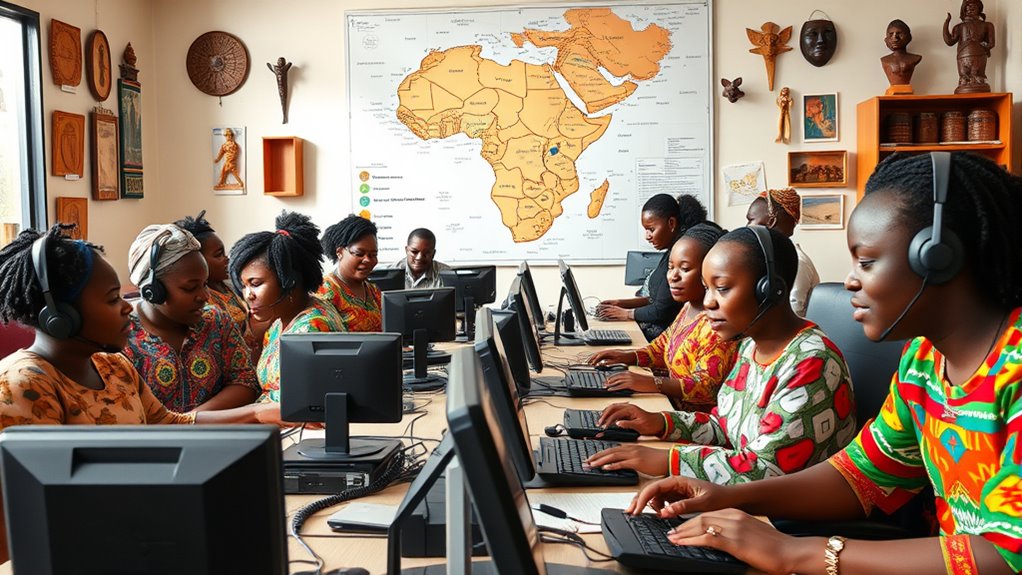
In customer support across Africa, major languages such as Swahili and Arabic serve as essential tools for effective communication. These languages enable businesses to reach broad audiences in key regions. Widespread regional tongues, like Hausa and Zulu, also enhance accessibility and cultural relevance in localized interactions.
Major African Languages
Africa boasts a rich array of major languages that serve as essential tools for customer support across the continent. Among these, Swahili stands out as a lingua franca in East Africa, facilitating seamless interactions in countries like Kenya and Tanzania, where it bridges diverse ethnic groups. English, as a legacy of colonial history, remains dominant in business and tech sectors, enabling global companies to engage multilingual audiences effectively. French is essential in West and Central Africa, supporting customer service in nations such as Senegal and the Democratic Republic of Congo. Arabic plays an essential role in North Africa, particularly in Egypt and Morocco, where it aids in commerce and support queries. Portuguese supports interactions in Angola and Mozambique, ensuring inclusive communication. These languages enhance accessibility, build trust, and drive customer satisfaction by addressing linguistic diversity in support operations.
Widespread Regional Tongues
Several widespread regional tongues, such as Swahili in East Africa and Hausa in West Africa, play a crucial role in customer support by bridging linguistic gaps and enhancing accessibility for diverse populations. These languages, including Amharic in the Horn of Africa and Yoruba in Nigeria, enable businesses to connect with millions, fostering trust and efficiency. For instance, Swahili’s widespread use across Kenya, Tanzania, and Uganda allows seamless interactions in local contexts, while Hausa facilitates engagement in Nigeria and beyond. By prioritizing these tongues, companies reduce misunderstandings and boost satisfaction rates. In Africa’s multilingual landscape, such languages are essential for inclusive services, supporting economic growth and cultural sensitivity. Translation services further amplify their impact, ensuring accurate communication in real-time support scenarios. Ultimately, embracing these regional languages strengthens customer loyalty and expands market reach across the continent.
How Translation Africa Enhances Business Operations
Translation Africa plays a pivotal role in streamlining business operations across Kenya by providing accurate multilingual services that bridge communication gaps in diverse markets. By facilitating seamless interactions, it boosts efficiency in customer support, enabling quicker resolutions and higher satisfaction rates. This leads to expanded market access, as businesses can engage with varied linguistic groups effectively. Additionally, Translation Africa’s expertise reduces operational costs through precise translations that minimize errors and rework, fostering sustainable growth.
| Benefit Area | Business Challenge | Enhancement by Translation Africa |
|---|---|---|
| Customer Support | Language Barriers | Faster, accurate responses |
| Marketing Strategies | Cultural Misunderstandings | Targeted, localized campaigns |
| Internal Operations | Communication Breakdowns | Streamlined team collaborations |
| Overall Growth | Market Entry Obstacles | Increased reach and compliance |
Strategies for Accurate Language Translation
Effective strategies for accurate language translation in Kenya include integrating cultural context to guarantee meanings resonate with local audiences. This approach helps translators avoid misinterpretations that could arise from cultural nuances. Additionally, adopting proofreading best practices, such as multiple reviews and expert feedback, enhances the overall quality and reliability of translations.
Cultural Context Integration
Integrating cultural context into language translation requires translators to navigate Kenya’s diverse ethnic landscapes, where nuances like idioms and traditions can alter meanings profoundly. Translators must conduct thorough cultural research, immersing themselves in local customs and histories to capture authentic intent. For example, in Kikuyu or Luo languages, proverbs often carry symbolic layers that direct translations might overlook, potentially leading to misunderstandings in customer support. Effective strategies include collaborating with native experts and using context-aware glossaries to adapt content sensitively. This guarantees translations respect taboos and social norms, fostering trust and engagement. In multilingual settings, such as Swahili-English interactions, aligning language with cultural values prevents offense and enhances clarity, ultimately improving communication efficacy across Kenya’s varied communities.
Proofreading Best Practices
Proofreading enhances the precision of language translations by identifying errors in grammar, vocabulary, and context. Effective strategies include employing native speakers for cultural accuracy, ensuring familiarity with regional dialects in Kenya and Africa. Translators should use specialized tools like CAT software to detect inconsistencies and suggest improvements. A multi-step process is essential: first, a preliminary review for basic errors; second, peer collaboration for cross-verification; and third, a final read-through focusing on flow and intent. Consistency in terminology across documents maintains brand integrity in multilingual customer support. Time management is key; allocate sufficient periods for revisions to avoid rushed work. Ultimately, these practices minimize misunderstandings, enhancing global communication reliability in translation services.
Cultural Aspects in Customer Interactions
Cultural aspects profoundly shape customer interactions in Kenya’s multilingual translation services, where diverse ethnic traditions and communication norms can either facilitate or hinder effective engagement. In Kenya, with over 40 ethnic groups, translators must navigate subtleties like indirect speech in Luo culture or the emphasis on community consensus in Kikuyu interactions. This awareness fosters trust and reduces misunderstandings, enhancing service quality. By integrating cultural knowledge, providers guarantee interactions are respectful and productive.
- Tribal greetings: Visualizing a translator exchanging elaborate Swahili salutations to establish rapport, mirroring Kenya’s communal warmth.
- Non-verbal cues: Envisioning subtle gestures, like avoiding direct eye contact in respectful Masai exchanges, to convey deference.
- Storytelling elements: Picturing the use of proverbs in Luhya conversations, painting vivid narratives that bridge cultural gaps.
- Hierarchical respect: Imagining deference to elders in a Kikuyu dialogue, where tone and posture reflect social structures for harmonious outcomes.
Integrating Translation Into Daily Support Workflows
Seamlessly incorporating translation into daily support workflows enables Kenyan organizations to address linguistic barriers efficiently. This integration streamlines customer interactions by embedding language support into routine processes, such as query handling and follow-ups, ensuring timely and accurate responses. Support teams can adopt protocols that prioritize real-time language adaptation, like assigning bilingual agents or incorporating simple verification steps during engagements. By normalizing translation as a core element, organizations reduce miscommunications and enhance overall service delivery. This approach not only boosts operational efficiency but also builds trust with diverse clientele. In Kenya’s multilingual context, such workflows promote inclusivity, leading to higher satisfaction and loyalty. Ultimately, consistent integration empowers businesses to navigate linguistic diversity as a strength, fostering long-term growth without disrupting daily operations.
Tools and Technology for Efficient Translations
In Kenya’s diverse linguistic landscape, innovative tools and technologies are essential for streamlining translations and overcoming communication barriers. Advanced machine translation software, such as neural networks, enables rapid and accurate language conversion, reducing errors in customer interactions. Computer-assisted translation (CAT) tools enhance productivity by managing glossaries and memory databases, while integration with AI chatbots guarantees seamless real-time support. These technologies foster efficiency without compromising cultural nuances.
- AI-powered interfaces visualize instant language shifts, like a digital bridge connecting Swahili and English speakers in a bustling call center.
- Cloud-based platforms depict collaborative editing sessions, where teams refine translations across devices in remote Kenyan offices.
- Mobile translation apps imagine field agents using handheld devices to decode local dialects during on-site customer engagements.
- Integration APIs portray automated workflows, where support systems fluidly translate queries in real-time, minimizing delays.
Case Studies of Successful Implementations
The article now examines case studies of successful implementations in multilingual translation within Kenya. Key examples include Kenya-specific initiatives and broader African translation efforts. These sector success stories demonstrate effective strategies across various contexts.
Kenya Implementation Examples
Kenya’s multilingual translation initiatives have yielded notable successes, as evidenced by case studies highlighting effective implementations in education, healthcare, and government sectors. In education, translated curricula have bridged language gaps for diverse learners, boosting literacy rates. Healthcare programs have utilized accurate translations to enhance patient-doctor communication, reducing misdiagnoses. Government services have adopted multilingual platforms, improving public access and trust. These efforts demonstrate practical benefits in fostering inclusivity.
- Education Scene: Classrooms buzzing with students engaging Swahili and English materials, fostering confident participation.
- Healthcare Setting: Doctors consulting via translated apps, easing anxiety for rural patients during consultations.
- Government Office: Citizens using multilingual forms seamlessly, with officials assisting in local dialects for efficient service.
- Community Impact: Villages alive with translated announcements, uniting diverse groups in public meetings for shared progress.
African Translation Cases
Across Africa, successful case studies illustrate the impact of multilingual translation initiatives in diverse sectors. In Rwanda, a digital health program translated materials into Kinyarwanda, resulting in increased community participation and better health outcomes. Similarly, in Nigeria, e-commerce platforms adopted local language support, enhancing user trust and sales. These examples highlight how precise translations overcome linguistic divides, enabling smoother interactions and broader accessibility. In Ethiopia, educational tools in Amharic and Oromo languages improved learning rates among non-English speakers. Such initiatives not only boost efficiency but also promote cultural inclusivity, as seen in Ghana’s government services translations that reduced administrative barriers. Overall, these African cases emphasize the strategic role of translation in driving sustainable development and equitable communication.
Sector Success Stories
In Kenya, innovative multilingual translation efforts across sectors like health and education have greatly enhanced accessibility and engagement. These initiatives have fostered better outcomes by bridging language barriers, enabling more effective communication and participation. Successful case studies demonstrate how tailored translations have transformed services, improving user experiences and operational efficiency.
- Health Sector Example: A rural clinic distributes translated pamphlets on malaria prevention, allowing patients to understand symptoms and treatments in their native languages, vividly reducing misinformation.
- Education Initiative: Teachers in primary schools use multilingual textbooks, painting images of enthusiastic students grasping complex concepts like math in Swahili or local dialects.
- Community Outreach Story: Translated mobile apps deliver agricultural advice, envisioning farmers visualizing crop rotation techniques in their mother tongues for better yields.
- Policy Implementation Scene: Government workshops employ real-time translation, depicting officials and citizens collaboratively discussing policies, fostering inclusive decision-making.
Training Customer Support Teams for Multilingual Environments
Training customer support teams for multilingual environments demands targeted strategies to handle diverse languages and cultural nuances effectively, ensuring seamless interactions in regions like Kenya. Effective training begins with thorough language programs, focusing on key languages such as Swahili, English, and regional dialects to build fluency and accuracy. Cultural sensitivity workshops emphasize understanding local customs, social norms, and communication styles, preventing misinterpretations that could erode trust. Interactive role-playing scenarios simulate real-world customer exchanges, allowing teams to practice empathy and adaptability. Integration of translation technologies, like AI-driven tools, supports quick learning and error reduction. Ongoing mentorship from multilingual experts reinforces skills, fostering a dynamic team capable of delivering high-quality support. This holistic approach enhances customer engagement and loyalty in diverse settings.
Measuring Effectiveness of Translation Efforts
Measuring the effectiveness of translation efforts in multilingual settings like Kenya requires clear metrics to assess accuracy, cultural appropriateness, and overall impact. Organizations can use tools such as error rate analysis, user feedback mechanisms, and performance benchmarks to evaluate translations. This guarantees that customer support remains reliable and resonant across diverse languages, ultimately enhancing trust and communication.
- A customer survey reveals seamless interactions, with users praising accurate Swahili responses that feel naturally idiomatic.
- Analysts review feedback loops, picturing agents adapting translations to avoid cultural missteps, like respecting local proverbs.
- Real-time dashboards display error metrics, evoking images of declining inaccuracies in live chats for improved clarity.
- Impact reports illustrate boosted engagement, imagining satisfied customers returning due to precise, contextually aware support.
Cost-Effective Solutions for Businesses
Businesses in Kenya operating in multilingual environments frequently adopt cost-saving strategies to optimize translation processes. Budget-efficient options enable firms to access quality services without exceeding financial limits. Value-driven implementations further guarantee that these approaches deliver measurable returns on investment.
Cost-Saving Strategies
In Kenya, multilingual translation presents opportunities for businesses to adopt cost-saving strategies that enhance efficiency and reduce expenses. By integrating innovative tools and practices, companies can minimize operational costs while maintaining high-quality service. For instance, leveraging technology and local resources allows firms to streamline translation processes, avoiding unnecessary expenditures on premium services.
- Automated tools in action: Visualize a bustling Kenyan office where AI-driven software instantly translates customer inquiries, freeing staff for core tasks and slashing processing time.
- Staff training scenarios: Picture employees in lively workshops mastering multiple languages, transforming them into versatile assets that eliminate outsourcing needs.
- Local partnerships depicted: Envision collaborations with Kenyan linguists in vibrant markets, where cost-effective expertise flows seamlessly, reducing travel and agency fees.
- Process optimization imagery: Imagine streamlined workflows in a modern call center, with real-time translations unfolding like a well-orchestrated dance, cutting delays and errors. (124 words)
Budget-Efficient Options
Exploring budget-efficient options empowers Kenyan businesses to implement cost-effective solutions for multilingual translation, minimizing expenses while sustaining quality. Businesses can leverage affordable freelance platforms, connecting with local linguists who offer competitive rates for accurate translations in Swahili, English, and other regional languages. Additionally, cost-saving tools like AI-powered software enable efficient handling of routine tasks, reducing reliance on expensive human resources without compromising accuracy. Strategic partnerships with African translation agencies provide scalable services, such as bulk discounts or shared resources, allowing firms to manage budgets effectively. By prioritizing these options, companies maintain operational efficiency and customer satisfaction in multilingual support, ensuring long-term competitiveness in Kenya’s diverse market.
Value-Driven Implementations
Value-driven implementations in multilingual translation enable Kenyan businesses to maximize returns on investment through targeted, cost-effective strategies. By integrating scalable tools and local expertise, companies optimize resource allocation, minimizing expenses while maintaining high-quality service delivery. This method focuses on measurable outcomes, such as enhanced customer engagement and operational efficiency, ensuring sustainable growth in diverse markets.
- Seamless language shifts: Visualize a Kenyan call center where agents fluidly switch dialects, turning complex queries into resolved interactions effortlessly.
- Efficient resource use: Picture streamlined workflows where AI-driven tools cut translation costs, freeing budgets for market expansion.
- Cultural precision: Imagine tailored content resonating with diverse audiences, like Swahili ads capturing local nuances to boost brand loyalty.
- Long-term scalability: Envision businesses scaling operations, with modular services adapting to growth, like a network of translators supporting e-commerce surges.
Partnering With Local Translation Experts
Partnering with local translation experts in Kenya strengthens multilingual efforts by incorporating indigenous knowledge and cultural nuances, ensuring translations resonate authentically with diverse communities. These experts bring deep familiarity with regional dialects, idioms, and social contexts, which global firms often overlook, therefore enhancing accuracy and trust in customer interactions. For instance, in sectors like tourism and finance, their input prevents miscommunications that could alienate clients. This collaboration fosters inclusive support systems, where translations adapt seamlessly to Kenya’s linguistic diversity, including Swahili, English, and ethnic languages. By prioritizing local partnerships, businesses achieve higher engagement and loyalty, as services feel personalized and respectful. Ultimately, this approach not only boosts operational efficiency but also promotes sustainable, community-oriented growth in multilingual customer support. (124 words)
Emerging Trends in Global Customer Support
As global customer support evolves, new trends emphasize AI-driven automation and personalized interactions to meet rising demands for efficiency and inclusivity. Integration of advanced AI technologies enables real-time language translation, allowing companies to serve diverse markets like Kenya with seamless multilingual support. This evolution reduces wait times, boosts customer loyalty, and incorporates cultural sensitivity through data-driven insights, ensuring equitable access worldwide.
- AI chatbots engaging users in Swahili, delivering instant responses like a fluent local guide.
- Virtual assistants translating live calls, bridging gaps as if customers speak the same language.
- Personalized interfaces adapting to preferences, envisioning a tailored experience in vibrant global settings.
- Predictive analytics forecasting needs, painting scenarios of proactive help in bustling marketplaces.
Frequently Asked Questions
How Do I Request a Quote for Services?
The individual inquires about requesting a quote for services. Typically, one should visit the provider’s website, complete the online request form with necessary details, and submit it for review, after which a response is provided.
What Payment Methods Do You Accept?
The inquiry focuses on the accepted payment methods for services. The organization supports major credit cards like Visa and Mastercard, direct bank transfers, and digital options such as PayPal and Stripe, ensuring secure and convenient transactions for customers.
Do You Offer 24/7 Translation Support?
The question of whether 24/7 translation support is offered arises frequently. Such services are not currently available, as operations are limited to standard business hours to maintain quality and accuracy for all users. Clients are advised to plan inquiries accordingly.
Can Translations Be Certified Officially?
The question of whether translations can be certified officially is common in professional settings. Indeed, certified translations are provided by accredited translators, who attest to accuracy via signed documents, often notarized for legal validity in various contexts.
How Do I Track My Translation Progress?
Tracking translation progress generally involves individuals accessing an online portal for updates, reaching out to the service provider via email or phone, and receiving status reports, ensuring they remain informed on project timelines.