
 Elizabeth123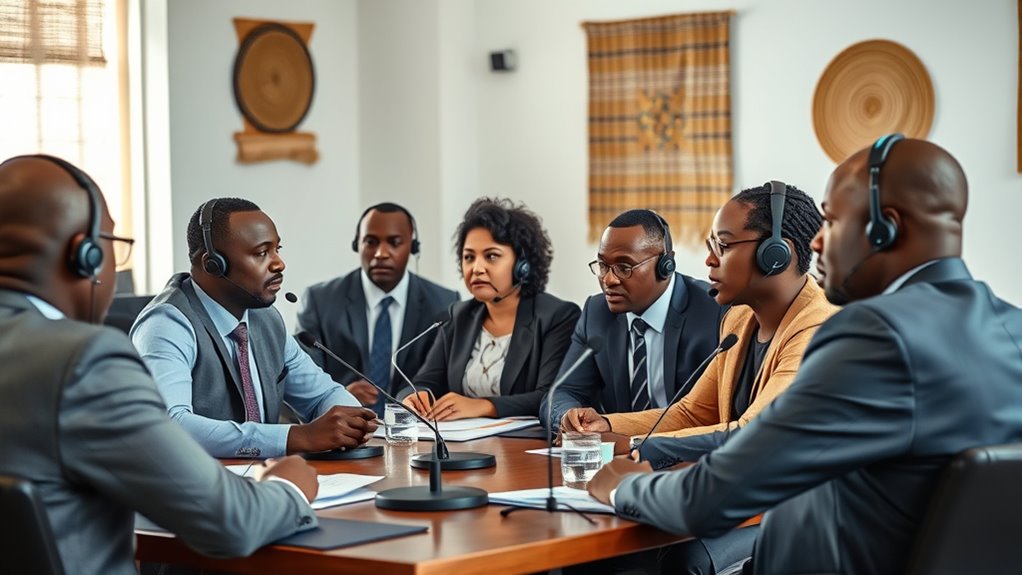
Professional interpreters in Nigeria, such as those from Translation Africa, play an essential role in bridging language barriers across sectors like oil, finance, and trade. They deliver real-time translations using techniques like simultaneous and consecutive interpreting, ensuring accuracy and cultural sensitivity in multilingual settings. With high demand driven by Nigeria’s linguistic diversity, interpreters require strong language skills, adaptability, and training to handle challenges effectively. This foundation leads to valuable details on emerging trends and sector-specific needs.
Quick Summaries
- Professional interpreters in Nigeria facilitate communication in multilingual business sectors like oil and finance.
- They bridge language barriers during negotiations, meetings, and trade fairs to enhance trust and efficiency.
- Interpreters use techniques such as simultaneous translation with technology for real-time accuracy.
- Essential skills include proficiency in languages like English, Hausa, and Yoruba, plus cultural sensitivity.
- Training opportunities exist through programs at universities and online platforms for certification and skill enhancement.
The Role of Interpreters in Nigerian Business

In Nigeria’s multilingual business environment, interpreters facilitate effective communication between parties with diverse linguistic backgrounds, ensuring accurate exchange of ideas in negotiations, meetings, and transactions. They bridge language barriers in sectors like oil, agriculture, and finance, where English, Hausa, Yoruba, and Igbo often intersect. By providing real-time translation, interpreters enable smoother deal-making and partnerships with foreign investors, reducing risks of miscommunication that could derail agreements. Their presence enhances trust in cross-cultural dealings, such as trade fairs and corporate alliances, promoting economic inclusivity. In a nation with over 500 languages, interpreters play a pivotal role in sustaining business operations, fostering regional trade, and supporting Nigeria’s global market integration, ultimately driving productivity and growth. This unseen support underpins the nation’s dynamic commerce landscape.
Essential Skills for Professional Interpreters

Professional interpreters in Nigeria rely on a set of core skills to bridge communication gaps in multilingual settings. First, exceptional language proficiency is vital, encompassing fluent command of English, local dialects, and international languages to guarantee accurate conveyance of meaning. Cultural awareness follows, allowing interpreters to navigate Nigeria’s diverse ethnic contexts without misinterpretation. Active listening and quick cognitive processing enable real-time translation, maintaining the original intent and nuance. Neutrality and confidentiality are essential, fostering trust in sensitive environments like legal or medical scenarios. Additionally, adaptability helps handle varying accents, technical jargon, and high-pressure situations. These skills, honed through rigorous training, enhance effective cross-cultural communication, supporting sectors such as diplomacy and education. Ultimately, they uphold professional standards in Nigeria’s dynamic linguistic landscape. (124 words)
Demand for Interpreting Services in Lagos
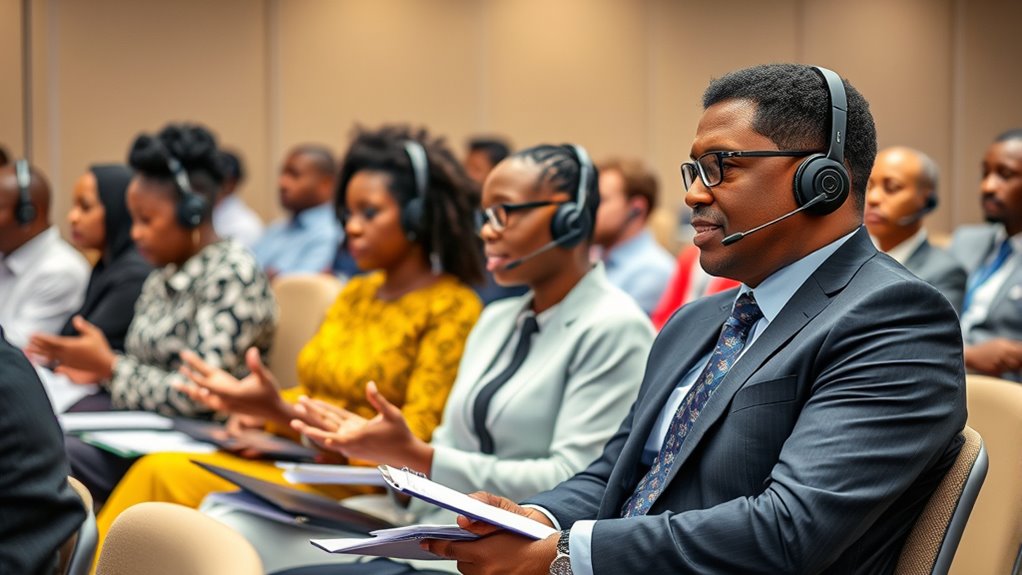
Lagos, Nigeria’s economic hub, experiences robust demand for interpreting services driven by its multicultural population and international business activities. This surge is particularly evident in sectors like finance, oil and gas, and maritime trade, where multilingual communication is essential for negotiations and partnerships. Conferences, legal proceedings, and medical consultations further amplify the need, as foreign investors and expatriates require real-time language support. The city’s rapid urbanization and hosting of global events have led to a growing market for skilled interpreters, with demand outpacing supply in recent years. Businesses increasingly rely on professional services to bridge language gaps, enhancing efficiency and fostering international relations. As a result, interpreting agencies in Lagos are expanding to meet this dynamic need, underscoring the sector’s crucial role in the city’s economic vitality.
Cultural Aspects of Interpreting in Nigeria
Nigeria’s diverse cultural landscape profoundly shapes interpreting practices, requiring professionals to adeptly handle ethnic nuances alongside language barriers. With over 250 ethnic groups, interpreters must navigate subtle differences in communication styles, such as indirect speech in Yoruba culture or hierarchical respect in Hausa traditions, to prevent misinterpretations. For instance, in legal or medical contexts, failing to account for cultural taboos—like discussing mental health openly in some Igbo communities—can erode trust and accuracy. Non-verbal cues, including gestures and eye contact, vary widely, demanding interpreters remain culturally attuned to foster effective dialogue. This sensitivity not only bridges linguistic gaps but also promotes social harmony in Nigeria’s multicultural settings, where ethnic conflicts could otherwise complicate interactions. Ultimately, skilled interpreters integrate cultural knowledge to guarantee messages resonate authentically across divides.
Training Opportunities for Interpreters in Africa
Training opportunities for interpreters in Africa encompass a range of available programs designed to enhance professional skills. Key institutions across the continent, such as universities and specialized academies, play an essential role in providing structured education. Online learning options further expand access, offering flexible courses that complement traditional methods.
Available Training Programs
Various institutions across Africa provide essential training programs for interpreters, equipping participants with specialized skills in language proficiency, cultural awareness, and real-time translation techniques. These programs vary in format, including workshops, online courses, and certification tracks, emphasizing practical application and ethical standards. They address diverse needs, from beginner levels to advanced expertise, helping interpreters navigate multicultural contexts effectively.
| Program Type | Key Features |
|---|---|
| Workshops | Hands-on practice sessions |
| Online Courses | Flexible, self-paced learning |
| Certification Tracks | Exam and portfolio assessment |
| Intensive Bootcamps | Immersive, full-time training |
| Advanced Seminars | Specialized topic in-depth explorations |
Such initiatives foster professional growth, ensuring interpreters meet global demands while promoting accuracy and cultural sensitivity in their work.
Key Institutions in Africa
Across Africa, key institutions deliver specialized training for interpreters, focusing on programs that enhance language skills, cultural competence, and professional standards. In Nigeria, the University of Lagos and Bayero University offer rigorous diploma and degree courses in translation and interpretation, emphasizing practical sessions and ethical practices. South Africa’s Stellenbosch University provides advanced programs that integrate regional languages like Zulu and Xhosa, preparing interpreters for diverse contexts. The African Union’s Interpreter Service in Ethiopia conducts workshops to build expertise in multilingual diplomacy. These institutions emphasize hands-on experience, such as simulated conferences, to guarantee graduates meet international benchmarks. By fostering local talent, they address the continent’s growing demand for skilled interpreters in sectors like healthcare, law, and business, ultimately elevating professional quality across Africa.
Online Learning Options
In recent years, online platforms have transformed interpreter training in Africa by providing accessible courses through sites like Coursera and edX, which focus on language proficiency, cultural sensitivity, and practical skills. These resources enable aspiring interpreters in Nigeria and beyond to access high-quality education without geographical barriers, often at lower costs than traditional programs. For instance, platforms offer specialized modules on simultaneous and consecutive interpreting, tailored to African contexts like multilingual diplomacy and healthcare. Learners benefit from interactive tools, such as virtual simulations and peer forums, fostering real-time practice and feedback. Additionally, partnerships with institutions like the African Union enhance credibility, leading to recognized certifications. This shift democratizes professional development, empowering individuals in remote areas to build careers in interpretation while bridging language gaps across the continent. Overall, online options complement formal training, promoting a skilled workforce adaptable to global demands.
Types of Interpreting Services Available
In the domain of professional interpreters in Nigeria, interpreting services primarily include simultaneous and consecutive methods. Simultaneous interpreting enables real-time translation, often utilized in settings like conferences. Consecutive interpreting, by contrast, involves rendering speech after pauses, making it suitable for meetings and negotiations.
Simultaneous Interpreting
Simultaneous interpreting delivers real-time translation, where professionals render speech almost instantly, often in conferences or diplomatic settings in Nigeria. This method requires interpreters to listen through headphones and speak into microphones simultaneously, typically from soundproof booths, ensuring seamless communication for multilingual audiences. In Nigeria’s diverse linguistic landscape, it facilitates international summits, business meetings, and cultural events, bridging languages like English, Hausa, Yoruba, and Igbo. Interpreters undergo rigorous training to handle the cognitive demands, maintaining accuracy under pressure without pausing the original speaker. Equipment such as headsets and relay systems enhances efficiency, making it indispensable for time-sensitive scenarios. Despite its complexity, simultaneous interpreting promotes inclusivity and global engagement, elevating Nigeria’s role in international dialogues. Its precision minimizes misunderstandings, fostering effective cross-cultural interactions.
Consecutive Interpreting
Consecutive interpreting serves as a key alternative in Nigeria’s interpreting landscape, where professionals translate speech after the speaker pauses, typically in smaller settings like business negotiations or legal proceedings. This method guarantees high accuracy by allowing interpreters to process and convey information in segments, making it ideal for detailed discussions in Nigeria’s diverse linguistic environments. It demands strong memory and note-taking skills, contrasting with simultaneous interpreting’s real-time approach.
- Enhanced Accuracy: Captures nuances through pauses, reducing errors in complex topics.
- Ideal for Small Groups: Suited for meetings, court sessions, or diplomatic talks in Nigeria.
- Note-Taking Efficiency: Interpreters use shorthand to maintain fidelity to the original message.
- Cultural Sensitivity: Allows adaptation to local contexts, fostering better understanding.
- Cost-Effective Option: Often requires fewer resources than simultaneous setups, benefiting Nigerian businesses.
Technology Integration in Modern Interpreting
Technology is reshaping interpreting practices in Nigeria, with tools like remote platforms and AI-driven software enhancing efficiency and accuracy for professionals. In urban centers such as Lagos, interpreters increasingly use video conferencing for simultaneous sessions, allowing seamless communication across distances. AI-powered applications, including speech recognition tools, assist in real-time language processing, reducing errors in multilingual environments. Nigerian interpreters are undergoing training to master these technologies, integrating them into workflows for better performance. Challenges like unreliable internet in rural areas prompt innovative solutions, such as offline AI modules, fostering adaptability. Overall, this integration modernizes the field, enabling interpreters to handle complex assignments with greater precision and speed, while maintaining cultural nuances in translations. This evolution positions Nigeria’s interpreting sector at the forefront of global standards.
Benefits of Expert Interpreting in Conferences
Expert interpreting in conferences offers significant advantages that enhance overall effectiveness. Enhanced accuracy guarantees that complex information is transmitted precisely without errors. Cultural bridging and efficient flow further promote seamless interactions among participants from diverse backgrounds.
Enhanced Accuracy
Guaranteeing accurate interpretation is essential for effective conferences. In Nigeria, professional interpreters from Translation Africa deliver precise, error-free translations that maintain the original message’s integrity, enabling smooth communication and informed decision-making among participants.
- Minimizes errors in real-time translation, preventing miscommunications.
- Accurately handles technical jargon and specialized terminology.
- Preserves the speaker’s intent and context for clarity.
- Utilizes advanced training to guarantee consistent precision.
- Enhances comprehension, allowing participants to engage fully without distractions.
This focus on enhanced accuracy by expert interpreters boosts conference productivity and reliability in diverse settings.
Cultural Bridging
Beyond accuracy in interpretation, professional interpreters in Nigeria foster cultural bridging during conferences by adeptly conveying cultural nuances, idioms, and contexts, which enables participants from diverse backgrounds to connect and collaborate effectively. These experts navigate linguistic subtleties, such as Nigerian proverbs or regional customs, preventing misunderstandings that could arise from cultural differences. By promoting empathy and mutual respect, interpreters enhance cross-cultural dialogues, allowing attendees to appreciate varied perspectives and build stronger relationships. In Nigeria’s multicultural landscape, this bridging not only enriches discussions but also supports inclusive decision-making, fostering a sense of unity among participants. Ultimately, such expertise transforms conferences into platforms for genuine cultural exchange, driving broader societal harmony.
Efficient Flow
Professional interpreters in Nigeria contribute to efficient flow in conferences by minimizing language barriers, allowing sessions to proceed without interruptions. They deliver real-time, accurate translations that keep discussions on track, fostering seamless communication among diverse participants. This expertise not only prevents delays but also enhances overall event productivity, ensuring that ideas are exchanged effectively and decisions are made promptly.
- Real-time accuracy: Interpreters provide instant translations, enabling participants to grasp content immediately.
- Reduced interruptions: Quick handling of language issues minimizes pauses, maintaining momentum.
- Improved comprehension: Clear interpretations help attendees understand complex topics without confusion.
- Enhanced engagement: Participants feel included, leading to more active involvement in sessions.
- Optimized scheduling: Efficient flow allows conferences to adhere to timelines, maximizing productivity. (124 words)
Challenges in the Interpreting Field Today
In today’s interpreting field, Nigerian professionals grapple with multifaceted challenges, including rapid technological advancements, cultural and linguistic complexities, and inconsistent professional standards that hinder effective service delivery. Technological shifts, such as AI-driven tools, demand constant upskilling, often overwhelming interpreters without adequate access to training. Nigeria’s linguistic diversity—with over 500 languages—complicates accurate communication, as nuances can lead to misinterpretations in critical settings like healthcare and legal proceedings. Furthermore, varying professional standards across regions result in unreliable quality, with some practitioners lacking formal certification, eroding trust and efficiency. These issues not only strain individual careers but also impede broader communication in a globalized world, underscoring the need for systemic reforms to enhance interpreter competence and reliability.
Growth of Interpreting Firms Like Translation Africa
Amid the evolving landscape of interpreting services in Nigeria, firms like Translation Africa have experienced substantial growth, fueled by rising demand for specialized expertise in multilingual environments. This surge reflects broader economic and technological shifts, enabling these firms to expand operations and enhance service delivery. As a result, they have become pivotal in bridging communication gaps across diverse settings.
- Increased Client Demand: A surge in international business and events has boosted the need for reliable interpreting.
- Technological Integration: Adoption of AI tools and virtual platforms has streamlined operations and expanded reach.
- Strategic Expansions: Firms have opened new branches and hired more professionals to meet scaling requirements.
- Partnerships and Networks: Collaborations with global organizations have enhanced credibility and market access.
- Quality Certifications: Earning industry accreditations has attracted more clients and fostered trust.
Sector-Specific Interpreting Needs in Nigeria
Nigeria’s diverse sectors increasingly require specialized interpreting services to address unique communication challenges stemming from linguistic diversity and global integration. In healthcare, interpreters bridge gaps during patient consultations, ensuring accurate diagnosis and treatment across languages like Hausa, Yoruba, and Igbo. The legal sector demands precise interpreting for court proceedings and negotiations, where misinterpretations could undermine justice. Business environments, particularly in oil and agriculture, rely on interpreters for international deals and training sessions, facilitating smoother trade with foreign partners. Education benefits from these services in multilingual classrooms and conferences, promoting inclusive learning. Government and diplomacy sectors also need skilled interpreters for policy discussions and international relations, enhancing Nigeria’s global engagement. Overall, these tailored services foster effective communication, driving sectoral efficiency and cultural understanding without overlooking local dialects.
Emerging Trends in Professional Interpreting
Professional interpreting is evolving rapidly, influenced by technological advancements and global demands that address the sector-specific needs highlighted in Nigeria. As the field adapts, interpreters are embracing innovations to enhance accuracy, accessibility, and efficiency in diverse contexts. This evolution is particularly evident in Nigeria, where professionals navigate cultural nuances while leveraging modern tools.
- AI Integration: Machine learning tools assist in real-time translation, reducing errors in high-stakes settings.
- Remote Interpreting: Video platforms enable virtual sessions, expanding reach beyond urban areas.
- Specialized Training: Online courses focus on niche sectors like healthcare and legal, improving expertise.
- Multilingual Apps: Mobile applications support on-the-go interpreting for everyday interactions.
- Sustainability Focus: Eco-friendly practices, such as digital resources, minimize environmental impact in events.
Frequently Asked Questions
What Is the Average Cost for Interpreting Services?
The average cost for interpreting services varies widely, typically ranging from $50 to $200 per hour. This depends on factors like language pair, session duration, interpreter expertise, and regional demand, making precise averages challenging.
How Do I Apply for Interpreting Jobs?
Applying for interpreting jobs typically involves individuals searching online job platforms, preparing resumes that highlight language proficiencies and experience, networking with industry contacts, submitting applications to agencies, and attending interviews for selection.
What Legal Protections Cover Interpreters?
Legal protections for interpreters include anti-discrimination laws, labor rights ensuring fair treatment, and confidentiality regulations to safeguard professional duties. In judicial and medical settings, they benefit from rules promoting accuracy and protection against retaliation, varying by jurisdiction.
Can Interpreters Work Part-Time?
In the field of interpretation, interpreters can indeed work part-time, offering flexibility for those balancing other commitments. This arrangement depends on demand, employer policies, and individual preferences, allowing varied career paths.
How Should Interpreters Handle Confidential Information?
Interpreters must handle confidential information by maintaining strict secrecy, using secure methods for storage and transmission, and only disclosing it when legally required or with explicit consent from all parties involved, ensuring professional integrity and trust.