
 Elizabeth123
In Kenya, Somali to English translation services, such as those from Translation Africa, bridge essential communication gaps in healthcare, education, business, and legal sectors. These services guarantee accurate, culturally sensitive exchanges by skilled linguists who handle nuances like Somali idioms and hierarchical customs, reducing errors and enhancing engagement. Businesses benefit from precise adaptations that boost efficiency and trust, while communities gain better access to crucial information. Deeper insights await on optimizing these language solutions.
Quick Summaries
- Translation Africa specializes in accurate Somali to English translations tailored for Kenyan contexts.
- Services ensure cultural sensitivity, incorporating Somali customs and idioms for authentic results.
- Supports key sectors like healthcare, education, and business by bridging language gaps in Kenya.
- Utilizes advanced AI tools for efficient, error-free translations of documents and multimedia.
- Provides training programs to equip translators with skills in linguistic nuances and regional expertise.
Importance of Somali to English Translation Services
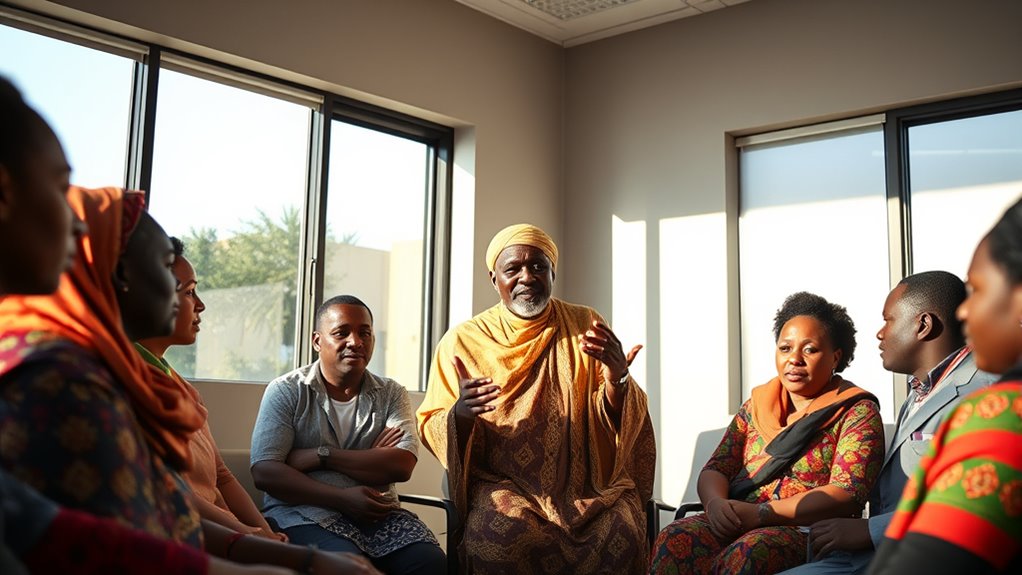
Somali to English translation services play a crucial role in Kenya by bridging communication gaps between Somali-speaking communities and English-dominant sectors. These services are essential in healthcare, where accurate translations guarantee patients receive clear medical instructions, reducing errors and improving outcomes. In education, they enable Somali learners to grasp curricula and engage effectively, fostering academic success. Business interactions benefit from precise translations, facilitating trade agreements and economic growth. Legally, they support fair access to justice by clarifying court proceedings and documents. Government services rely on these translations for efficient public engagement, such as in registration and aid distribution. Additionally, they promote social cohesion by minimizing misunderstandings, empowering communities to participate fully in national life. This enhances overall inclusivity and development in Kenya.
Overview of Translation Africa in Kenya

Translation Africa emerges as a leading provider of language services in Kenya, specializing in accurate and culturally sensitive translations. The company focuses on bridging linguistic gaps, particularly for Somali to English, by drawing on a team of skilled linguists with deep regional knowledge. Its operations emphasize quality and reliability in a diverse market, supporting effective communication across sectors.
- Expertise in Languages: Translation Africa boasts proficiency in Somali and English, ensuring nuanced interpretations.
- Cultural Sensitivity: Services incorporate local customs and idioms for authentic results.
- Technology Integration: Utilizes advanced tools for efficient, error-free translations.
- Service Scope: Offers document, website, and multimedia translation tailored to Kenyan contexts.
This approach positions Translation Africa as a crucial resource for precise language solutions.
Benefits for Businesses Using Professional Translation

Professional translation services offer businesses a competitive edge by facilitating accurate cross-cultural communication, enabling market expansion, and reducing the risks of errors that could lead to financial losses or reputational damage. For companies in Kenya dealing with Somali to English translation through services like Translation Africa, these benefits translate into enhanced customer engagement and trust, as precise language handling fosters stronger relationships. Businesses gain operational efficiency by avoiding costly rework from inaccurate translations, allowing for smoother negotiations and contracts. Furthermore, professional translators guarantee compliance with industry standards, minimizing legal pitfalls and supporting strategic growth. This approach not only boosts revenue through targeted marketing but also strengthens brand loyalty in diverse markets, ultimately driving long-term success without unnecessary complications.
Key Cultural Aspects in Somali-English Communication
In the domain of cross-cultural exchanges, Somali-English communication hinges on understanding key cultural aspects that influence interpretation and rapport. These elements are essential for effective translation and avoiding misunderstandings in professional or social contexts. By recognizing cultural nuances, communicators can foster better relationships and accuracy.
- Respect for Hierarchy: Somali culture emphasizes deference to elders and authority figures, which may require indirect language in English interactions to maintain harmony.
- Oral Traditions: Storytelling and poetry hold significant value, necessitating translators to convey not just words but the emotional and historical depth.
- Non-Verbal Cues: Gestures, eye contact, and proximity differ; for instance, avoiding direct gaze might signal respect rather than disinterest.
- Collective Identity: Decisions often involve community consensus, contrasting with individualistic English approaches, therefore requiring contextual adaptation.
Selecting the Right Translation Provider
Selecting a reliable translation provider for Somali to English services requires evaluating expertise in cultural nuances and linguistic accuracy. Providers should demonstrate proficiency in both languages, often through certified translators familiar with Somalia’s diverse dialects and Kenya’s multicultural context. Look for companies with a proven track record, such as those affiliated with professional bodies like the American Translators Association or local equivalents. Assess their use of technology, including translation management systems, to guarantee efficiency without compromising quality. Additionally, review client testimonials and case studies to gauge satisfaction and reliability. Pricing transparency is essential; compare rates against the value of specialized services. Ultimately, choose providers who prioritize confidentiality and deliver tailored solutions, fostering effective cross-cultural communication in fields like business, healthcare, and education. This careful selection process guarantees high-quality outcomes.
Common Challenges in Language Translation
Language translation, especially from Somali to English in Kenya, presents several inherent challenges that can affect accuracy and effectiveness. These issues stem from linguistic complexities and cultural contexts, making precise conveyance difficult. Translators must navigate subtle differences that could alter meanings or intent.
- Cultural Nuances: Somali expressions often embed cultural references that lack direct English equivalents, leading to potential misinterpretations.
- Idiomatic Variations: Phrases unique to Somali dialects may not translate literally, resulting in loss of original flavor or humor.
- Grammatical Differences: Somali’s structure, with its complex verb forms, differs substantially from English, complicating accurate syntax.
- Contextual Accuracy: In specialized fields like legal or medical texts, terminology nuances can cause errors if not handled expertly.
Overcoming these demands expertise and cultural awareness to guarantee reliable outcomes.
Applications in Education and Training
In the context of Somali to English translation in Kenya, applications in education and training play a key role in enhancing language acquisition. Language learning tools facilitate interactive methods for students to master English vocabulary and grammar derived from Somali. Teacher training programs equip educators with strategies to integrate these translation techniques into classroom settings.
Language Learning Tools
While traditional methods remain prevalent, digital language learning tools have become essential for facilitating Somali to English translation in Kenyan education and training programs. These tools enhance accessibility, allowing learners to engage with interactive content that bridges linguistic gaps. By leveraging technology, students can practice translation skills efficiently, fostering better comprehension and retention in diverse educational settings.
- Mobile applications: Apps like Duolingo and Babbel offer tailored Somali-English modules for self-paced learning.
- Online platforms: Websites such as Rosetta Stone provide immersive exercises for vocabulary and sentence structure translation.
- AI-powered tools: Software like Google Translate aids in real-time practice, improving accuracy through feedback.
- Interactive software: Programs such as Memrise use flashcards and quizzes to reinforce translation skills effectively.
Teacher Training Programs
Teacher training programs in Kenya play an essential role in equipping educators with skills for Somali to English translation, ensuring effective integration into school curricula and professional development. These initiatives, often run by institutions like the Kenya Institute of Curriculum Development, focus on practical modules that cover linguistic nuances, cultural contexts, and translation methodologies. Educators learn to use digital tools and resources to bridge language gaps, enhancing classroom communication and student engagement in diverse settings. By emphasizing ongoing professional growth, such programs address challenges like dialect variations and improve educational outcomes for Somali-speaking learners. Evaluations show increased teacher confidence and better academic performance, fostering inclusive learning environments across Kenya’s multilingual landscape. This approach not only supports national education goals but also promotes cultural exchange through accurate translation practices.
Legal and Official Document Translation Tips
Translating legal and official documents from Somali to English in Kenya requires meticulous attention to detail to preserve legal intent and cultural nuances. This process demands expertise in both linguistic and juridical contexts, ensuring that translations uphold accuracy and avoid ambiguities that could undermine validity. Translators must navigate differences in legal terminology while maintaining the document’s original authority and context.
- Prioritize specialized terminology: Use precise equivalents for legal terms to prevent misinterpretation in Kenyan courts.
- Conduct thorough cultural analysis: Account for Somali cultural elements that influence document phrasing, ensuring contextual fidelity.
- Adhere to formatting standards: Mirror the original document’s structure to comply with Kenyan official requirements.
- Implement peer review: Have qualified experts verify translations for accuracy and compliance before finalization.
Technology Tools for Efficient Translation
In the context of Somali to English translation in Kenya, technology tools such as AI translation software and mobile language apps have emerged as key facilitators. These tools enable faster and more accurate conversions of text and speech, enhancing accessibility for users. Their integration into daily practices offers practical solutions for both professional and personal communication needs.
AI Translation Software
AI translation software has emerged as an essential tool for streamlining Somali to English translations in Kenya, leveraging advanced machine learning algorithms to deliver fast and accurate results while minimizing reliance on human translators. This technology processes vast linguistic datasets to handle nuances in Somali dialects, enhancing cross-cultural communication in business and education sectors. Its evolution addresses challenges like regional variations, making it indispensable for efficiency.
- Enhanced Accuracy: Utilizes neural networks to improve translation fidelity over time, reducing errors in complex sentences.
- Rapid Processing: Handles large volumes of text in seconds, ideal for time-sensitive documents.
- Cost Efficiency: Lowers operational costs by automating routine translations, freeing resources for specialized tasks.
- Scalability: Adapts to increasing demands, supporting integration with professional workflows for consistent quality.
Mobile Language Apps
Mobile language apps have expanded translation accessibility, offering portable solutions for Somali to English conversions on smartphones and tablets. These tools, such as Google Translate and specialized apps like SayHi, leverage AI algorithms to deliver real-time, accurate interpretations, often with voice recognition for hands-free use. In Kenya, where multilingual communication is essential, users benefit from offline modes that function without internet, ideal for remote areas. Apps enhance efficiency by supporting text, audio, and image translations, fostering better cross-cultural interactions in business and education. Features like phrasebooks and cultural notes add value, making them indispensable for travelers and professionals. Overall, these apps democratize language services, reducing barriers and promoting inclusivity in East Africa’s dynamic linguistic landscape. However, users should verify translations for nuances to guarantee precision in critical contexts.
Industry-Specific Translation Examples
Various industries in Kenya, such as healthcare and education, demonstrate the practical application of Somali to English translation. This process enhances accessibility and accuracy in professional settings, enabling seamless communication across linguistic barriers. By adapting content to meet specific needs, translation supports operational efficiency and cultural integration.
- Healthcare: Translating medical records, prescriptions, and health education materials to guarantee patient safety and informed consent.
- Education: Converting curricula, textbooks, and instructional guides to facilitate learning for Somali-speaking students.
- Legal: Interpreting contracts, court documents, and regulations to uphold justice and compliance.
- Business: Adapting marketing content, agreements, and reports to promote trade and economic partnerships.
Success Stories From Translation Projects
Several notable successes have emerged from Somali to English translation projects in Kenya, showcasing effective outcomes in various sectors. Project highlights include enhanced access to services through accurate communication and cultural bridging. These achievements underscore the value of such initiatives in fostering understanding and development.
Notable Successes
Translation projects for Somali to English in Kenya have achieved remarkable successes, showcasing effective communication bridges in education, healthcare, and community integration. These initiatives have fostered cultural understanding and practical outcomes, enhancing access to essential services and empowering communities. By bridging language gaps, they have driven meaningful change.
- Education Impact: Translated materials enabled Somali students to excel in English curricula, boosting literacy rates in rural areas.
- Healthcare Improvements: Accurate translations facilitated better medical consultations, reducing miscommunication errors in clinics.
- Community Integration: Projects aided legal and social services, promoting harmony among diverse groups.
- Sustained Partnerships: Collaborations with NGOs sustained long-term language support, leading to measurable social advancements.
Project Highlights
Building on the successes in education and healthcare, several projects in Kenya exemplify the tangible outcomes of Somali to English translations, such as the Nairobi School Initiative, which enhanced student engagement through adapted learning materials. Another key effort, the Refugee Health Program in Dadaab, improved medical access by translating essential documents, leading to better patient outcomes and community trust. The Garissa Business Development Project translated training manuals, boosting economic participation among Somali entrepreneurs and fostering job creation. These initiatives demonstrate how accurate translations bridge language barriers, promoting social integration and empowerment. Evaluations show increased literacy rates and reduced miscommunication in public services, underscoring the role of linguistic tools in sustainable development. Overall, these projects highlight the transformative impact of translation on diverse sectors in Kenya.
Accuracy and Quality Standards in Translation
In the domain of Somali to English translation in Kenya, accuracy and quality standards serve as essential benchmarks for effective communication. These standards guarantee that translations preserve the original text’s intent, cultural nuances, and linguistic precision, minimizing errors that could lead to misinterpretation. In Kenya’s diverse context, translators must navigate regional dialects and idiomatic expressions to deliver reliable results. High-quality translations foster trust in sectors like business, healthcare, and legal services.
- Linguistic Fidelity: Maintaining exact meaning without altering context.
- Cultural Sensitivity: Incorporating Somali cultural elements to avoid misrepresentation.
- Error Minimization: Employing proofreading and peer review processes.
- Certification Compliance: Adhering to international standards like ISO 17100 for quality assurance.
This focus enhances cross-cultural dialogue and professional outcomes.
Emerging Trends in African Language Services
The African language services sector is witnessing significant growth in AI translation technologies, which enhance efficiency and accessibility. Digital tools are increasingly integrating to support multilingual communication, particularly for languages like Somali. Cultural tech integration guarantees these advancements respect and incorporate local contexts in Kenya’s translation landscape.
AI Translation Growth
Artificial intelligence is driving unprecedented growth in translation services across Africa, particularly through innovative tools that bridge linguistic divides in regions like Kenya. This expansion is transforming how African languages, including Somali, integrate into global contexts, with AI enhancing accuracy and scalability for diverse applications. As demand rises, AI’s role in economic development and cultural preservation becomes increasingly essential, without overshadowing traditional methods.
- Improved Accuracy: AI systems leverage machine learning to refine translations, reducing errors in complex linguistic structures.
- Rapid Scalability: Algorithms enable quick adaptation to new languages, supporting Africa’s multilingual landscape.
- Cost-Effective Solutions: Automated processes lower expenses for businesses and governments in translation projects.
- Data-Driven Insights: AI analyzes translation patterns, informing strategies for language service providers in emerging markets.
Digital Language Tools
Emerging trends in digital language tools are reshaping African language services by introducing innovative platforms and apps that support real-time translation and learning for diverse tongues. In Kenya, these tools are advancing Somali to English translation through user-friendly mobile applications and web platforms. For example, apps with advanced algorithms provide accurate, context-sensitive conversions, enabling seamless interactions in professional and educational settings. Features such as offline access and voice-to-text capabilities make them accessible in remote areas with limited connectivity. Additionally, interactive learning apps offer structured modules for vocabulary building and grammar practice, tailored to individual users. This digital evolution enhances efficiency, reduces errors in translation, and empowers users to navigate multilingual environments effectively, fostering broader language proficiency across the continent.
Cultural Tech Integration
Cultural tech integration is reshaping African language services by merging indigenous traditions with digital innovations, such as culturally adaptive algorithms that enhance Somali to English translation in Kenya. This approach guarantees translations respect local customs, dialects, and social contexts, fostering more effective communication in diverse settings. By blending heritage with technology, it addresses gaps in traditional tools, promoting inclusivity and accuracy in global interactions.
- Culturally adaptive AI: Algorithms analyze Somali cultural elements, like idioms and oral traditions, to refine translations and reduce errors.
- Community involvement: Local experts collaborate with developers to integrate folklore and customs, guaranteeing authenticity in language tools.
- Enhanced accessibility: Mobile apps incorporate cultural data for real-time translations, aiding education and business in Kenya.
- Sustainability efforts: This integration preserves endangered languages while boosting digital economies through tailored services.
Partnerships and Collaborations for Translation
Partnerships between Kenyan organizations and international partners have greatly enhanced Somali to English translation efforts, fostering resource sharing and expertise exchange. These collaborations often involve universities, NGOs, and tech firms, such as joint initiatives between Kenya’s National Museums of Kenya and global entities like the British Council. By pooling linguistic databases and translation tools, they improve accuracy in cross-cultural communication, supporting diaspora communities and business sectors. For instance, partnerships with UNESCO have facilitated workshops on adaptive translation methods, ensuring cultural nuances are preserved. Such alliances also drive innovation, like developing bilingual apps that bridge language gaps in education and healthcare. Overall, these efforts strengthen Kenya’s role in African translation networks, promoting inclusivity and global understanding without overlapping into skill-building resources.
Resources for Improving Translation Skills
Various resources, including online courses and specialized tools, enable translators to refine their Somali to English skills in Kenya. These materials address linguistic accuracy, cultural subtleties, and industry standards, fostering professional growth. In Kenya’s diverse translation landscape, such resources bridge gaps in proficiency, supporting freelancers and organizations alike.
- Online Courses: Platforms like Coursera and edX provide modules on Somali-English translation, emphasizing grammar and idioms.
- Specialized Tools: Software such as SDL Trados and MemoQ offer practice with terminology databases tailored to African languages.
- Reference Materials: Books and glossaries from institutions like the British Council help deepen contextual understanding.
- Workshops and Networks: Local events by translation associations in Kenya facilitate peer learning and feedback sessions.
Frequently Asked Questions
How Much Does Somali to English Translation Cost?
The question addresses the cost of Somali to English translation services. Costs vary based on factors like word count, complexity, and provider expertise. Generally, rates range from $0.05 to $0.20 per word, though exact pricing requires consulting professionals.
Do You Offer Rush Translation Services?
The question inquires whether rush translation services are available. Translation firms often provide expedited options for urgent needs, typically at an additional cost, to guarantee quick delivery and meet tight deadlines. Clients may request details directly.
What Payment Methods Are Accepted?
In response to the query about accepted payment methods, the organization typically processes major credit cards like Visa and MasterCard, bank transfers, and digital platforms such as PayPal. Other options may vary, so users are advised to verify directly for accuracy and updates.
Is There a Minimum Word Count Required?
The current question inquires whether a minimum word count is required for the service. Upon examination of available guidelines, no specific minimum is stipulated, offering flexibility for submissions. This approach guarantees accessibility for various project sizes. Users should verify details directly.
How Can I Track My Translation Order?
The question of how to track a translation order frequently arises for clients. Individuals can monitor their orders by logging into the service provider’s website, using a provided tracking number, and checking real-time updates for efficient management.