
 directlineauthors
Many people use translation and interpretation interchangeably, but these language services represent completely different skills, processes, and professional requirements. The difference between translation and interpretation affects which service you need for specific situations, how much time projects require, and what qualifications professionals must possess to deliver quality results.
Understanding the difference between translation and interpretation becomes crucial when planning international business meetings, legal proceedings, medical appointments, or document processing. Each service operates under distinct time pressures, accuracy requirements, and delivery methods that shape how language professionals approach their work.
At Directline Translator, we frequently help clients identify which service matches their specific communication needs.
The difference between translation and interpretation extends beyond timing to include skill sets, training requirements, technology usage, and cost structures that influence project planning and budgeting decisions.
Translation work involves written documents processed over days or weeks, while interpretation handles spoken communication in real-time situations. These fundamental distinctions create entirely different professional specializations with unique challenges and requirements.
This comprehensive guide will clarify every aspect of the difference between translation and interpretation, helping you make informed decisions about language services for your organization. You’ll learn when each service provides optimal results, how to evaluate professionals in both fields, and practical strategies for managing projects that require either translation or interpretation services.
By understanding these distinctions, you’ll avoid common misconceptions that lead to inappropriate service selection and disappointing results.
What Defines the Core Difference Between Translation and Interpretation Services?
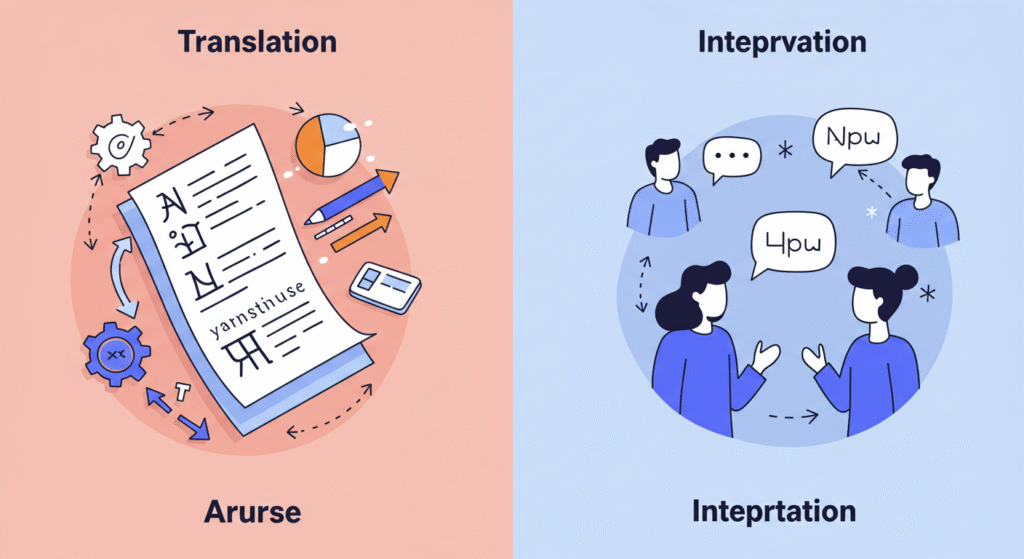
The fundamental difference between translation and interpretation lies in medium and timing: translation handles written text with extended processing time, while interpretation manages spoken language in real-time situations. This basic distinction creates cascading differences in skills, training, technology, and service delivery that affect every aspect of how these professions operate.
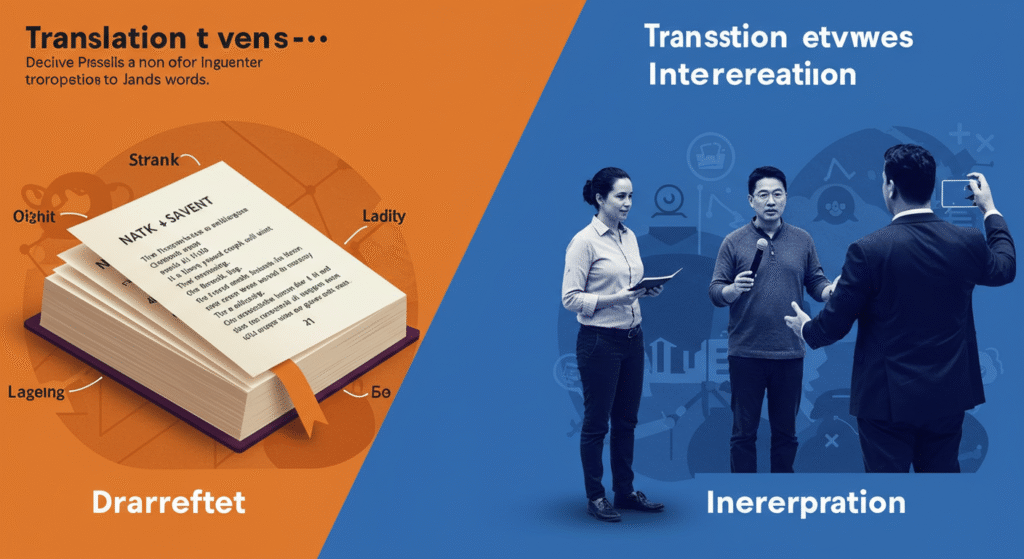
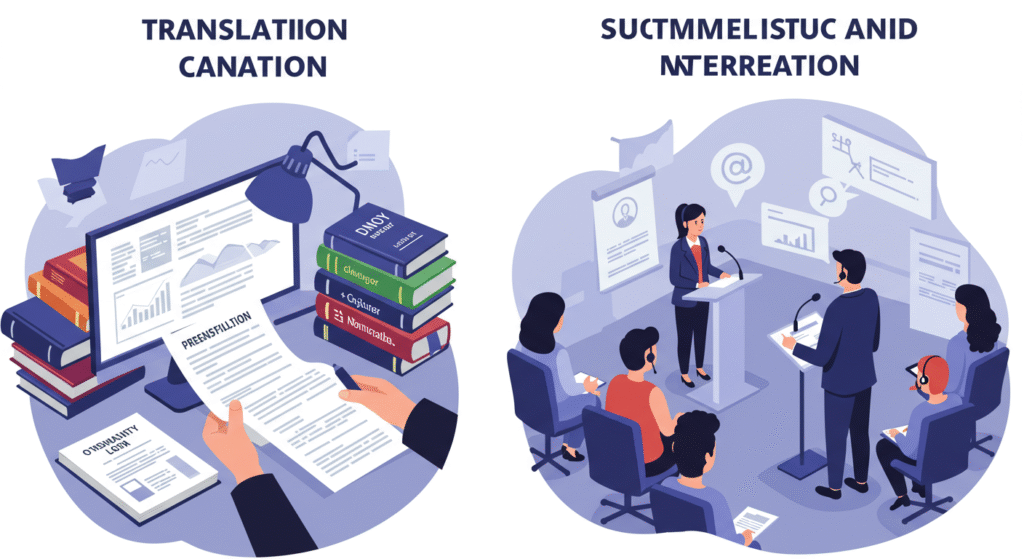
Translation professionals work with written documents, converting text from source languages into target languages while maintaining meaning, tone, and cultural appropriateness. The difference between translation and interpretation becomes apparent in the time available for research, revision, and quality assurance that written work allows.
Translators can consult dictionaries, verify technical terminology, and refine word choices over hours or days to achieve optimal results.
Interpretation professionals handle spoken communication, converting speech from one language to another in real-time situations without opportunity for extensive research or revision.
The difference between translation and interpretation shows clearly in the immediate decision-making and quick thinking that interpretation requires, as interpreters must process, convert, and deliver messages within seconds of hearing them.
Working memory plays different roles in each profession, highlighting another key difference between translation and interpretation. Translators can refer back to previous sections of documents, maintain consistency through reference materials, and build upon earlier translation choices throughout projects.
Interpreters must rely on short-term memory to retain speaker messages while simultaneously converting and delivering them in target languages.
Research opportunities represent another significant difference between translation and interpretation services. Translators can pause to verify unfamiliar terms, research cultural references, or consult subject matter experts when encountering challenging content.
Interpreters must work with their existing knowledge base and make immediate decisions about terminology and cultural adaptations without external consultation during active interpretation sessions.
How Does the Difference Between Translation and Interpretation Affect Professional Skills?
Professional skills required for translation and interpretation overlap in language proficiency but diverge significantly in specialized abilities that each field demands. The difference between translation and interpretation creates distinct skill requirements that influence training programs, certification processes, and career development paths for language professionals.
Writing skills represent a crucial difference between translation and interpretation, as translators must produce polished, professional text that reads naturally in target languages. Translators develop expertise in grammar, style, tone adaptation, and cultural writing conventions that interpretation work rarely requires.
The difference between translation and interpretation shows in the extended time translators spend crafting precise word choices and sentence structures.
Speaking skills distinguish interpretation from translation work, as interpreters must deliver clear, confident oral communication under pressure. Public speaking abilities, voice projection, clear pronunciation, and the capacity to maintain composure during challenging situations become essential for interpretation success.
The difference between translation and interpretation appears in interpreters’ need for strong verbal communication skills that translation work doesn’t emphasize.
Multitasking abilities highlight another difference between translation and interpretation, particularly in simultaneous interpretation where professionals must listen, process, convert, and speak simultaneously. Interpreters develop cognitive flexibility and attention management skills that allow them to handle multiple mental processes concurrently.
Translation work allows sequential processing that doesn’t require the same level of simultaneous mental juggling.
Stress management represents a significant difference between translation and interpretation work environments. Interpreters face immediate performance pressure with no opportunity to correct mistakes once words are spoken, while translators can revise and improve their work before final delivery.
The difference between translation and interpretation creates different stress patterns and coping mechanisms that professionals must develop.
Cultural mediation skills affect both fields but manifest differently due to the difference between translation and interpretation contexts. Translators adapt cultural references within written text, while interpreters must navigate cultural misunderstandings in real-time conversations, often explaining cultural concepts to facilitate communication between parties.
What Technology Differences Exist Between Translation and Interpretation Work?
Technology plays vastly different roles in translation versus interpretation work, reflecting the fundamental difference between translation and interpretation in terms of timing, medium, and quality assurance requirements. These technological distinctions influence productivity, accuracy, and service delivery methods across both professions.
Computer-assisted translation (CAT) tools revolutionize translation work but have limited application in interpretation services, highlighting a major difference between translation and interpretation. Translators use translation memory systems, terminology databases, and consistency checking tools that require written text input and processing time unavailable during live interpretation sessions.
Translation memory systems store previously translated segments for reuse and consistency, representing a key difference between translation and interpretation project management. Translators build databases of approved translations that improve efficiency and maintain consistency across projects, while interpreters cannot access such systems during real-time communication situations.
Quality assurance software assists translation work through automated checking for terminology compliance, consistency, and formatting errors, but these tools cannot evaluate spoken interpretation output. The difference between translation and interpretation shows in the post-delivery quality control options available to each profession.
Remote interpretation technology enables interpreters to work via video conferencing, telephone systems, and specialized platforms that connect them with clients worldwide. The difference between translation and interpretation appears in the real-time connectivity requirements that interpretation demands versus the asynchronous file transfer methods that translation projects typically use.
Machine translation integration affects both fields but differently due to the fundamental difference between translation and interpretation timing requirements. Translators can incorporate machine translation output as starting points for human revision, while interpreters cannot rely on automated systems during live communication events that require immediate human judgment and cultural adaptation.
Digital document management systems support translation projects through version control, collaborative editing, and delivery tracking, but interpretation work requires different technology focused on communication rather than document processing. The difference between translation and interpretation creates distinct technology needs and investment priorities for professionals in each field.
How Does the Difference Between Translation and Interpretation Impact Training Requirements?
Educational pathways and training requirements reflect the fundamental difference between translation and interpretation skills, creating distinct preparation programs that address each profession’s unique demands. Understanding these training differences helps clients evaluate professional qualifications and helps aspiring language professionals choose appropriate career paths.
Academic programs recognize the difference between translation and interpretation through specialized degree tracks that focus on either written or spoken language skills. Translation programs emphasize writing, research, cultural studies, and technology usage, while interpretation programs focus on listening skills, public speaking, memory techniques, and real-time processing abilities.
Certification processes acknowledge the difference between translation and interpretation through separate testing procedures that evaluate profession-specific skills. Translation certifications typically involve written examinations and portfolio reviews, while interpretation certifications require practical demonstrations of simultaneous or consecutive interpretation abilities under timed conditions.
Continuing education requirements differ between translation and interpretation professionals due to the distinct skills each field demands. The difference between translation and interpretation shows in ongoing training priorities: translators focus on technology updates, specialized terminology, and writing techniques, while interpreters emphasize listening skills, cultural competency, and stress management techniques.
Specialization paths reflect the difference between translation and interpretation through distinct areas of focus that align with each profession’s service delivery methods. Translators might specialize in technical writing, legal documents, or marketing content, while interpreters focus on conference settings, medical appointments, or court proceedings that require specific interpretation skills.
Practice requirements vary significantly between translation and interpretation training due to the difference in skill development needs. Translation students practice through written assignments and revision exercises that allow extended time for improvement, while interpretation students require live practice sessions with immediate feedback to develop real-time processing abilities.
Mentorship programs address the difference between translation and interpretation through profession-specific guidance from experienced practitioners. Translation mentors focus on project management, client relations, and technical skill development, while interpretation mentors emphasize performance techniques, professional presence, and situational adaptation strategies.
What Situational Factors Determine the Difference Between Translation and Interpretation Needs?
Different communication situations require either translation or interpretation services based on factors like timing, audience, medium, and accuracy requirements. Understanding the difference between translation and interpretation helps organizations select appropriate services for specific scenarios and avoid mismatched service selections that lead to poor outcomes.
Document processing situations clearly require translation services due to the written medium and extended timeline needs. Legal contracts, technical manuals, marketing materials, and regulatory filings represent scenarios where the difference between translation and interpretation favors written translation work that allows time for accuracy verification and revision.
Live communication events require interpretation services to facilitate real-time conversation between speakers of different languages. Business meetings, medical appointments, court proceedings, and conference presentations represent situations where the difference between translation and interpretation clearly favors spoken interpretation services that provide immediate language assistance.
Hybrid situations combine translation and interpretation needs, requiring understanding of the difference between translation and interpretation to plan appropriate service combinations. International conferences might need document translation for preparation materials and simultaneous interpretation for live sessions, while legal proceedings might require translated evidence documents and consecutive interpretation for witness testimony.
Accuracy requirements influence the choice between translation and interpretation services based on the difference in quality control opportunities each profession provides. High-stakes legal documents, medical prescriptions, and technical specifications typically require translation services that allow extensive accuracy verification, while routine business conversations might accept interpretation’s immediate but less verifiable results.
Timeline constraints affect service selection based on the fundamental difference between translation and interpretation delivery schedules. Urgent communication needs might require interpretation services despite preference for written translation, while long-term projects can utilize translation services for optimal accuracy and cultural adaptation.
Budget considerations reflect the difference between translation and interpretation pricing structures and resource requirements. Translation projects typically involve per-word pricing for predictable costs, while interpretation services use hourly rates that vary based on complexity, duration, and travel requirements.
How Does the Difference Between Translation and Interpretation Affect Quality Standards?
Quality measurement and assurance methods differ significantly between translation and interpretation services due to the fundamental difference in delivery medium, timing, and revision opportunities available to each profession. These quality distinctions affect service evaluation, professional standards, and client expectations across both fields.
Accuracy verification processes highlight a major difference between translation and interpretation quality control. Translation work allows multiple review stages, back-translation verification, and extensive proofreading that ensures precision in final deliverables. Interpretation quality depends on immediate performance without opportunity for correction once words are spoken to audiences.
Revision opportunities represent perhaps the clearest difference between translation and interpretation quality assurance. Translators can incorporate client feedback, make corrections, and refine their work through multiple drafts until achieving optimal results. Interpreters must deliver final-quality output during initial performance without revision opportunities.
Quality measurement criteria reflect the difference between translation and interpretation evaluation methods. Translation quality focuses on accuracy, consistency, cultural appropriateness, and technical precision that can be verified through detailed review processes. Interpretation quality emphasizes clarity, fluency, completeness, and appropriate register that must be assessed during live performance.
Documentation requirements differ based on the fundamental difference between translation and interpretation deliverables. Translation projects produce written records that serve as quality references and enable future evaluation, while interpretation services create temporary spoken communication that cannot be easily reviewed or verified after completion.
Error correction methods show significant difference between translation and interpretation quality management. Translation errors can be identified, documented, and corrected in revised versions, while interpretation errors require immediate clarification or correction during ongoing communication sessions, potentially disrupting the flow of conversation.
Performance standards acknowledge the difference between translation and interpretation working conditions through distinct quality expectations. Translation standards assume controlled working environments with research resources and adequate time, while interpretation standards account for challenging acoustic conditions, speaker accents, and real-time pressure that affect performance quality.
What Cost Structures Reflect the Difference Between Translation and Interpretation Services?
Pricing models and cost factors vary dramatically between translation and interpretation services due to fundamental differences in service delivery, resource requirements, and professional expertise demands. Understanding these cost distinctions helps organizations budget appropriately and select services that provide optimal value for specific communication needs.
Per-word pricing dominates translation services because written content provides measurable units that reflect project scope and complexity. The difference between translation and interpretation appears clearly in translation’s predictable word counts that enable accurate cost estimation versus interpretation’s time-based requirements that depend on actual event duration and complexity.
Hourly rates characterize interpretation pricing due to the time-based nature of spoken communication services. The difference between translation and interpretation shows in interpretation’s need for guaranteed minimum hours, travel time compensation, and premium rates for specialized settings that translation projects rarely require.
Rush charges affect both services differently based on the fundamental difference between translation and interpretation timeline flexibility. Translation rush work might add 25-50% to standard rates for compressed schedules, while interpretation rush requests can double or triple standard rates due to limited professional availability and immediate service requirements.
Travel and accommodation costs primarily impact interpretation services due to the location-specific nature of most interpretation assignments. The difference between translation and interpretation appears in interpretation’s frequent travel requirements versus translation’s location-independent delivery that eliminates travel expenses for most projects.
Equipment rental costs represent another difference between translation and interpretation expense structures. Interpretation services might require specialized sound equipment, wireless receivers, and interpretation booths that add significant costs to events, while translation work typically uses standard computer equipment that professionals already own.
Minimum service requirements reflect the difference between translation and interpretation professional commitment needs. Translation projects can accept any word count based on actual content requirements, while interpretation services typically require minimum half-day or full-day bookings due to preparation time and professional availability constraints.
How Do Cultural Considerations Highlight the Difference Between Translation and Interpretation?
Cultural adaptation requirements and methods vary significantly between translation and interpretation work due to fundamental differences in context, timing, and audience interaction opportunities. The difference between translation and interpretation creates distinct approaches to cultural mediation that affect service delivery and professional responsibilities.
Cultural research opportunities represent a key difference between translation and interpretation preparation methods.
Translators can research cultural references, historical contexts, and social customs extensively while working on documents, allowing thorough cultural adaptation. Interpreters must rely on existing cultural knowledge and make immediate cultural decisions without research opportunities during active interpretation sessions.
Cultural explanation methods show the difference between translation and interpretation audience interaction capabilities. Translators can incorporate cultural explanations directly into translated text through footnotes, parenthetical explanations, or adapted references that help readers understand cultural contexts.
Interpreters must decide whether to interrupt communication flow to explain cultural concepts or risk misunderstanding through direct interpretation.
Cultural bias management reflects the difference between translation and interpretation neutrality requirements. Translators can take time to consider cultural biases and adapt content appropriately for target audiences while maintaining source message integrity. Interpreters must maintain cultural neutrality while facilitating understanding between parties who might hold conflicting cultural perspectives.
Cultural competency development shows the difference between translation and interpretation professional preparation needs. Translators develop deep cultural knowledge through extended research and document analysis over time, while interpreters need broad cultural awareness applicable to immediate situations across diverse settings and participants.
Cultural adaptation strategies highlight the difference between translation and interpretation flexibility in addressing cultural differences. Translation work allows careful consideration of cultural adaptation strategies and multiple revision attempts to achieve appropriate cultural fit. Interpretation requires immediate cultural adaptation decisions that cannot be revised once delivered to audiences.
Cultural consultation opportunities demonstrate the difference between translation and interpretation collaboration possibilities. Translators can consult cultural experts, native speakers, and subject matter specialists during projects to ensure appropriate cultural adaptation. Interpreters must work with their existing cultural knowledge base without external consultation during active interpretation assignments.
What Future Trends Affect the Difference Between Translation and Interpretation?
Technological advances and industry developments continue reshaping both translation and interpretation fields while maintaining the fundamental difference between translation and interpretation in terms of medium, timing, and service delivery methods. Understanding these trends helps predict future service evolution and professional requirements.
Artificial intelligence integration affects both fields differently based on the core difference between translation and interpretation processing requirements.
AI tools increasingly assist translation work through improved machine translation, quality assurance, and productivity enhancement, while interpretation services remain more resistant to AI replacement due to real-time cultural mediation and contextual judgment requirements.
Remote service delivery transforms both fields but differently due to the fundamental difference between translation and interpretation location dependencies. Translation work has always been location-independent, while interpretation services increasingly operate through video conferencing and remote interpretation platforms that expand service accessibility while maintaining real-time communication requirements.
Specialization trends increase the difference between translation and interpretation career paths as both fields demand deeper expertise in specific industries, subject areas, and service types. Professional development increasingly focuses on specialized knowledge rather than general language skills, creating distinct career tracks for translation and interpretation professionals.
Quality assurance automation affects the difference between translation and interpretation through technology integration possibilities. Translation work benefits from automated quality checking, consistency verification, and error detection systems, while interpretation services require different quality assurance approaches focused on real-time performance evaluation and immediate feedback.
Market demand evolution reflects changing communication needs that maintain the essential difference between translation and interpretation while shifting emphasis between written and spoken language services. Global business growth increases demand for both services while digital communication trends influence delivery methods and service expectations.
Professional education adaptation addresses the difference between translation and interpretation through updated training programs that incorporate new technologies, service delivery methods, and market demands while maintaining core competency development for each profession’s unique requirements.
The difference between translation and interpretation encompasses far more than simple timing distinctions, extending to professional skills, training requirements, technology usage, quality standards, cost structures, and cultural considerations that shape every aspect of language service delivery.
Organizations that understand these differences can make informed decisions about service selection, professional evaluation, and project planning that lead to successful international communication outcomes.
Whether your needs involve careful document processing through translation services or real-time communication facilitation through interpretation services, recognizing these professional distinctions ensures appropriate service selection and realistic expectations for results.
Both translation and interpretation represent essential language services with distinct roles in global communication, and understanding their differences helps maximize the value and effectiveness of international language support for your organization.
FAQs On The Difference Between Translation and Interpretation:
Q: Can the same professional provide both translation and interpretation services? A: While some language professionals work in both fields, the difference between translation and interpretation requires distinct skill sets that most professionals specialize in one area. Translation emphasizes writing and research skills, while interpretation requires strong speaking and real-time processing abilities.
Q: Which costs more: translation or interpretation services? A: The difference between translation and interpretation pricing depends on project scope and timeline. Translation typically costs $0.15-0.30 per word with predictable pricing, while interpretation ranges from $75-200 per hour with minimum booking requirements and potential travel expenses.
Q: How do I know whether I need translation or interpretation services? A: The difference between translation and interpretation needs depends on your communication medium and timing. Choose translation for written documents that require accuracy and revision opportunities. Select interpretation for live communication events that need real-time language assistance.
Q: What qualifications should I look for in translation versus interpretation professionals? A: The difference between translation and interpretation qualifications reflects each field’s requirements. Look for translators with strong writing skills, subject expertise, and CAT tool proficiency. Seek interpreters with public speaking experience, cultural competency, and demonstrated ability to work under pressure.
Q: How much advance notice do translation and interpretation services require? A: The difference between translation and interpretation scheduling needs varies significantly. Translation projects typically need 1-2 weeks for quality work, while interpretation services require 2-4 weeks advance booking for professional availability, especially for specialized assignments.
Q: Can machine translation replace either professional translation or interpretation? A: The difference between translation and interpretation makes each field differently susceptible to automation. Machine translation increasingly assists professional translation work but cannot replace human expertise for complex content. Interpretation remains largely resistant to automation due to real-time cultural mediation requirements.
Q: What happens if errors occur in translation versus interpretation? A: The difference between translation and interpretation error correction reflects each service’s revision opportunities. Translation errors can be identified and corrected in revised versions, while interpretation errors require immediate clarification during ongoing communication, potentially disrupting conversation flow.
Q: How do confidentiality requirements differ between translation and interpretation? A: The difference between translation and interpretation confidentiality lies mainly in documentation. Both fields maintain strict confidentiality standards, but translation creates written records that require secure handling, while interpretation involves temporary spoken communication with different security considerations.
Q: Which service provides better accuracy: translation or interpretation? A: The difference between translation and interpretation accuracy reflects available quality control time. Translation generally achieves higher accuracy through research time, revision opportunities, and quality assurance processes. Interpretation prioritizes effective communication with acceptable accuracy levels given real-time constraints.
Q: How do cultural considerations differ between translation and interpretation services? A: The difference between translation and interpretation cultural adaptation reflects available preparation time. Translation allows extensive cultural research and adaptation within written text, while interpretation requires immediate cultural decisions and may need real-time cultural explanation to facilitate understanding between parties.