
 directlineauthors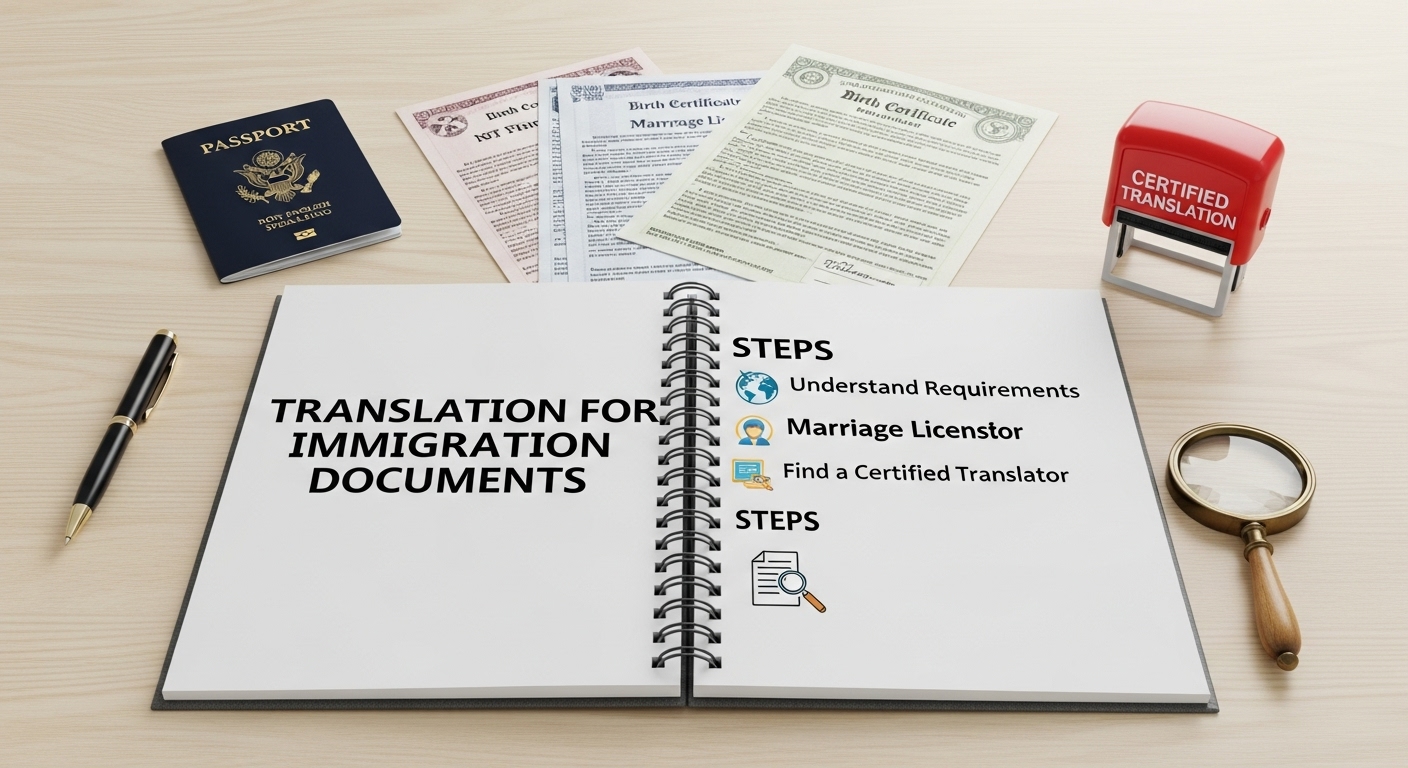
Moving to a new country represents one of life’s most significant decisions, involving complex paperwork, strict deadlines, and high stakes for your future. Translation for immigration documents stands as a critical component of this process, often determining whether your application gets approved or rejected.
Immigration authorities around the world require precise, certified translations that meet specific formatting and accuracy standards, making professional translation services essential rather than optional.
The complexity of immigration translation goes far beyond converting words from one language to another. Birth certificates, marriage licenses, academic transcripts, employment records, and legal documents must be translated with absolute accuracy while maintaining official formatting and legal terminology.
A single error or omission can delay your application by months or lead to permanent rejection, affecting your ability to work, study, or reunite with family in your chosen destination country.
Recent changes in immigration policies worldwide have made translation requirements more stringent and specific. Countries like the United States, Canada, Australia, and European Union nations have implemented detailed guidelines about translator qualifications, certification requirements, and document formatting standards.
Translation for immigration documents now requires understanding not just languages, but also legal systems, cultural contexts, and bureaucratic procedures that vary significantly between countries.
The financial and emotional stakes make choosing the right translation approach crucial for immigration success. Families invest thousands of dollars and wait years for immigration decisions. Students miss enrollment deadlines due to document delays. Professionals lose job opportunities because of translation errors.
Understanding the complete process, requirements, and best practices for translation for immigration documents can mean the difference between achieving your immigration goals and facing costly setbacks. This comprehensive guide walks you through every aspect of immigration document translation, helping you navigate this critical step toward your new life abroad.
Understanding Requirements for Translation for Immigration Documents
Immigration authorities maintain strict standards for document translation that go far beyond basic language conversion. Translation for immigration documents must meet specific legal and formatting requirements that vary significantly between destination countries and visa categories, making it essential to understand exact requirements before beginning the translation process.
The United States Citizenship and Immigration Services (USCIS) requires certified translations accompanied by a certificate of accuracy from the translator or translation agency. This certificate must include specific language stating that the translator is competent in both languages and that the translation is complete and accurate to the best of their knowledge. The translator must also provide their name, signature, address, and qualifications.
Canadian immigration authorities require certified translations from members of provincial translator associations or certified translators recognized by the Immigration, Refugees and Citizenship Canada (IRCC). Translators must include their certification number, contact information, and a statement confirming their qualifications and the accuracy of their translation work.
Australian immigration services mandate translations from accredited NAATI (National Accreditation Authority for Translators and Interpreters) translators for most visa applications. Non-accredited translators can be accepted in specific circumstances, but they must provide detailed information about their qualifications and experience with the relevant languages and subject matter.
European Union countries each maintain their own translation requirements, but most accept sworn translators (traducteurs assermentés in France, vereidigde vertalers in the Netherlands) who are officially recognized by government authorities. These translators have legal authorization to certify their translations for official use in legal and administrative procedures.
Document formatting requirements often prove as important as translation accuracy. Immigration authorities typically require translations to maintain the original document’s layout, including official seals, signatures, and formatting elements. Some countries require specific paper sizes, font requirements, or binding methods for translated documents.
Timing considerations affect translation planning significantly. Rush translations often cost 50-100% more than standard services, but immigration deadlines rarely offer flexibility. Planning translation needs well in advance of application deadlines helps ensure adequate time for quality review and any necessary corrections without premium pricing.
Essential Documents Requiring Translation for Immigration Documents
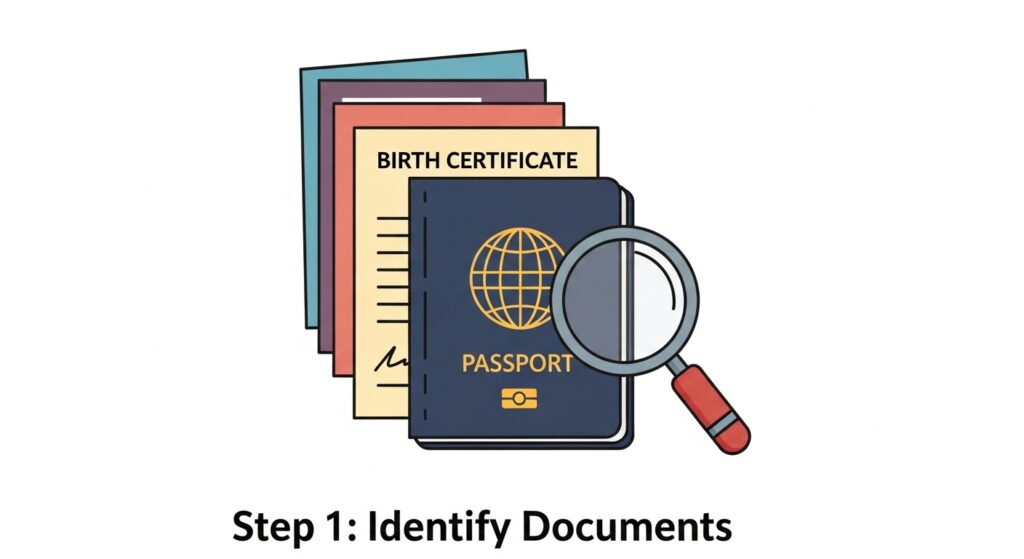
Personal identification documents form the foundation of most immigration applications and require precise translation that captures all information exactly as it appears on original documents. Translation for immigration documents typically begins with these core identity papers that establish your legal identity and personal history.
Birth certificates require careful attention to detail, including exact spelling of names, dates, and places of birth. Many countries use different date formats, naming conventions, and administrative divisions that must be accurately conveyed in translation. Original birth certificates often contain handwritten information, official seals, and stamps that translators must describe precisely in their translations.
Marriage certificates and divorce decrees establish family relationships that affect immigration eligibility and visa categories. These documents often contain complex legal language, property settlements, and custody arrangements that require translators with legal expertise. Family-based immigration applications depend heavily on accurate translation of these relationship documents.
Academic transcripts and diplomas require specialized knowledge of educational systems and terminology. Grade point averages, credit systems, and degree classifications vary significantly between countries, requiring translators who understand both educational systems. Professional licensing and certification documents often accompany academic credentials and need similar specialized translation approaches.
Employment records, including letters of recommendation, job descriptions, and salary statements, require business and legal translation expertise. These documents often determine eligibility for employment-based visas and require accurate translation of job titles, responsibilities, and compensation information that align with immigration requirements.
Medical records and health certificates require translation by professionals with healthcare knowledge. Medical terminology, test results, and treatment histories must be translated accurately to satisfy health requirements and ensure proper medical care continuation in the destination country. Vaccination records require particular attention to vaccine names and dates that might affect entry requirements.
Police clearance certificates and court records require legal translation expertise to accurately convey criminal history information. These documents often use specific legal terminology and procedures that require translators familiar with both legal systems involved in the immigration process.
Financial documents, including bank statements, tax returns, and property deeds, require precise translation of financial terminology and numerical information. Immigration authorities use these documents to assess financial stability and support requirements, making accuracy essential for application success.
Choosing Qualified Translators for Translation for Immigration Documents
Selecting the right translator represents one of the most critical decisions in your immigration journey, as translation quality directly affects your application’s success or failure. Translation for immigration documents requires specific qualifications, experience, and certifications that differ significantly from general business or academic translation services.
Professional certification provides the most reliable indicator of translator qualifications for immigration work. Look for translators certified by recognized professional organizations such as the American Translators Association (ATA), Institute of Translation and Interpreting (ITI), or equivalent organizations in your country. These certifications require rigorous testing and ongoing professional development.
Immigration-specific experience offers valuable advantages beyond general translation skills. Translators who regularly work with immigration documents understand formatting requirements, common terminology, and potential pitfalls that could affect application processing. Ask potential translators about their experience with your specific visa category and destination country.
Legal translation background provides additional expertise for complex documents like court records, contracts, and official government papers. Many immigration documents contain legal language that requires understanding of legal systems and terminology in both source and target languages.
Language pair expertise ensures translators have deep knowledge of both languages involved in your translation project. Some translators specialize in specific language combinations and maintain higher quality standards than generalists who work across multiple language pairs.
Technology capabilities affect both quality and delivery speed for translation projects. Professional translators use computer-aided translation (CAT) tools, terminology management systems, and quality assurance software that improve consistency and accuracy while reducing turnaround times.
References and testimonials from previous immigration clients provide insight into translator performance and customer satisfaction. DirectLine Translator maintains relationships with immigration attorneys and consultants who regularly refer clients for document translation services, providing additional quality validation.
Pricing transparency helps avoid surprises and budget overruns during the translation process. Professional translators provide clear pricing structures, delivery timelines, and revision policies upfront. Extremely low pricing often indicates inexperienced translators or corner-cutting that could jeopardize your immigration application.
Communication skills affect project coordination and problem resolution throughout the translation process. Immigration document translation often involves clarifying ambiguous information, explaining formatting requirements, and coordinating with immigration attorneys or consultants.
Certification and Notarization Process for Translation for Immigration Documents
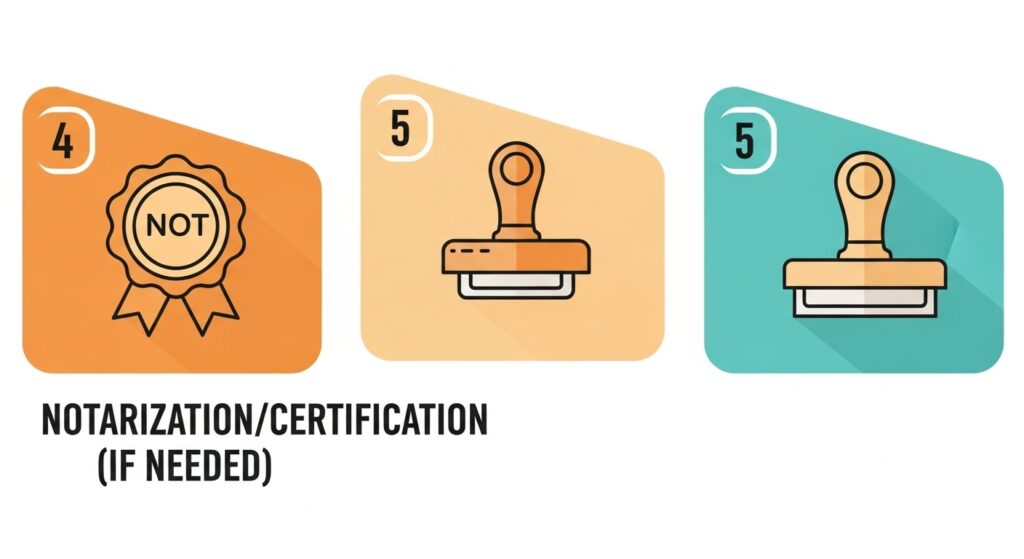
The certification and notarization process for translated immigration documents involves specific legal procedures that validate translation accuracy and translator qualifications. Translation for immigration documents typically requires both certification by the translator and notarization by a public official to meet immigration authority requirements.
Translator certification involves a formal statement accompanying the translation that declares the translator’s qualifications and attests to the accuracy and completeness of their work. This certificate must include specific language required by immigration authorities, the translator’s full name and contact information, their signature, and the date of certification.
Notarization adds an additional layer of verification by having a licensed notary public witness the translator’s signature and verify their identity. The notary attaches an official seal and signature to the certification statement, creating a legal record of the translator’s attestation to their work quality.
Sworn translation, required in some jurisdictions, involves translators taking a legal oath before a court official or government authority about their qualifications and the accuracy of their translation work. Sworn translators often maintain special licenses or registrations that authorize them to provide certified translations for legal and administrative purposes.
Document authentication sometimes requires additional steps beyond basic certification and notarization. Some countries require apostille certification for international document recognition, while others need embassy or consulate authentication of translated documents before immigration authorities will accept them.
Chain of custody documentation ensures translated documents maintain their legal validity throughout the immigration process. Professional translation services maintain detailed records of document handling, translation processes, and quality assurance steps that can be provided if immigration authorities request additional documentation.
Multiple certification levels may be required for complex immigration cases. Some applications need translations certified at both the translator level and the agency level, with additional authentication by legal professionals or government officials depending on specific visa requirements and destination country regulations.
Quality assurance procedures should be documented and available for review by immigration authorities if requested. Professional translation services maintain records of their review processes, including primary translation, secondary review, and final quality checks before certification and delivery.
Storage and handling procedures for original documents require careful attention to prevent damage or loss during the translation process. Professional services maintain secure document handling procedures and insurance coverage to protect client documents throughout the translation and certification process.
Common Challenges in Translation for Immigration Documents
Immigration document translation presents unique challenges that require specialized knowledge and careful attention to detail. Translation for immigration documents involves complex terminology, strict formatting requirements, and zero tolerance for errors that could affect life-changing immigration decisions.
Handwritten documents present significant challenges for translators, particularly when dealing with older birth certificates, marriage licenses, or academic records. Poor handwriting, faded ink, and unfamiliar writing styles can make accurate translation difficult, requiring translators to make professional judgments about unclear text while maintaining complete accuracy.
Missing or incomplete information in original documents creates translation dilemmas that require careful handling. Translators must accurately represent incomplete information without adding assumptions or interpretations that could misrepresent the original document’s content. Immigration authorities need to see exactly what information is and isn’t available in original documents.
Outdated terminology and historical references often appear in older documents that use language, place names, or administrative divisions that no longer exist. Translators must research historical context while providing clear explanations of changes that have occurred since document issuance.
Technical formatting requirements vary significantly between immigration authorities and often change without advance notice. Maintaining exact formatting while accommodating different languages that may require more or less space than the original text requires careful attention to layout and design elements.
Cultural concepts that don’t translate directly between languages require explanation and context that maintains document accuracy while ensuring immigration officials understand the intended meaning. Family relationships, educational systems, and legal concepts often require additional explanation beyond direct translation.
Rushed deadlines pressure translators to work quickly while maintaining absolute accuracy standards. Immigration applications often face strict deadlines that don’t allow for extended translation and review periods, creating pressure that can affect quality if not managed properly.
Multiple document versions sometimes exist for the same individual or event, requiring translators to note discrepancies and help immigration applicants understand how different versions might affect their application. Consistency across multiple related documents becomes critical for immigration success.
Legal implications of translation errors extend far beyond typical translation projects. Immigration document errors can result in application denial, visa revocation, or permanent bars to future immigration benefits, making accuracy and quality assurance absolutely critical for translator liability and client success.
Quality control procedures must be rigorous and well-documented to ensure consistent accuracy across all translated documents. Professional translation services implement multiple review stages and maintain detailed quality assurance records that can be provided to immigration authorities if requested.
Cost Considerations for Translation for Immigration Documents
Understanding the full cost structure for immigration document translation helps applicants budget appropriately while making informed decisions about service providers and quality levels. Translation for immigration documents involves various cost factors beyond basic per-page or per-word pricing that affect total project expenses.
Base translation rates vary significantly depending on language pair, document complexity, and translator qualifications. Common language pairs like Spanish-English typically cost less than rare languages or specialized combinations. Immigration documents often require premium rates due to certification requirements and zero-error tolerance.
Certification and notarization fees add to basic translation costs but are essential for immigration application acceptance. These fees typically range from $25-$100 per document depending on local notary rates and certification complexity. Some translators include certification in their base rates, while others charge separately.
Rush delivery services command premium pricing when immigration deadlines create time pressure. Same-day or next-day translation services often cost 50-100% more than standard delivery times. Planning translation needs in advance helps avoid these premium charges while ensuring adequate review time.
Document complexity affects pricing for immigration translation projects. Simple birth certificates cost less than complex legal documents, academic transcripts, or medical records that require specialized terminology and formatting. Some documents require extensive research or consultation that increases translation time and costs.
Volume discounts may be available for applicants with multiple documents requiring translation. Family immigration applications often involve numerous documents for multiple family members, creating opportunities for package pricing that reduces per-document costs.
Additional services like document scanning, expedited delivery, or consultation with immigration attorneys may be available at additional cost. These services can provide value for complex cases but should be evaluated based on individual needs and budget constraints.
Quality assurance levels affect both pricing and outcomes for immigration document translation. Basic translation with single reviewer costs less than comprehensive review processes involving multiple translators and specialized quality checks, but higher quality levels reduce risks of costly application delays or rejections.
Payment terms and methods vary between translation service providers. Some require full payment upfront, while others offer payment upon delivery or completion. Credit card processing fees, wire transfer costs, or other payment-related expenses should be considered in total project budgeting.
Insurance and liability coverage may be included in premium translation services to protect clients against errors that could affect immigration applications. This coverage typically costs more but provides financial protection against translation errors that could result in application denial or legal complications.
Timeline Management for Translation for Immigration Documents

Effective timeline management ensures translated documents are available when needed for immigration applications while allowing adequate time for quality assurance and any necessary corrections. Translation for immigration documents requires careful coordination with other application components and immigration authority deadlines.
Document collection represents the first critical timeline component that often takes longer than expected. Obtaining original documents from foreign governments, educational institutions, or employers can take weeks or months, particularly for older records or documents from countries with slow administrative processes.
Translation time varies based on document complexity, translator availability, and quality assurance requirements. Simple documents like birth certificates might be completed within 1-2 business days, while complex academic transcripts or legal documents could require 5-10 business days for proper translation and review.
Certification and notarization processes add additional time requirements that must be factored into project timelines. Scheduling notary appointments, arranging sworn translation procedures, or obtaining additional authentication can add several days to the overall timeline.
Review and correction time should be built into all immigration document translation projects. Immigration applicants should review translated documents carefully and allow time for corrections or clarifications before submission deadlines. Rush corrections often incur premium charges and create additional stress.
Coordination with immigration attorneys or consultants requires timeline flexibility to accommodate their review schedules and feedback. Legal professionals often need several days to review translated documents and may request modifications or additional documentation that affects overall timelines.
Buffer time for unexpected delays helps prevent deadline pressures that could compromise translation quality or force expensive rush services. Immigration applications involve multiple moving parts, and delays in one area often affect other components of the application process.
Delivery methods affect timeline management and should be chosen based on urgency and security requirements. Electronic delivery provides fastest turnaround but may not meet requirements for original signatures or notarizations. Physical delivery takes longer but ensures proper handling of certified documents.
Backup plans should be established for critical immigration deadlines that cannot be extended. Having relationships with multiple qualified translators or translation services provides options if primary translators become unavailable or encounter unexpected delays.
Document tracking systems help manage complex immigration cases involving multiple documents, translators, and deadlines. Professional translation services provide tracking capabilities that allow applicants and their representatives to monitor progress and identify potential delays before they become critical problems.
Quality Assurance Standards for Translation for Immigration Documents
Maintaining the highest quality standards for immigration document translation requires comprehensive review processes and quality control measures that eliminate errors before documents reach immigration authorities. Translation for immigration documents demands perfection because even minor errors can result in application delays, rejections, or permanent immigration consequences.
Primary translation quality begins with selecting experienced, qualified translators who understand immigration requirements and maintain consistent accuracy standards. Professional translators use specialized dictionaries, terminology databases, and reference materials to ensure precise translation of legal, medical, and technical terms common in immigration documents.
Secondary review processes involve independent review by additional translators or editors who check accuracy, completeness, and formatting compliance. This second pair of eyes catches errors that primary translators might miss and ensures consistency across multiple related documents in complex immigration cases.
Terminology consistency across multiple documents becomes critical when immigration applications involve numerous translated materials. Professional translation services maintain terminology databases and style guides that ensure consistent translation of names, places, technical terms, and legal concepts across all documents in an application.
Formatting verification ensures translated documents maintain required layouts, fonts, spacing, and design elements specified by immigration authorities. Some countries require exact replication of original document formatting, while others have specific requirements for translated document appearance and organization.
Accuracy verification involves checking all numerical information, dates, names, and other factual content against original documents. Immigration documents often contain critical dates, identification numbers, and personal information that must be transferred exactly without transcription errors.
Legal compliance review ensures translations meet specific requirements established by destination country immigration authorities. Different countries have varying requirements for translator qualifications, certification language, and document authentication that must be followed precisely.
Final proofreading catches typographical errors, formatting inconsistencies, and other issues that could affect document acceptance by immigration authorities. This final review focuses on presentation quality and professional appearance that supports positive reception by immigration officials.
Quality documentation provides records of review processes, translator qualifications, and quality assurance steps taken during translation projects. This documentation can be provided to immigration authorities if they request additional information about translation processes or translator credentials.
Continuous improvement processes help translation services identify common error patterns and implement preventive measures that reduce future quality issues. Regular quality assessments and client feedback help maintain and improve service quality over time.
Working with Immigration Attorneys on Translation for Immigration Documents
Collaboration between translation service providers and immigration attorneys creates synergies that improve application success rates and reduce risks of document-related complications. Translation for immigration documents often requires legal expertise alongside linguistic skills to ensure translations meet both language accuracy and legal compliance requirements.
Attorney review of translation requirements helps ensure all necessary documents are identified and translated according to specific visa category requirements. Immigration attorneys understand which documents are mandatory versus optional and can prioritize translation efforts to maximize application strength while managing costs.
Legal context for translation decisions helps translators understand how specific document interpretations might affect immigration outcomes. Attorneys can provide guidance on handling ambiguous information, incomplete documents, or discrepancies between multiple versions of similar documents.
Coordination of submission timelines ensures translated documents align with other application components and legal strategy requirements. Immigration attorneys manage overall application timing and can advise on optimal sequencing of document translation and submission.
Quality standards consultation helps establish appropriate review levels and quality assurance measures for specific immigration cases. Complex cases or applications with high stakes may justify additional review steps and premium quality assurance measures that attorneys can recommend.
Document authentication guidance helps navigate requirements for apostille certification, embassy authentication, or other additional verification steps that some immigration cases require. Attorneys understand which documents need additional authentication and can coordinate these processes efficiently.
Error resolution procedures should be established upfront to handle any translation issues that arise during application processing. Immigration attorneys can provide guidance on correcting translation errors, submitting amended documents, or addressing immigration authority questions about translated materials.
Communication protocols between translators and attorneys help ensure smooth information flow and rapid problem resolution. Clear communication channels prevent misunderstandings and enable quick responses to questions or issues that arise during translation projects.
Cost allocation strategies help manage translation expenses across multiple application components and family members. Immigration attorneys can advise on prioritizing translation investments to maximize application success while working within budget constraints.
Professional liability coordination ensures appropriate insurance coverage and risk management for both translation services and legal representation. Understanding liability allocation helps both professionals provide optimal service while managing risks associated with immigration application outcomes.
Document Security and Confidentiality in Translation for Immigration Documents
Protecting sensitive personal information during the translation process requires comprehensive security measures that safeguard client privacy while maintaining document integrity throughout the translation workflow. Translation for immigration documents involves highly confidential information that requires professional handling and secure storage procedures.
Confidentiality agreements between clients and translation services establish legal protections for sensitive information contained in immigration documents. These agreements should specify information handling procedures, storage requirements, and destruction protocols for both physical and electronic documents.
Secure document transmission protects information during transfer between clients, translators, and immigration representatives. Professional translation services use encrypted email systems, secure file transfer protocols, and password-protected documents to prevent unauthorized access during transmission.
Physical document security requires controlled access storage, locked filing systems, and limited personnel access to original documents during translation projects. Translation services should maintain secure facilities and documented procedures for handling original documents that clients cannot replace.
Electronic security measures protect digital copies and translated documents from unauthorized access or cyber security threats. Professional translation services implement firewalls, encryption, secure backup systems, and access controls that protect client information from data breaches.
Personnel screening ensures translation staff have appropriate backgrounds and training for handling confidential immigration information. Professional services conduct background checks, provide security training, and maintain confidentiality agreements with all personnel who access client documents.
Document retention policies specify how long translated documents and related materials are maintained after project completion. These policies should balance client service needs with privacy protection and comply with applicable data protection regulations.
Insurance coverage protects both clients and translation services against losses related to document theft, damage, or unauthorized disclosure. Professional liability insurance and cyber security coverage provide financial protection against security-related incidents.
Audit trails document all handling, access, and transmission of client documents throughout the translation process. These records can demonstrate proper security procedures and help investigate any security incidents that might occur.
International compliance requirements may affect document handling procedures for clients from different countries or applying to various destination countries. Data protection regulations like GDPR create additional security requirements that professional translation services must understand and implement.
FAQs On Translation for Immigration Documents: A Step-by-Step Guide:
Q: How long does translation for immigration documents typically take? A: Simple documents like birth certificates usually take 1-3 business days, while complex documents such as academic transcripts or legal records may require 5-10 business days. Certification and notarization add 1-2 additional days. Rush services are available but cost 50-100% more than standard delivery times.
Q: What qualifications should I look for in a translator for immigration documents? A: Look for certified translators with immigration-specific experience, professional association membership (like ATA or ITI), legal translation background, and familiarity with your destination country’s requirements. Ask about their certification process and request references from previous immigration clients.
Q: Do all immigration documents need to be translated by certified translators? A: Yes, most immigration authorities require certified translations from qualified professionals. DIY translations or translations by friends/family members are typically not accepted. Each country has specific requirements for translator qualifications and certification procedures that must be followed exactly.
Q: How much does professional translation for immigration documents cost? A: Costs vary by language pair, document complexity, and urgency. Simple documents typically range from $25-$75 per page, while complex legal or medical documents may cost $50-$150 per page. Certification, notarization, and rush delivery incur additional fees.
Q: Can I use machine translation services like Google Translate for immigration documents? A: No, immigration authorities do not accept machine translations or uncertified translations. Immigration documents require professional human translation with proper certification and notarization. Translation errors can result in application denial or permanent immigration consequences.
Q: What happens if there are errors in my translated immigration documents? A: Translation errors can delay applications, trigger requests for additional documentation, or result in application denial. Professional translation services typically offer correction guarantees and may provide financial protection against errors. Always review translations carefully before submission.
Q: Do I need to translate documents that are already in English? A: Generally no, but some countries require certified copies or specific formatting even for English documents. Check with immigration authorities or your attorney about requirements for English-language documents from foreign countries.
Q: How should I handle incomplete or damaged original documents? A: Professional translators can work with incomplete documents but must note missing information accurately in their translations. For severely damaged documents, you may need to obtain replacement copies from issuing authorities before translation.
Q: What’s the difference between certified translation and sworn translation? A: Certified translation involves a translator’s formal statement of accuracy and qualifications. Sworn translation requires the translator to take a legal oath before a court or government official. Requirements vary by destination country – some accept certified translations while others require sworn translations.
Q: Should I work directly with individual translators or translation agencies? A: Both options have advantages. Individual translators may offer lower costs and direct communication, while agencies provide backup support, quality assurance systems, and project management capabilities. Choose based on your specific needs, timeline, and complexity of your document portfolio.