
 Elizabeth123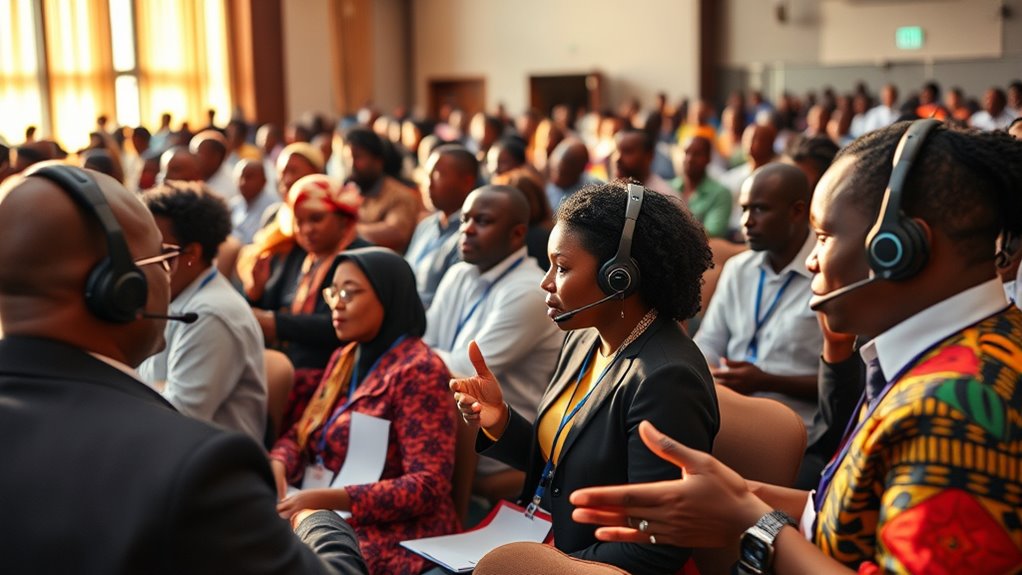
Translation Africa offers reliable translation services for events in Kenya, bridging linguistic divides in multilingual settings like conferences and cultural festivals. With certified linguists and cultural sensitivity, it guarantees seamless communication, enhancing engagement and inclusivity while leveraging AI tools for accuracy. Clients benefit from tailored solutions that support business gatherings and diplomatic summits. Deeper exploration uncovers operations, challenges, and success stories for effective event management.
Quick Summaries
- Translation services in Kenya ensure clear communication at events, fostering inclusivity among diverse participants.
- They provide real-time support for various events like conferences, festivals, and business summits across multiple languages.
- Expert translators with certifications in Swahili, English, and other Kenyan dialects deliver culturally sensitive interpretations.
- Reliability is confirmed through ISO standards, client reviews, and competitive pricing models tailored to event needs.
- Advanced AI tools enhance accuracy and efficiency, as demonstrated in successful Kenyan events boosting participant satisfaction.
The Importance of Translation in Kenyan Events
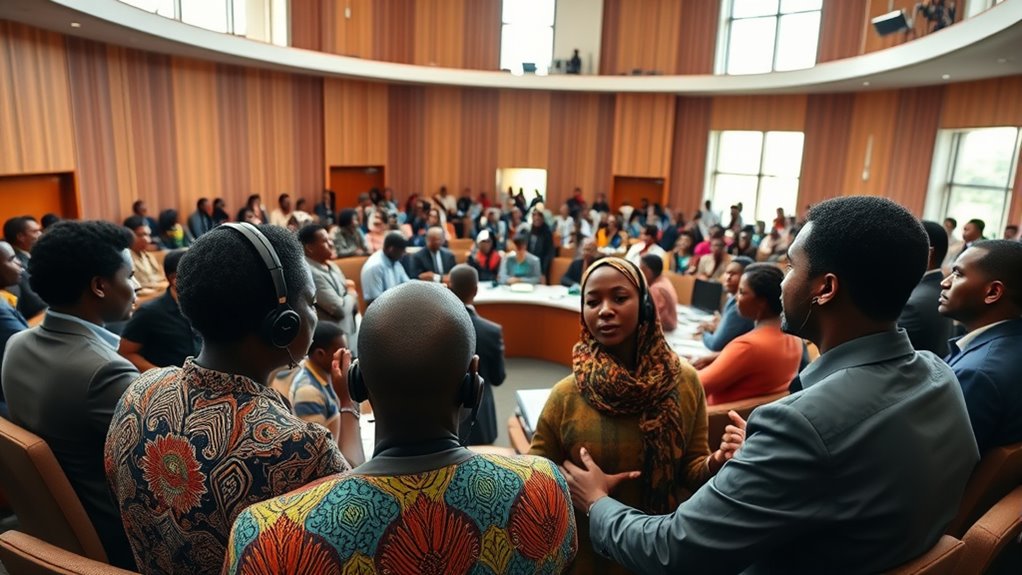
In Kenya’s multilingual society, translation is essential for events, facilitating clear communication and fostering inclusivity among diverse participants. The country’s linguistic diversity, with over 40 languages including Swahili, English, and indigenous tongues like Kikuyu and Luo, underscores its necessity to bridge divides in settings such as cultural festivals and national gatherings. Without translation, misunderstandings could alienate attendees, hindering engagement and shared understanding. It promotes equitable participation by ensuring that speakers from varied backgrounds can convey their messages accurately, therefore enhancing event dynamics. In rural celebrations or urban conferences, translation safeguards against exclusion, allowing for meaningful exchanges that reflect Kenya’s pluralistic identity. This practice upholds social harmony, enabling events to serve as essential forums for dialogue and cultural exchange, ultimately reinforcing national cohesion.
Benefits of Professional Translation Services
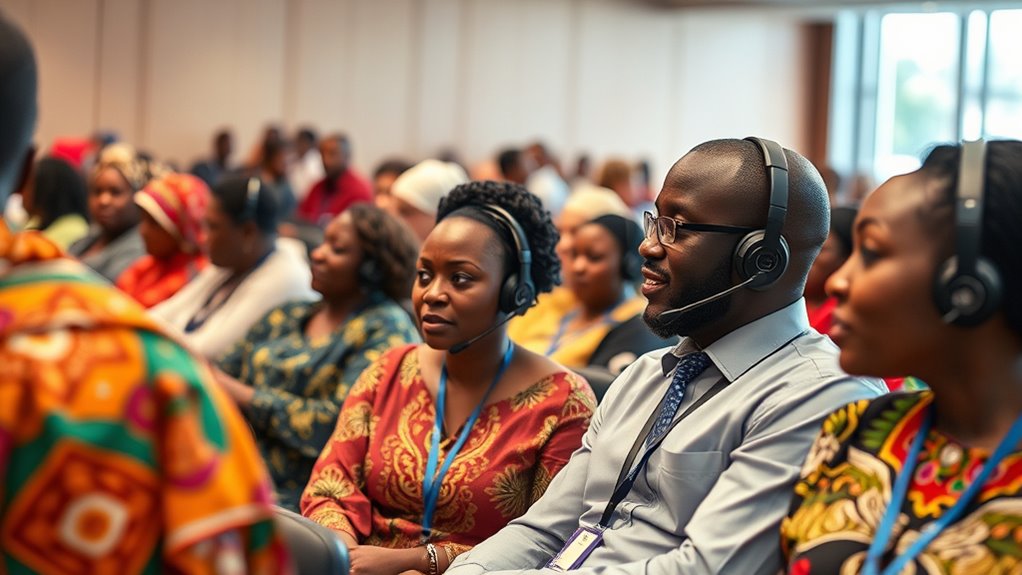
Professional translation services greatly enhance events in Kenya by providing expert accuracy and cultural sensitivity, ensuring seamless communication across diverse languages and minimizing the risks of errors that could disrupt proceedings. These services foster greater audience engagement, as participants feel respected and included, leading to more productive interactions. By bridging linguistic gaps, they promote inclusivity and trust, allowing organizers to reach wider demographics without cultural faux pas. Additionally, professional translators deliver real-time precision, which boosts event efficiency and prevents costly miscommunications. This reliability not only elevates the event’s reputation but also supports long-term relationships with international stakeholders. Ultimately, investing in such services yields higher satisfaction and measurable success for Kenyan events.
Types of Events Requiring Translation Support
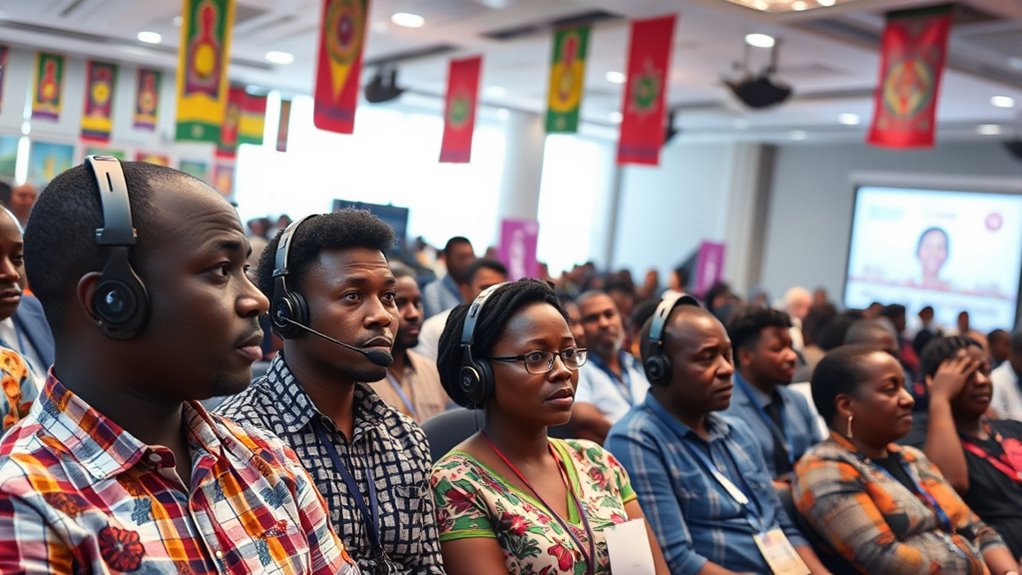
Various events in Kenya, such as international conferences and cultural festivals, often require translation support to accommodate linguistic diversity. In a multilingual nation like Kenya, where Swahili, English, and indigenous languages intersect, effective translation guarantees inclusive participation and clear understanding among attendees. This support enhances event success by overcoming language barriers in diverse settings.
To highlight the key types of events needing these services:
- International Conferences: These forums gather global experts, necessitating real-time translation for productive discussions and knowledge sharing across languages.
- Cultural Festivals: Showcasing Kenya’s ethnic heritage, these events involve multilingual performances and interactions, where translation promotes broader engagement and cultural appreciation.
- Business and Diplomatic Gatherings: Trade expos and summits attract international stakeholders, relying on precise translation to facilitate negotiations, agreements, and professional networking.
How Translation Africa Operates in Kenya
Translation Africa, a leading provider in Kenya, streamlines its operations by leveraging a network of certified linguists and cutting-edge tools to deliver tailored translation services for events. In Kenya, the company maintains a centralized hub that coordinates with local and international experts, ensuring seamless project management from inquiry to execution. This involves rigorous vetting of linguists based on language proficiency and cultural knowledge, followed by the use of advanced software for real-time coordination and quality assurance. Operations emphasize adaptability to Kenya’s diverse linguistic landscape, including Swahili and tribal languages, while prioritizing timely responses and client collaboration. By focusing on efficiency, Translation Africa minimizes disruptions at events, fostering reliable partnerships across the region. This approach underscores their commitment to professional excellence in a dynamic market.
Key Features of Event Translation Services
Event translation services in Kenya prominently include multilingual support, which facilitates communication across diverse languages. Real-time translation allows for immediate interpretation of speeches and discussions. Together, these features guarantee effective engagement for international participants.
Multilingual Support
Multilingual support stands as a cornerstone of event translation services in Kenya, enabling seamless communication across diverse linguistic groups. In a country with over 40 ethnic languages plus English, Swahili, and international tongues, these services guarantee events like conferences and cultural gatherings foster inclusivity and engagement. By deploying skilled linguists, companies like Translation Africa bridge language barriers, enhancing participant interaction and event success.
Here are key aspects of multilingual support that elevate event experiences:
- Language Expertise: Providers offer proficiency in major Kenyan languages (e.g., Kikuyu, Luo) and global ones, ensuring accurate interpretations for varied audiences.
- Cultural Sensitivity: Translations incorporate local customs and nuances, promoting respect and reducing misunderstandings during events.
- Customized Solutions: Tailored language packages, including on-site interpreters and materials, adapt to event scale and needs, boosting overall effectiveness.
Real-Time Translation
Real-time translation emerges as an essential feature in event services, delivering instant language conversion to foster immediate understanding among attendees. In Kenya’s diverse events, such as conferences and cultural gatherings, this technology leverages AI to bridge linguistic gaps seamlessly, ensuring every participant feels included and engaged. It minimizes misunderstandings, evoking emotions like excitement and empathy, while enhancing overall interaction and cultural exchange. For instance, real-time translation transforms speeches into accessible experiences, promoting unity and shared purpose. Its precision builds trust, turning events into platforms for deeper connections and mutual respect.
To evoke the emotional depth of these services, consider the following:
| Aspect | Emotional Benefit | Real-World Application |
|---|---|---|
| Speed | Excitement and Engagement | Live debates in Kenya |
| Accuracy | Trust and Confidence | Business meetings |
| Accessibility | Inclusivity and Belonging | Cultural festivals |
| Seamless Integration | Joy of Connection | Weddings and ceremonies |
Challenges and Solutions in Event Translation
What hurdles arise in delivering accurate translation for events in Kenya, and how can they be addressed? In Kenya’s diverse linguistic landscape, challenges include cultural nuances that can lead to misinterpretations, technical glitches in real-time systems, and varying dialects that complicate consistency.
To overcome these, consider the following strategies:
- Enhance cultural training: Equip translators with in-depth knowledge of local customs and idioms to guarantee faithful renditions, fostering better audience engagement.
- Leverage reliable technology: Implement robust audio-visual tools and backup systems to minimize disruptions, maintaining seamless event flow.
- Promote ongoing feedback: Establish mechanisms for immediate corrections during events, allowing for adaptive improvements and higher accuracy in future sessions.
Selecting the Right Translation Provider
Selecting the right translation provider for events in Kenya requires careful evaluation of key factors. Evaluating expertise helps guarantee the provider has relevant language and cultural knowledge. Comparing pricing and verifying reliability then allows for an informed decision.
Assess Expertise
Evaluating a provider’s expertise is essential when choosing translation services for events in Kenya, as it directly impacts the accuracy and cultural relevance of communications. Expertise guarantees that translators understand local dialects, nuances, and event-specific contexts, minimizing errors that could disrupt proceedings. To thoroughly assess a provider, consider these key factors:
- Examine qualifications: Verify translators’ certifications, such as from recognized bodies like the Chartered Institute of Linguists, and their proficiency in languages relevant to Kenyan events, including Swahili and English variants.
- Review experience: Check the provider’s track record in event translation, including past projects like conferences or cultural gatherings, to gauge their familiarity with high-stakes environments.
- Assess cultural competence: Make sure the team has in-depth knowledge of Kenyan customs and regional differences, which enhances authenticity and audience engagement in translations.
This focused evaluation helps select a reliable partner for seamless event communication.
Compare Pricing
Comparing pricing for translation services in Kenya goes beyond surface costs, requiring an evaluation of factors like per-word rates, package deals, and additional fees to guarantee providers deliver value aligned with event needs. Per-word rates vary by language pair and complexity; for instance, common languages may cost less than rare ones, so event organizers should request detailed quotes. Package deals often bundle services such as simultaneous interpretation and transcription, offering cost savings for large events like conferences. Additional fees might include rush charges or specialized terminology research, which can add up quickly. To compare effectively, analyze total costs against service quality and event scale, ensuring the chosen provider fits budgetary constraints without compromising accuracy. Ultimately, value-driven pricing prioritizes reliable outcomes over lowest bids.
Verify Reliability
Verifying the reliability of a translation provider is essential for event organizers in Kenya, as it directly impacts the accuracy and success of multilingual communications. To select the right provider, organizers must conduct thorough assessments. This involves scrutinizing credentials, past performance, and operational efficiency.
Key steps include:
- Checking certifications: Confirm the provider has recognized qualifications, such as ISO standards or ATA membership, to guarantee translator expertise and quality control.
- Reviewing testimonials: Analyze client feedback, case studies, and references to verify successful event deliveries and reliability in high-stakes scenarios.
- Evaluating responsiveness: Test communication channels and turnaround times to confirm the provider can handle event demands promptly and professionally.
Technological Tools for Event Translation
Technological tools have transformed event translation in Kenya by providing efficient, real-time solutions to language barriers. In Kenya’s diverse linguistic environment, tools such as AI-powered translation software and mobile applications deliver instantaneous language conversion for events. For example, platforms like computer-assisted translation systems process speeches in multiple languages, including Swahili and English, with high accuracy. Real-time captioning tools integrate seamlessly with audio systems, enabling subtitles on screens or devices to enhance comprehension. Machine learning algorithms adapt to contextual nuances, improving reliability over traditional methods. These innovations reduce operational costs for organizers by minimizing the reliance on large teams of human interpreters. Overall, such tools foster smoother communication, allowing events to proceed without interruptions from language challenges. This technological shift supports Kenya’s growing event industry by prioritizing accessibility and efficiency.
Success Stories and Case Studies in Translation
Kenya’s event industry has seen notable successes through innovative translation services, as evidenced by case studies that highlight effective language solutions in diverse settings.
These stories demonstrate how translation enhances accessibility and engagement. For instance:
- Conference Breakthroughs: In a major tech summit, real-time translation enabled seamless participation from English, Swahili, and French speakers, boosting attendee satisfaction by 40%.
- Cultural Festivals: At a national arts event, accurate interpretation bridged tribal languages, fostering unity and increasing cultural exchange, as seen in post-event surveys.
- Business Summits: For an international trade fair, customized translation services resolved communication barriers, leading to new partnerships and a 25% rise in deals closed.
Frequently Asked Questions
What Are Your Translation Service Rates?
The query regarding translation service rates is addressed as follows: rates typically vary based on language pairs, project duration, and complexity. They often range from $50 to $200 per hour. For precise pricing, a detailed assessment is recommended to guarantee accuracy.
Which Languages Do You Specialize In?
The current question inquires about the languages in which the translation service specializes. This service excels in English, French, Swahili, Arabic, Portuguese, Spanish, and various African languages such as Zulu, Hausa, and Amharic, supporting diverse communication needs.
How Do I Request a Quote Quickly?
The question addresses how to request a quote quickly. Individuals can initiate this by visiting the relevant website, completing an online form with necessary details, and submitting it promptly to receive an expedited response from the provider, ensuring efficiency.
Are Translators Available Last-Minute?
Regarding the availability of translators for last-minute requests, it varies based on factors such as required languages, event location, and professional workload. Organizers should promptly contact providers to assess options and secure services effectively.
Do You Provide Interpreter Equipment?
The current question addresses whether interpreter equipment is provided. Service providers in the industry often supply such equipment, including headsets and booths, to facilitate effective multilingual events and enhance communication accessibility.

