
 Elizabeth123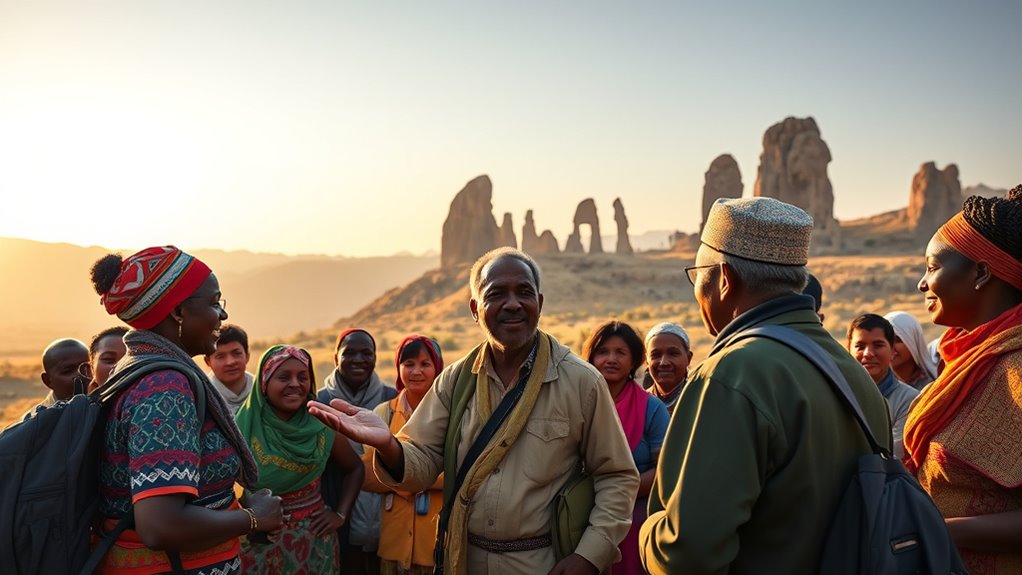
Translation services are essential in Ethiopia’s tourism sector, helping international visitors overcome language barriers and immerse in local cultures. Translation Africa provides professional translation of brochures, websites, and on-site interpretation for guided tours, along with cultural adaptations in key languages like Amharic, Oromo, Tigrinya, and Somali. These services enhance communication, reduce misunderstandings, and support sustainable travel growth. Deeper insights into applications and collaborations await in the content that follows.
Quick Summaries
- Translation Africa offers professional translation services to convert tourism materials like brochures and websites into key Ethiopian languages.
- On-site interpretation by Translation Africa provides live language support for guided tours, enhancing visitor interactions in Ethiopia.
- Translation Africa’s cultural adaptation services adjust promotional content to respect local traditions, improving tourist engagement.
- Customized solutions from Translation Africa, such as audio guides, support inclusive tourism experiences for diverse visitors in Ethiopia.
- Translation Africa’s precise and culturally sensitive services ensure clear communication during essential activities like hotel check-ins and emergency assistance.
The Role of Translation in Ethiopian Tourism
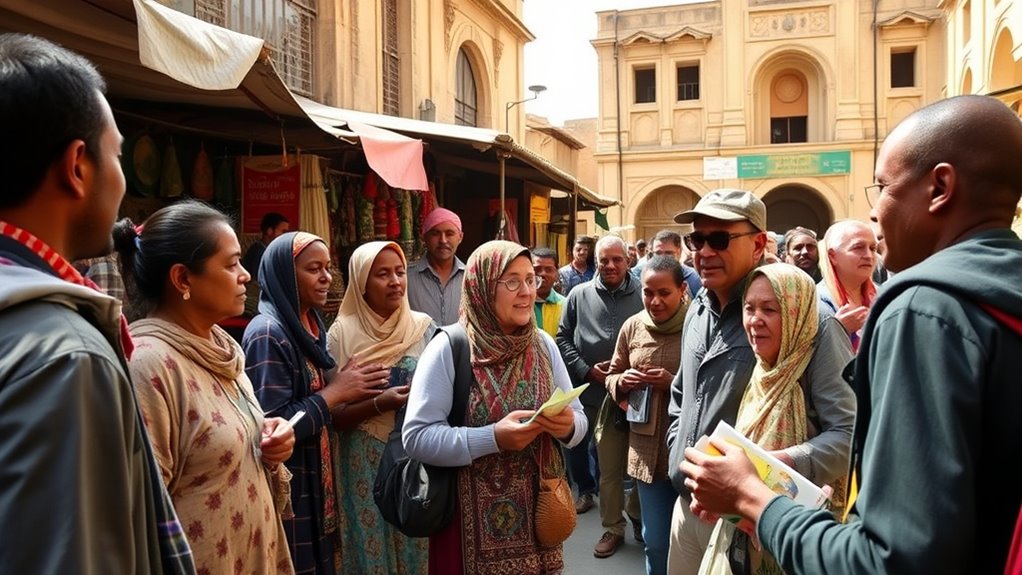
Translation plays a pivotal role in Ethiopian tourism by overcoming language barriers and enhancing visitor experiences. It enables seamless communication between international visitors and local communities, fostering deeper cultural immersion and mutual understanding. For instance, accurate translations of historical site information and guided tours allow tourists to appreciate Ethiopia’s rich heritage, from ancient rock churches to vibrant festivals, without confusion. This accessibility not only boosts satisfaction but also encourages repeat visits and positive word-of-mouth. Furthermore, translation supports inclusive tourism by assisting diverse groups, including those with disabilities, to navigate Ethiopia’s diverse landscapes safely. Ultimately, it bridges gaps, promoting Ethiopia as a welcoming destination and contributing to sustainable growth in the sector.
Key Services Provided by Translation Africa
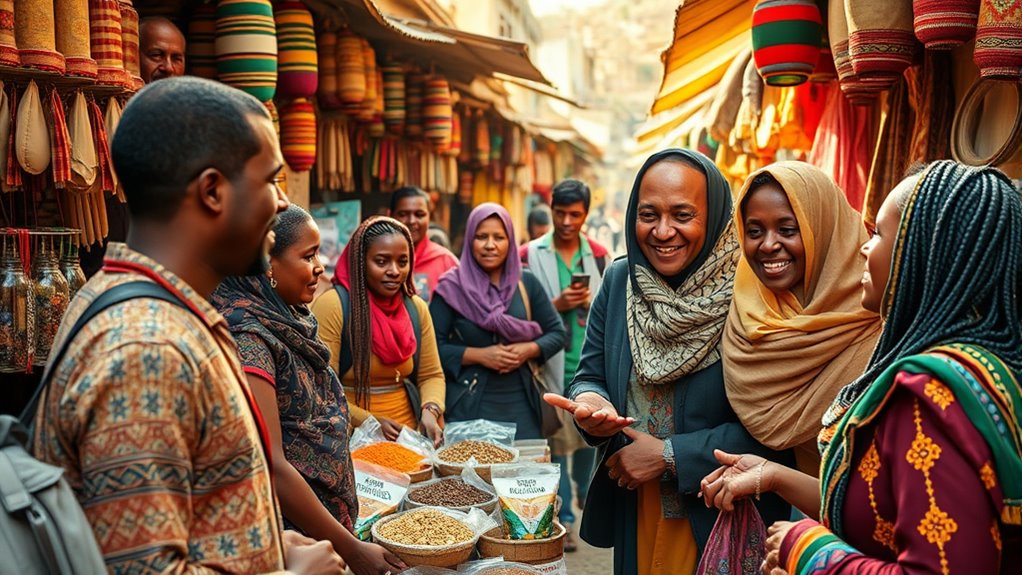
The key services offered by Translation Africa include professional translation of tourism materials, on-site interpretation for guided tours, and cultural adaptation for promotional content. These offerings enhance accessibility and engagement for tourists exploring Ethiopia’s vibrant sites. By focusing on precision and cultural sensitivity, Translation Africa bridges communication gaps effectively.
To highlight these services in a relatable way:
- Professional Translation: Converts brochures, websites, and guides into clear, accurate formats, aiding seamless navigation.
- On-Site Interpretation: Provides live language support during tours, ensuring real-time understanding and interaction.
- Cultural Adaptation: Adjusts content to align with local traditions, making promotional materials more authentic and appealing.
- Customized Support: Offers tailored solutions like audio guides or event facilitation, boosting visitor satisfaction and safety.
Essential Languages for Visitors in Ethiopia

Essential languages for visitors in Ethiopia encompass key ones that aid communication and cultural engagement. These languages help tourists navigate daily interactions and access services effectively. Useful phrases in these languages further support practical exchanges during travel.
Key Languages Needed
Ethiopia’s linguistic diversity demands familiarity with several key languages to enhance visitor experiences. With over 80 ethnic languages, tourists benefit from knowing those most prevalent to foster better communication and cultural immersion. This knowledge aids in exploring markets, historical sites, and local customs without relying solely on translation services.
- Amharic: As the official language, it’s essential in Addis Ababa and government interactions, facilitating daily transactions and tours.
- Oromo: Widely spoken in the south and west, it’s key for engaging with communities in regions like Oromia, enriching rural adventures.
- Tigrinya: Predominant in the north, particularly Tigray, this language unveils deeper connections at ancient sites like Aksum.
- Somali: Critical in the east, especially near the Somali border, for safe travels and interactions in border towns.
Useful Tourist Phrases
Learning a few key phrases in Ethiopia’s major languages, such as Amharic and Oromo, enables tourists to navigate daily interactions more effectively, fostering genuine connections and enhancing cultural exchanges during their visits. These phrases cover essentials like greetings, directions, and basic courtesies, which help bridge language barriers and show respect for local customs. For instance, simple words can ease transactions in markets or conversations with guides.
| English Phrase | Amharic Translation |
|---|---|
| Hello | Selam |
| Thank you | Amsigenalo |
| Where is the hotel? | Hotel indet new? |
This practice not only aids practical needs but also enriches the travel experience, encouraging mutual understanding and memorable encounters in Ethiopia’s diverse regions.
Enhancing Tourist Experiences Through Translation
As tourists explore Ethiopia’s rich cultural and historical sites, accurate translation services bridge language barriers, greatly enriching their experiences by facilitating communication and fostering deeper cultural immersion. These services transform travel by making interactions more meaningful and accessible, allowing visitors to appreciate nuances in language and customs. Translation goes beyond words, promoting empathy and connection in diverse settings.
Here are key ways translation enhances tourist experiences:
- Enables clear communication with locals, reducing misunderstandings and building trust during conversations.
- Unlocks cultural depth, helping tourists understand folklore, traditions, and site histories with precision.
- Supports immersive activities, such as guided tours where accurate translations reveal hidden insights.
- Boosts personal growth, encouraging travelers to engage confidently and form lasting memories through shared stories.
Real-World Applications in Ethiopian Travel
In practical settings, translation services play a pivotal role in Ethiopian tourism, from guiding visitors through the ancient churches of Lalibela to assisting negotiations in Addis Ababa’s vibrant markets. These services enable smooth interactions in everyday scenarios, such as airport navigation and hotel bookings, enhancing safety and efficiency. For instance, they bridge language gaps during excursions to the Simien Mountains or while arranging local transport.
| Scenario | Role of Translation Services |
|---|---|
| Guided Tours | Real-time interpretation for sites |
| Hotel Check-ins | Accurate handling of reservations |
| Market Bargaining | Facilitating fair negotiations |
| Emergency Assistance | Clear communication for safety |
| Transportation Queries | Directing travelers effectively |
Cultural Aspects of Translation in Tourism
Beyond practical applications in Ethiopian travel, translation services play a key role in handling cultural nuances during tourism. In Ethiopia’s diverse cultural tapestry, translators must adeptly convey meanings that respect traditions, languages, and social contexts, fostering genuine connections between visitors and locals. This guarantees tourism experiences are enriching and authentic.
- Idiomatic Adaptation: Translators reinterpret local idioms and proverbs to preserve their cultural depth, avoiding literal translations that might distort meanings or cause offense.
- Social Etiquette Handling: Accurate conveyance of customs, such as greetings or taboos, helps tourists navigate interactions respectfully and build positive relationships.
- Historical and Symbolic Translation: Rendering references to Ethiopia’s heritage, like ancient sites or rituals, with precision maintains the integrity of cultural stories.
- Dialect and Regional Sensitivity: Addressing variations in languages guarantees inclusive communication, enhancing tourists’ appreciation of Ethiopia’s multifaceted identity.
Advantages of Expert Translation Providers
Expert translation providers in Ethiopia’s tourism sector offer significant advantages that improve service quality. Enhanced accuracy guarantees that translations are precise and free from errors, facilitating better communication. Cultural expertise allows for adaptations that respect local customs and contexts, enhancing visitor experiences.
Enhanced Accuracy
The advantages of expert translation providers lie in their ability to deliver enhanced accuracy, minimizing errors that could misrepresent Ethiopia’s cultural and historical sites. This precision guarantees that promotional materials, guides, and communications effectively convey intended meanings, fostering trust among international visitors.
To achieve this, expert providers employ several strategies:
- Rigorous translator selection: Only certified professionals with proven expertise handle translations, reducing inaccuracies from the outset.
- Multi-layer proofreading: Documents undergo multiple reviews by native speakers, catching subtle errors that machines might miss.
- Advanced tools integration: Utilization of AI-assisted software for consistency checks, while human oversight maintains nuance.
- Customized quality metrics: Tailored benchmarks for tourism content guarantee context-specific accuracy, enhancing reliability.
Cultural Expertise
Cultural expertise among professional translators greatly enhances the authenticity of communications in Ethiopia’s tourism sector, ensuring that cultural nuances and traditions are accurately conveyed to global audiences. Expert providers possess in-depth knowledge of Ethiopia’s diverse ethnic groups, languages, and customs, which prevents misinterpretations that could alienate visitors. For instance, they adeptly handle subtleties in Amharic, Oromo, or Tigrinya, translating not just words but contextual meanings tied to rituals, folklore, and social norms. This precision fosters trust, enriching tourist experiences and boosting Ethiopia’s appeal as a cultural destination. By avoiding cultural errors, such as inappropriate phrasing in promotional materials, expert translators help maintain positive international perceptions, ultimately driving sustainable tourism growth. Their role extends to training programs, equipping local guides with accurate multilingual tools for seamless interactions, thereby elevating service quality and economic benefits.
Incorporating Translation Into Tour Planning
How can translation services be seamlessly integrated into tour planning? Effective integration guarantees that language barriers do not hinder cultural exchanges in Ethiopia’s vibrant tourism sector. It involves strategic steps to enhance communication and accessibility for international visitors.
- Early Collaboration: Tour planners should engage professional translators from the outset to adapt itineraries, guaranteeing all materials like guides and maps are available in multiple languages.
- Customized Content: Develop translated promotional materials and briefing documents tailored to specific tourist groups, making cultural sites more relatable and engaging.
- Staff Training: Incorporate language sensitivity training for tour operators, enabling them to facilitate basic interactions and foster trust with diverse visitors.
- On-Site Coordination: Schedule interpreters for key events or site visits to handle real-time queries, promoting smoother experiences without disrupting the flow.
This approach not only enriches tours but also supports sustainable tourism growth in Ethiopia. (124 words)
Innovative Tools for Tourism Translation
Innovative tools are transforming translation services in Ethiopia’s tourism industry, leveraging advanced technologies to overcome language barriers efficiently. AI-powered applications, such as neural machine translation systems, enable real-time conversion of text, speech, and even visual content into languages like Amharic, Oromo, and English. These tools integrate seamlessly into mobile devices, allowing tourists to navigate sites like the Simien Mountains or Lalibela with instant accuracy. Voice recognition software facilitates effortless communication between visitors and local guides, reducing misunderstandings and enhancing cultural immersion. Additionally, augmented reality apps overlay translations on historical sites, preserving Ethiopia’s rich heritage while making it accessible. By prioritizing data security and user-friendly interfaces, these innovations boost efficiency, ensuring a more inclusive and enjoyable travel experience for global visitors. Overall, such advancements empower Ethiopia’s tourism sector to thrive in a multilingual world.
Collaborations With Ethiopian Tour Operators
Collaborations with Ethiopian tour operators provide key partnership benefits that enhance the effectiveness of translation services in tourism. Joint projects between translation providers and operators facilitate the development of tailored language solutions for travelers. Operator alliances further strengthen these efforts by promoting broader access to multilingual support in Ethiopia’s tourism sector.
Partnership Benefits
Partnering with Ethiopian tour operators enables translation services to bridge language barriers effectively, fostering smoother interactions for tourists exploring Ethiopia’s diverse cultural landscapes. Such collaborations yield key advantages, enhancing both tourism experiences and operational efficiency. These partnerships create mutual value by leveraging local expertise and global linguistic capabilities.
Here are four notable benefits:
- Enhanced Communication: Real-time translations facilitate clearer exchanges, reducing misunderstandings during tours and cultural exchanges.
- Cultural Accessibility: Tourists gain deeper insights into Ethiopia’s heritage, as operators integrate tailored language support for immersive experiences.
- Operational Efficiency: Streamlined services lower costs for operators while boosting tourist satisfaction through reliable support.
- Market Expansion: Partnerships attract more international visitors, fostering loyalty and positive word-of-mouth for sustainable growth.
Joint Projects
Ethiopian tour operators and translation providers have launched joint projects to integrate language support into tourism initiatives, fostering more inclusive travel experiences. These efforts focus on developing customized translation tools, such as multilingual audio guides and on-site interpreters for cultural sites like the Simien Mountains and Lalibela. Projects also encompass training workshops where operators collaborate with linguists to enhance communication skills, ensuring seamless interactions with international visitors. For example, initiatives have produced digital platforms that offer real-time language conversion for tour descriptions, making Ethiopia’s attractions more accessible. By prioritizing practical applications, these collaborations reduce misunderstandings and enrich traveler engagement, ultimately supporting sustainable tourism growth without overlapping broader partnerships. This approach highlights the value of targeted, innovative language integration in enhancing visitor satisfaction.
Operator Alliances
Alliances with tour operators have become essential for expanding translation services in Ethiopia’s tourism industry, enabling providers to embed language solutions into travel packages. This strategy fosters better integration of language support, helping to bridge cultural and linguistic gaps for tourists. In Ethiopia, such partnerships enhance the overall travel experience by combining translation expertise with local knowledge.
- Broader market access: Collaborations allow translation providers to reach more tourists through operator networks, increasing service visibility.
- Tailored language solutions: Operators can customize translations for specific tours, ensuring relevance and improving user satisfaction.
- Enhanced cultural exchange: Accurate, real-time translations promote deeper understanding of Ethiopia’s diverse heritage, enriching visitor interactions.
- Business efficiency gains: Partnerships reduce costs via shared resources, boosting profitability for both translation firms and operators.
These alliances ultimately drive sustainable tourism growth in Ethiopia.
Affordable Translation Options for Travel Businesses
Travel businesses in Ethiopia face the challenge of bridging language barriers while managing costs, making affordable translation options a key consideration for enhancing customer experiences and expanding reach. For instance, utilizing freelance translators offers a cost-effective alternative, as they provide on-demand services at competitive rates without long-term commitments. Online translation tools, such as user-friendly apps and software, enable real-time language conversion for marketing materials, websites, and customer interactions, often at minimal subscription fees. Partnerships with local translation agencies can further reduce expenses through bulk discounts or shared resources, ensuring accuracy in key languages like Amharic, Oromiffa, and English. These options allow businesses to customize services based on budget, from basic document translation to interactive guided tours, ultimately boosting accessibility and satisfaction for international tourists while maintaining financial viability.
Emerging Developments in Translation for Tourism
The tourism sector is witnessing rapid advancements in translation technology, such as AI-powered tools and neural machine learning, which deliver real-time accuracy across diverse languages. In Ethiopia, these developments are enhancing visitor experiences by bridging communication gaps and promoting cultural exchange. Innovations are making translation more accessible, efficient, and tailored to tourism needs.
- AI-driven apps: Offer instant voice and text translation for tourists exploring sites like the Simien Mountains.
- Neural networks: Improve accuracy in local languages, such as Amharic, for seamless interactions with guides.
- Mobile integration: Enable on-the-go phrasebooks and augmented reality tours, boosting engagement.
- Custom analytics: Provide data on language trends to refine services, ensuring personalized and inclusive travel.
Frequently Asked Questions
How Do I Request a Quote for Services?
The current question seeks guidance on requesting a quote for services. Individuals typically contact the provider via email, phone, or website, providing details like service type, scope, and timeline. This enables the provider to deliver a tailored estimate promptly.
What Payment Methods Do You Accept?
The question regarding accepted payment methods is now addressed. The provider accepts major credit cards such as Visa and Mastercard, bank transfers, PayPal, and other digital payment solutions to facilitate ease of transaction for clients.
Are Your Translators Certified Professionals?
The question raised concerns whether translators are certified professionals. It is confirmed that these translators hold relevant certifications and expertise, ensuring reliable and accurate language services in diverse contexts.
Can I Get Translations for Personal Documents?
Inquiries regarding translations for personal documents are common, with many professional services offering such options. Individuals can seek accurate, certified translations for items like passports or certificates, ensuring confidentiality and compliance with standards.
How Do I Provide Feedback on Your Services?
The individual seeking to provide feedback on services can submit comments via email to the designated address or through the online form on the website. The organization reviews all feedback to improve quality and address concerns effectively.