
 Elizabeth123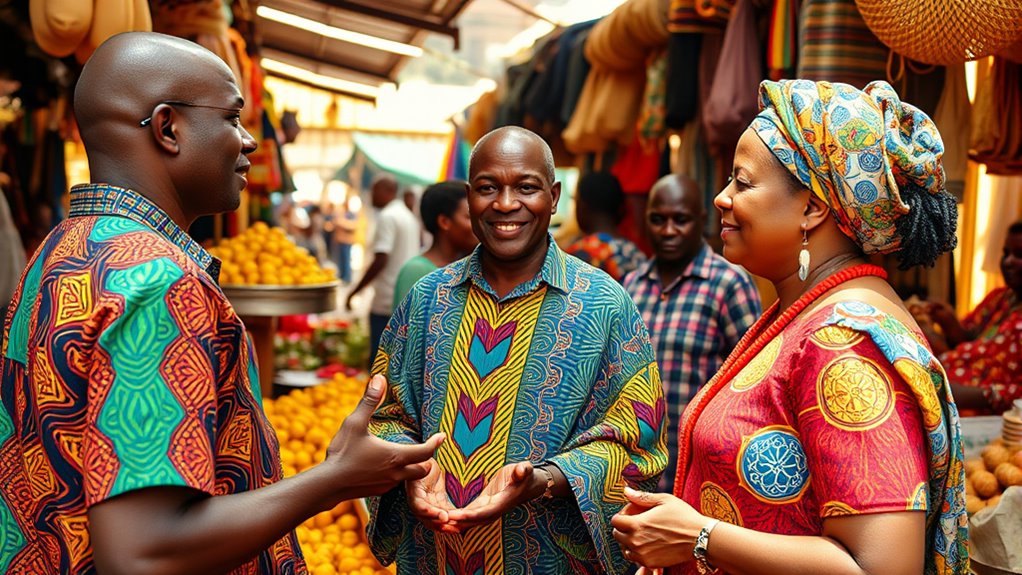
Twi to English translation in Ghana serves as an essential bridge for communication in education, business, and cultural preservation, drawing on the language’s tonal nuances and agglutinative features. Professional services from agencies like Ghana Translation Co. guarantee accuracy and cultural sensitivity, aiding negotiations and community interactions. This process enhances bilingual opportunities, boosting cognitive skills and economic prospects. Exploring related aspects reveals insights into tools, challenges, and future advancements in African language translation.
Quick Summaries
- Ghana provides professional Twi to English translation services through certified agencies like Ghana Translation Co.
- Accurate Twi-English translations incorporate cultural nuances and tonal variations for effective communication.
- Translation Africa offers specialized services for Twi to English conversions in business, education, and healthcare sectors.
- Advanced tools and software support efficient Twi-English translation processes in Ghana.
- Bilingual Twi-English expertise boosts opportunities in Ghana’s multilingual economy and cultural exchanges.
The Basics of Twi Language
Twi, a widely spoken language in Ghana, forms part of the Akan group and features a tonal structure that influences its pronunciation and meaning. This tonal system means that pitch variations can alter word meanings, making it essential for learners to master intonation. Twi uses the Latin alphabet with additional diacritics to represent its sounds, including nasal vowels and specific consonants like “kw” and “gy.” Grammatically, it is an agglutinative language, where words are formed by adding prefixes, suffixes, and infixes to roots, affecting tense, aspect, and possession. For instance, verbs change based on subject and object markers. The language includes dialects such as Asante, Akuapem, and Fante, each with subtle variations in vocabulary and pronunciation. Overall, Twi’s structure reflects Ghana’s rich cultural heritage, emphasizing oral traditions and community communication. Its basic vocabulary draws from everyday life, with words like “ɛyɛ” meaning “it is” and “me” for “I.” Learning Twi involves practicing these elements to build foundational skills.
Importance of Twi Translation in Ghana
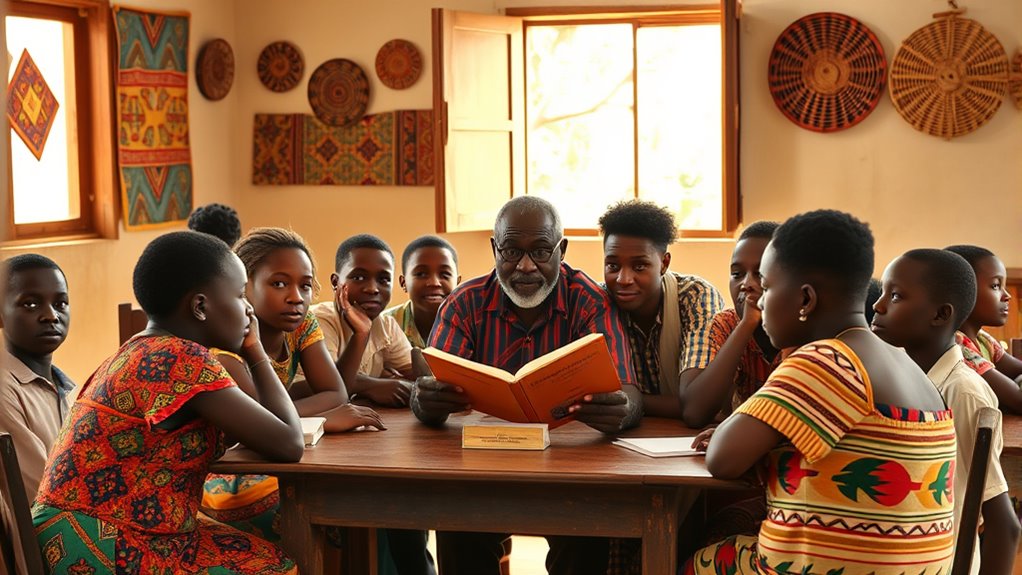
In Ghana, effective translation of local languages such as Twi bridges communication gaps in education, business, and cultural exchanges, enhancing accessibility to information and fostering national unity. This process is essential for educational equity, where Twi translations enable students in rural areas to grasp complex concepts in their native tongue, reducing dropout rates and improving literacy. In business, accurate Twi-English conversion facilitates smoother negotiations and market expansion, allowing companies to engage diverse populations and boost economic growth. Moreover, in cultural contexts, it preserves indigenous knowledge and traditions, promoting social cohesion amid globalization. By integrating Twi translation into media and public services, Ghana strengthens community bonds and empowers marginalized groups, ensuring inclusive development. Ultimately, this linguistic tool supports policy implementation and innovation, driving the nation’s progress.
Common Twi Words and Phrases
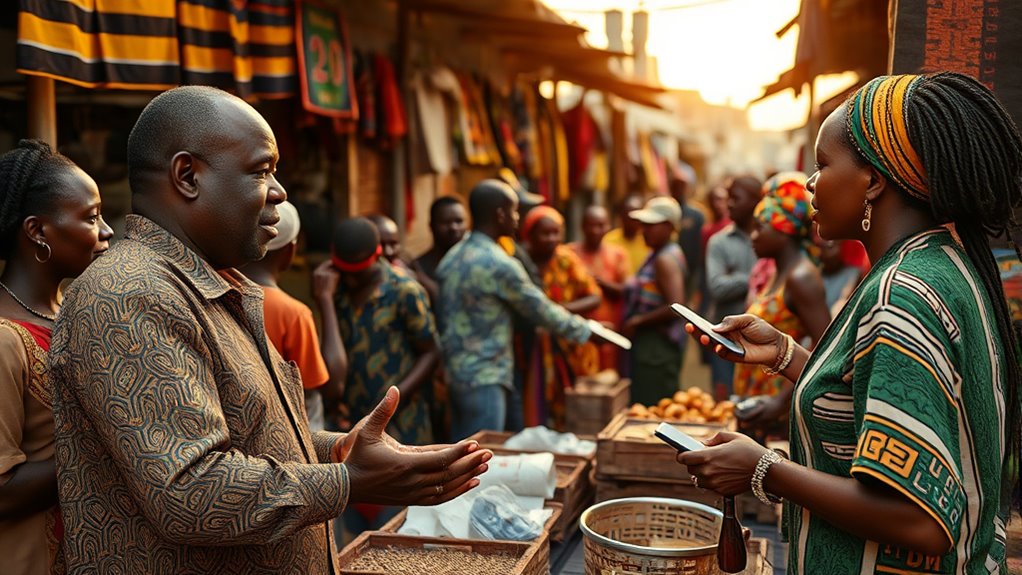
Common words and phrases in Twi provide foundational tools for everyday communication in Ghana. These elements form the backbone of interactions in Akan-speaking communities, enabling smooth exchanges in daily life. For instance, greetings like “ɛnkyɛ” (thank you) and “maakye” (good morning) foster politeness and rapport. Essential phrases include “me ho ye” (I am fine) for responses and “sɛ w’adeɛ” (what is your name?) for introductions. Numerals such as “ɛnan” (one) and “ɛne” (two) assist in basic counting and commerce. Everyday expressions like “diɛ w’akwan” (be careful) promote safety, while “medaase” (thank you very much) expresses gratitude. Learning these basics enhances cultural understanding and facilitates connections, making Twi accessible for learners and travelers alike.
Steps for Accurate Twi to English Translation
Accurate Twi to English translation requires a structured approach to guarantee fidelity to the original meaning. The process begins with understanding the Twi context, which involves grasping cultural and linguistic nuances. Following this, selecting appropriate translation tools and reviewing the output for accuracy helps maintain precision in the final result.
Understand Twi Context
Understanding Twi context forms the foundation of precise translations from Twi to English. This involves grasping cultural nuances, idiomatic expressions, and regional variations in Ghanaian Twi, which can alter meanings greatly. Translators must analyze social contexts, historical references, and linguistic subtleties to avoid misinterpretations. For instance, Twi proverbs often carry implicit wisdom that direct translations might overlook, leading to inaccuracies.
| Aspect | Twi Specifics | Implications for Translation |
|---|---|---|
| Idioms | “Ɛyε adwuma” means hard work | Requires cultural adaptation to convey effort’s value |
| Cultural Norms | Greetings vary by time of day | Guarantees politeness and context in English equivalents |
| Regional Terms | Akan dialects differ slightly | Prevents confusion by selecting appropriate variants |
| Historical Allusions | References to chiefs or folklore | Demands historical knowledge for accurate conveyance |
Choose Translation Tools
After establishing a solid understanding of Twi context, translators select appropriate tools to guarantee precise Twi to English conversions. These tools enhance efficiency while addressing Twi’s unique linguistic features, such as tonal variations and cultural idioms. By choosing wisely, translators maintain fidelity to the original meaning.
- Assess digital platforms: Opt for reliable apps like Google Translate or specialized Twi tools, evaluating their accuracy in handling Ghanaian dialects for initial drafts.
- Incorporate bilingual resources: Use Twi-English dictionaries and glossaries to cross-reference terms, ensuring context-specific interpretations.
- Leverage advanced software: Select AI-driven programs that support customization, like machine learning tools, to refine translations and adapt to regional nuances.
Review for Accuracy
Reviewing Twi to English translations requires rigorous steps to verify fidelity and cultural appropriateness. To achieve this, translators first compare the draft against the original Twi text, meticulously checking for accurate word choices, sentence structures, and contextual meanings. They then assess cultural nuances, ensuring idioms, proverbs, and traditions are adapted without distortion. Involving native Twi speakers is essential for validating subtle interpretations that automated tools might overlook. Additionally, proofreading focuses on English grammar, syntax, and fluency to maintain natural readability. Peer reviews by bilingual experts follow, identifying any discrepancies through collaborative feedback. Iterative revisions refine the translation, incorporating suggestions to enhance precision. Finally, testing with target audiences in Ghana confirms comprehension and cultural sensitivity, ensuring the final output effectively bridges linguistic gaps. This systematic approach upholds translation integrity in diverse settings.
Cultural Context in Twi Language Use
The cultural nuances of Ghana profoundly influence Twi language use, embedding traditions and social norms into everyday communication. Twi reflects the Akan heritage through idioms and expressions tied to agriculture, family structures, and spiritual beliefs, fostering a deeper connection in dialogues. This linguistic embedding guarantees that conversations carry historical and communal significance, aiding in cultural preservation amid modernization.
- Proverbs and Wisdom: Twi proverbs, like “Ɔbɛn na ɔkɔ” (The path leads), embed moral lessons from folklore, enriching narratives and decision-making.
- Social Hierarchies: Honorifics and greetings vary by age and status, such as using “W’akɔ” for elders, promoting respect and community cohesion.
- Ritual Expressions: Language in ceremonies incorporates symbolic words from ancestral traditions, reinforcing identity and collective memory.
Professional Translation Services Available
In Ghana, a variety of professional translation services facilitate accurate Twi to English conversions, serving sectors like business, education, and healthcare. These services, offered by certified agencies and freelance experts, guarantee cultural nuances are preserved for effective communication. They employ skilled linguists with expertise in legal, medical, and corporate contexts, delivering timely and error-free results. Quality is maintained through rigorous proofreading and adherence to international standards.
To illustrate, the following table highlights select providers and their specializations:
| Service Provider | Key Specializations |
|---|---|
| Ghana Translation Co. | Business and legal documents |
| Twi Experts Agency | Healthcare and education |
| African Language Hub | Cultural media adaptations |
| ProLingua Ghana | Technical manuals |
| Elite Translators Ltd. | Government communications |
This accessibility enhances cross-cultural interactions in Ghana’s diverse landscape.
Tools for Twi Language Learning
Beyond professional translation services, tools for Twi language learning enable individuals to build proficiency through accessible resources such as mobile apps, online platforms, and interactive exercises that focus on vocabulary, grammar, and pronunciation. These tools democratize language acquisition, allowing learners to practice at their own pace and integrate Twi into daily routines for better cultural immersion. They often incorporate multimedia elements like audio clips and games to enhance engagement and retention.
- Mobile Apps: Apps like Duolingo and Twi101 offer bite-sized lessons with flashcards and quizzes for on-the-go vocabulary building.
- Online Platforms: Websites such as BBC Languages or dedicated Twi courses on Coursera provide structured modules with video tutorials and progress tracking.
- Interactive Exercises: Platforms like Memrise feature gamified activities that emphasize pronunciation practice through voice recognition and community forums for feedback.
Differences in Twi and English Grammar
While Twi and English share basic sentence structures, their grammatical differences—such as Twi’s use of tone for meaning and serial verb constructions—often challenge learners and translators. Twi, as a tonal language, relies on pitch variations to distinguish words and convey grammatical nuances, whereas English uses intonation more for emphasis than core meaning. For instance, Twi’s serial verb constructions link multiple verbs in a single clause to describe sequential actions, like “go buy come,” which English typically breaks into separate sentences or uses conjunctions. Another key difference lies in Twi’s noun class system, where agreement markers on verbs and adjectives reflect categories such as animacy or shape, absent in English. Twi also features a more fluid aspectual system, focusing on action states rather than strict tense, requiring translators to adapt creatively. These contrasts highlight the need for cultural and linguistic sensitivity in Ghanaian translations, ensuring accurate conveyance of intent. Overall, mastering these elements enhances cross-language communication in Africa.
Historical Background of Twi
Twi, a prominent language in Ghana, traces its origins to the Akan ethnic group and their historical migrations in West Africa. The language’s evolution involved influences from trade, colonization, and cultural exchanges over centuries. This background provides essential context for understanding Twi‘s role in modern translation efforts.
Twi Origins
The origins of Twi, a prominent Akan language in Ghana, date back to the migrations of Akan-speaking groups from the western Sudan region into the forested areas of West Africa centuries ago. These movements involved the Akan people, including subgroups like the Ashanti and Fante, who established settlements in Ghana’s fertile zones. This historical backdrop highlights Twi’s role as an essential cultural and ethnic identifier, rooted in early West African societies.
- Migration patterns: Akan groups traveled along trade routes, blending with local populations and laying Twi’s foundational elements.
- Ethnic influences: Interactions with neighboring groups, such as the Bono and Baule, enriched Twi’s early vocabulary and expressions.
- Cultural significance: Twi’s origins tie to ancient kingdoms, underscoring its importance in oral traditions and community identity.
Language Evolution
Over centuries, external influences and internal innovations propelled Twi’s evolution, transforming it from early Akan dialects into a structured language integral to Ghanaian culture. Twi, part of the Kwa branch of the Niger-Congo family, emerged prominently among Akan peoples like the Asante and Fante in the 17th century. Colonial encounters with British and Dutch traders introduced loanwords, enriching vocabulary while preserving core structures. Internal developments, such as the creation of written forms by missionaries in the 19th century, standardized grammar and orthography. This evolution facilitated Twi’s role in literature, education, and media, fostering cultural unity amid Ghana’s linguistic diversity. Today, it adapts to modern influences like globalization, blending traditional elements with contemporary expressions to maintain its vibrancy in everyday communication.
Benefits of Twi-English Bilingualism
Bilingualism in Twi and English offers substantial advantages for individuals in Ghana, enhancing cognitive flexibility and communication across diverse contexts. This dual-language proficiency not only sharpens mental agility but also promotes deeper cultural understanding and professional growth. By mastering both languages, individuals can navigate societal complexities more effectively, leading to personal and communal benefits.
- Cognitive Enhancement: Bilingualism boosts brain functions, improving multitasking, problem-solving, and delaying cognitive decline, as supported by linguistic studies.
- Cultural Preservation: It maintains Twi heritage while facilitating English-based education, fostering a balanced identity and stronger community ties.
- Economic Opportunities: Proficiency in both languages increases job prospects in Ghana’s multilingual sectors, such as business and media, enhancing career advancement.
Everyday Applications of Twi Translation
In Ghana, Twi to English translation finds practical use in daily conversations, enabling smooth communication in everyday settings. It also proves essential in travel scenarios, where managing local interactions can bridge language gaps. Additionally, business interactions benefit from accurate translations, fostering better relationships and opportunities in diverse environments.
Daily Conversations
Daily conversations in Ghana often require Twi to English translation, enabling seamless communication in routine interactions. This practice bridges linguistic gaps in everyday settings, such as markets, homes, and community gatherings, where Twi speakers engage with English users. It fosters mutual understanding and cultural exchange, making daily exchanges more efficient and inclusive. By facilitating clear dialogue, Twi to English translation enhances social cohesion and personal relationships in Ghana’s multilingual society.
- Marketplace Bargaining: Translators help negotiate prices and discuss goods, ensuring accurate exchanges between vendors and customers.
- Family and Social Chats: It aids in sharing stories or planning events, allowing non-Twi speakers to participate fully in casual talks.
- Workplace Discussions: Employees use translation for meetings and collaborations, promoting productivity in diverse teams.
Travel Scenarios
Travel scenarios in Ghana frequently rely on Twi to English translation to navigate interactions during trips, such as directing taxis or inquiring about destinations. Tourists often encounter language barriers when asking locals for directions to remote villages or popular attractions like Kakum National Park. For example, negotiating with tro-tro drivers requires quick translations to clarify routes and fares, enhancing safety and efficiency. At roadside stops, travelers might translate inquiries about rest areas or local customs, fostering cultural exchange. Additionally, using translation tools during hikes or boat rides helps in communicating weather updates or wildlife information, making adventures more enjoyable. This everyday application of Twi translation bridges gaps, allowing seamless exploration of Ghana’s diverse landscapes and communities. (124 words)
Business Interactions
Business interactions in Ghana frequently involve Twi to English translation to streamline negotiations and transactions. In Ghana’s diverse business landscape, this translation facilitates seamless communication between local entrepreneurs and international stakeholders, minimizing cultural misunderstandings and promoting equitable deals. It enhances efficiency in markets where Twi is predominant, allowing for precise exchange of ideas and faster decision-making.
- Negotiations: Translators guarantee accurate conveyance of proposals, helping parties reach agreements without language barriers, therefore building stronger partnerships.
- Contract drafting: Clear translation of legal terms prevents disputes, safeguarding business interests and fostering long-term collaborations.
- Marketing strategies: Adapting campaigns to Twi engages local audiences effectively, boosting sales and brand loyalty in Ghanaian markets.
Challenges in African Language Translation
Translating African languages like Twi into English presents significant challenges, including linguistic diversity and limited technological tools, which often lead to inaccuracies and cultural misinterpretations in Ghana and beyond. Linguistic diversity manifests in tonal variations and complex grammatical structures unique to languages like Twi, making direct translations difficult and prone to errors. For instance, Twi’s tonal nuances can alter word meanings entirely, resulting in miscommunications that erode cultural context. Additionally, the scarcity of specialized translation resources, such as detailed dictionaries or trained linguists, exacerbates these issues. In educational and legal settings, such barriers hinder accurate information exchange, perpetuating misunderstandings. Efforts to address these challenges require greater investment in language documentation, yet progress remains slow due to resource constraints. Overall, these obstacles underscore the need for nuanced approaches to preserve cultural integrity in translations. (124 words)
Future Developments in Translation Technology
As technology advances, innovative tools in machine translation are poised to overcome barriers in languages like Twi. Emerging AI-driven systems promise greater accuracy and cultural sensitivity, potentially revolutionizing communication in Ghana’s multilingual landscape. These developments could integrate seamlessly with everyday applications, fostering broader accessibility and preserving linguistic heritage.
- Enhanced AI Algorithms: Future models will use deep learning to handle Twi’s tonal nuances, reducing errors in real-time translations.
- Expanded Datasets: Collaborative efforts will build larger, specialized corpora for African languages, improving machine learning outcomes.
- Integration with Devices: Smartphones and wearables will feature built-in translators, enabling instant Twi-English exchanges for education and business.
Frequently Asked Questions
How Much Does Twi Translation Cost?
The query regarding the cost of Twi translation reveals that prices vary based on factors like word count, content complexity, and urgency. Professional services typically charge between $0.05 and $0.20 per word, though exact rates depend on providers and specifics.
What Are the Main Twi Dialects?
In response to the question about the main Twi dialects, Asante Twi and Akuapem Twi are the primary ones. Spoken in Ghana, Asante Twi prevails in the Ashanti Region, while Akuapem Twi dominates the Eastern Region. These dialects exhibit variations in vocabulary and pronunciation.
Where Can I Find Twi Language Tutors?
The query regarding where to find Twi language tutors reveals several options. Online platforms like language apps, educational websites, and forums connect learners with tutors. In Ghana, universities, community centers, and local language schools offer in-person guidance. Social media groups also facilitate connections.
Is Twi Translation Legally Certified?
The question of whether Twi translations are legally certified pertains to official validation processes. In Ghana, certification depends on translators meeting professional standards, such as those from accredited bodies, rather than the language itself.
How to Handle Twi Slang in Texts?
Handling Twi slang in texts involves recognizing its cultural nuances and contextual meanings. Experts recommend consulting native speakers or specialized dictionaries for accurate interpretation. This guarantees effective communication and avoids misinterpretations in translations. Maintaining objectivity aids clarity. (35 words)