
 Elizabeth123
Website localization for African real estate adapts websites to regional languages like English, French, Arabic, and Swahili, while incorporating cultural elements such as color symbolism and traditional imagery to resonate with users in diverse markets like Nigeria and South Africa. This process enhances user engagement, builds trust, and drives conversion rates by addressing linguistic and cultural nuances. Effective technical strategies manage challenges like translation accuracy and infrastructure issues, ultimately expanding market reach. Subsequent sections offer detailed insights into implementation.
Quick Summaries
- Localize African real estate websites into key languages like English, French, Arabic, and Swahili to improve accessibility and user engagement.
- Adapt website designs with culturally relevant elements, such as colors and symbols, to align with regional preferences and build trust.
- Implement technical strategies like translation APIs and human oversight for accurate multilingual content in real estate platforms.
- Achieve higher conversion rates by enhancing user experience through native language support in African markets.
- Address localization challenges, such as linguistic diversity, by partnering with local experts for precise translations and cultural adaptations.
Understanding African Real Estate Markets

The African real estate markets vary widely across countries, shaped by factors like urbanization, economic growth, and regulatory differences. In rapidly urbanizing nations such as Nigeria and South Africa, booming populations drive demand for residential and commercial properties, often leading to infrastructure investments. Economic growth in countries like Kenya and Ethiopia fuels construction booms, with sectors like mining and agriculture influencing land values. Regulatory environments differ considerably; for instance, Ghana’s stable policies attract foreign investors, while bureaucratic hurdles in the Democratic Republic of Congo slow development. These dynamics create opportunities and risks, requiring stakeholders to analyze local trends carefully. Political stability and infrastructure quality further impact market viability, as seen in Morocco’s thriving tourism-related real estate. Understanding these variations is essential for informed decision-making in the sector.
Essential Languages for Localization

Identifying essential languages for website localization in African real estate involves focusing on key African languages and popular regional tongues. These choices play a crucial role in reaching diverse audiences across the continent. Critical localization decisions must balance cultural relevance with market demands to guarantee effective communication.
Key African Languages
African real estate websites require localization into key languages to effectively engage diverse populations across the continent. These languages, such as English, French, Arabic, and Swahili, act as essential bridges for communication in a multilingual landscape. English facilitates global transactions and broad accessibility, while French supports interactions in Francophone regions. Arabic guarantees relevance in North African contexts, and Swahili promotes connectivity in East Africa. Localization into these tongues enhances user comprehension of property listings, legal terms, and services, fostering trust and inclusivity. By prioritizing accurate translation and cultural nuances, real estate firms can bridge linguistic divides, improve customer satisfaction, and drive business growth. This approach tailors content to resonate with varied audiences, ultimately boosting market penetration and conversion rates across Africa.
Popular Regional Tongues
Beyond the core languages, popular regional tongues like Yoruba in West Africa and Amharic in the East play a pivotal role in tailoring real estate websites to local audiences, ensuring deeper engagement and cultural relevance in niche markets. For instance, Yoruba’s widespread use in Nigeria supports property listings that resonate with urban and rural communities, incorporating idioms and cultural nuances to build trust. Similarly, Amharic in Ethiopia enables precise communication of real estate details, from land titles to housing features, fostering accessibility for non-English speakers. Other key tongues, such as Swahili across East Africa and Hausa in the Sahel, further enhance inclusivity by addressing diverse dialects, allowing platforms to penetrate deeper into local economies. This linguistic strategy not only boosts user interaction but also aligns content with regional customs, ultimately driving higher conversion rates in specialized real estate sectors. By prioritizing these languages, businesses can effectively bridge cultural gaps and expand their reach.
Critical Localization Choices
Strategic language selection anchors localization for African real estate websites, emphasizing core options that broaden audience reach. In Africa’s diverse linguistic landscape, essential languages include English, which serves as a bridge across anglophone nations like Nigeria and South Africa, facilitating widespread accessibility. French is essential for Francophone regions such as Senegal, Ivory Coast, and the Democratic Republic of Congo, where it drives user engagement in property searches. Arabic targets North African markets in Egypt and Morocco, enhancing trust and conversion rates. Swahili connects East African communities in Kenya, Tanzania, and Uganda, while Portuguese supports growth in Angola and Mozambique. By prioritizing these languages, websites can adapt content to cultural contexts, improving SEO, user satisfaction, and market penetration. Ultimately, this approach guarantees real estate platforms resonate with local audiences, boosting competitiveness in a dynamic continent. (124 words)
Cultural Adaptations in Website Design
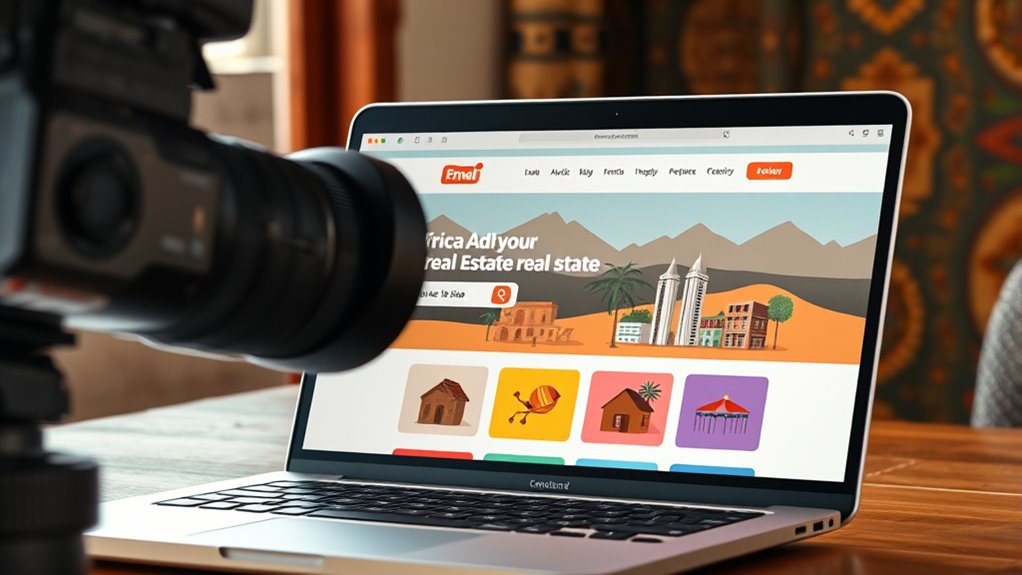
Cultural adaptations in website design for African real estate involve careful selection of color choices that resonate with local cultural meanings. For instance, colors like red or green may symbolize prosperity or danger in various African contexts, influencing user engagement. Symbolic imagery adaptation guarantees that visuals, such as icons or graphics, align with regional traditions to avoid misinterpretation.
Cultural Color Choices
In African real estate websites, color choices must reflect local cultural nuances to enhance user engagement and avoid misinterpretations. For instance, in many West African cultures, green symbolizes prosperity and growth, making it ideal for highlighting properties in developing areas, while red may denote energy or warning, requiring careful use to prevent negative associations. In East Africa, blue often represents trust and harmony, which can foster confidence in real estate listings. Designers must conduct thorough cultural research to select palettes that align with regional values, such as using earth tones in Southern Africa to evoke stability and community. This approach not only boosts visual appeal but also guarantees inclusivity, ultimately driving higher conversion rates by resonating with diverse audiences. By prioritizing these adaptations, websites can effectively bridge cultural gaps and promote properties that feel personally relevant.
Symbolic Imagery Adaptation
Adapting symbolic imagery to regional contexts profoundly influences African real estate websites. In diverse African cultures, symbols like animals, patterns, or landmarks hold specific meanings that can foster trust or alienate users if ignored. For example, an image of a lion might represent strength in some regions but aggression in others, necessitating thoughtful redesign to align with local values and boost engagement.
- Research local symbols: Analyze cultural databases to identify region-specific meanings, avoiding misinterpretations.
- Customize imagery: Replace universal icons with culturally resonant alternatives, such as using traditional motifs in property listings.
- Ensure inclusivity: Collaborate with local experts to adapt visuals that respect ethnic diversity and promote accessibility.
- Measure impact: Track user interactions and feedback to refine imagery, enhancing conversion rates and brand loyalty.
Technical Strategies for Website Translation
Technical strategies form the backbone of effective website translation, enabling precise adaptation of content for diverse linguistic environments. In African real estate contexts, these involve leveraging translation management systems (TMS) to handle multilingual content efficiently. For instance, integrating APIs from tools like Google Translate or specialized services guarantees accurate rendering of African languages such as Swahili, Yoruba, and Amharic. Human oversight complements automated processes, verifying nuances in real-time updates and dynamic elements like property listings. Additionally, strategies include optimizing HTML structures for seamless localization, managing character encodings to prevent errors, and adapting metadata for cultural relevance without altering core functionality. Employing version control systems further maintains consistency across language variants, facilitating scalable website maintenance. These approaches prioritize precision in technical execution, supporting diverse user interactions.
Benefits of Localized Real Estate Sites
Localized real estate websites deliver key advantages in African markets by enhancing user accessibility and engagement. By adapting content to local languages and cultural nuances, these sites make property information more relatable and intuitive for diverse audiences. This strategy not only improves user satisfaction but also drives higher interaction rates, ultimately supporting business expansion in multilingual regions.
- Increased User Engagement: Localized sites attract more visitors through familiar language, reducing bounce rates and encouraging longer sessions.
- Enhanced Trust and Credibility: Cultural relevance builds confidence, as users feel the content respects their context, leading to stronger brand loyalty.
- Higher Conversion Rates: Simplified navigation in native tongues facilitates easier inquiries and transactions, boosting sales potential.
- Broader Market Reach: Targeting non-English speakers expands audience access, tapping into underserved segments for greater competitiveness.
Common Challenges and Solutions
While localizing real estate websites for African markets presents significant hurdles, such as language barriers and cultural mismatches, targeted strategies can effectively address these issues to guarantee successful implementation. One major challenge is the linguistic diversity across countries, where over 2,000 languages exist, complicating accurate translations and user engagement. Cultural mismatches, like varying perceptions of property ownership or community values, can alienate potential buyers if not handled properly. Additionally, inconsistent internet infrastructure in rural areas hinders access, while regulatory differences in real estate laws create compliance risks. Solutions include partnering with local experts for precise translations and cultural adaptations, conducting thorough market research to identify sensitivities, and adopting flexible tech solutions to accommodate varying digital capabilities. By prioritizing these approaches, businesses can mitigate risks and enhance market penetration.
Effective Implementation Tips
To build on addressing localization challenges, companies implementing real estate websites in African markets can adopt practical tips that guarantee seamless adaptation and user engagement. By focusing on cultural sensitivity, accurate language use, and user-centric design, businesses enhance accessibility and trust. For instance, tailoring content to local preferences prevents alienation, while mobile optimization addresses high smartphone usage. Integrating regional SEO and payment systems further boosts interaction. Furthermore, ongoing refinement based on user feedback guarantees long-term success.
- Conduct thorough cultural and market research to align content with local norms.
- Use certified translation services for precise, context-aware adaptations.
- Customize UI/UX elements, such as layouts and colors, for regional preferences.
- Perform regular testing with local users to identify and fix issues promptly.
Frequently Asked Questions
How Much Does Website Localization Cost?
The cost of website localization varies widely based on factors such as language count, website complexity, and custom features. Prices typically range from a few hundred to several thousand dollars per language, depending on the provider and scope.
What Is the Typical Timeline for Localization?
The typical timeline for localization projects varies based on factors like content volume, language count, and complexity. Generally, it ranges from two weeks for simple tasks to three months for extensive efforts, ensuring thorough adaptation.
How Do You Select a Reliable Translator?
Selecting a reliable translator involves evaluating qualifications, experience, and client feedback. One assesses language proficiency, cultural expertise, and references while verifying certifications and reviewing sample translations to guarantee quality outcomes.
What Tools Are Recommended for Localization?
In localization efforts, experts recommend tools like computer-assisted translation software (e.g., SDL Trados and MemoQ) and platforms such as Crowdin. These facilitate efficient translation, cultural adaptation, and seamless content management for diverse global audiences.
How Does Localization Impact SEO Rankings?
Localization impacts SEO rankings by tailoring content to regional languages, cultures, and search behaviors, enhancing user relevance and engagement. Search engines prioritize such optimized sites, improving visibility and traffic in local results.