
 Elizabeth123
Website localization for Nigerian markets, as highlighted by Directline Translators, involves adapting designs to cultural nuances like using green for prosperity and incorporating Yoruba or Igbo symbolic imagery. Content must be translated into key languages such as Hausa, Yoruba, and Igbo, with local idioms to build trust and engagement. Mobile-first approaches address economic realities and internet access. The outline ahead reveals additional strategies for effective implementation.
Quick Summaries
- Adapt website content to major Nigerian languages like Hausa, Yoruba, and Igbo for enhanced user accessibility.
- Incorporate cultural colors such as green and blue to symbolize prosperity and reliability in designs.
- Integrate symbolic imagery like Yoruba motifs and Igbo patterns to foster cultural resonance and engagement.
- Use mobile-first designs to address Nigeria’s high mobile penetration and affordability constraints.
- Tailor interaction styles with subtle prompts and social features to align with communal values and boost retention.
Understanding the Nigerian Market Landscape
Understanding the Nigerian market landscape is essential for effective website localization, as it encompasses demographic diversity, cultural nuances, and economic factors that shape consumer behavior. Nigeria’s population exceeds 200 million, featuring a youthful demographic with over 60% under 25 years old, alongside urban-rural divides that influence digital access. This diversity requires adaptive localization strategies, such as supporting multiple languages like English, Hausa, Yoruba, and Igbo to reach broader audiences. Economically, Nigeria is Africa’s biggest economy, driven by a burgeoning middle class and rising e-commerce adoption, with internet penetration at around 60%. Localization must address economic realities, including mobile-first designs due to widespread smartphone use and affordability concerns, ensuring content is accessible and relevant to varying income levels. This approach enhances user engagement and conversion rates in a dynamic market.
Key Cultural Nuances in Website Design
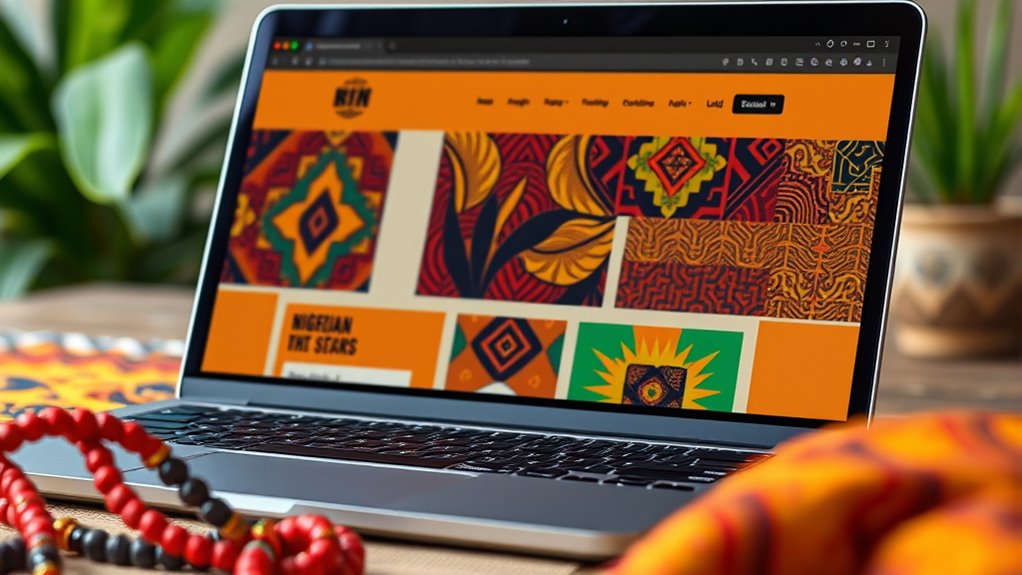
Effective website localization for Nigerian markets involves incorporating key cultural nuances in design to resonate with local users. Cultural colors, such as those symbolizing national identity or traditions, influence user perceptions and emotional responses. Symbolic imagery and interaction styles further guarantee that content aligns with Nigerian customs, fostering better engagement and trust.
Cultural Colors
In Nigerian culture, colors carry profound symbolic meanings that can greatly impact website design effectiveness. Various ethnic groups, such as the Yoruba and Igbo, assign unique interpretations that influence user perceptions. For instance, green symbolizes prosperity, fertility, and nature, making it ideal for agricultural or financial websites to evoke growth and trust. White represents purity and new beginnings, often used in health or spiritual contexts to convey cleanliness and peace. Red signifies energy and power but can also denote danger or sacrifice, requiring cautious application to avoid negative associations. Yellow embodies sunshine and happiness, boosting engagement in promotional designs, while blue conveys calmness and reliability, suitable for corporate or educational sites. Orange reflects warmth and earthiness, resonating in community-focused interfaces. By thoughtfully incorporating these color meanings, designers can create culturally attuned websites that enhance user interaction, foster brand loyalty, and drive success in Nigerian markets. This approach guarantees designs align with local values, avoiding alienation and promoting inclusivity.
Symbolic Imagery
Symbolic imagery in Nigerian culture extends beyond colors, incorporating motifs and icons that resonate with ethnic traditions and influence website user engagement. For instance, Yoruba motifs like the “opon ifa” divination board or Igbo uli patterns symbolize wisdom and community, fostering a sense of familiarity for users. Hausa geometric designs, often drawn from Islamic art, convey order and spirituality, making interfaces more intuitive and appealing. When localizing websites, designers should integrate these elements thoughtfully, such as using Adire fabric-inspired backgrounds or symbolic icons for navigation aids, to enhance cultural authenticity. This approach not only boosts user retention but also aligns content with Nigeria’s diverse heritage, encouraging deeper interactions. Avoiding generic imagery guarantees the site feels personalized, ultimately driving higher conversion rates in a competitive market. By prioritizing these nuances, businesses can create resonant digital experiences that honor Nigeria’s rich symbolic tapestry.
Interaction Styles
Interaction styles in Nigerian website design reflect cultural nuances that prioritize communal engagement and indirect communication, influencing how users navigate and interact with digital interfaces. In Nigeria’s diverse cultural landscape, websites often incorporate features like social sharing buttons and community forums to foster group interactions, mirroring the collectivist values prevalent in societies such as the Yoruba and Igbo. Designers avoid aggressive calls to action, opting for subtle prompts that respect indirect communication norms, reducing user friction and building trust. For instance, dropdown menus and guided tours accommodate hierarchical preferences, ensuring users feel supported rather than overwhelmed. Color schemes and layouts emphasize warmth and approachability, encouraging prolonged engagement. By aligning with these nuances, localized websites enhance user satisfaction and conversion rates in Nigeria’s dynamic market.
Selecting Appropriate Languages for Localization
Selecting appropriate languages is essential for effective website localization in Nigerian markets, where linguistic diversity plays a significant role. Key languages in Nigeria include Hausa, Yoruba, and Igbo, among others, reflecting the country’s multilingual population. Criteria for language selection involve evaluating regional usage, target audience preferences, and alignment with business goals.
Key Languages in Nigeria
Nigeria boasts a rich linguistic landscape, with key languages such as Hausa, Yoruba, Igbo, and Pidgin English playing pivotal roles in daily communication. Hausa, spoken by over 50 million people primarily in the northern regions, serves as a dominant trade and media language, reflecting the area’s cultural heritage. Yoruba, with approximately 40 million speakers in the southwest, is integral to education, entertainment, and social interactions, underscoring its vibrant influence. Igbo, used by around 30 million in the southeast, drives local commerce and community engagement, highlighting regional diversity. Pidgin English, a versatile lingua franca adopted across Nigeria, fosters inclusivity and everyday exchanges among diverse groups. In website localization efforts, these languages enhance content relevance, enabling broader audience reach and cultural resonance in Nigeria’s dynamic markets. Their prominence guarantees that digital platforms align with local preferences, promoting effective communication and user connection.
Criteria for Language Selection
Determining the appropriate languages for website localization requires evaluating several key criteria to guarantee content resonates with target audiences. In Nigeria’s diverse linguistic landscape, demographic factors are paramount; for instance, prioritizing languages like Hausa, Yoruba, and Igbo based on speaker populations and regional prevalence guarantees broader reach. Market potential, including internet penetration and economic activity in specific areas, guides selections to maximize engagement and ROI. Additionally, cultural relevance must be assessed—languages that align with local customs and values foster trust and inclusivity. Practical considerations, such as the availability of skilled translators and localization tools, help mitigate costs and maintain accuracy. Ultimately, aligning language choices with business objectives, like targeting urban versus rural users, optimizes the website’s effectiveness in Nigeria’s multilingual market.
Adapting Content and Imagery for Local Audiences
As websites seek to resonate with diverse cultural contexts, adapting content and imagery for local audiences emerges as a key strategy in website localization. In Nigeria’s vibrant and multicultural market, this process involves tailoring textual content to incorporate local languages, idioms, and cultural references, such as Yoruba proverbs or Hausa traditions, to foster relatability and trust. For imagery, selecting visuals that reflect Nigeria’s ethnic diversity—depicting traditional attire, festivals like Eid or Durbar, and everyday scenes—helps avoid alienation and enhances emotional connection. This cultural sensitivity guarantees content feels authentic, boosting user engagement and conversion rates. By prioritizing these adaptations, businesses can bridge cultural gaps, making their websites more inclusive and effective for Nigerian users, ultimately driving loyalty and market success.
Technical Considerations for Website Adaptation
Technical considerations underpin effective website adaptation, guaranteeing seamless functionality across diverse linguistic and regional environments. For Nigerian markets, this involves implementing robust internationalization frameworks, such as Unicode support for languages like Hausa, Yoruba, and Igbo, to handle special characters and scripts accurately. Adaptive coding for right-to-left text, though less common, prevents display issues. Developers must address date, time, and number formats—e.g., adapting to the DD/MM/YYYY standard—while integrating local currencies like the Naira in e-commerce systems. Responsive design ensures compatibility across varying internet speeds and devices prevalent in Nigeria. Additionally, geo-targeted content delivery and secure payment gateways mitigate latency and security risks. Thorough testing for cross-browser compatibility and mobile optimization is essential to maintain performance, fostering a reliable user experience without cultural missteps.
Strategies to Enhance User Engagement in Nigeria
Enhancing user engagement in Nigeria requires tailored strategies that resonate with local audiences, such as incorporating culturally relevant content, interactive features, and social media integration to foster deeper connections and encourage prolonged interaction. For instance, businesses can adapt websites to include content in major Nigerian languages like Yoruba, Igbo, and Hausa, alongside English, to make information more accessible. Interactive elements, such as live polls on trending topics or user-generated content sections, boost participation. Integrating with popular platforms like WhatsApp and Twitter allows seamless sharing and community building, capitalizing on Nigeria’s vibrant social media culture. Additionally, featuring localized visuals, like imagery from Nigerian festivals or everyday life, creates emotional resonance. These approaches guarantee users feel valued, increasing loyalty and interaction without overwhelming the site. Overall, such strategies align digital experiences with Nigerian preferences for a more engaging online presence.
Measuring and Optimizing Localization Efforts
Measuring the effectiveness of localization efforts enables businesses to refine their strategies for Nigerian markets. By tracking key performance indicators (KPIs) such as website traffic, user engagement rates, conversion metrics, and bounce rates from Nigerian users, companies gain actionable insights. Tools like Google Analytics and heatmaps reveal how localized content performs, highlighting areas like language accuracy or cultural relevance that may need improvement.
Optimizing these efforts involves data-driven adjustments. For instance, A/B testing different versions of localized pages helps identify what resonates best with Nigerian audiences. Incorporating user feedback through surveys or usability tests allows for iterative enhancements, such as refining imagery or terminology to align with local customs. Regular audits guarantee ongoing relevance, adapting to evolving trends like mobile usage patterns. Ultimately, this process boosts user satisfaction, increases ROI, and strengthens market presence in Nigeria’s diverse landscape.
Frequently Asked Questions
How Much Does Website Localization Cost?
The cost of website localization varies based on factors like language count, content volume, and complexity. Prices typically range from $50 to $200 per page, influenced by service providers and project scope. Factors such as cultural adaptation and technical adjustments also impact totals, often totaling hundreds to thousands of dollars.
What Is the Typical Timeline for Localization?
In professional settings, the typical timeline for localization projects is determined by factors like content size and languages involved. It usually takes 2-8 weeks for standard projects and up to 4 months for larger ones, including translation and quality checks.
Do You Offer Certified Translators for Nigeria?
The current question inquires whether certified translators for Nigeria are available. Directline Translators indeed provides these services, featuring certified professionals skilled in Nigerian languages and cultural nuances, thereby supporting effective global communication efforts.
How Do We Handle Post-Localization Updates?
Post-localization updates are managed through a systematic process where changes to source content are identified, translated by certified experts, integrated efficiently, and subjected to quality checks for accuracy and cultural appropriateness. This guarantees ongoing relevance in dynamic markets.
What Payment Options Are Integrated for Nigeria?
The question regarding payment options integrated for Nigeria involves common methods such as bank transfers, mobile wallets like MTN MoMo and Airtel Money, and online gateways including Paystack and Flutterwave, ensuring accessibility and security for users.

