
 Elizabeth123
Website localization services in Kenya, such as those from Translation Africa, adapt websites to local languages like Swahili and cultural contexts, ensuring content resonates with diverse audiences. This process involves translating text, modifying visuals, and complying with regulations to enhance user engagement and boost SEO performance. Translation Africa offers professional translations, technical adaptations, and AI-driven optimizations for better business reach. Further insights into steps, benefits, and innovations await exploration.
Quick Summaries
- Translation Africa provides website localization services in Kenya, translating content into Swahili and adapting for local dialects and customs.
- These services enhance user engagement by tailoring websites to Kenyan cultural nuances and improving SEO for regional visibility.
- The localization process includes content audits, accurate translations, structural adaptations, and user testing for optimal performance.
- Translation Africa ensures cultural sensitivity and compliance with Kenyan regulations, such as the Data Protection Act, for trustworthy results.
- AI innovations from Translation Africa offer real-time adaptive translations and intelligent customization to streamline website localization efforts.
What Is Website Localization in Kenya
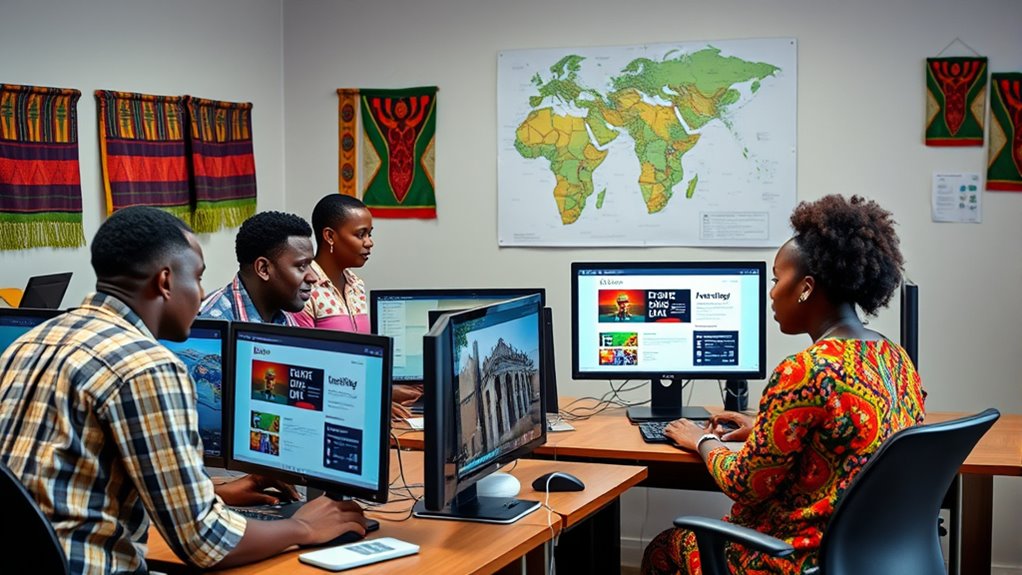
Website localization in Kenya refers to the process of adapting a website to suit the cultural, linguistic, and regulatory contexts of Kenyan users, such as translating content into Swahili or English variations, incorporating local customs, and ensuring compliance with regional standards. This involves tailoring user interfaces to reflect Kenya’s diverse ethnic groups, including modifications for local dialects like Sheng in urban areas. Designers must consider visual elements, such as imagery depicting Kenyan landscapes or traditional motifs, to foster relatability. Additionally, regulatory aspects include adhering to Kenya’s data protection laws, like the Data Protection Act, and accessibility guidelines to accommodate varying internet speeds and device types prevalent in the region. Localization experts analyze user behavior data to refine adaptations, ensuring the site aligns with Kenya’s unique digital landscape while maintaining global best practices. This holistic approach helps create an inclusive online experience for Kenyan audiences.
Benefits of Localizing Websites for African Audiences

Localizing websites for African audiences enhances user engagement by tailoring content to diverse cultural and linguistic contexts, such as incorporating local languages and customs. This approach fosters a sense of inclusivity, making digital experiences more relatable and effective across the continent’s varied demographics.
Beyond engagement, localization yields tangible advantages for businesses. It helps overcome barriers in multilingual markets, leading to broader reach and sustained growth.
- Boosts conversion rates: By aligning with local preferences, websites encourage more actions like purchases or sign-ups.
- Builds trust and credibility: Users feel valued when content reflects their culture, reducing skepticism and fostering loyalty.
- Improves SEO performance: Localized keywords and content enhance visibility in regional search engines, driving organic traffic.
Services Offered by Translation Africa

Translation Africa provides a range of services tailored for website localization in Kenya. The company offers thorough translation services to adapt content for local audiences. Additionally, it includes various localization options to guarantee cultural and linguistic accuracy.
Translation Services
In Kenya’s dynamic digital landscape, translation services are essential for adapting website content to local languages and cultures. Translation Africa, a leading provider, offers high-quality solutions tailored to Kenyan businesses, ensuring accurate and culturally sensitive conversions. Their services bridge communication gaps, enhancing global reach while maintaining content integrity.
Key translation services include:
- Document and website translation: Converting text from English to Swahili, Kikuyu, and other local languages with precision.
- Technical and legal translations: Handling specialized content like contracts or software interfaces for accuracy in professional contexts.
- Multilingual SEO optimization: Adapting keywords and metadata to improve search visibility in target markets.
These offerings help businesses expand effectively in Kenya’s diverse environment.
Localization Options
Beyond translation, Translation Africa enhances website accessibility in Kenya through tailored localization options that adapt content for cultural nuances, user interfaces, and regional preferences. These services include cultural adaptation, such as modifying imagery and idioms to resonate with Kenyan audiences, guaranteeing sensitivity to local customs and languages. User interface adjustments involve redesigning layouts for intuitive navigation, supporting right-to-left scripts, and optimizing for mobile devices prevalent in the region. Regional preferences are addressed by localizing date formats, currency symbols, and measurement units to align with Kenyan norms. Additionally, Translation Africa offers SEO localization to improve search visibility in local search engines, multimedia adaptation for videos and graphics, and compliance checks for legal standards. This thorough approach guarantees websites engage users effectively, fostering business growth in Kenya’s diverse market. Overall, these options deliver seamless, culturally relevant experiences.
Steps to Localize Your Website Effectively
Effective website localization requires a series of key steps to guarantee content resonates with target audiences. Businesses must approach this process systematically, focusing on technical and linguistic adaptations that enhance user experience without compromising functionality. By following these steps, companies can achieve a polished, accessible website.
- Conduct a thorough content audit: Identify all elements needing translation, such as text, images, and metadata, to prioritize high-impact areas for adaptation.
- Translate and adapt content accurately: Use professional translators to convert text while adjusting for linguistic nuances, ensuring the website’s structure supports the new language.
- Test and optimize the localized site: Perform functionality checks, user testing, and performance evaluations to fix issues and refine the site for efficient loading and navigation.
Cultural Considerations for Kenyan Markets
Cultural considerations play a pivotal role in website localization for Kenyan markets, where diverse ethnic groups and languages shape user preferences. Kenya’s population includes over 40 ethnic communities, such as the Kikuyu, Luo, and Maasai, each with unique customs, values, and communication styles that influence digital interactions. For instance, incorporating Swahili alongside English guarantees accessibility, while visual elements must respect cultural symbols and taboos—avoiding imagery that conflicts with traditional beliefs or religious sensitivities. Color choices are vital; red might signify danger in some contexts but celebration in others, potentially affecting user engagement. Additionally, content should align with communal orientations, emphasizing family and community themes to foster trust. By integrating these factors, localization efforts enhance relevance, user satisfaction, and market penetration in Kenya’s multifaceted cultural landscape.
Real-World Examples of Successful Localizations
Real-world case studies highlight how companies have effectively adapted websites for Kenyan audiences, boosting engagement and market share. These examples underscore the value of cultural and linguistic tailoring in diverse markets like Kenya.
- E-commerce Giant: A global retailer translated its site into Swahili and incorporated local festivals in visuals, leading to a 35% surge in sales within six months.
- Education Platform: An online learning service integrated Kiswahili interfaces and Kenya-specific curricula, resulting in doubled user retention and expanded reach to rural areas.
- Financial App: A banking website localized payment gateways to include M-Pesa and used culturally resonant graphics, achieving a 50% increase in new sign-ups.
Such adaptations not only enhance user experience but also drive sustainable growth in competitive landscapes.
Choosing the Best Localization Provider in Kenya
Selecting a localization provider in Kenya requires evaluating factors such as expertise in Swahili and regional dialects, cultural sensitivity, and proven track records in similar projects to guarantee effective adaptations. Businesses should also examine the provider’s technological capabilities, including tools for seamless integration with website platforms, to guarantee high-quality translations and adaptations. Cost-effectiveness is vital; compare pricing structures against deliverables to avoid overpaying for subpar services. Additionally, review client testimonials and case studies for reliability and accuracy in past work. A provider’s ability to handle deadlines and offer post-localization support enhances overall success. Ultimately, choosing one with a strong understanding of Kenya’s diverse linguistic and cultural landscape minimizes risks and maximizes user engagement, fostering better market penetration.
Future Developments in Website Localization Services
The future of website localization services in Kenya is poised for transformation through AI innovations that automate translation processes. Machine learning trends will improve adaptation to local languages and cultural nuances, enhancing user engagement. Tech integration advances promise seamless incorporation of these technologies into existing platforms.
AI Innovations
As AI continues to evolve, innovative technologies are poised to transform website localization services in Kenya, enhancing accuracy and efficiency through advanced machine learning algorithms. These advancements promise to make localization more adaptive and user-centric, bridging language barriers while maintaining cultural relevance in a digital era.
Key AI innovations include:
- Real-time adaptive translation engines that instantly convert content, allowing Kenyan businesses to engage global audiences with minimal delays.
- Intelligent content customization tools that analyze user data to tailor websites for local preferences, boosting engagement and conversion rates.
- Seamless integration with e-commerce platforms to automate localization workflows, reducing costs and enabling scalable operations for emerging markets.
Machine Learning Trends
Machine learning trends are rapidly advancing future developments in website localization services, particularly in Kenya, where adaptive algorithms enhance translation accuracy and cultural adaptation. These trends leverage neural networks to process vast datasets, enabling dynamic language models that learn from user interactions and refine translations in real-time. In Kenya’s diverse linguistic landscape, ML algorithms prioritize context-aware adaptations, such as incorporating Swahili nuances and regional idioms, to guarantee content resonates with local audiences. Predictive analytics further anticipate user preferences, optimizing site interfaces for better engagement. As these technologies evolve, they promise cost-effective solutions, reducing manual efforts while maintaining high fidelity in cross-cultural communications. Kenyan businesses are therefore positioned to expand globally with more intuitive, user-centric websites.
Tech Integration Advances
Integrating advanced technologies into website localization services is poised to accelerate future developments, particularly in Kenya’s dynamic digital landscape. As the industry evolves, innovations like artificial intelligence and machine learning will enhance efficiency and cultural accuracy in translations. This integration promises to make localized websites more adaptive and user-centric, fostering global business growth.
- AI-Driven Automation: Algorithms will streamline translation processes, reducing errors and turnaround times for Kenyan firms.
- Real-Time Adaptation: Dynamic content adjustments based on user data will guarantee websites remain relevant across languages and regions.
- Seamless Integration: Advanced APIs will connect localization tools with e-commerce platforms, improving user experiences in Africa’s expanding digital market.
Frequently Asked Questions
How Much Does Website Localization Cost?
The cost of website localization varies based on factors such as the website’s size, number of languages, and content complexity. Prices typically range from a few hundred to several thousand dollars per language, depending on service providers.
What Is the Typical Timeline for Projects?
The typical timeline for projects varies based on factors like scope, complexity, and resources. Simple projects often take 1-2 weeks, while larger ones may extend to 4-6 weeks or more, depending on requirements and team availability.
Do You Offer SEO Optimization Services?
The question addresses whether SEO optimization services are offered. This involves techniques to boost a website’s visibility on search engines through keyword research, content enhancement, and technical adjustments for improved rankings and user engagement.
Are There Guarantees on Translation Accuracy?
The question of guarantees on translation accuracy is vital for clients seeking reliable services. Translation providers often offer warranties backed by rigorous quality checks, expert linguists, and certification processes to guarantee high precision and minimize errors.
How Do You Handle Website Updates Post-Localization?
Handling website updates post-localization involves a systematic process where changes are reviewed, new content translated accurately, thorough testing conducted, cultural relevance verified, and updates deployed seamlessly to maintain site integrity and user experience.

