 directlineauthors

The world of international finance moves at breakneck speed, with billions of dollars crossing borders every second. Behind this massive flow of capital lies an often-overlooked challenge: financial translation navigating global regulations requires precision that can make or break multinational deals.
A single mistranslated clause in a derivatives contract once cost a major bank $2.6 billion, highlighting just how critical accurate financial translation has become in our interconnected economy.
Financial translation navigating global regulations has transformed from a simple language conversion task into a specialized field requiring deep knowledge of both linguistic nuances and complex regulatory frameworks.
Banks, investment firms, insurance companies, and fintech startups all depend on expert translation services to communicate effectively across borders while staying compliant with local laws. The stakes couldn’t be higher – regulatory violations can result in hefty fines, operational shutdowns, and irreparable damage to corporate reputations.
Today’s financial institutions operate in a maze of ever-changing regulations spanning multiple jurisdictions. The Basel III framework affects banks globally, while the European Union’s MiFID II directive impacts investment services across 27 countries. Meanwhile, the Dodd-Frank Act continues to shape how American financial firms operate internationally. Each of these regulatory environments uses specific terminology, legal concepts, and reporting requirements that demand specialized translation expertise.
What makes financial translation particularly challenging is the intersection of multiple complex domains. Translators must understand not only the source and target languages but also accounting principles, legal frameworks, tax codes, and industry-specific terminology. A commercial banking document might reference LIBOR rates, credit default swaps, and regulatory capital requirements – all concepts that require precise translation to maintain their legal and financial meaning across different jurisdictions.
The consequences of poor financial translation extend far beyond simple miscommunication. Regulatory bodies worldwide have become increasingly strict about compliance documentation, with many requiring translated materials to meet specific standards. The Financial Conduct Authority in the UK, the Securities and Exchange Commission in the US, and similar organizations globally now scrutinize translated documents as closely as original texts. This scrutiny has created a growing demand for certified financial translation services that can guarantee accuracy and compliance.
Stay with us as we examine the intricate world of financial translation and regulatory compliance, exploring how professional translation services help organizations thrive in the global marketplace while avoiding costly regulatory pitfalls.
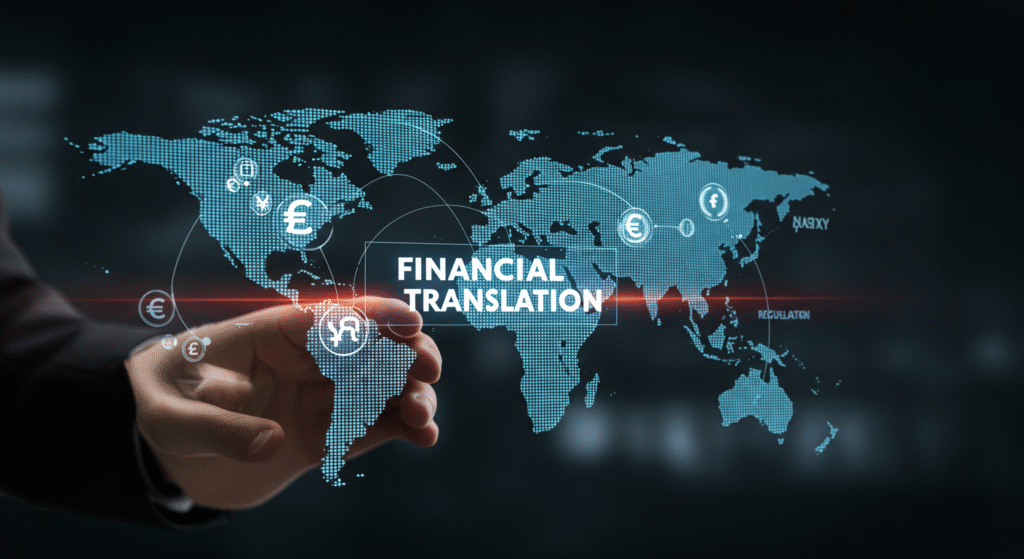
Professional financial translation goes far beyond converting numbers and basic terminology from one language to another. The field demands translators who possess deep understanding of financial markets, regulatory environments, and cultural business practices across different countries.
Financial translation navigating global regulations requires specialists who can interpret complex financial instruments, legal requirements, and reporting standards while maintaining absolute accuracy in their target language.
Modern financial institutions deal with an overwhelming variety of documents that require translation. Annual reports must comply with international accounting standards while meeting local disclosure requirements. Prospectuses for new securities offerings need precise translation to ensure investors understand risks and opportunities. Loan agreements, insurance policies, and derivatives contracts contain highly technical language that can dramatically change meaning with even minor translation errors.
The regulatory landscape adds another layer of complexity. European banks operating under the European Banking Authority guidelines face different translation challenges than American institutions following Federal Reserve requirements. Asian financial markets have their own unique regulatory frameworks, often incorporating concepts that don’t exist in Western financial systems. Professional translators must understand these nuances to produce accurate, compliant translations.
Quality control becomes paramount when dealing with financial documents. Many translation services now employ multiple review stages, including initial translation, financial expert review, and legal compliance checking. Some organizations require sworn translations for certain regulatory filings, adding legal weight to the translated documents. The translation process often involves collaboration between linguists, financial experts, and legal advisors to ensure complete accuracy.
Technology has begun playing a larger role in financial translation, but human expertise remains irreplaceable. Machine translation might handle basic correspondence, but complex financial documents require human translators who understand context, implications, and regulatory requirements. The best financial translation services combine technological tools with human expertise to deliver accurate, timely results.
The financial sector presents unique translation challenges that don’t exist in other industries. Financial translation navigating global regulations must account for rapid changes in financial markets, evolving regulatory requirements, and the high-stakes nature of financial communications. One major challenge involves translating financial terminology that may not have direct equivalents in the target language.
Consider the concept of “qualified institutional buyers” under U.S. securities law. This specific regulatory category has precise legal implications that affect how securities can be marketed and sold. Translating this concept for European markets requires understanding both the American regulatory framework and finding appropriate equivalent terms that convey the same legal meaning under European securities law. Simple literal translation often fails to capture these regulatory nuances.
Cultural and legal system differences create additional complications. Common law systems approach contract interpretation differently than civil law systems, affecting how financial agreements should be translated. Islamic finance presents its own challenges, with concepts like sukuk bonds and sharia-compliant investments requiring specialized knowledge to translate accurately. These documents must satisfy both linguistic accuracy and religious compliance requirements.
Time pressure represents another significant challenge in financial translation. Market conditions can change rapidly, requiring quick translation of time-sensitive documents like earnings announcements, regulatory filings, or merger agreements. However, speed cannot compromise accuracy – a mistranslated earnings report could trigger unwanted market reactions or regulatory investigations.
The technical complexity of modern financial instruments adds yet another layer of difficulty. Exotic derivatives, structured products, and complex hedging strategies use highly specialized terminology that requires deep financial knowledge to translate properly. Translators must understand not just the words but the underlying financial concepts, risk factors, and regulatory treatment of these instruments.
Maintaining consistency across large document sets presents ongoing challenges. A major bank might need thousands of pages of regulatory documentation translated while ensuring consistent terminology throughout. This requires sophisticated project management, terminology databases, and quality control processes that many general translation services lack.
Regulatory compliance represents the most critical aspect of financial translation work. Financial translation navigating global regulations must meet specific standards set by financial authorities worldwide, with non-compliance potentially resulting in severe penalties. Different jurisdictions impose varying requirements for translated financial documents, creating a complex web of regulations that professional translators must navigate.
The European Union’s regulations require financial documents to be translated by qualified professionals for certain types of regulatory filings. The European Securities and Markets Authority has specific guidelines about translation quality and certification requirements. Similarly, the Financial Conduct Authority in the United Kingdom maintains strict standards for translated documents submitted for regulatory approval.
In the United States, the Securities and Exchange Commission requires foreign companies listing on American exchanges to provide certified translations of their financial statements and regulatory filings. These translations must meet specific formatting requirements and include certifications from qualified translators. The Commodity Futures Trading Commission has similar requirements for derivatives market participants.
Asian financial markets have developed their own compliance frameworks. The Japan Financial Services Agency requires specific translation protocols for foreign financial institutions operating in Japanese markets. China’s securities regulators have detailed requirements for translated prospectuses and annual reports. These regional differences require translation services that understand local regulatory nuances.
Banking regulations add another compliance layer. The Basel Committee on Banking Supervision has influenced global banking regulations, but implementation varies by country. Banks operating internationally must ensure their translated risk management documents, capital adequacy reports, and compliance manuals meet local regulatory standards while maintaining consistency with global frameworks.
Professional certification has become increasingly important for financial translators. Many regulatory bodies now recognize specific translator qualifications, such as certified public accountant credentials combined with translation expertise. Some jurisdictions require sworn translations for certain financial documents, adding legal liability for translation accuracy.
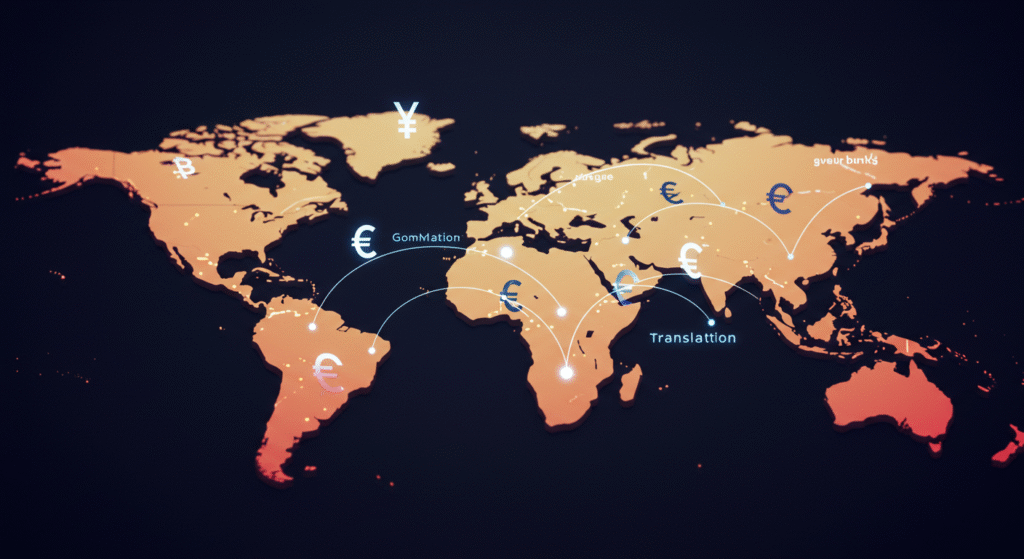
Modern financial translation relies heavily on specialized technology tools designed to handle the unique challenges of financial documentation. Financial translation navigating global regulations benefits from computer-assisted translation software, terminology management systems, and quality assurance tools specifically developed for financial services. These technologies help maintain consistency, speed up translation processes, and reduce errors in complex financial documents.
Translation memory systems prove particularly valuable for financial institutions that regularly translate similar document types. These systems store previously translated segments, allowing translators to maintain consistency across multiple documents and projects. For a multinational bank translating quarterly reports, translation memory ensures consistent terminology and phrasing across different reporting periods and business units.
Terminology management becomes crucial when dealing with financial documents that use highly specialized vocabulary. Professional financial translation services maintain extensive databases of financial terms, regulatory definitions, and approved translations for specific clients. These databases help ensure that complex financial concepts like “mark-to-market accounting” or “value-at-risk calculations” receive consistent, accurate translation across all documents.
Quality assurance tools have evolved to address the specific needs of financial translation. Advanced software can check for numerical accuracy, currency conversions, and regulatory compliance requirements. Some tools integrate with financial databases to verify market data, exchange rates, and regulatory information automatically during the translation process.
Artificial intelligence and machine learning technologies are beginning to impact financial translation, though human expertise remains essential. AI tools can help with initial document analysis, terminology extraction, and consistency checking. However, the nuanced nature of financial regulations and the high stakes of financial communication still require human translators who understand both languages and financial markets.
Cloud-based collaboration platforms enable global translation teams to work together on large financial translation projects. These platforms provide secure environments for handling confidential financial documents while allowing real-time collaboration between translators, reviewers, and subject matter experts located around the world.
Different sectors within the financial industry have unique translation requirements that demand specialized expertise. Financial translation navigating global regulations varies significantly between investment banking, commercial banking, insurance, asset management, and fintech companies. Each sector operates under different regulatory frameworks and uses distinct terminology that requires targeted translation approaches.
Investment banking presents some of the most complex translation challenges in the financial sector. Initial public offerings require prospectuses that must comply with securities regulations in multiple jurisdictions simultaneously. Merger and acquisition documents involve intricate legal and financial concepts that must be translated with absolute precision. Credit rating reports and analyst research require translation that maintains the analytical integrity while adapting to local market conventions.
Commercial banking translation focuses heavily on regulatory compliance and customer communication. Basel III compliance reports require translation that accurately reflects risk management frameworks and capital adequacy calculations. Consumer banking documents must comply with local consumer protection laws while maintaining clear, accessible language for retail customers.
Trade finance documents like letters of credit require precise translation to ensure international commercial transactions proceed smoothly.
Insurance companies face unique challenges in translating complex actuarial concepts and regulatory requirements. Solvency II requirements in Europe demand specific translation approaches for risk assessment documents. Reinsurance contracts involve highly technical terminology that requires deep understanding of global insurance markets. Claims documentation must be translated accurately to ensure proper settlement of international insurance claims.
Asset management firms must translate investment prospectuses, fund reports, and regulatory filings that comply with local investment regulations. Alternative investment funds face particularly complex translation requirements, as regulatory frameworks for hedge funds, private equity, and real estate investments vary significantly between jurisdictions. Performance reporting must accurately reflect investment results while complying with local advertising and disclosure regulations.
The rapidly growing fintech sector presents new translation challenges as digital financial services expand globally. Payment processing documentation, cryptocurrency regulations, and digital banking licenses require translation expertise that combines traditional financial knowledge with understanding of emerging financial technologies. Regulatory sandboxes and fintech-specific regulations add complexity to translation requirements.
Implementing effective practices for financial translation requires a systematic approach that prioritizes accuracy, compliance, and efficiency. Financial translation navigating global regulations succeeds when organizations establish clear processes, maintain qualified translator networks, and implement robust quality control measures. These best practices help ensure consistent, reliable translation results across all financial documentation.
Establishing comprehensive style guides and terminology databases forms the foundation of successful financial translation programs. These resources should include approved translations for industry-specific terms, regulatory terminology, and company-specific language. Regular updates ensure that guides reflect current market conditions and regulatory changes. Major financial institutions often maintain multilingual glossaries covering thousands of specialized terms.
Vendor qualification and management represent critical success factors in financial translation. Organizations should evaluate translation providers based on their financial industry expertise, regulatory knowledge, and quality assurance processes. Ongoing performance monitoring helps ensure consistent service quality and identifies areas for improvement. Many successful financial institutions work with specialized translation partners rather than general-purpose language service providers.
Project management practices must account for the time-sensitive nature of financial communications and the complexity of financial documents. Clear workflows, defined approval processes, and contingency planning help ensure that urgent translation needs are met without compromising quality. Effective project management also coordinates between multiple stakeholders, including translators, subject matter experts, and regulatory compliance teams.
Quality assurance processes should include multiple review stages appropriate for different document types. Routine correspondence might require standard translation and proofreading, while regulatory filings might need additional review by financial experts and legal advisors. Risk-based approaches help allocate quality assurance resources efficiently while maintaining appropriate oversight for high-stakes documents.
Training and development programs help both internal staff and translation partners stay current with evolving financial regulations and market developments. Regular training sessions on new regulatory requirements, emerging financial instruments, and industry best practices improve translation quality and reduce compliance risks. Professional development opportunities help build expertise in specialized areas of financial translation.

Understanding and avoiding common mistakes in financial translation can prevent costly errors and regulatory problems. Financial translation navigating global regulations often fails when organizations underestimate the complexity of financial terminology, rush translation processes, or rely on inadequately qualified translators. Learning from these common pitfalls helps organizations develop more effective translation strategies.
One frequent error involves treating financial translation as a purely linguistic exercise rather than a specialized professional service. General translators, no matter how skilled linguistically, may lack the financial knowledge needed to understand complex concepts like credit derivatives, regulatory capital calculations, or international accounting standards. This knowledge gap can lead to translations that are linguistically correct but financially meaningless or misleading.
Inadequate quality control processes represent another common problem in financial translation. Organizations sometimes assume that single-pass translation is sufficient for financial documents, failing to implement appropriate review and verification procedures. Financial documents often contain interconnected information where errors in one section can affect the accuracy of other sections. Comprehensive quality control helps identify and correct these systemic issues.
Failure to maintain consistency across related documents can create confusion and compliance problems. A multinational corporation might use different translations for the same financial concept in various documents, creating uncertainty about the intended meaning. Inconsistent terminology can also signal poor quality control to regulatory reviewers, potentially triggering additional scrutiny or compliance issues.
Rushing translation projects without adequate time for proper review and quality assurance creates significant risks in financial translation. Market pressures often drive demands for quick turnaround times, but inadequate review time can result in errors that have serious financial and regulatory consequences. Successful organizations plan translation timelines that allow for appropriate quality assurance while meeting business deadlines.
Cultural insensitivity in financial communication can damage business relationships and create market confusion. Financial concepts that are routine in one culture might be unfamiliar or even offensive in another. Professional financial translators understand these cultural nuances and adapt their translations accordingly, ensuring that financial communications are both accurate and culturally appropriate.
The landscape of financial translation continues evolving as technology advances, regulations change, and global financial markets become increasingly interconnected. Financial translation navigating global regulations will likely see significant changes in the coming years, driven by artificial intelligence developments, regulatory harmonization efforts, and the growing importance of sustainable finance and digital currencies.
Artificial intelligence and machine learning technologies are beginning to transform aspects of financial translation while highlighting the continued importance of human expertise. Advanced AI systems can now handle routine financial correspondence and basic document translation, but complex regulatory documents and high-stakes financial communications still require human translators with deep financial knowledge. The future likely holds hybrid approaches that combine AI efficiency with human expertise for optimal results.
Regulatory harmonization efforts worldwide may simplify some aspects of financial translation while creating new challenges. International organizations continue working toward more consistent financial reporting standards and regulatory frameworks. While this harmonization could reduce some translation complexity, it also requires translators to stay current with evolving international standards and their implementation in different jurisdictions.
The rise of sustainable finance and environmental, social, and governance (ESG) investing creates new translation challenges as organizations develop specialized terminology and reporting requirements for sustainable financial products. Climate risk disclosures, sustainability reporting standards, and green finance regulations require translation expertise that combines financial knowledge with environmental and social policy understanding.
Digital currencies and blockchain technologies introduce entirely new categories of financial instruments that require specialized translation approaches. Central bank digital currencies, cryptocurrency regulations, and decentralized finance protocols use terminology that often lacks established translations in many languages. Financial translators must develop expertise in these emerging areas while maintaining accuracy in traditional financial translation work.
Real-time translation technologies may eventually transform certain aspects of financial communication, particularly for routine customer interactions and basic financial information. However, the complexity and regulatory requirements of financial documentation suggest that human expertise will remain essential for important financial translations for the foreseeable future.
Choosing the right translation partner for financial services requires careful evaluation of expertise, capabilities, and quality assurance processes. Financial translation navigating global regulations demands translation providers who understand both linguistic requirements and financial industry complexities. Organizations should evaluate potential partners based on several key criteria to ensure successful translation outcomes.
Industry expertise represents the most important factor in selecting financial translation services. Providers should demonstrate deep knowledge of financial markets, regulatory requirements, and industry terminology.
Look for translation companies that specialize in financial services rather than general-purpose providers who handle financial translation as a side business. Specialized providers typically maintain extensive terminology databases, employ financially qualified translators, and understand regulatory requirements across different jurisdictions.
Quality assurance processes distinguish professional financial translation services from basic language conversion providers. Effective quality assurance includes multiple review stages, consistency checking, and verification of financial calculations and data. Some providers offer additional services like regulatory compliance review and certification that can be valuable for complex financial documents.
Technology capabilities affect both translation quality and project management efficiency. Professional financial translation services should offer secure document handling, translation memory systems, and terminology management tools. Advanced providers may offer integration with client systems, real-time project tracking, and automated quality assurance checking.
Geographic and regulatory coverage becomes important for organizations operating in multiple jurisdictions. Translation providers should understand regulatory requirements in all relevant markets and maintain networks of qualified translators for required language combinations. Some providers specialize in specific regional markets, while others offer global coverage with varying levels of expertise.
Certification and credentials provide additional assurance of translation quality and professional standards. Look for providers whose translators hold relevant professional certifications, financial industry credentials, or specialized training in financial translation. Some regulatory jurisdictions require specific translator qualifications for certain types of financial documents.
Establishing effective metrics and evaluation criteria helps organizations assess the quality and value of their financial translation programs. Financial translation navigating global regulations requires measurement approaches that consider accuracy, compliance, efficiency, and business impact. Successful measurement programs combine quantitative metrics with qualitative assessments to provide comprehensive evaluation of translation performance.
Accuracy metrics form the foundation of financial translation evaluation. Error rates, revision requirements, and client feedback provide quantitative measures of translation quality. However, financial translation accuracy extends beyond simple linguistic correctness to include financial accuracy, regulatory compliance, and cultural appropriateness. Weighted scoring systems can account for the relative importance of different types of accuracy.
Compliance metrics track how well translated documents meet regulatory requirements and industry standards. These might include regulatory approval rates, compliance review feedback, and audit findings related to translated documents. Some organizations track regulatory interactions and citations to measure the compliance effectiveness of their translation programs.
Efficiency metrics help evaluate the operational effectiveness of financial translation processes. Turnaround times, revision cycles, and project completion rates provide insights into process efficiency. Cost per word or per project metrics help assess the economic efficiency of translation programs, though these should be balanced against quality considerations.
Business impact metrics connect translation performance to broader organizational objectives. Market entry success, international revenue growth, and client satisfaction in international markets can all be influenced by translation quality. Customer feedback, market penetration rates, and competitive positioning in international markets provide insights into the business value of effective financial translation.
Risk metrics assess how well translation programs manage compliance, reputational, and operational risks. These might include error rates in high-stakes documents, regulatory incident rates, and client complaint frequencies. Risk-adjusted performance measures help organizations understand the true value of investing in high-quality financial translation services.

1. What makes financial translation different from other types of translation?
Financial translation requires specialized knowledge of financial markets, regulatory frameworks, and industry terminology that goes far beyond basic language skills. Translators must understand complex financial concepts, legal requirements, and cultural business practices to produce accurate, compliant translations. The high-stakes nature of financial communications demands absolute precision, as errors can result in significant financial losses or regulatory violations.
2. How long does professional financial translation typically take?
Translation timelines vary significantly based on document complexity, length, and regulatory requirements. Simple financial correspondence might be completed within hours, while complex regulatory filings could require several weeks. Factors affecting timeline include document technical complexity, required quality assurance levels, and the number of review stages needed for compliance.
3. What qualifications should financial translators have?
Professional financial translators should combine advanced language skills with deep financial industry knowledge. Many hold financial certifications like CPA or CFA credentials in addition to translation qualifications. Experience in financial services, regulatory compliance knowledge, and specialized training in financial translation are essential qualifications for handling complex financial documents.
4. How much does professional financial translation cost?
Financial translation costs vary based on language combinations, document complexity, turnaround requirements, and quality assurance levels. Specialized financial translation typically costs more than general translation due to the expertise required and the higher stakes involved. However, the cost of professional translation is minimal compared to the potential costs of errors or regulatory violations.
5. What types of financial documents require professional translation?
Common financial documents requiring professional translation include annual reports, prospectuses, regulatory filings, loan agreements, insurance policies, investment contracts, audit reports, compliance manuals, risk management documents, and financial statements. Any document used for regulatory compliance, investor communication, or international business typically requires professional translation.
6. How do you ensure accuracy in technical financial translations?
Accuracy in financial translation requires multiple quality assurance stages, including initial translation, financial expert review, and compliance checking. Professional providers use specialized terminology databases, maintain consistency across related documents, and employ translators with relevant financial expertise. Some documents may require additional certification or sworn translation for regulatory compliance.
7. Can machine translation handle financial documents?
While machine translation technology continues improving, financial documents generally require human expertise due to their complexity and regulatory requirements. Machine translation might assist with routine correspondence, but important financial documents need human translators who understand context, implications, and regulatory nuances. The stakes are too high to rely solely on automated translation.
8. What happens if there are errors in financial translations?
Translation errors in financial documents can have serious consequences, including regulatory violations, financial losses, market disruption, and reputational damage. Professional translation services typically carry insurance and provide quality guarantees to protect clients. However, prevention through proper quality assurance is far preferable to dealing with error consequences.
9. How do you handle confidential financial documents during translation?
Professional financial translation services implement strict confidentiality and security measures, including secure document transmission, restricted access controls, confidentiality agreements, and secure storage systems. Many providers offer additional security certifications and compliance with industry security standards for handling sensitive financial information.
10. What regulatory requirements affect financial translation?
Regulatory requirements vary by jurisdiction and document type, but commonly include specific translator qualifications, certification requirements, formatting standards, and compliance with local securities, banking, or insurance regulations. Major regulatory frameworks like Basel III, MiFID II, Solvency II, and various national securities laws all impact financial translation requirements in their respective jurisdictions.
At Directline Translators, we understand that financial translation navigating global regulations requires more than linguistic expertise – it demands deep knowledge of financial markets, regulatory frameworks, and industry best practices. Our specialized team of financial translation experts combines advanced language skills with professional financial credentials to deliver accurate, compliant translations that help your organization succeed in global markets while maintaining regulatory compliance.
Contact Directline Translators today to learn how our financial translation services can help your organization navigate complex regulatory requirements while expanding your global reach with confidence.