
 directlineauthors
In today’s interconnected global marketplace, your brand’s reputation extends far beyond your home country’s borders. Every translated document, marketing campaign, and customer interaction becomes a reflection of your company’s professionalism and attention to detail. Quality translation serves as the invisible foundation that either strengthens or undermines your brand’s credibility in international markets.
Consider what happens when customers encounter poorly translated content from your brand. Grammatical errors, cultural missteps, and awkward phrasing immediately signal unprofessionalism and raise questions about your company’s overall quality standards. Conversely, when customers experience seamless, culturally appropriate communication in their native language, they develop trust and confidence in your brand’s commitment to serving their market properly.
Quality translation does more than simply convert words from one language to another – it preserves your brand’s voice, maintains consistency across markets, and demonstrates respect for local cultures and customs. Companies that invest in professional translation services consistently outperform competitors who rely on automated tools or inexperienced translators. The difference shows up in customer satisfaction scores, brand loyalty metrics, and ultimately, revenue growth in international markets.
This comprehensive analysis will show you exactly how strategic translation investments transform brand perception, build lasting customer relationships, and create competitive advantages that drive sustainable business growth across global markets.
Building Brand Trust Through Quality Translation Excellence

Quality translation forms the cornerstone of brand trust in international markets because it demonstrates your company’s commitment to treating each market with appropriate respect and professionalism. When customers receive communications that feel natural and culturally relevant in their native language, they immediately perceive your brand as knowledgeable, considerate, and trustworthy.
Trust building through translation excellence goes beyond basic linguistic accuracy. Professional translators understand cultural nuances, local business practices, and communication styles that resonate with specific audiences. They adapt your brand’s messaging to align with local values while preserving your core brand identity. This cultural sensitivity shows customers that your company has invested time and effort to understand their market, which builds emotional connections that pure marketing campaigns cannot achieve.
The psychological impact of receiving high-quality translated content cannot be overstated. Customers process information more efficiently when it appears in their native language with familiar cultural references and communication patterns. This cognitive ease creates positive associations with your brand and reduces the mental barriers that might prevent purchase decisions or long-term engagement.
Directline Translators has observed how companies that prioritize quality translation consistently achieve higher customer satisfaction ratings and stronger brand loyalty in international markets. Our clients report that customers frequently comment on the professionalism and clarity of translated materials, often mentioning these factors as reasons for choosing their brand over competitors who provide poorly translated alternatives.
The cumulative effect of consistent translation quality creates a reputation for reliability and professionalism that spreads through word-of-mouth recommendations and online reviews. Customers who have positive experiences with your translated content become brand ambassadors who recommend your products or services to others in their networks, amplifying your reputation through authentic customer advocacy.
Consistency in Global Brand Messaging Through Quality Translation
Brand consistency across multiple markets requires quality translation that maintains your core messaging while adapting to local preferences and cultural expectations. Professional translation services ensure that your brand’s personality, values, and unique selling propositions remain consistent regardless of the target language or market conditions.
Maintaining consistent brand voice across languages presents complex challenges that inexperienced translators often struggle to address effectively. Your brand’s tone might be casual and friendly in English, but direct translations could appear unprofessional or inappropriate in more formal business cultures. Skilled translators adapt your voice to maintain its essential character while ensuring appropriateness for each target market.
Terminology consistency becomes particularly important for technical products, services, or industries where specific terms carry precise meanings. Quality translation services maintain comprehensive glossaries and style guides that ensure technical terms, product names, and key concepts are translated consistently across all materials and platforms. This consistency prevents confusion and reinforces your brand’s expertise and reliability.
Visual elements and design considerations also require careful attention during the translation process. Text expansion and contraction issues can affect layout designs, while right-to-left languages require complete interface redesigns. Professional translation services coordinate with design teams to ensure visual consistency while accommodating linguistic requirements.
Directline Translators works with global brands to develop comprehensive brand guidelines for international markets. These guidelines address not only linguistic elements but also cultural adaptations, visual requirements, and communication strategies that maintain brand integrity while maximizing local market appeal. Our quality assurance processes ensure consistent application of these guidelines across all translated materials and touchpoints.
Customer Experience Enhancement via Quality Translation Services
Quality translation directly impacts customer experience by removing language barriers and creating seamless interactions across all customer touchpoints. When customers can access information, support, and services in their preferred language with natural, professional communication, their overall satisfaction and engagement levels increase significantly.
Customer service interactions represent critical moments where translation quality can make or break relationships. Support documentation, help desk responses, and troubleshooting guides must provide clear, actionable information that helps customers resolve issues quickly and efficiently. Poor translations in customer service materials often lead to frustration, repeated contact attempts, and negative brand perceptions that can take years to overcome.
Product information and user guides require translation approaches that consider different learning styles and cultural approaches to instruction. What works well for technical audiences in one culture might be too detailed or complex for general consumers in another market. Quality translation services adapt content presentation to match local preferences while ensuring all necessary information remains accessible.
Digital customer experiences, including websites, mobile applications, and online platforms, need comprehensive localization that goes beyond text translation. Navigation patterns, information architecture, and user interface elements must be adapted to align with local user expectations and behavior patterns. Search functionality, form designs, and checkout processes require cultural adaptation to maximize conversion rates and user satisfaction.
The compound effect of superior customer experiences through quality translation creates competitive advantages that are difficult for competitors to replicate quickly. Customers develop preferences for brands that consistently provide excellent experiences in their native language, creating barriers to competitor entry and increasing customer lifetime value through improved retention rates.
Professional Image Reinforcement Through Quality Translation Standards
Your company’s professional image depends heavily on quality translation that reflects the same standards of excellence you maintain in your core business operations. Every translated document, marketing material, and customer communication serves as a representation of your company’s professionalism and attention to detail.
Professional presentation standards vary significantly across cultures and markets, requiring translation approaches that understand and adapt to local expectations. Business correspondence formats, formal language requirements, and professional etiquette differ between markets, and these differences must be reflected in translated materials to maintain appropriate professional positioning.
Legal and regulatory documentation requires translation excellence that meets professional standards while ensuring compliance with local requirements. Contracts, terms of service, privacy policies, and regulatory filings must be translated with absolute precision to prevent legal complications and maintain professional credibility with business partners, customers, and regulatory authorities.
Technical documentation and industry-specific materials demand translation quality that demonstrates your company’s expertise and knowledge. Poorly translated technical content immediately signals lack of professional standards and can undermine confidence in your products or services. Professional translation services ensure technical accuracy while maintaining readability for intended audiences.
Directline Translators understands that professional image considerations extend beyond individual documents to encompass overall brand presentation across markets. Our quality assurance processes include professional presentation reviews that evaluate translated materials against local professional standards and expectations, ensuring your brand maintains appropriate positioning in each target market.
Market Credibility Building Through Quality Translation Practices
Quality translation establishes market credibility by demonstrating your company’s commitment to serving international markets with the same level of professionalism and expertise you provide in your home market. This credibility becomes particularly important when entering new markets where customers have limited familiarity with your brand.
Industry expertise and technical knowledge must be communicated clearly through translated materials to establish credibility with professional audiences, regulatory bodies, and business partners. Specialized terminology, industry standards, and technical concepts require translation by experts who understand both linguistic and technical requirements specific to your industry.
Regulatory compliance and legal requirements vary significantly between markets, and quality translation ensures your company meets all necessary standards while maintaining credibility with local authorities. Compliance documentation, safety information, and regulatory submissions must be translated accurately to prevent legal issues and maintain good standing with regulatory agencies.
Partnership and business development activities rely on quality translation to facilitate effective communication with potential partners, suppliers, and customers. Business proposals, partnership agreements, and negotiation materials must reflect your company’s professionalism and expertise while addressing local business practices and expectations.
Customer testimonials and case studies require careful translation that maintains authenticity while adapting to local market preferences and communication styles. Social proof elements like reviews, endorsements, and success stories must be translated in ways that resonate with target audiences while preserving their credibility and impact.
Cultural Sensitivity and Brand Perception via Quality Translation
Cultural sensitivity in quality translation directly influences brand perception by demonstrating respect for local customs, values, and communication preferences. Companies that show cultural awareness through thoughtful translation choices build positive relationships with local communities and avoid costly cultural missteps that can damage brand reputation.
Religious and cultural considerations require careful attention during translation processes to prevent inadvertent offense or exclusion of specific groups. Color symbolism, imagery choices, and cultural references must be evaluated and adapted appropriately for each target market. What appears positive and appealing in one culture might carry negative connotations or inappropriate associations in another.
Gender roles, family structures, and social hierarchies vary significantly across cultures, requiring translation approaches that acknowledge and respect these differences. Marketing messages, product positioning, and customer communication strategies must be adapted to align with local social norms while maintaining brand authenticity and appeal.
Business etiquette and communication styles differ dramatically between cultures, affecting everything from email correspondence to marketing campaign tone. Quality translation services understand these differences and adapt communication approaches to match local expectations while preserving your brand’s essential character and messaging objectives.
Directline Translators employs cultural consultants and native-speaking translators who provide insights into local preferences, taboos, and communication patterns. Our cultural review processes evaluate translated materials for cultural appropriateness and identify opportunities to strengthen local appeal while avoiding potential sensitivity issues.
Competitive Advantage Creation Through Quality Translation Investment
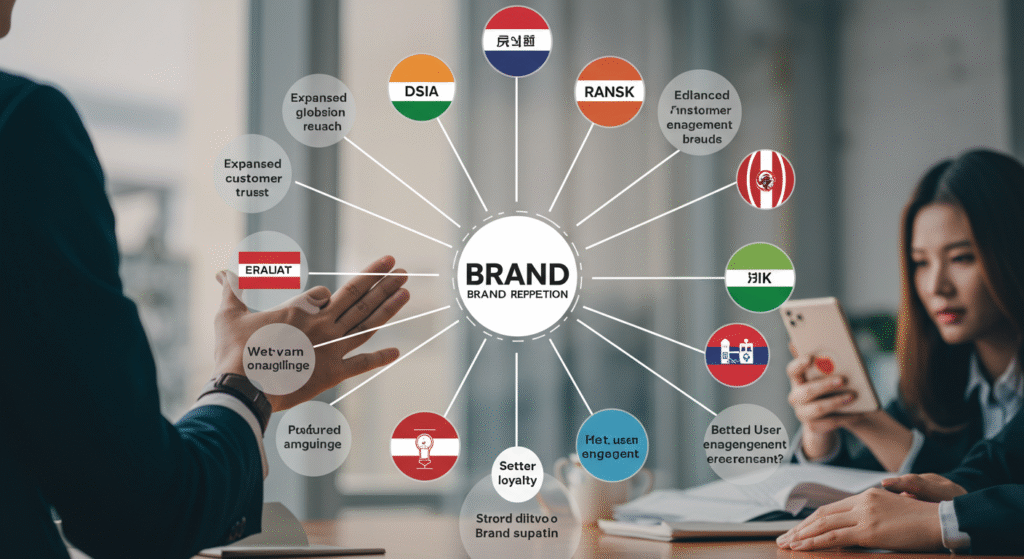
Strategic investment in quality translation creates sustainable competitive advantages that are difficult for competitors to replicate quickly or cost-effectively. Companies that establish superior translation capabilities often capture market share and customer loyalty that persists even when competitors eventually improve their own translation efforts.
First-mover advantages in international markets often depend on quality translation capabilities that enable effective communication with local customers, partners, and regulatory authorities. Companies that can enter new markets with professional, culturally appropriate materials gain credibility and market position that later entrants struggle to overcome.
Customer acquisition costs typically decrease when companies provide high-quality translated materials that resonate with target audiences. Clear, compelling communication in local languages improves conversion rates across all marketing channels while reducing the need for additional marketing spend to overcome poor first impressions from inadequate translation.
Premium positioning strategies rely heavily on quality translation to maintain brand perception and justify higher prices in international markets. Luxury brands, professional services, and high-value products must communicate consistently at premium quality levels to support pricing strategies and brand positioning across all markets.
Long-term customer relationships and retention rates improve significantly when companies consistently provide quality translation across all customer touchpoints. The cumulative effect of superior communication experiences creates customer loyalty that withstands competitive pressure and price competition from companies with inferior translation capabilities.
Digital Presence Optimization Through Quality Translation Excellence
Online brand presence requires quality translation that optimizes digital experiences while maintaining brand consistency across multiple platforms and channels. Search engine visibility, social media engagement, and digital marketing effectiveness all depend on translation quality that resonates with local audiences while meeting technical requirements.
Search engine optimization in international markets requires translation approaches that understand local search behaviors, keyword preferences, and content consumption patterns. Direct translations of SEO content rarely perform well because search terms, question patterns, and information-seeking behaviors vary significantly between cultures and languages.
Social media content and engagement strategies need quality translation that adapts to platform-specific communication styles and cultural preferences. What works well on LinkedIn in professional markets might be inappropriate for Instagram in youth-focused demographics. Platform algorithms also favor content that generates authentic engagement, which requires culturally relevant translation approaches.
E-commerce platforms and online stores require comprehensive translation that addresses product descriptions, checkout processes, customer service features, and promotional content. Conversion rate optimization depends on translation quality that builds trust, communicates value propositions clearly, and addresses local purchasing concerns and preferences.
Directline Translators provides comprehensive digital localization services that optimize online brand presence across multiple markets. Our teams understand technical SEO requirements, platform-specific best practices, and cultural preferences that drive engagement and conversion in international digital markets.
Customer Loyalty Development Through Quality Translation Consistency
Quality translation consistency across all customer interactions builds loyalty by creating reliable, predictable experiences that customers come to expect and appreciate from your brand. When customers receive consistently excellent translated content, they develop confidence in your brand’s commitment to quality and service excellence.
Long-term customer relationships require ongoing communication through newsletters, product updates, support materials, and promotional content. Translation quality must remain consistent across all these touchpoints to maintain customer satisfaction and prevent erosion of brand perception over time. Inconsistent translation quality signals organizational problems and undermines customer confidence.
Customer support and service experiences heavily influence loyalty and retention rates. Support documentation, help articles, and direct customer communication must maintain high translation standards to ensure customers can resolve issues efficiently and maintain positive brand associations. Poor translation in support contexts often leads to customer frustration and churn.
Product education and training materials require quality translation that enables customers to maximize value from their purchases. User guides, tutorial content, and educational resources must be translated clearly to prevent customer frustration and support complaints. Well-translated educational content also reduces support costs while improving customer satisfaction.
Loyalty programs and customer retention initiatives depend on quality translation to communicate value propositions and program benefits effectively. Promotional materials, reward descriptions, and program communications must be translated persuasively to encourage participation and ongoing engagement with loyalty initiatives.
Return on Investment Maximization via Quality Translation Strategy
Strategic quality translation investments generate measurable returns through improved market performance, customer acquisition efficiency, and operational cost reductions. Companies that approach translation as a strategic business investment rather than a necessary expense consistently achieve better financial results in international markets.
Revenue growth in international markets directly correlates with translation quality across marketing, sales, and customer service materials. Companies with superior translation capabilities typically achieve higher conversion rates, larger average order values, and faster market penetration compared to competitors with inadequate translation resources.
Customer acquisition costs decrease when quality translation improves marketing effectiveness and reduces the need for additional promotional spending to overcome poor first impressions. Clear, compelling translated content generates better response rates across all marketing channels while building brand credibility that supports premium pricing strategies.
Operational efficiency improvements result from quality translation that reduces customer service inquiries, support costs, and internal communication problems. Well-translated documentation and training materials reduce training time, minimize errors, and improve productivity across international operations.
Risk mitigation represents another important ROI component of quality translation investment. Professional translation services help companies avoid costly legal issues, regulatory problems, and reputation damage that can result from poor translation choices. The cost of preventing these problems through quality translation is typically far lower than the cost of addressing them after they occur.
FAQs On How Quality Translation Boosts Your Brand Reputation:

1. How does poor translation specifically damage brand reputation?
Poor translation creates immediate negative impressions by suggesting unprofessionalism, lack of attention to detail, and disrespect for local markets. Customers lose confidence in companies that provide awkward, inaccurate, or culturally inappropriate translated content, often assuming this reflects broader quality problems with products or services.
2. What’s the difference between quality translation and basic translation services?
Quality translation involves cultural adaptation, brand voice consistency, technical accuracy verification, and comprehensive quality assurance processes. Basic translation focuses primarily on linguistic conversion without considering cultural nuances, brand positioning, or market-specific requirements that affect customer perception.
3. How can companies measure the impact of translation quality on brand reputation?
Key metrics include customer satisfaction scores, brand perception surveys, online review sentiment analysis, market share growth rates, customer retention statistics, and competitive positioning assessments. Companies should track these metrics across different markets to identify translation quality impacts.
4. Which types of content have the biggest impact on brand reputation through translation?
Customer-facing materials like websites, marketing campaigns, product information, and customer service content have the most immediate impact. Legal documents, safety information, and technical documentation also significantly affect professional credibility and regulatory compliance reputation.
5. How often should companies review and update their translation quality standards?
Translation quality standards should be reviewed annually or when entering new markets, launching new products, or experiencing changes in competitive positioning. Regular audits help identify improvement opportunities and ensure consistency with evolving brand strategies and market conditions.
6. What role does cultural adaptation play in maintaining brand reputation?
Cultural adaptation ensures translated content resonates appropriately with local audiences while avoiding offensive or inappropriate messaging. Companies that demonstrate cultural sensitivity through thoughtful translation choices build stronger relationships and more positive brand associations in international markets.
7. How do translation quality issues affect customer service reputation?
Poor translation in customer service materials leads to frustrated customers, increased support inquiries, longer resolution times, and negative service experiences. Quality translation enables efficient problem resolution and maintains positive customer relationships even during service interactions.
8. Can companies recover from brand reputation damage caused by poor translation?
Recovery is possible but requires significant investment in improved translation services, proactive communication about quality improvements, and consistent delivery of high-quality translated content over time. Prevention through initial quality translation investment is more cost-effective than reputation recovery efforts.
9. What’s the connection between translation quality and premium brand positioning?
Premium brands must maintain consistently high quality standards across all customer touchpoints, including translated materials. Poor translation undermines premium positioning by suggesting cost-cutting measures and lack of attention to quality details that premium customers expect and value.
10. How should companies choose translation partners to protect brand reputation?
Companies should evaluate translation partners based on industry expertise, quality assurance processes, cultural consulting capabilities, project management systems, and track records with similar brands. References from comparable companies and sample work evaluations help assess translation quality standards and brand protection capabilities.

